


bathtub refinishing peeling
Why Bathtub Reglazing Doesn't Last — The Hard Water Truth

You call five refinishers to reglaze your tub. Four refuse and push a $15,000 bathroom gut job. The one who says yes warns you the finish probably won't last more than two years. You feel like you're losing your mind — until you find out it isn't the installers, it isn't the coating, and it isn't your tub. It's your water.
A 2023 Water Quality Association report found that 85% of U.S. homes have hard water, with mineral concentrations high enough to physically wear down surfaces over time. That's the part nobody on the phone tells you. The reason reglazing has a brutal reputation isn't because the technology got worse. It's because the water hitting the finish every single day grinds it off faster than the warranty card admits.
The Reglazing Industry Has a Hidden Problem
Refinishing a bathtub used to be a one-day, $400 job that bought you another decade out of a perfectly good tub. Walk into the same conversation today and you'll hear the same script from contractor after contractor:
- "We only do full bathroom remodels now."
- "Reglazing doesn't hold up — you'll be calling us back in two years."
- "It's not worth the warranty hassle."
A handful of veteran refinishers will tell you the truth if you press them: the coatings haven't gotten worse. Modern epoxy and polyurethane reglazing systems are tougher than what was used 20 years ago. The problem is what's hitting them.
Calcium and magnesium ions in hard water act like microscopic sandpaper. Every shower, every bath, every cleaning cycle scuffs the finish. Over a year or two, that wear shows up as dull patches, peeling around the drain, and that powdery white film no degreaser can remove. The homeowner blames the installer. The installer stops taking reglazing jobs because the calls keep coming back.
What Hard Water Actually Does to a Reglazed Surface
A fresh reglaze is a thin chemical bond — typically 3 to 8 mils thick — adhered to the original porcelain or fiberglass. It's not armor. It's a coating, and like every coating, it has a wear curve.
Hard water attacks that coating in three ways:
- Mechanical abrasion: Dissolved minerals precipitate out when water evaporates. Those crystallized deposits scratch the glaze when you wipe them off.
- Chemical etching: Acidic cleaners used to remove mineral scale (CLR, Lime-A-Way, vinegar) also strip the glaze topcoat. Most homeowners reach for these the first time they see white residue.
- Soap scum bonding: Hard water reacts with soap to form a sticky, alkaline film. Scrubbing it off requires abrasives that micro-scratch the finish.
A 2024 study published in the Journal of Cleaning Science estimated that homes with water hardness above 10 grains per gallon (gpg) see fixture coatings degrade 3 to 4 times faster than homes with softened water. Most U.S. homes test between 7 and 15 gpg. Florida, Texas, Arizona, and parts of the Midwest routinely test above 20 gpg.
Why "Just Clean It Better" Doesn't Work
The advice you'll get on home improvement forums is to clean the tub more often, use gentler products, and squeegee after every use. It helps. It does not solve the problem.
The minerals never stop coming out of the tap. The buildup never stops forming. You can stretch the finish from 18 months to 36 months with religious maintenance, but you can't beat the chemistry. Every time you fill that tub, you're depositing more abrasive material on a surface designed to look smooth.
The same dynamic destroys glass shower doors, chrome faucets, dishwasher interiors, and stainless sinks. Reglazing is just the most expensive casualty because the failure shows up visibly and the repair runs four figures.
What Actually Solves the Problem
The fix is upstream of the tub. If you remove the hardness minerals before water reaches your fixtures, the reglaze stops wearing prematurely. So does the water heater. So do your faucets, shower head, dishwasher, and ice maker.
Two technologies work for this:
- Salt-based water softeners exchange calcium and magnesium for sodium. They produce zero scale and protect every appliance downstream. The trade-off: ongoing salt purchases and a small amount of brine discharge.
- Salt-free water conditioners use Template Assisted Crystallization (TAC) to convert hardness minerals into a non-adhering crystal form. They don't remove the minerals, but the crystals can't bond to surfaces, so scale doesn't form.
The right choice depends on your hardness level, household size, and whether you have well water or municipal water. Homes above 15 gpg or with iron in the water typically need salt-based softening. Homes at 7 to 15 gpg with no iron often do well with salt-free conditioning, which is lower-maintenance and lets the minerals stay in the water for taste.
A 2022 Plumbing Heating Cooling Contractors Association analysis found that homes with whole-house softening or conditioning extended fixture and appliance life by an average of 40 to 60 percent. That's the difference between reglazing once every 15 years and reglazing every 2 years.
What to Look For in a Whole-House System
If you're researching solutions, certifications and component quality matter more than marketing claims:
- NSF/ANSI 44 certification for salt-based softeners (verifies softening capacity and material safety)
- WQA Gold Seal for salt-free conditioners (verifies crystal-conversion performance)
- 10-year tank warranty minimum — fiberglass-wrapped tanks are the standard
- Bypass valve included — required for service and most outdoor faucets
- Capacity matched to household size — undersized systems regenerate too often and degrade faster
Avoid anything sold door-to-door with a $5,000 price tag and a financing pitch. Avoid magnetic or electronic "descalers" that claim to soften water without removing or treating minerals — the National Bureau of Standards has repeatedly failed to verify they work.
The RKIN Solution for Reglazing Survival
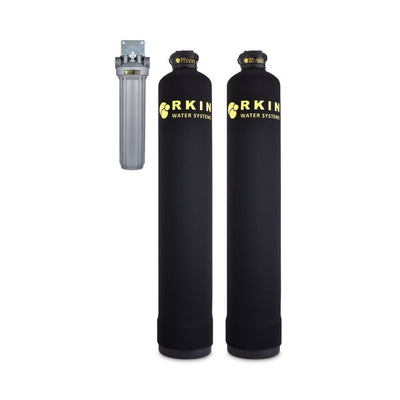
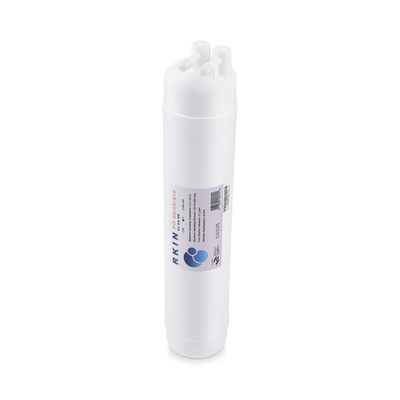
If your tub needs a reglaze and you want it to actually last a decade, the upstream fix is what the refinishers won't tell you about. The RKIN OnliSoft Pro Salt-Free + Carbon Combo is designed for exactly this homeowner — someone with municipal hard water who wants scale prevention without the maintenance of a salt system.
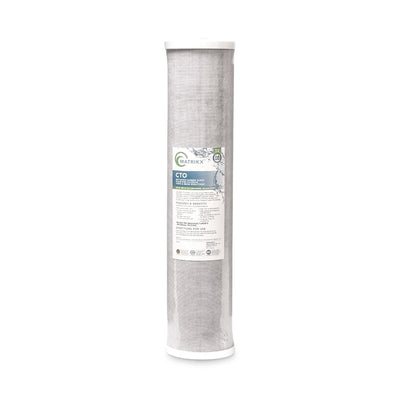
The OnliSoft Pro uses Template Assisted Crystallization to neutralize hardness minerals so they can't bond to your tub finish, glass doors, or fixtures. It pairs that with a coconut-shell carbon stage that removes chlorine, which speeds up the chemical degradation of bathtub coatings independently of hardness.
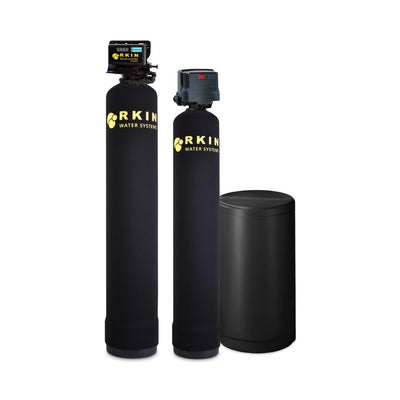
For homes with water hardness above 15 gpg, well water, or iron staining, the RKIN Salt-Based Water Softener + Whole House Carbon Combo is the better fit. It removes minerals entirely and adds the same chlorine-removing carbon stage.
Both systems install at the main water line, treat every fixture in the house, and carry a 10-year warranty on the resin tanks.
Frequently Asked Questions
How long should a bathtub reglaze actually last?
With soft or conditioned water, a quality reglaze using modern epoxy or polyurethane coatings should last 10 to 15 years with normal use. With untreated hard water above 10 gpg, the same finish typically shows visible degradation in 2 to 4 years. The coating isn't the variable — the water is.
Can I reglaze the tub and just clean it more carefully?
You can extend the life of a reglaze with gentle cleaning (no abrasive pads, no acidic cleaners) and squeegeeing after every use, but you can't eliminate mineral deposition. Hard water will still wear the finish over time. Treating the water upstream is the only way to actually solve the problem.
Will a water softener also protect my new water heater?
Yes. Water heaters in homes with untreated hard water typically lose 30 to 50 percent of their rated efficiency within five years due to scale buildup on the heating element. A 2023 Department of Energy report found that softened water extends water heater life by an average of 7 years. The protection extends to dishwashers, washing machines, ice makers, and every appliance that touches hot water.
How do I test my water hardness before deciding?
Hardware stores sell test strips for under $10, or you can request a copy of your municipal water report from your local utility. For well water, a third-party lab test (~$50-$150) is more reliable. Anything above 7 grains per gallon (120 ppm) is classified as hard and will accelerate fixture wear.
Is salt-free conditioning as good as a real softener?
For preventing scale and protecting fixtures, salt-free conditioning works well in homes with moderate hardness (7-15 gpg) and no iron. It doesn't remove the minerals, so you won't get the "slippery" soft-water feel, but you also don't get sodium in the water or salt-bag deliveries. For very hard water or well water with iron, a salt-based softener is the more reliable choice.
Can I install one of these myself?
Whole-house systems install at the main water line entering the home, typically near the water heater. The plumbing is straightforward for a handy homeowner — a few hours with PEX or copper fittings. Most owners hire a licensed plumber for $300 to $600, which is still far less than reglazing every two years.
Stop Replacing the Finish — Fix the Water
If you're staring at a peeling tub and a $15,000 remodel quote, the math is straightforward. Treat the water, reglaze once, and the finish lasts a decade. Don't treat the water, and you're back on the phone in two years calling the same refinishers who already turned you down.
The RKIN OnliSoft Pro Salt-Free + Carbon Combo protects every fixture in your home, ships free, and installs at the main line. No salt deliveries. No plumbing rebuild. Just water that stops destroying everything it touches.




0 comments