




bypass
Do Outdoor Hose Bibs Need a Bypass from a Water Softener? Full FAQ

If you are planning a whole-home water softener installation — or troubleshooting an existing one — you have probably run into the question of outdoor hose bibs. Specifically: should your garden hose get softened water, or should it bypass the system entirely?
The short answer is bypass. Here is everything you need to know about why, and how to do it correctly.
Do Outdoor Hose Bibs Need a Bypass from a Water Softener?
Yes, in almost every installation. Outdoor hose bibs — the spigots on the exterior of your house used for garden hoses, irrigation systems, and pressure washing — should receive untreated hard water rather than softened water.
Here is why: salt-based water softeners work by replacing calcium and magnesium ions (the minerals that cause hardness) with sodium ions. That sodium is harmless in the quantities humans drink. But when you water your lawn or garden repeatedly with softened water, sodium accumulates in the soil.
Over time, elevated soil sodium can:
- Break down soil structure, reducing aeration
- Pull moisture away from plant roots
- Stress or kill sodium-sensitive plants, including most grass varieties
Most homeowners do not notice effects within the first few months. Problems develop gradually — and by the time they are visible, the soil sodium level is already well elevated. The fix is simple: route outdoor spigots off the pre-softener supply line so they always receive untreated water.
What Is a Bypass Valve and Where Is It?
Almost every modern water softener ships with a bypass valve built into the control head — typically a 3-valve arrangement or a single lever that shifts the water path around the resin tank. When the bypass is engaged, water flows directly into your home plumbing without passing through the softener.
This is different from a dedicated hose bib bypass line. The control-head bypass is used temporarily — during regeneration cycles, service calls, or travel. For outdoor zones, you need a permanent plumbing bypass that routes specific fixtures off the pre-softener supply, regardless of where the control head is set.
How to Install a Hose Bib Bypass Line
This is a plumbing task, not an electrical one. If you are comfortable soldering copper or working with push-fit fittings, it is a one-to-two hour job. If not, a plumber can complete it in under an hour.
The steps:
- Locate your main water supply line before the softener inlet
- Install a T-fitting on the pre-softener line
- Run the bypass branch to your outdoor hose bib circuit
- Install a shutoff valve on the bypass branch so you can isolate it if needed
The result: outdoor bibs always receive untreated water. Indoor plumbing still gets soft water. The softener control head bypass is unaffected.
Do You Need a Bypass If You Have a Salt-Free System?
No. This is one of the key practical advantages of salt-free water conditioners over salt-based softeners.
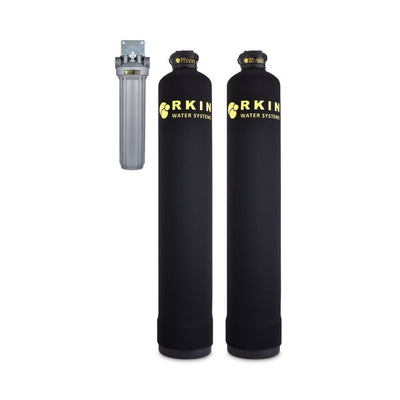
Salt-free systems — like the RKIN OnliSoft Salt-Free Water Conditioner — work differently. Instead of removing calcium and magnesium, they transform those minerals into a stable crystalline form that cannot bind to surfaces or form scale. Nothing is added to the water. No sodium exchange takes place.
The result: conditioned water from a salt-free system is safe for lawns, gardens, irrigation, and outdoor use without any bypass required. No soil sodium buildup. No risk to plants. One less plumbing modification.
For homeowners with large gardens, drip irrigation systems, or concerns about outdoor plants, this is often the deciding factor between choosing a salt-based softener versus a salt-free conditioner.
The RKIN OnliSoft vs. Salt-Based Softeners: Bypass Comparison
| Feature | Salt-Based Softener | RKIN OnliSoft (Salt-Free) |
|---|---|---|
| Removes hardness minerals | Yes (ion exchange) | No (transforms crystals) |
| Adds sodium to water | Yes | No |
| Outdoor bypass required | Yes | No |
| Safe for irrigation | Only bypassed water | Yes, all zones |
| Maintenance | Salt refills every 4–8 weeks | Maintenance-free media |
Other Common Bypass Questions
What happens if I do not bypass outdoor bibs with a salt softener?
Nothing immediately visible. But over months of regular irrigation, sodium accumulates in the soil. You may start seeing patchy grass, struggling shrubs, or reduced plant vigor. Existing damage can be partially reversed by flushing the soil with rainfall or untreated water over one to two seasons.
Does a bypass affect water pressure?
Not meaningfully. The bypass line is a direct supply connection and will maintain full line pressure to outdoor bibs. In fact, bypassed outdoor zones may have marginally higher pressure than indoor softened water, since they skip the resistance of the softener tank.
Should the water heater be on the bypass line?
No. The water heater should receive softened water. Scale buildup inside a water heater from hard water is one of the primary reasons homeowners install softeners in the first place. Only outdoor zones benefit from a bypass.
Do I need a bypass during softener regeneration?
Most modern softeners regenerate overnight and route water around the resin tank automatically during that cycle. You do not need to manually bypass for regeneration. The control-head bypass is primarily used during servicing or extended absences.
Which RKIN System Is Right for You?
If you are deciding between softening approaches and the outdoor bypass question is part of your research, here is the short version:
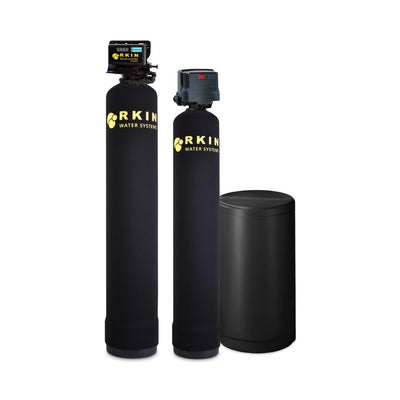
- High hardness (14+ GPG), heavy scale on fixtures, spots on dishes: A salt-based softener provides the most complete hardness removal. Plan for an outdoor bypass line in your installation.
- Moderate hardness, garden-heavy property, prefer maintenance-free: The RKIN OnliSoft prevents scale without adding sodium — no bypass needed, no salt to buy.
- High hardness plus chlorine, odor, or sediment concerns: The RKIN Water Softener and Whole House Carbon Filter System combines salt-based softening with whole-home filtration in one installation.
Not sure what your hardness level is? A $10 test strip kit from any hardware store gives you a reading in under two minutes. That number drives the right system choice more than anything else.
Questions about installation, system sizing, or how your water's specific chemistry affects the bypass decision? The RKIN consultation team can walk you through it — see our whole-house systems here or call 1-800-803-4551.



0 comments