



tannins in well water
Tannins in Well Water: Testing and Home Filter Options

Tannins in well water can cause a yellow or tea-colored tint, but color alone cannot confirm the cause. Start with laboratory testing, then assess treatment designed for organic color rather than assuming an ordinary sediment filter or softener will remove it. EPA guidance, checked on 10/21/2026, lists an aesthetic guideline of 15 color units, not a tannin-specific treatment target.
If your water looks different during fall home-maintenance checks, record the change rather than blaming the leaves outside. Soil conditions, other dissolved substances, existing treatment, and plumbing all deserve a look. The useful question is not which filter looks strongest. It is what is causing the color, where it appears, and what a laboratory can actually confirm.
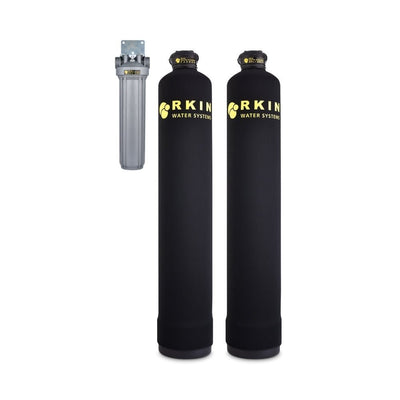
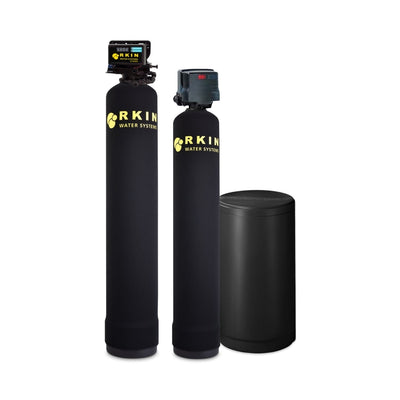
If your report also identifies hardness, iron, sulfur, or manganese, our RKIN Advanced Water Softener and Well Water Filter Combo brings together treatment for those separate problems. Suspected tannins still need their own testing and treatment assessment.
Why can well water look like weak tea?
Tannins are naturally occurring organic materials associated with decaying vegetation and organic-rich soils. In household water discussions, the term often includes related humic substances. These materials can give water a yellow-brown cast without producing obvious grains of dirt. That is why replacing a sediment cartridge does not necessarily change the appearance.
But yellow water is not a diagnosis. Iron and manganese can also affect color, and more than one issue may be present. The EPA guidance linked above lists secondary aesthetic guidelines of 0.3 mg/L for iron and 0.05 mg/L for manganese. Those values, checked on 10/21/2026, help explain why a laboratory panel should look beyond a single tannin result. They are not guarantees about your well or instructions to buy a particular system.
Start by comparing cold water at several fixtures. Does the tint appear throughout the house, only after existing equipment, or only at one tap? Check whether hot water looks different, too. A problem isolated to hot water needs a plumbing or water-heater investigation, not an automatic whole-house filter purchase.
Record when the change began and whether it followed heavy rain, well repairs, or an equipment change. Photos against the same white background can help document it. Do not taste unfamiliar water to diagnose the cause.
Private wells are not assessed by a municipal report for your individual property. EPA recommends testing after changes in color, odor, or taste, as well as annual baseline testing. An aesthetic explanation for the tint does not establish the overall quality of the water. Address any local advisory or suspected well damage separately.
What common fixes can miss the cause?
A finer sediment cartridge may catch smaller suspended particles, but it is not a universal answer for dissolved organic color. Before changing cartridge grades repeatedly, find out whether the color-causing material is particulate, dissolved, or a combination. A cartridge that looks clean can still be doing exactly the job it was designed for.
An ordinary salt-based softener is also a different treatment. Its usual job is exchanging calcium and magnesium hardness minerals. Equipment designed specifically for organic color may use a different resin and operating setup. The presence of a salt tank does not make the two systems interchangeable.
Carbon can be useful in water treatment, but the word “carbon” alone does not establish performance for your particular tannin mixture. Water chemistry, the carbon selected, contact time, and organic loading matter. A pleasant taste after filtration does not prove that the color problem has been solved for the full service interval.
A handheld total dissolved solids meter cannot identify tannins, iron, or every other substance individually. Nor does an overnight glass observation replace laboratory testing. Both may supply clues, but neither should decide the purchase.
Finally, do not add treatment chemicals to the well as a color experiment. An approach that includes oxidation needs professional design, appropriate dosing, and verification. Guessing can complicate the original problem rather than clarify it.
How should you test and choose treatment?
Our recommendation is to start with a laboratory report and a clearly stated goal: drinking-water improvement at one tap, or color reduction throughout the house. The reason we're asking is simple: those are different jobs, and they may need different equipment.
Ask a certified drinking-water laboratory what analysis it offers for suspected tannins or organic color. The available test may be described as tannin and lignin, color, or an organic-matter measurement. Ask what the result does and does not establish. A broader organic-carbon result is not automatically a tannin concentration.
Provide the laboratory with your observations and the list of existing equipment. Follow its sampling instructions, including bottle type, collection location, handling, and delivery time. A sample before treatment can help characterize the source; a properly planned sample after treatment can help assess performance. Do not open pressurized housings or alter plumbing just to obtain a sample.
Useful questions for the laboratory and treatment professional include:
- Should iron and manganese be measured alongside the organic-color analysis?
- What do hardness, pH, alkalinity, and other dissolved constituents mean for equipment selection?
- Does the panel include the routine private-well tests, or are those a separate order?
- Which results will be used to confirm improvement after installation?
Once the cause is established, anion exchange may be considered for dissolved organic material. It uses resin selected for negatively charged substances, rather than assuming a conventional softener resin will do the same job. A 2018 review in Chemosphere discusses ion exchange for natural organic matter and the importance of the material being treated. It does not validate a particular household product or promise complete removal.
Other approaches can include appropriately selected membrane treatment or a professionally designed oxidation-and-filtration process. Suitability depends on the water, including potential fouling and pretreatment needs. Ask for a written explanation of the proposed method, its limits, drain and maintenance requirements, and how performance will be checked. A certification for an unrelated substance is not evidence of tannin performance.
Where do RKIN systems fit in the plan?
We approach well-water treatment by separating the problems instead of treating “brown water” as one condition. The official page for our RKIN Advanced Water Softener and Well Water Filter Combo specifically calls for a tannins test when you notice yellow coloration or staining. That testing step matters before a recommendation is made.
The combination brings together salt-based softening and well-water filtration for the tasks described on its product page. Its softener addresses hardness through ion exchange, and the well-water filter is described for iron, manganese, and sulfur. Those descriptions are not a claim that the combination removes tannins. A separate organic-color treatment assessment may be needed when the report identifies that issue.
A discussion should cover the untreated report, existing equipment, household demand, and the fixtures where you notice the problem. It should also distinguish the desired result from the equipment name. Clearer water, reduced hardness, and a drinking-water treatment goal are not identical outcomes.
That keeps the recommendation grounded. If the results point somewhere else, the treatment plan should change rather than forcing the water to fit a predetermined package.
Frequently Asked Questions
What are tannins in well water?
Tannins are natural organic materials associated with vegetation and soil that can contribute a yellow or tea-like color. Household discussions may also include related humic substances under that label. Appearance alone cannot confirm them, because other materials can discolor water. A laboratory analysis is the useful next step when your well water changes color.
How do I know whether yellow well water is tannins or iron?
Compare where the color appears, whether particles form, and whether it changes after standing, but treat those observations as clues only. Tannins and iron can occur together, and a visual check cannot reliably separate them. Ask the laboratory about testing both, plus manganese and relevant water chemistry, before selecting equipment or changing existing treatment settings.
Will a water softener remove tannins?
Do not assume it will. A conventional salt-based softener primarily addresses calcium and magnesium hardness. Treatment designed for organic color can use a different type of ion-exchange resin and different operating conditions. Share the actual water analysis with the installer and ask which measured substance each proposed stage is intended to address, including any needed pretreatment.
Can reverse osmosis remove tannins from well water?
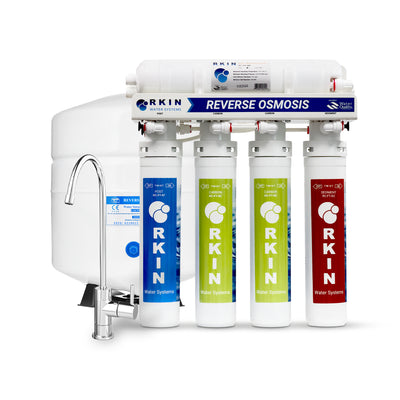
Membrane treatment can be considered for some natural organic materials, but the water composition and fouling potential matter. That does not establish a removal claim for every reverse osmosis system. Check the specific manufacturer's documentation and feed-water requirements. A drinking-water system also serves its connected outlet, not every bath, laundry fixture, and appliance in the home.
Is clear water after filtration enough to confirm success?
No. Visual improvement is useful, but it does not identify everything in the water or prove that treatment will keep performing as intended. Agree on follow-up laboratory measurements before installation. Compare results collected using appropriate sampling methods, then monitor the system over its service interval. Keep routine private-well testing separate from simply checking whether the tint returns.
Should I test tannins every fall?
There is no single fall-only schedule that fits every well. EPA recommends annual baseline private-well testing and additional testing after changes in water quality or relevant conditions. Ask your laboratory and local health department which tests fit your property. If the tint changes seasonally, document that timing so sampling can capture the problem rather than miss it.
Ready to Upgrade Your Water?
Yellow water deserves a recommendation based on its measured cause. Our RKIN Advanced Water Softener and Well Water Filter Combo combines hardness treatment with filtration for iron, sulfur, and manganese; those capabilities do not establish tannin removal. Contact RKIN with your laboratory report, photos, and existing equipment details to discuss which treatment fits the results before choosing a system.






0 comments