


washer inlet screen sediment
Washing Machine Inlet Screen Clogged? Check Your Water

A washing machine inlet screen that keeps clogging is usually not a washing-machine problem first. It is often a water clue: sediment from a well, scale from hard water, pipe debris after plumbing work, rust from older lines, or grit stirred up by utility repairs.
That distinction matters because replacing the valve or cleaning the screen again may only buy you a few loads. If the same debris keeps arriving, the fix has to move upstream. Start with what the material looks like, where it appears, and whether hot, cold, or every fixture is affected.
What the Inlet Screen Is Trying to Tell You
Most washers have small mesh screens where the hot and cold supply hoses connect. Their job is simple: catch particles before they enter the valve. The screen is not meant to be your home's main sediment filter. It is a last small guard for one appliance.
When that screen plugs, the washer may fill slowly, stop mid-cycle, show a water-flow error, or leave detergent behind because the load never received enough water. Cleaning the screen can restore flow, but the debris sample is more valuable than the quick fix.
Collect what you rinse out into a white bowl or clear cup. Beige grit, black flecks, orange rust, white chips, and slimy material all point in different directions. Do not wash the evidence down the drain before you look at it. A phone photo and a simple note about which side clogged can save time later.
Common Causes of a Clogged Washer Inlet Screen
Sediment from a private well is one common cause. Sand, silt, clay, and fine grit can enter if the well screen, pump depth, pressure tank, or plumbing has changed. EPA says private well owners are responsible for managing their own water quality, and EPA's private well page notes that more than 43 million Americans rely on private wells.
Hard-water scale is another cause. Minerals can form small chips or crust that break loose and collect at narrow screens. The Water Quality Association explains that dissolved calcium and magnesium are mainly responsible for scale in pipes, water heaters, kitchens, and baths.
City-water homes can see debris too. Main repairs, hydrant flushing, meter work, old service lines, or nearby construction can stir up particles that later land in aerators and appliance screens. If the clog started right after street work, a pressure outage, or a utility notice, treat timing as a clue.
Your own plumbing can be the source. Old galvanized pipe can shed rust. A deteriorating rubber washer inside a supply hose can shed black flecks. A water heater can release scale into hot-water lines. New plumbing work can leave shavings, solder debris, or loosened deposits that show up at the first small screen downstream.
Hot Side, Cold Side, or Both?
Before buying anything, identify which inlet is clogging. That one detail narrows the source.
If only the hot side clogs, look at the water heater and hot-water plumbing first. Heated hard water drops scale more readily, and older tanks can collect sediment that later moves through the hot line. Do not open the heater or plumbing unless you know the steps; call a licensed plumber if the heater is old, leaking, noisy, or hard to isolate.
If only the cold side clogs, the source may be the incoming main, well line, pressure tank, cold branch piping, or the washer hose itself. Compare the washer's cold screen with a nearby cold faucet aerator. If both collect the same material, the issue is upstream of the washer.
If both hot and cold clog, think main supply, well sediment, city-line debris, whole-home hardness, or pipe corrosion before the water splits through the house. Check a tub spout or utility sink without an aerator if you need to flush visible particles without instantly plugging another small screen.
What Not to Do First
Do not remove the washer screens and leave them out. That may restore flow for a short time, but it sends debris into the inlet valve where it can stick, leak, or fail. The screen is there to protect a smaller, more expensive part.
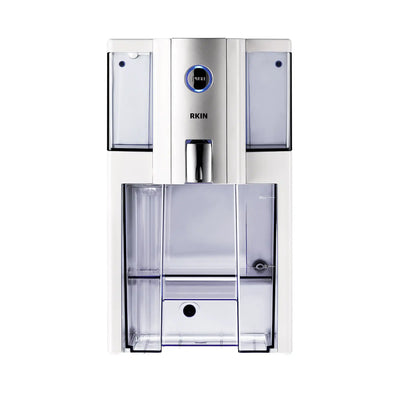
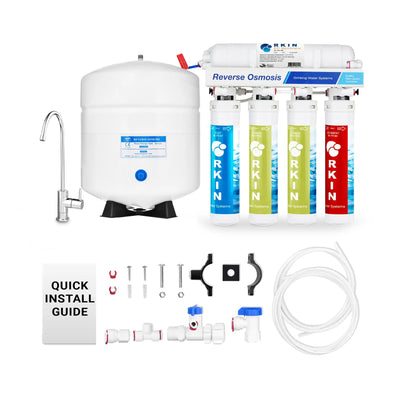
Do not assume a drinking-water filter at the kitchen fixes a laundry problem. A countertop or under-sink RO system filters drinking and cooking water at one point of use. It does not protect the washing machine unless the washer is actually fed by that treated line, which it will not be in a normal home.
Do not use a softener as a sediment filter. A softener targets dissolved hardness minerals through ion exchange. It is not designed to catch sand, rust flakes, or heavy debris before they reach the appliance. If the water carries visible particles, sediment filtration usually belongs before other equipment.
Do not guess from color alone. Orange material can be iron, rust, or a mix. White grit can be calcium scale or other mineral debris. Black flecks can be rubber, manganese, carbon fines, or deteriorating plumbing material. Use color as a starting point, not the final answer.
How to Trace the Source at Home
Start with a safe, low-cost inspection. Turn off the washer supply valves, relieve pressure, disconnect the hoses, and clean the screens according to the washer manual. If the valves are stuck or corroded, stop and call a plumber instead of forcing them.
Next, compare fixtures. Unscrew a faucet aerator near the laundry area and rinse it into a bowl. Check whether bathroom sinks, showers, and the kitchen faucet show the same debris. Look inside toilet tanks too; they often reveal incoming sediment because water sits still long enough for particles to settle.
Then compare timing. Did the clog start after a water heater replacement, softener service, filter change, city repair, pressure loss, storm, well pump work, or long vacancy? Timing often points to the right branch of the system.
Finally, test when the pattern is not obvious. City-water customers can read the annual water quality report and call the utility if neighbors have the same problem. Private well owners should use a certified lab or local well professional when sediment, staining, odor, or bacteria indicators are possible. A screen full of grit tells you something is entering the plumbing; a test tells you what else may be in the water.
Where RKIN Fits
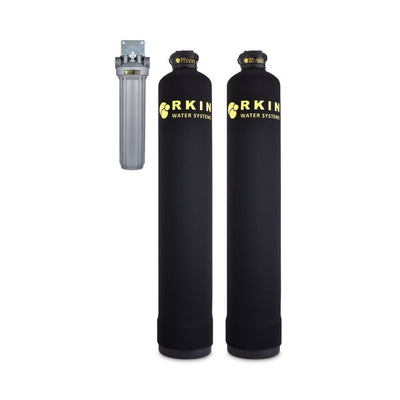
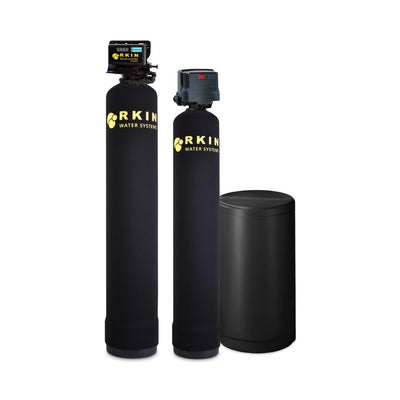
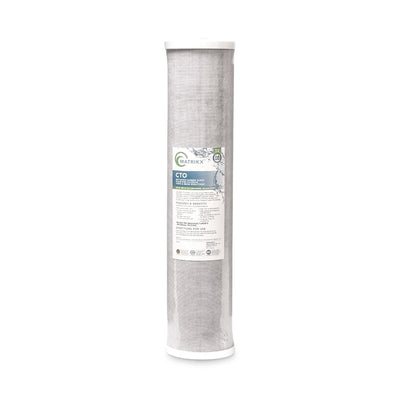
If the washer screen is clogging because of whole-home sediment, hardness scale, iron, or mixed water issues, the fix usually belongs at the main line, not at the washer alone. That is where RKIN's whole house water treatment systems come into the discussion.
A sediment-first setup can help protect downstream equipment when the water carries visible particles. A whole-house carbon system may be part of a city-water plan when taste, odor, chlorine, or certain chemical concerns are also present. A well-water system may be the better conversation when iron staining, sulfur odor, manganese, sediment, or hardness appear together. A scale-control or softening plan may be needed when hard water is creating white crust throughout the home.
The right setup depends on the source water and test results. A washer screen is a symptom. The goal is to match the system to the cause so the washer, shower heads, faucets, refrigerator line, water heater, and dishwasher are not each fighting the same incoming debris one screen at a time.
A Practical Cleaning and Prevention Checklist
Use this order:
- Turn off the washer supply valves before removing hoses.
- Photograph and save the material from the clogged screen.
- Clean the screen according to the appliance manual; do not discard it.
- Check whether hot, cold, or both sides are affected.
- Rinse a nearby faucet aerator into a bowl for comparison.
- Look for matching debris in toilet tanks, shower heads, and other aerators.
- Review recent plumbing work, utility notices, well service, or water heater work.
- Test the water or call the utility if the problem returns.
- Choose main-line treatment only after the source is clear.
If the screen clogs once after a known repair, cleaning and flushing may be enough. If it clogs repeatedly, stop treating it as routine maintenance. Repeated clogging is the house asking you to look upstream.
Me personally, I would clean the screen once, then test the water if it clogs again.
Frequently Asked Questions
Why does my washing machine inlet screen keep clogging?
Repeated clogging usually means debris is entering before the washer. Common causes include well sediment, hard-water scale, rust from old plumbing, water heater sediment, deteriorating hoses, or city-line debris after main work. Clean the screen, then trace where the debris starts.
Should I remove the washer inlet screen?
No. The screen protects the inlet valve from grit and scale. Removing it can move debris deeper into the appliance, where it can cause slow filling, leaks, or valve failure. Clean it according to the manual instead.
Can hard water clog a washing machine screen?
Yes. Hard water can form scale that breaks loose as small white or beige particles. If you also see white crust on faucets, shower heads, dishes, or a water heater, test hardness and consider a whole-home scale-control plan.
Will a whole-house filter help my washer?
It can if the filter matches the cause. Sediment filtration can help with visible grit. Whole-house carbon can help with some city-water taste and odor concerns. Well-water treatment may be needed for iron, sulfur odor, manganese, or mixed issues. Test first.
Why is only the hot-water screen clogged?
A hot-side clog often points to water heater sediment, scale that forms when hard water is heated, or debris in the hot-water branch. Compare other hot fixtures and consider a plumber if the heater is old, noisy, leaking, or overdue for maintenance.
Ready to Stop Cleaning the Same Screen?
A washer screen should not be your home's main filter. If it keeps catching debris, use it as evidence and move the fix upstream.
Start with RKIN's whole house water treatment systems if sediment, scale, staining, odor, or appliance clogging appears at more than one fixture. Match the system to a real water test instead of guessing from one clogged screen.






0 comments