


best water for humidifier
White Dust From Humidifier: Is Your Water the Cause?

White dust around a humidifier usually means your water is carrying minerals into the air with the mist. It is one of the first fall and winter water clues homeowners notice because the device sits near a bed, nursery, office desk, or living room table where the residue is hard to miss.
The good news: the fix is usually not a new humidifier. It starts with understanding what kind of humidifier you own, what is in the water you are pouring into it, and whether you need low-mineral water for that small appliance or broader water treatment for the whole home.
Why Humidifier White Dust Happens
White dust is usually mineral residue. Tap water often contains dissolved calcium, magnesium, silica, sodium, and other minerals. In a glass, those minerals may be invisible. In a humidifier, the water becomes mist or vapor. When the water evaporates into the room, some minerals can be left behind as a pale film on furniture, electronics, floors, and nearby surfaces.
The EPA's home humidifier guidance specifically warns that ultrasonic and impeller humidifiers can disperse minerals from the tank into indoor air. EPA also says using water with low mineral content helps reduce scale buildup and mineral dispersal.
That detail matters because not every humidifier works the same way. If you use an evaporative unit with a wick, the minerals often collect in the wick and tank. If you use an ultrasonic unit, the device can turn mineral-heavy water into a visible mist more directly. That is why one humidifier may leave dust while another in the same house does not.
Which Humidifiers Are Most Likely to Leave Dust?
Ultrasonic and impeller humidifiers are the usual suspects. They are popular because they are quiet, compact, and easy to move from room to room. They also create cool mist without boiling the water. That design can be convenient, but it means minerals can travel with the mist instead of staying behind in a heated chamber.
Evaporative humidifiers tend to release less mineral dust because air moves through a wet wick. Steam vaporizers heat water first, so they also tend to leave more minerals inside the unit than on the dresser. Still, every model needs cleaning, and every tank can develop scale if the water has enough dissolved minerals.
A simple clue is where the residue appears. Dust close to the humidifier points to mineral carryover. White crust inside the tank, cap, or base points to the same water chemistry. If you also see white spots on shower glass, a crusty kettle, cloudy ice, or scale on faucet aerators, the humidifier is probably showing you a house-wide hard-water pattern.
What Does Not Work Well
Wiping the dust every morning addresses the symptom, not the water. The residue will keep returning as long as the same mineral-heavy water keeps going into the tank.
Letting tap water sit overnight may reduce a free-chlorine smell, but it does not remove dissolved calcium or magnesium. Boiling water also does not solve the mineral problem. Boiling drives off water as steam and leaves many dissolved minerals behind, which can make the remaining water more concentrated if you pour it into the tank afterward.
A standard carbon pitcher is often the wrong tool too. Carbon is useful for many taste and odor complaints, especially chlorine taste. It is not designed to remove most dissolved mineral content at the level needed to stop humidifier dust. If a TDS meter reads almost the same before and after a pitcher filter, that is why.
Demineralization cartridges can help when the humidifier maker recommends them, but their performance and life vary. EPA tells homeowners to watch for white dust as a sign that minerals are not being removed well enough. In other words, the dust itself is feedback.
What Water Should You Use in a Humidifier?
For ultrasonic or impeller humidifiers, start with the owner's manual. Many manufacturers recommend distilled, demineralized, or purified water. EPA notes that distilled water is typically lower in mineral content than most tap water, while reverse osmosis and deionization also remove most minerals.
Distilled water is the easiest answer for a single small room humidifier if you only use it during dry weeks. The trade-off is storage and repeated trips to buy jugs. For a larger household, daily humidifier use can turn into a routine nobody enjoys.
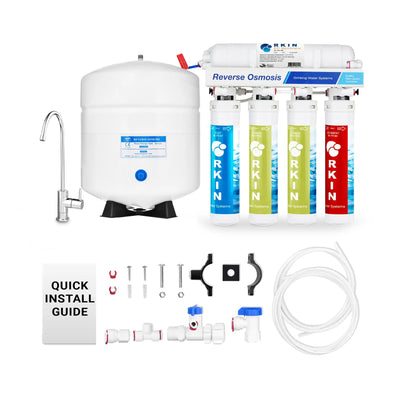
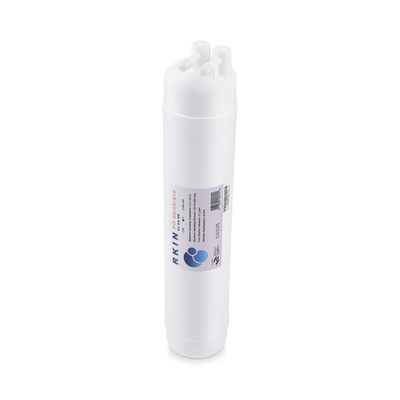
Reverse osmosis water can also be a fit because RO is a point-of-use process designed to reduce many dissolved substances that simple carbon does not target well. It is not identical to distilled water, and mineral levels depend on the system, membrane, maintenance, and any remineralization stage. But for many homes, RO water is a practical way to get low-mineral water from the kitchen without hauling containers.
Do not overthink the test. Clean the humidifier, refill it with distilled or RO water for several days, and check the nearby surfaces. If the white film drops sharply, water minerals were the main cause. If dust remains unchanged, look at the room itself: drywall dust, nearby vents, candle residue, renovation dust, or powder from household products can mimic the same look.
When White Dust Points to a Bigger Water Issue
Humidifier dust alone does not prove your water is unsafe. It tells you the water has enough dissolved minerals to leave residue when misted into a room. That is usually a nuisance issue, not a diagnosis.
Still, the clue can help you decide what to test next. If the same home has scale on faucets, spots on dishes, stiff-feeling laundry, or repeated appliance descaling, test hardness and total dissolved solids. The Water Quality Association explains that dissolved calcium and magnesium are the main drivers of scale in pipes, water heaters, kitchens, and baths.
City-water customers can start with the annual water quality report, then add a home test if the symptoms do not match the report. Private well owners should be more hands-on because their water is not managed by a public utility. EPA says private well owners are responsible for their own water quality, and that more than 43 million Americans rely on private wells.
Where RKIN Fits
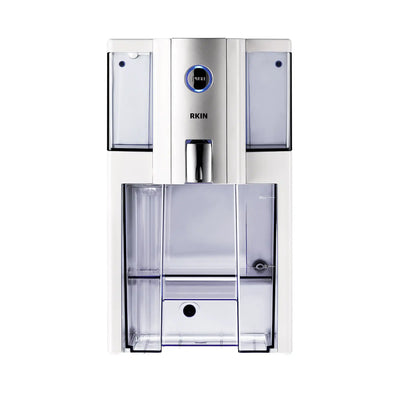
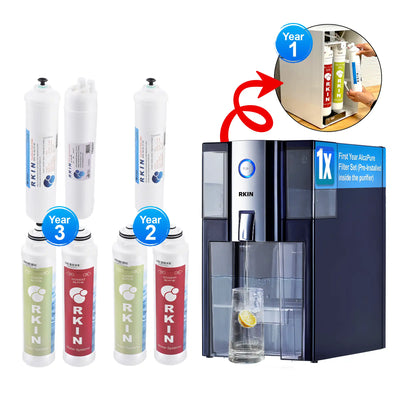
If your goal is low-mineral water for a room humidifier, drinking water, coffee, tea, and cooking, a point-of-use RO system is the most direct category to compare. The RKIN Zero Installation Purifier is designed for countertop reverse osmosis without permanent plumbing changes. It connects at the counter and front-loads water at counter height, so you do not have to lift a heavy tank overhead.
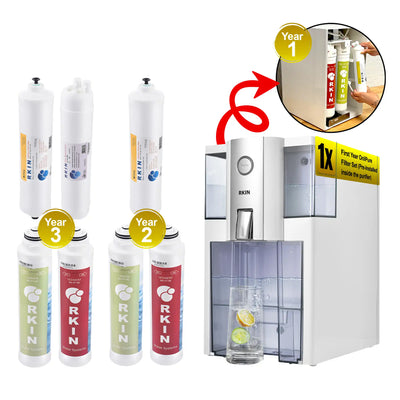
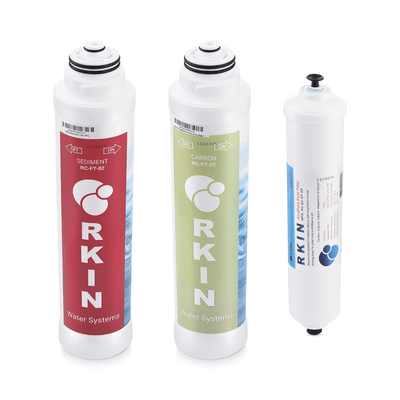
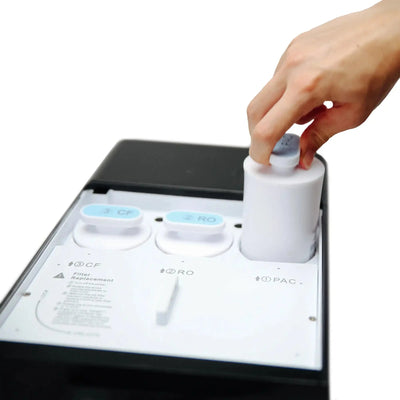
If you prefer a freestanding countertop unit with hot and cold dispensing, the RKIN U1 4-in-1 Water Filter System uses a five-stage process with sediment filtration, carbon filtration, reverse osmosis, UV, and post-filtration. It sits on the countertop and uses a fill tank rather than an under-sink install.
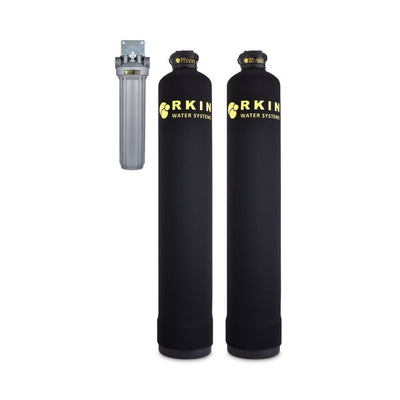
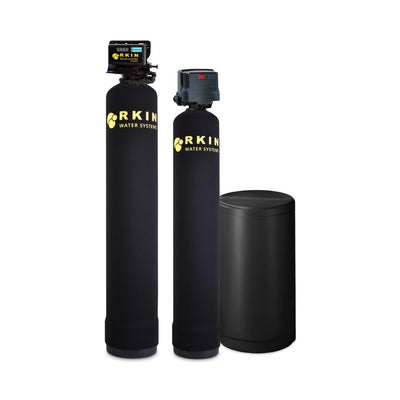
If the humidifier is only one of several hard-water clues, the better fit may be a whole-home conversation. Scale at showers, heaters, faucets, and appliances is a main-line water issue, not just a bedroom appliance issue. In that case, start with RKIN's whole house water treatment systems and match the setup to a real water test.
A Simple Home Checklist
Use this order before buying another humidifier:
- Clean and dry the tank, base, and cap according to the manual.
- Switch to distilled or RO water for several days.
- Keep the humidifier away from electronics and surfaces that show dust fast.
- Check whether the residue is also inside the tank or only around the room.
- Test water hardness if you see scale in other parts of the home.
- Replace or rinse any humidifier cartridge only as the manufacturer directs.
- If the home is on a private well, keep a current lab report instead of guessing from residue.
Also keep moisture in check. A humidifier is meant to add comfort during dry air, not make the room damp. If windows sweat or surfaces stay wet, lower the setting, run it less often, or use a hygrometer to keep the room in the range recommended by your humidifier maker.
Me personally, I would test hardness and TDS before blaming the humidifier.
Frequently Asked Questions
What causes white dust from a humidifier?
White dust usually comes from minerals in the water, especially when an ultrasonic or impeller humidifier turns mineral-heavy tap water into mist. When the water evaporates, minerals can settle on nearby furniture, floors, and electronics as a pale film.
Is humidifier white dust the same as mold?
No. White mineral dust is dry residue from the water. Mold is biological growth and usually appears as spots, film, or odor inside a damp unit or room. Clean the humidifier often, keep surfaces dry, and follow the manual if you see growth or smell musty air.
Will filtered water stop humidifier dust?
It depends on the filter. A basic carbon filter may improve taste but leave dissolved minerals behind. Distilled water, demineralized water, and many reverse osmosis systems are better fits when the goal is lower mineral content.
Can I use reverse osmosis water in a humidifier?
Often, yes, if your humidifier manual allows it. Reverse osmosis water usually has lower dissolved mineral content than ordinary tap water, which can reduce white dust. Check the appliance instructions first, and keep cleaning the tank on schedule.
Do I need whole-house treatment for humidifier dust?
Not always. If the only issue is one room humidifier, low-mineral water at the tank may be enough. If you also see scale on fixtures, dishes, shower glass, and appliances, test the water and consider whole-home hardness or scale treatment.
Ready to Fix the Water Behind the Dust?
White dust is annoying, but it is also useful feedback. It tells you to stop blaming the appliance and check the water going into it.
Start with the RKIN Zero Installation Purifier if you want countertop reverse osmosis for daily drinking water, cooking water, and low-mineral humidifier refills without a permanent install.






0 comments