


hard water septic system
Water Softener With Septic System: Homeowner Guide

A water softener can share a home with a septic system when it is sized, programmed, and maintained correctly. Check local rules and have the septic design reviewed before choosing equipment, because household water use and regeneration discharge both matter.
The concern is reasonable. The EPA's septic care guidance says more than one in five U.S. households use septic systems or small community cluster systems, and it tells homeowners to conserve water and protect the drainfield. If your house has both hard water and septic, the right answer is not "buy any softener." It is to match the treatment choice to your water, plumbing, septic design, and maintenance habits.
Start With the Two Problems You Are Solving
Hard water and septic performance are separate issues. Hard water is about dissolved minerals, mostly calcium and magnesium, that can leave scale on fixtures, reduce soap performance, and build up in appliances. A septic system is a wastewater treatment system that depends on proper flow, settling, microbial action, and a drainfield that can absorb effluent.
That distinction matters because a water softener is not a septic product. It treats hardness before water enters the plumbing. The septic system handles used water after showers, laundry, toilets, dishwashing, and sinks. The overlap is the discharge: salt-based softeners periodically regenerate and send brine and rinse water to the drain unless installed or plumbed differently.
For many homes, a properly sized and maintained softener can be compatible with septic. For others, the better choice may be a salt-free conditioner, a prefilter, a whole-house carbon system, or a mixed setup. The right path depends on your hardness level, daily water use, regeneration settings, septic age, local rules, and whether the system is aerobic, conventional, or has special discharge requirements.
Before buying, get specific. Test the water. Identify your septic type. Check your local code or installer guidance. Then choose the water-treatment system that solves the actual problem without creating a new one.
Why Salt-Based Softeners Raise Septic Questions
A salt-based softener works through ion exchange. Hardness minerals are exchanged for sodium or potassium ions inside the resin tank. When the resin needs cleaning, the system regenerates with brine. That brine and rinse water usually go somewhere, and in many homes it goes to the same drain system as other household wastewater.
The septic concern is not just "salt." It is a mix of regeneration volume, brine concentration, system size, soil conditions, water use, and maintenance. A modern demand-initiated softener that is sized correctly may regenerate less often than an older timer-based unit. An oversized or poorly programmed system can waste water and send more discharge than necessary.
That is why two neighbors can have different outcomes. One home has moderate hardness, a newer septic system, efficient settings, and normal water use. Another has very hard water, an older drainfield, high laundry volume, and a softener that regenerates too often. The product category is the same, but the operating conditions are not.
If you are on septic, avoid blanket advice. Ask these questions instead:
- How hard is the water? A lab test or reliable local report is better than guessing from stains.
- What type of septic system do you have? Conventional, aerobic, mound, and engineered systems may have different requirements.
- Where will regeneration discharge go? Local code and installer guidance matter here.
- How much water does the house use? Guests, irrigation habits, laundry, and vacation rentals can change the load.
- Can the softener be programmed efficiently? Demand-based regeneration is usually preferable to wasteful timer settings.
Where Salt-Free Conditioners Fit
A salt-free conditioner is not the same as a salt-based softener. It does not remove calcium and magnesium through ion exchange. Instead, it changes how hardness minerals behave so they are less likely to form hard scale on surfaces. That means no brine tank, no salt hauling, and no softener regeneration discharge.
For septic households, that difference can be attractive. If your main complaint is scale on fixtures, shower glass, and appliances, and you do not specifically need ion-exchange soft water, a salt-free conditioner may be the cleaner fit. It avoids adding a regeneration discharge stream to the septic system.
There are trade-offs. Salt-free conditioning will not create the same slick feel as softened water. It does not remove hardness minerals from the water. If your water is extremely hard, or if you need true softening for a specific appliance, business, or personal preference, a salt-based system may still be the better match.
This is where honest exclusion matters: not every home needs a salt-based softener. If I were choosing for a septic home where scale control was the main goal and water test results did not call for ion exchange, I would review a salt-free conditioner first. If the home needed true soft water, I would move to a properly sized salt-based system and make sure the septic installer was comfortable with the discharge plan.
What Does Not Work
Do not buy a softener to fix every water complaint. A softener is not a sediment filter. It is not a chlorine filter. It is not a PFAS filter. It is not a well-water iron, sulfur, or bacteria solution by itself. If your water smells, stains orange, has grit, or comes from a private well, hardness may only be one piece of the water report.
Do not ignore the septic system because the water problem feels urgent. The EPA advises homeowners to spread out water use, fix leaks, and avoid overloading the system. A water-treatment setup that adds unnecessary discharge or is programmed poorly can work against those habits.
Do not rely on taste alone. Hardness may not taste bad. Septic compatibility cannot be judged from a glass of water. A basic water test, septic records, and installer input are more useful than online guesses.
Finally, do not assume salt-free means better in every case. It is often a strong fit for septic homes focused on scale control, but it is not identical to softening. Choose based on the job you need done.
How to Choose the Right Setup
Start with testing. For city water, read your utility's annual Consumer Confidence Report and add a hardness test if hardness is not listed. The EPA explains Consumer Confidence Reports as annual water quality reports from community water systems. For private wells, the EPA private wells guidance reminds homeowners that private well owners are responsible for testing and maintenance.
Next, separate hardness from other concerns. If hardness is the main issue, compare salt-based softening against salt-free conditioning. If chlorine taste, sediment, PFAS, lead, or well-water concerns are present, add the right filtration stage instead of asking a softener to do work it was not built to do.
Then look at the septic side. Confirm where the system discharges. Ask whether local rules, septic design, or the installer require a separate discharge plan. If the septic system is older, recently repaired, undersized, or showing warning signs, address that first.
A simple decision path looks like this:
- Scale is the main problem and you want no brine discharge: Review a salt-free conditioner.
- You need true soft water: Choose a properly sized, demand-initiated salt-based softener and confirm the discharge plan.
- You have sediment, chlorine, PFAS, lead, or well-water issues: Add the matching filtration stage instead of relying on softening alone.
- You are unsure: Test first, then size the system from the data.
RKIN Options for Hard Water and Septic Homes
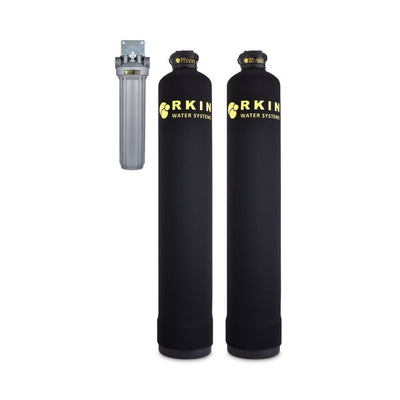
For homeowners who want scale control without a salt brine tank, the OnliSoft Salt-Free Water Conditioner System is the RKIN product to review first. It is built for whole-house scale control at the main water line without salt-based regeneration.
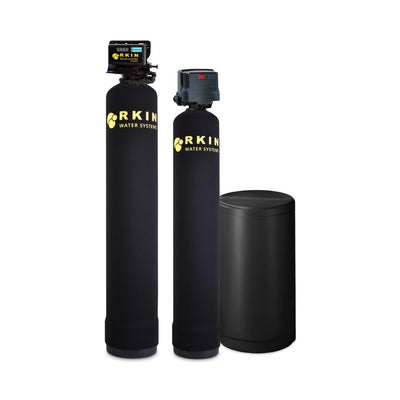
For homes that need true softening, the Water Softener System is the salt-based path. The key is sizing and setup: water hardness, household use, and septic guidance should drive the recommendation.
If your water report includes more than hardness, start with the broader RKIN Whole House Water Treatment collection. A whole-house filter, conditioner, softener, or combination system may be needed depending on whether the problem is scale, chlorine, sediment, well water, PFAS, lead, or a mix.
RKIN's job is not to push the largest system into every home. It is to help match the treatment to the water. For septic households, that means respecting both sides of the problem.
Questions to Ask Before You Buy
Before you choose a water softener with septic, write down these answers. They will make any call with a water-treatment company or septic installer more useful.
- What is my hardness level? Use grains per gallon or mg/L if available.
- Is my septic system conventional, aerobic, mound, or engineered? Do not assume all septic systems behave the same.
- Is there a recent septic inspection? Warning signs should be handled before adding new discharge patterns.
- What water problems am I trying to fix? Scale, taste, odor, staining, sediment, and contaminants require different treatment.
- Who will maintain the system? Salt delivery, filter replacement, and septic pumping all need a realistic plan.
Frequently Asked Questions
Can you use a water softener with a septic system?
Often, yes, but it depends on the septic design, local rules, softener size, regeneration settings, water use, and system condition. A properly sized demand-initiated softener is different from an old timer-based unit that regenerates too often. Ask your septic professional before routing discharge into a sensitive system.
Is a salt-free water conditioner better for septic?
It can be a better fit when the goal is scale control and you want to avoid brine discharge. A salt-free conditioner does not remove hardness minerals the way a salt-based softener does, so it is not identical. It changes how minerals behave, which can help with scale without a salt tank.
Will a water softener remove iron, sulfur, or PFAS?
A softener is mainly for hardness minerals. Some softeners can reduce certain dissolved iron under specific conditions, but iron, sulfur odors, sediment, PFAS, lead, and other concerns usually need their own treatment stage. Test first so the system matches the water report.
What is the best water treatment for hard water on septic?
If scale is the main issue, start by comparing a salt-free conditioner with a properly sized salt-based softener. If the home needs true soft water, a salt-based system may make sense with the right setup. If the main concern is contaminants or well-water staining, add the matching filter.
Do aerobic septic systems change the water softener decision?
They can. Aerobic systems may have different operating needs, maintenance contracts, alarms, and discharge rules than conventional septic systems. If your home has aerobic septic, ask the septic service provider how softener discharge should be handled before choosing a system.
Ready to Solve Hard Water Without Guessing?
If you have hard water and septic, do not start with the product. Start with the water test and the septic setup. Then choose the smallest system that solves the real problem.
Review the RKIN Whole House Water Treatment options or contact RKIN with your water test results so we can point you toward the right conditioner, softener, filter, or combination system.






0 comments