




agua dura y grietas en el inodoro
Can Hard Water Crack a Toilet? What Homeowners Should Know

Hard water usually does not crack toilet porcelain directly. It can cause scale buildup, restricted flow, and stress on valves or seals, while impact, overtightened bolts, installation defects, or freezing are more common causes of a porcelain crack.
Hard water usually does not split porcelain by itself overnight. But it can create conditions that stress toilet parts, hide small cracks, clog rim jets, and make plumbing problems look mysterious. If you are seeing scale and a crack at the same time, treat it as a water-quality clue.
What hard water actually does to a toilet
Hard water carries dissolved calcium and magnesium. Penn State Extension explains that these minerals determine whether water is called soft or hard, and that hardness is commonly expressed as calcium carbonate.
In a toilet, those minerals show up as white, gray, tan, or rusty-looking scale. You may see a ring at the waterline, crust around the rim jets, buildup inside the tank, or flakes that break loose after cleaning.
That scale is not just ugly. It can narrow small openings, interfere with the fill valve, make the flapper seal poorly, and trap stains so the bowl always looks dirty. Over time, the toilet works harder to do the same job.
Porcelain cracks usually come from impact, over-tightened bolts, uneven flooring, manufacturing flaws, temperature shock, or stress around mounting points. Hard water is better understood as a contributing factor. It does not usually create the crack alone, but it can make the toilet less forgiving and make small problems harder to spot.
Can hard water crack a toilet directly?
Usually, no. Mineral scale is not a wedge that expands like a tree root and splits the bowl in normal use. If a toilet tank or bowl has a visible crack, look for mechanical causes first: a dropped tank lid, over-tightened tank bolts, an uneven base, a heavy impact, or movement in the floor.
But hard water can still be part of the pattern. Scale can build around bolts and seals. Deposits can make parts stick. A clogged rim can weaken the flush, leading people to hold the handle down longer or flush repeatedly. Mineral buildup in the fill valve can cause noisy refills, slow refills, or running water that stresses components.
Hardness can also distract from the real leak. A crusty white line near the base might look like harmless mineral residue, but it may also mark a small seep that needs attention. If you see any crack in the bowl, tank, or base, stop using that toilet until it is inspected. Water damage from a slow leak can be worse than the fixture problem.
The fair answer is this: hard water is rarely the only cause of a cracked toilet, but it is often part of the home pattern that makes toilet problems more frequent.
Warning signs around the toilet
Look beyond the crack. If hard water is involved, you will usually see more than one symptom.
- White or chalky rings: mineral scale at the waterline, base, or tank openings.
- Slow flushing: rim jets or trapway may be narrowed by buildup.
- Frequent scrubbing: stains come back quickly even after cleaning.
- Running toilet: buildup can affect the flapper, chain, fill valve, or overflow tube.
- Low refill flow: the fill valve or supply line may have deposits.
- Scale elsewhere: shower glass, faucets, dishwasher, water heater, and kettle show the same mineral pattern.
If the toilet is the only place with buildup, the issue may be local: a slow leak, cleaning residue, old parts, or a fixture-specific problem. If the whole house shows the same signs, hardness is likely part of the water profile.
The EPA private wells page lists scaly residues and poor soap lather as signs that hardness should be tested. That advice is useful for city-water homes too: symptoms point you toward a test, not a guess.
Why summer and low-use bathrooms make it worse
Toilets in guest baths, pool baths, workshops, and vacation homes often show harder scale because water sits longer. As water evaporates from the bowl, minerals remain behind. Repeated cycles leave rings that can become difficult to remove.
Summer can make that more obvious. More guests, more showers, more irrigation, and more water use can expose the same hardness issue across the house. In areas where wells, municipal blends, or seasonal demand change the water profile, homeowners may notice scale building faster during hot months.
A rarely used toilet can also hide a leak. If water slowly seeps from the tank into the bowl, fresh hard water keeps entering the tank. That steady refill adds more mineral load and can create a stubborn ring that looks like a cleaning problem.
If a crack appears near old mineral buildup, do not assume the minerals cracked the porcelain. Treat the scale as evidence that water has been sitting, leaking, evaporating, or depositing minerals for a while.
What to check before replacing the toilet
If the toilet is cracked, replacement may be the safest option. But before you stop there, check whether the new toilet will inherit the same hard-water conditions.
Start with a simple hardness test strip or a lab report. If you are on a private well, include hardness in a broader annual test along with pH, total dissolved solids, iron, manganese, bacteria indicators, nitrate, and any local concerns. If you are on city water, your utility report may provide a hardness range, but an at-home test tells you what is reaching your fixtures.
Then inspect the toilet and surrounding plumbing:
- Check whether tank bolts are over-tightened or corroded.
- Look for wobble at the base.
- Inspect the fill valve, flapper, and supply line for mineral buildup.
- Clean rim jets gently and see whether flush strength changes.
- Look for matching scale on faucets, shower glass, and appliances.
If scale is everywhere, the toilet is not the root problem. It is one visible symptom.
When whole-house treatment helps
Whole-house treatment makes sense when hardness is affecting more than one fixture. If you are only fighting one toilet ring, start local. If you also have shower spots, crusty faucets, poor lather, dishwasher film, laundry stiffness, or water heater scale, the water itself deserves attention.
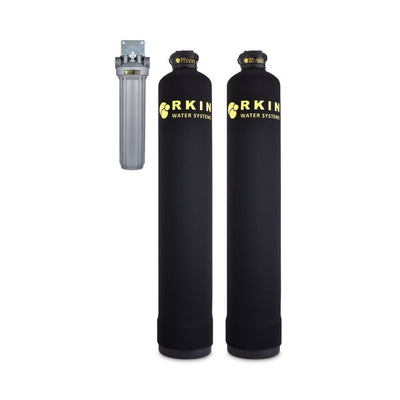
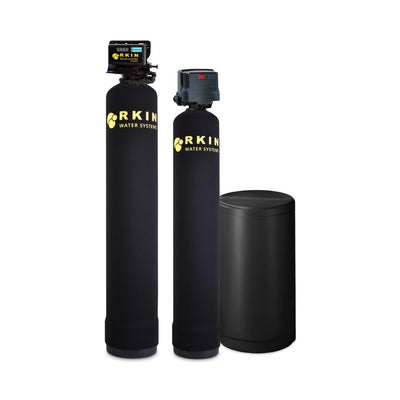
The RKIN OnliSoft Salt-Free Water Conditioner is designed for homeowners who want scale control without adding salt to the water. It conditions hardness minerals so they are less likely to stick to surfaces as scale. For homes with broader water-quality concerns, RKIN also offers whole-house water treatment systems that can be matched to the water report.
If the home is on a well and also has iron, sulfur, or manganese concerns, do not pick a conditioner alone. Test first. Some homes need a salt-free conditioner, some need targeted well treatment, and some need both in the right order.
In my house, I would not replace a cracked toilet and call the job done if every faucet in the house had scale. I would fix the fixture, then deal with the water pattern that caused the buildup.
What not to do
Do not use harsh tools that scratch porcelain. Scratches create places for minerals and stains to cling. Do not tighten bolts until the tank or bowl flexes. Over-tightening can create the kind of stress crack people later blame on hard water.
Do not pour random chemicals into the tank. Some cleaners can damage rubber parts, seals, and valves. If scale is heavy, use a cleaner made for mineral deposits and follow the label. If the toilet has a crack, avoid DIY chemical fixes and replace or repair the fixture as recommended by a plumber.
Most important, do not treat a toilet crack as isolated if the entire home shows mineral buildup. The toilet is giving you a visible signal.
Frequently Asked Questions
Can hard water crack a toilet bowl?
Hard water usually does not crack porcelain by itself. Cracks more often come from impact, over-tightened bolts, uneven flooring, movement, or existing defects. Hard water can contribute to scale buildup that stresses parts and hides early warning signs.
Why is there white crust around my toilet?
White crust is usually mineral scale from hard water or a slow leak that leaves minerals behind as water evaporates. If the buildup keeps returning quickly, test hardness and inspect the toilet for a small leak.
Can hard water clog toilet rim jets?
Yes. Mineral deposits can narrow small rim-jet openings and weaken the flush. Cleaning may help, but if deposits return throughout the house, the water hardness should be addressed at the source.
Should I replace a cracked toilet or treat the water first?
A cracked toilet should be inspected or replaced first because leaks can damage floors. After the fixture is safe, test the water and decide whether hardness treatment is needed to protect the replacement and other fixtures.
What RKIN system helps with hard water scale?
The RKIN OnliSoft Salt-Free Water Conditioner is designed for scale control in homes with hardness issues. If your report shows other concerns too, RKIN can help match a whole-house system to the water conditions.
Ready to deal with hard water at the source?
A cracked toilet needs a fixture fix, but repeating scale means the water deserves attention too. Test hardness, check the rest of the house, and choose treatment based on the pattern.
For whole-home scale control, review the RKIN OnliSoft Salt-Free Water Conditioner, or start with the RKIN whole-house water treatment collection if your water report shows more than hardness.


0 comentarios