




filtro para agua de la ciudad
Filtro para agua de la ciudad: ¿primero ósmosis inversa bajo el fregadero o para toda la casa?

Respuesta corta: tener agua de la ciudad no significa automáticamente que primero necesite un filtro para toda la casa. Si su principal preocupación es el agua para beber y cocinar, la ósmosis inversa bajo el fregadero o de encimera puede ser el primer paso más sensato. Si todos los grifos presentan síntomas de sabor, olor, sedimentos o sarro, vale la pena considerar un tratamiento para toda la casa.
Esa distinción importa porque muchos propietarios compran de más y en el orden equivocado. Una hoja informativa de la EPA sobre filtros de agua, de 2024, indica a los consumidores que elijan un filtro según las sustancias que desean reducir. No dice que todas las viviendas con agua de la ciudad deban empezar por la línea principal.
Por qué el agua de la ciudad crea una trampa al elegir un filtro
Parecería que el agua de la ciudad debería ser algo sencillo. La empresa de servicios públicos la trata, la analiza y envía un informe anual. Aun así, los propietarios siguen notando sabor a cloro, vasos opacos, sarro por agua dura, sedimentos después de roturas en la red principal o noticias sobre normas de PFAS y tuberías de servicio de plomo. El resultado es una pregunta común: “¿Debo filtrar toda la casa o solo el agua para beber?”
La respuesta depende de dónde aparece el problema. Si el problema está en el vaso, el café, el té, la olla y la botella de agua, primero es un problema de agua potable. Si el problema aparece en las duchas, la ropa lavada, los calentadores de agua, la grifería, los inodoros, las mangueras y todos los lavabos, puede ser un problema de toda la casa.
Son trabajos diferentes. Tratar cada galón que entra en la casa puede ser útil, pero no es automáticamente la forma más precisa de mejorar el agua que bebe. Tratar solo un grifo puede ser inteligente, pero no solucionará todos los grifos.
El error es elegir el equipo antes de identificar el síntoma.
Empiece con el informe del agua de la ciudad
Para el agua de la ciudad, el primer documento es el Informe de Confianza del Consumidor (Consumer Confidence Report). La EPA describe los Informes de Confianza del Consumidor como resúmenes anuales que incluyen los contaminantes detectados, las fuentes de agua y la información de cumplimiento de los sistemas comunitarios de agua. Muchos sistemas los publican a principios del verano, por lo que agosto es un buen momento para leer el informe actual en lugar de depender de una captura de pantalla antigua.
Busque el tipo de desinfectante, notas sobre plomo y cobre, resultados de PFAS, nitrato, arsénico, subproductos de la desinfección, notas sobre dureza o minerales y cualquier mención de infracciones. También verifique si su proveedor de agua usa cloro o cloramina. Ambos pueden afectar el sabor, pero no se filtran de la misma manera.
El informe no le dirá exactamente qué producto comprar. Le indica qué preguntas hacer. Si el informe apunta a una preocupación sobre el agua potable, empiece con la filtración en el punto de uso. Si el informe coincide con síntomas en toda la casa, la línea principal puede ser el mejor lugar para actuar.
Si su agua cambió de repente esta semana, llame también a la empresa de servicios públicos. El lavado de hidrantes, una rotura en la red principal, cambios en la fuente de agua y obras cercanas pueden afectar el sabor, el color o los sedimentos antes de que el próximo informe anual lo registre.
Cuándo basta con la ósmosis inversa bajo el fregadero
La ósmosis inversa bajo el fregadero suele ser suficiente cuando el objetivo es el agua para beber y cocinar. Eso incluye el agua para el café, el té, las sopas, las mascotas, las cubetas de hielo, las botellas reutilizables y los vasos de todos los días en la cocina.
La ósmosis inversa es una opción sólida en el punto de uso porque trata un volumen de agua más pequeño con una tecnología diseñada para la reducción de contaminantes en el agua potable. La Water Quality Association describe la ósmosis inversa como el uso de presión para hacer pasar el agua a través de una membrana semipermeable. Por eso se suele hablar de la ósmosis inversa para los sólidos disueltos y para preocupaciones específicas sobre el agua potable.
La ósmosis inversa bajo el fregadero puede ser suficiente cuando:
- La preocupación es principalmente el agua potable: La ducha, la ropa y los inodoros están bien, pero el problema está en el vaso de la cocina.
- Quiere un grifo dedicado: Es propietario de la vivienda y tiene espacio en el gabinete para una instalación bajo el fregadero.
- El informe del agua apunta a un tratamiento en el punto de uso: Quiere un filtro de cocina adecuado a preocupaciones específicas sobre el agua potable.
- Quiere menos equipos en la línea principal: No necesita tratar el agua que usa para bañarse, regar o los inodoros.
La limitación es simple: la ósmosis inversa bajo el fregadero no trata toda la casa. Si todos los grifos presentan el mismo síntoma, el grifo de la cocina no es el único lugar donde buscar.
Cuándo la ósmosis inversa de encimera es el mejor primer paso
La ósmosis inversa de encimera pertenece a la misma categoría de agua potable, pero evita el paso de la instalación. Puede ser el mejor primer paso para inquilinos, apartamentos, condominios, oficinas, encimeras de piedra, gabinetes de fregadero estrechos y propietarios que no quieren perforaciones ni plomería bajo el fregadero.
Esto importa porque muchos compradores con agua de la ciudad piden cotizaciones para toda la casa antes de saber si el problema es solo el agua potable. Si la preocupación es el vaso y la principal barrera es la instalación, un sistema de ósmosis inversa sin plomería puede resolver el problema del agua potable sin convertirlo en un proyecto para toda la casa.
La ósmosis inversa de encimera no es la respuesta correcta para todos los hogares. Ocupa espacio en la encimera. No solucionará el sarro de la ducha ni los sedimentos en todos los grifos. Es posible que no abastezca al refrigerador automáticamente. Pero si el objetivo real es tener mejor agua para beber y cocinar, empezar en la encimera puede ser práctico y de bajo compromiso.
Eso es especialmente cierto cuando quiere comprobar si la ósmosis inversa en el punto de uso cambia la rutina diaria antes de emprender un proyecto en la línea principal.
Cuándo la filtración para toda la casa va primero
La filtración para toda la casa va primero cuando los síntomas son de toda la casa. Si todos los grifos huelen a cloro, aparecen sedimentos en varios grifos, el sarro del agua dura está dañando los electrodomésticos o el agua afecta las duchas y la ropa, un filtro solo para la cocina puede resultar demasiado limitado.
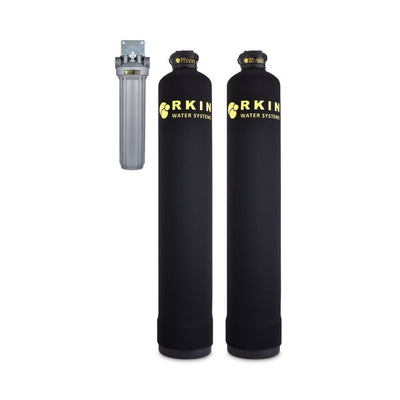
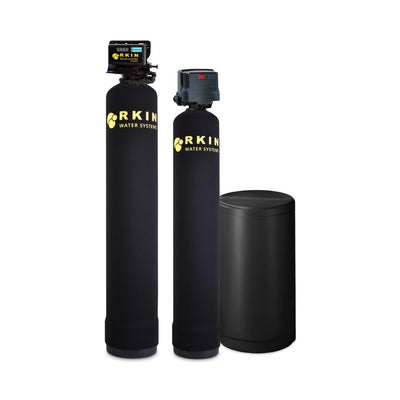
Se puede considerar un sistema de carbón para toda la casa cuando el sabor y el olor afectan a toda la vivienda. Un prefiltro de sedimentos puede ayudar cuando aparecen partículas en muchos puntos. Un ablandador o un acondicionador sin sal puede ser adecuado para problemas de dureza y sarro. Un sistema para agua de pozo es una categoría diferente, para pozos privados y problemas de hierro, azufre o sedimentos.
El agua de la ciudad puede necesitar un tratamiento para toda la casa, pero el motivo debe estar claro. No compre un sistema para la línea principal solo porque “el agua de la ciudad es mala”. Cómprelo porque el informe, los síntomas y los grifos apuntan a un problema en la línea principal.
La página de regulaciones de agua potable de la EPA es un recordatorio útil de que el agua pública regulada se gestiona contaminante por contaminante. La decisión para su hogar debe ser igual de específica.
Un árbol de decisiones sencillo para no comprar de más
Siga este orden antes de aprobar una cotización.
- Problema solo en el refrigerador: Reemplace y purgue el cartucho del refrigerador, limpie el depósito de hielo y confirme el recorrido de la línea.
- Problema en el vaso de la cocina: Considere la ósmosis inversa de encimera o bajo el fregadero para el agua de beber y cocinar.
- Problema en todos los grifos de agua fría: Compare el informe de la ciudad con las opciones para toda la casa para sabor, olor, sedimentos o dureza.
- Problema solo con el agua caliente: Revise el calentador de agua y la plomería antes de culpar al suministro de la ciudad.
- Preocupación por un contaminante específico: Adapte la tecnología del filtro y los datos de pruebas a esa sustancia en lugar de comprar por el nombre de la categoría.
Esa última línea es la clave. “Para toda la casa” y “bajo el fregadero” son ubicaciones. No son afirmaciones sobre contaminantes. El método de tratamiento y los datos de pruebas aún tienen que corresponder al problema del agua.
Cómo encaja RKIN en la elección para el agua de la ciudad
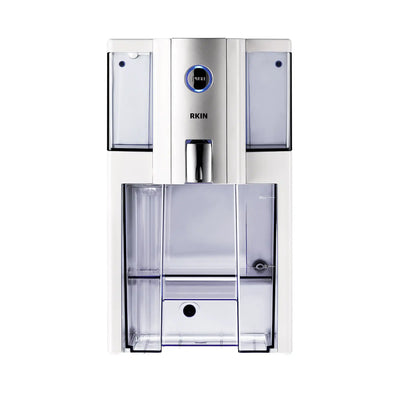
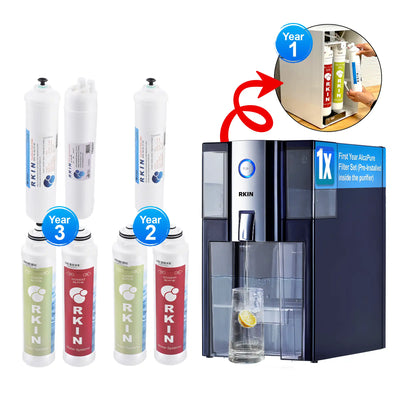
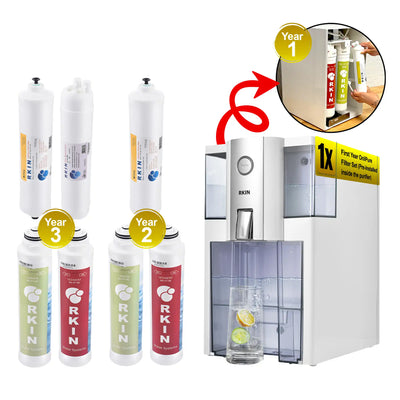
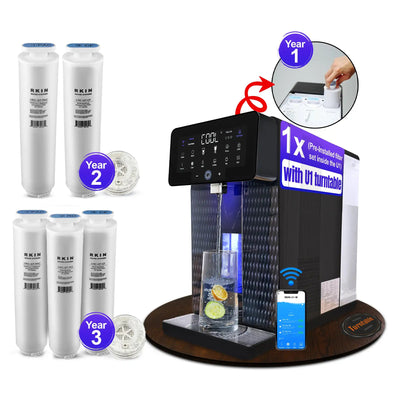
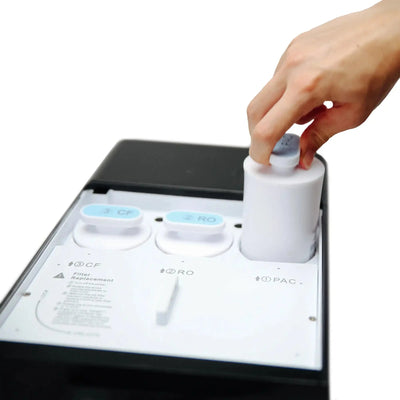
Si su preocupación con el agua de la ciudad es el agua para beber y cocinar sin trabajos de plomería, el filtro de agua de ósmosis inversa de encimera RKIN Zero Installation Purifier es la opción sin instalación. Se llena por el frente, a la altura de la encimera, y evita perforaciones, cambios bajo el fregadero o la aprobación del arrendador.
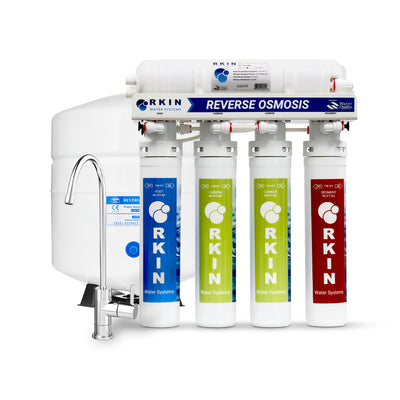
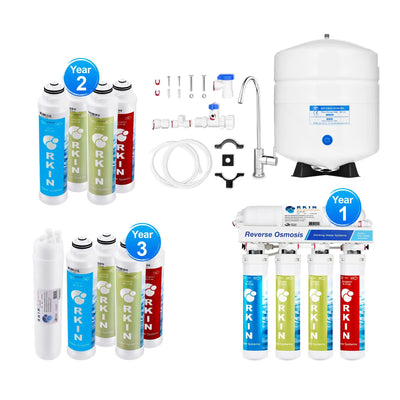
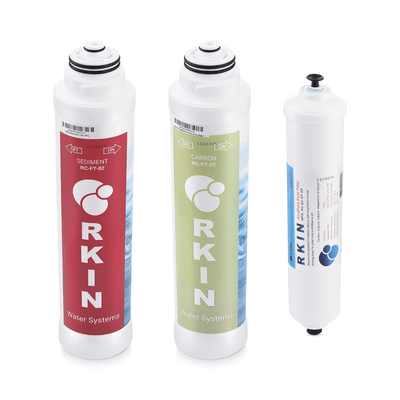
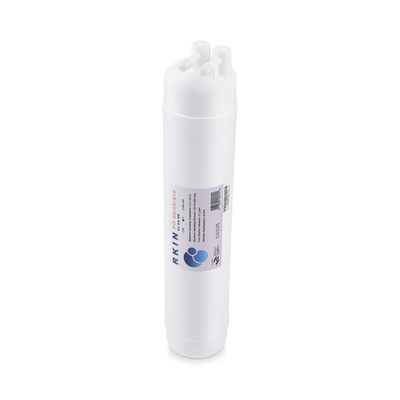
Si es propietario de la vivienda y quiere un grifo dedicado con un sistema bajo el fregadero, el sistema de ósmosis inversa bajo el fregadero RKIN Flash está diseñado para esa instalación. Es ideal para propietarios que quieren agua potable filtrada con el equipo oculto bajo el fregadero.
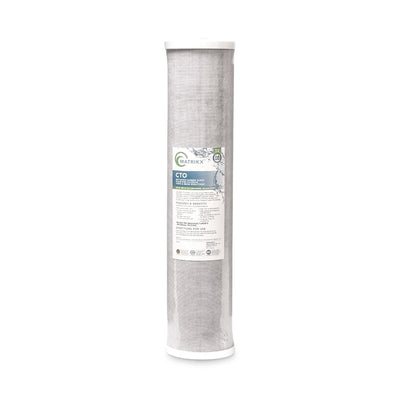
Si el problema afecta a varios grifos, empiece mejor con la colección de tratamiento de agua para toda la casa de RKIN. Esa es la mejor opción cuando la casa, y no solo el vaso de la cocina, le indica que algo anda mal.
Empiece con el sistema más pequeño que resuelva el problema identificado; puede ser un tratamiento bajo el fregadero o un equipo para toda la casa.
Preguntas sobre el agua de la ciudad que debe hacerse antes de comprar
Antes de elegir un equipo, responda estas preguntas por escrito.
- ¿Qué muestra el Informe de Confianza del Consumidor actual? Use el informe más reciente, no un rumor del vecindario.
- ¿Dónde noto el problema? ¿En un grifo, en la cocina, en todos los grifos de agua fría, solo en el agua caliente o en toda la casa?
- ¿La preocupación es el sabor, los sedimentos, la dureza o una sustancia específica? Cada una apunta a un tipo de filtro diferente.
- ¿Soy propietario de la vivienda? Los inquilinos y los propietarios de condominios pueden necesitar opciones sin plomería.
- ¿Puedo darle mantenimiento al sistema? Un filtro de difícil acceso es un filtro al que la gente olvida darle servicio.
- ¿Intento mejorar el agua potable o cada galón? Sea honesto antes de pagar por un proyecto en la línea principal.
Si no puede responderlas, vaya más despacio. Un filtro debe elegirse con evidencia, no con ansiedad.
Preguntas frecuentes
¿Necesito un filtro para toda la casa si tengo agua de la ciudad?
No siempre. Si su preocupación es principalmente el agua para beber y cocinar, la ósmosis inversa en el punto de uso puede ser suficiente. La filtración para toda la casa tiene más sentido cuando los síntomas de sabor, olor, sedimentos o sarro aparecen en varios grifos de la casa.
¿La ósmosis inversa bajo el fregadero es buena para el agua de la ciudad?
Sí, la ósmosis inversa bajo el fregadero puede ser una muy buena opción para las necesidades de agua para beber y cocinar con agua de la ciudad cuando es propietario de la vivienda y quiere un grifo dedicado. No trata las duchas, la ropa ni todos los grifos, así que úsela para un problema del agua de la cocina.
¿Qué filtro deben usar los inquilinos para el agua de la ciudad?
Los inquilinos suelen necesitar una opción sin plomería. Un sistema de ósmosis inversa de encimera puede tratar el agua para beber y cocinar sin perforaciones, trabajos en la línea principal ni la aprobación del arrendador. Los sistemas para toda la casa suelen requerir ser propietario y tener acceso a la línea principal de agua.
¿Debo analizar el agua de la ciudad antes de comprar un filtro?
Empiece con el Informe de Confianza del Consumidor y luego haga un análisis si tiene una preocupación específica dentro de la casa. Si el problema es el sabor, el olor, los sedimentos, el riesgo de plomo, los PFAS, la dureza o una preocupación con la plomería privada, el análisis debe corresponder a esa pregunta.
¿Un filtro para toda la casa reemplaza la ósmosis inversa?
No automáticamente. Los sistemas para toda la casa tratan el agua que entra en la vivienda, pero la ósmosis inversa es una tecnología de agua potable en el punto de uso. Muchos hogares eligen uno u otro según los síntomas. Algunos usan ambos cuando la casa y el vaso de agua potable tienen necesidades diferentes.
¿Listo para elegir el primer filtro correcto?
Si usa agua de la ciudad, empiece con el informe, el grifo donde aparece el problema y el agua que realmente bebe. No deje que una preocupación vaga se convierta en el proyecto equivocado.
Elija el filtro de agua de ósmosis inversa de encimera RKIN Zero Installation Purifier para ósmosis inversa sin plomería con agua de la ciudad, el sistema de ósmosis inversa bajo el fregadero RKIN Flash para un grifo bajo el fregadero, o explore el tratamiento de agua para toda la casa de RKIN si el problema aparece en todos los grifos.




0 comentarios