


NSF water filter lookup
Consulta de certificaciones de filtros de agua: verifique primero las afirmaciones

Lo que afirma la página del producto no es la prueba. Si un filtro dice que reduce PFAS, plomo, fluoruro, cloro o TDS, la siguiente pregunta es sencilla: ¿puede relacionar esa afirmación con un listado real o con un informe de pruebas?
Esa pregunta es cada vez más común en 2026 porque los compradores ven afirmaciones más amplias sobre contaminantes, titulares más estrictos sobre los PFAS y más sistemas parecidos en internet. La EPA finalizó en 2024 normas nacionales de agua potable para varios compuestos PFAS, y muchos propietarios ahora intentan relacionar el informe local de su agua con un filtro que realmente se ajuste al problema. Empiece por la afirmación. Luego verifíquela antes de comprar.
Por qué ahora importa consultar la certificación de un filtro de agua
Consultar la certificación de un filtro de agua es el paso que la mayoría de los compradores omite. Leen una afirmación, ven un logotipo y suponen que todo el sistema está certificado para cada contaminante mencionado en el anuncio. La certificación no siempre funciona así.
Una base de datos de certificación es más limitada que una página de marketing. Por lo general identifica una marca, un número de modelo, una norma y una afirmación de reducción de contaminantes. Si el número de modelo del listado no coincide con la unidad que se vende, todavía no tiene una respuesta clara. Si el listado cubre el sabor y el olor a cloro según una norma, pero la página del producto también habla de PFAS, plomo, arsénico, fluoruro o microplásticos, esas afirmaciones necesitan su propio respaldo.
El momento importa porque las preocupaciones sobre el agua avanzan rápido. La norma de la EPA de 2024 sobre los PFAS aumentó la atención de los consumidores hacia compuestos que hace unos años apenas formaban parte de las conversaciones caseras sobre filtros. Al mismo tiempo, muchas páginas sobre el agua de la ciudad, publicaciones en foros y anuncios de compras hacen que la búsqueda parezca más amplia de lo necesario. Lo práctico no es entrar en pánico. Es ir más despacio y revisar tres cosas:
- ¿Qué dice su informe de agua o el resultado de su análisis?
- ¿Qué contaminante exacto afirma reducir el filtro?
- ¿Qué listado de terceros o qué datos de laboratorio respaldan esa afirmación exacta?
Para el agua de la red pública, su informe anual de confianza del consumidor (Consumer Confidence Report, CCR) es un punto de partida útil. La EPA explica cómo funcionan esos informes en su página sobre los Informes de confianza del consumidor y, para conocer el contexto de los contaminantes regulados, también mantiene una lista de Reglamentos Nacionales Primarios de Agua Potable. Esas páginas no elegirán un filtro por usted, pero le ayudan a identificar el problema antes de comprar.
Certificado, probado y afirmación de marketing no son lo mismo
Las palabras suenan parecidas, pero cumplen funciones distintas.
Un sistema certificado ha sido evaluado por un organismo de certificación acreditado según normas y afirmaciones específicas. Un sistema probado por terceros puede contar con pruebas de laboratorio que respalden ciertas reducciones, aunque el sistema completo no figure en una base de datos pública de certificación. Una afirmación de marketing es la promesa en lenguaje sencillo que aparece en la página de un producto o en un anuncio.
Ninguno de esos términos debe tratarse como intercambiable. Un producto puede funcionar muy bien para el sabor y el olor a cloro y aun así no ser la respuesta correcta para los PFAS. Un sistema de ósmosis inversa puede estar diseñado para una amplia reducción de sólidos disueltos, pero aun así conviene leer la documentación específica del modelo. Un filtro de carbón puede ser excelente para el sabor y el olor sin ser la respuesta completa para los contaminantes disueltos.
El proceso de consulta evita que compre basándose en una nube de palabras. Si una página dice "probado para reducir el plomo", pregunte dónde está documentado el resultado. Si una página dice "norma NSF", pregunte si el modelo exacto está certificado o si el filtro solo se probó según un protocolo. Si una página muestra una insignia, pregunte qué norma y qué afirmación representa esa insignia.
La base de datos pública de unidades de tratamiento de agua potable de NSF es un lugar para consultar productos certificados de agua potable. La búsqueda de productos de la WQA es otro lugar que los compradores pueden usar para buscar productos certificados. No necesita convertirse en ingeniero del agua. Solo necesita la disciplina suficiente para cotejar el modelo y la afirmación exactos.
Cómo consultar la certificación de un filtro de agua en cinco minutos
Use esto como una revisión rápida antes de comprar cualquier filtro de agua potable.
- Anote el nombre y el número de modelo exactos que aparecen en la página del vendedor. No se base solo en el nombre de la familia de productos.
- Abra la base de datos de certificación que menciona el vendedor. Si la página nombra a NSF, WQA, IAPMO u otro organismo, empiece por ahí.
- Busque por fabricante y número de modelo. Si solo busca por marca, puede encontrar un sistema diferente.
- Abra el listado y revise la norma. Entre las normas comunes para el agua potable están la NSF/ANSI 42 para efectos estéticos como el sabor y el olor a cloro, la NSF/ANSI 53 para ciertas reducciones de contaminantes relacionados con la salud y la NSF/ANSI 58 para sistemas de ósmosis inversa.
- Compare la lista de contaminantes. El listado debe nombrar el contaminante o la afirmación que le interesa, no solo una categoría amplia.
- Revise la configuración del filtro. Si el listado depende de un cartucho, una membrana o una versión de modelo específicos, asegúrese de que esa sea la versión que se vende.
- Guarde el listado o la hoja de laboratorio antes de comprar. Si una página cambia más adelante, seguirá teniendo la base de su decisión.
Si no puede cotejar la afirmación, eso no significa automáticamente que el producto sea malo. Significa que necesita más evidencia antes de dar la afirmación por comprobada. Pida al vendedor la hoja de datos de rendimiento actual, el informe de pruebas de terceros o el listado de certificación. Un buen vendedor debería poder indicarle dónde está el respaldo sin obligarlo a perseguir declaraciones vagas.
Lo que no funciona
Una jarra con filtro puede mejorar el sabor, pero muchas no están diseñadas para una reducción amplia de contaminantes. Hervir el agua puede ser apropiado ante ciertos avisos de hervir el agua, pero no elimina contaminantes disueltos como los PFAS, el plomo o muchos minerales. El agua embotellada evita el agua del grifo por el momento, pero puede convertirse en un hábito recurrente sin decirle lo que realmente necesita el agua de su casa.
El otro atajo común es comprar el filtro con la lista de contaminantes más larga. Eso puede salir mal. Una lista larga puede incluir afirmaciones que se aplican solo a otro cartucho, a una condición de laboratorio específica o a una versión anterior. El mejor criterio no es la longitud de la lista. Es la coincidencia entre la afirmación y la prueba.
También es fácil abusar del medidor de TDS. Los TDS pueden mostrar si la ósmosis inversa está reduciendo los sólidos disueltos, pero no identifican plomo, PFAS, compuestos orgánicos volátiles (COV) ni bacterias. Un TDS bajo no es lo mismo que un informe completo del agua. Use los TDS como una señal, no como el veredicto final.
La solución: adapte el filtro al contaminante
Empiece por el agua de origen. Los clientes con agua de la ciudad deben leer primero el CCR y luego buscar avisos locales o actualizaciones de la empresa de servicios. Los clientes con agua de pozo deben hacer análisis, porque los pozos privados no están cubiertos de la misma manera que los sistemas públicos de agua. La guía de la EPA sobre pozos privados explica que los propietarios de pozos son responsables de analizar y mantener sus propios sistemas de agua.
Luego elija la tecnología de filtración que se ajuste a la preocupación:
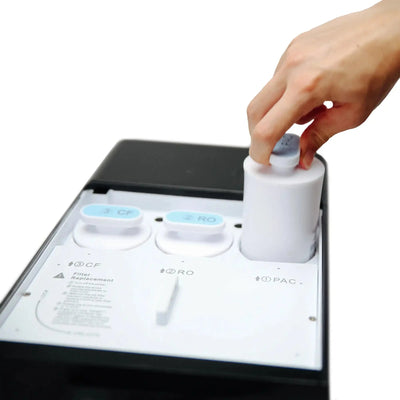
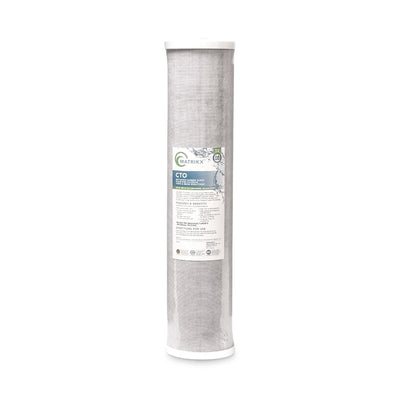
- El carbón activado se usa comúnmente para el sabor y el olor a cloro y para ciertas sustancias químicas orgánicas, según el cartucho y la certificación.
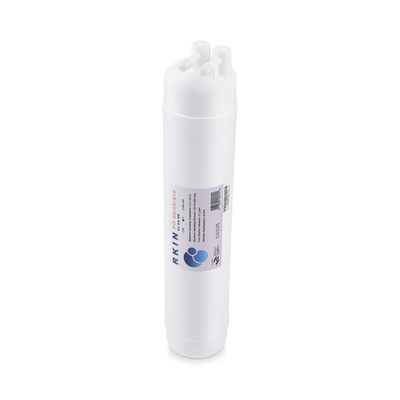
- La ósmosis inversa usa una membrana semipermeable y suele escogerse cuando importa una amplia reducción de sólidos disueltos.
- La filtración de sedimentos ayuda con las partículas, pero por sí sola no es una solución para contaminantes disueltos.
- La filtración para toda la casa trata el agua antes de que llegue a la grifería, mientras que un sistema de agua potable se centra en el agua que usted bebe y con la que cocina.
Para muchos hogares, la respuesta correcta no es un único sistema gigante. Es un plan por capas: resolver el sabor y el olor donde sea necesario, tratar el agua potable de forma más rigurosa en el fregadero o la encimera, y reservar los equipos para toda la casa para problemas de toda la casa, como sedimentos, cloro, dureza o problemas del agua de pozo.
Dónde encaja RKIN
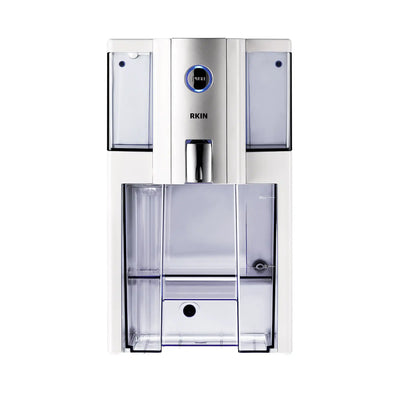
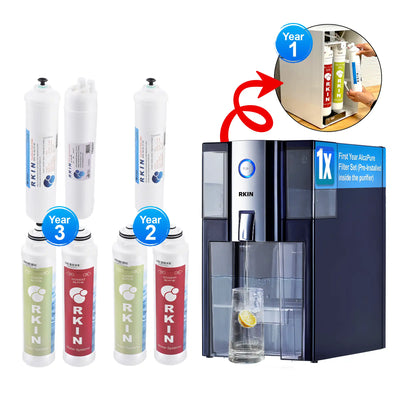
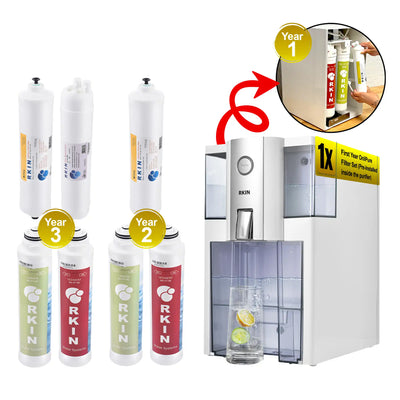
Si desea ósmosis inversa sin cambios en la plomería, el filtro de agua de ósmosis inversa de encimera Zero Installation Purifier está diseñado para propietarios e inquilinos. Usa un tanque de llenado sobre la encimera y no se conecta al grifo ni requiere una instalación bajo el fregadero.
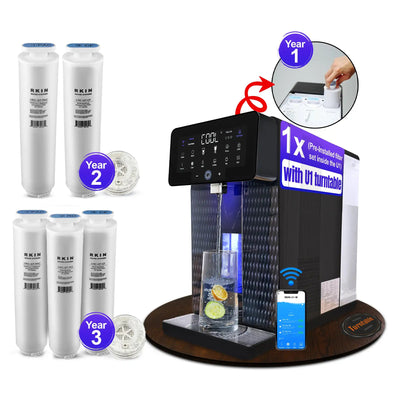
Si desea un sistema de encimera compacto con tanque de llenado, el sistema de filtro de agua 4 en 1 que ahorra espacio RKIN U1-W combina tecnologías de sedimentos, carbón, ósmosis inversa, UV y posfiltración. Es una opción de encimera, no un sistema bajo el fregadero.
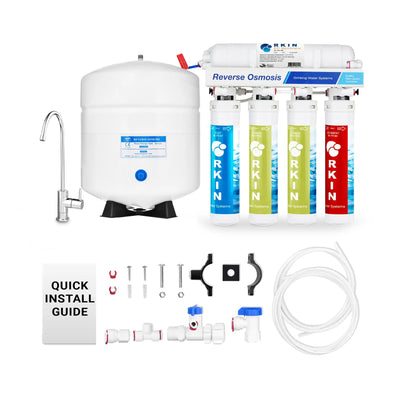
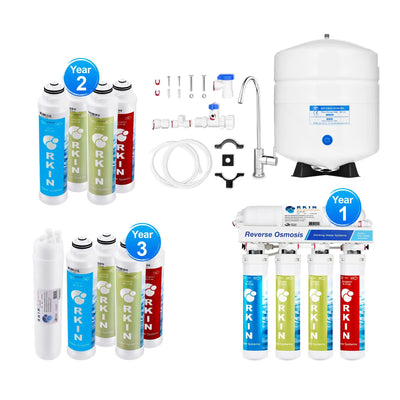
Si prefiere una instalación bajo el fregadero y no tiene inconveniente en conectarlo a la línea de agua fría, el sistema de ósmosis inversa bajo el fregadero RKIN Flash es la mejor opción. Lo principal es no comprar por el nombre de la categoría. Compre según el agua de origen, el espacio, la preferencia de instalación y el rendimiento documentado.
Preguntas frecuentes
¿Cómo verifico la certificación de un filtro de agua?
Identifique la marca y el número de modelo exactos y luego busque en la base de datos pública del organismo de certificación. Compare el listado con el modelo, la norma y la afirmación sobre contaminantes. Si el vendedor dice que un filtro reduce PFAS, plomo, fluoruro u otro contaminante, el listado o el informe de pruebas debe respaldar esa afirmación específica.
¿Probado por terceros es lo mismo que certificado por NSF?
No. Las pruebas de terceros pueden respaldar una afirmación, pero la certificación significa que un organismo acreditado ha incluido el producto en su listado según una norma y los requisitos de un programa. Ambas pueden ser útiles, pero las palabras no deben tratarse como si fueran lo mismo. Revise con atención la página del producto y los documentos de respaldo.
¿Qué certificación debo buscar en un sistema de ósmosis inversa?
Para los sistemas de ósmosis inversa, la NSF/ANSI 58 es la norma habitual que buscan los compradores. Otras normas pueden aplicarse a las etapas de carbón o a afirmaciones específicas sobre contaminantes. La norma por sí sola no basta; revise el modelo exacto y las afirmaciones de reducción.
¿Puede un filtro afirmar que reduce un contaminante si está certificado para otro?
La página de un producto puede tratar varias afirmaciones, pero cada una necesita respaldo. Un listado para el sabor y el olor a cloro no demuestra automáticamente la reducción de PFAS, plomo, arsénico, fluoruro u otros contaminantes. Pida la hoja de datos de rendimiento cuando la afirmación sea importante.
¿Debo analizar mi agua antes de comprar un filtro?
Si tiene un pozo privado, sí. Si tiene agua de la ciudad, empiece por su CCR y haga un análisis si tiene una preocupación específica, plomería antigua o un problema de sabor, olor o manchas sin explicación. Cuanto más claro sea el problema, más fácil será elegir el filtro adecuado.
¿Listo para elegir con base en pruebas?
La afirmación de un filtro debería ser fácil de rastrear. Empiece por su informe de agua, relacione la preocupación con la tecnología y verifique el modelo antes de comprar.
Para una opción de ósmosis inversa de encimera sin plomería, compare el filtro de agua de ósmosis inversa de encimera Zero Installation Purifier con el sistema de filtro de agua 4 en 1 que ahorra espacio RKIN U1-W, y luego elija el sistema que se adapte a su cocina y a su preocupación sobre el agua de origen.





0 comentarios