

Best Water Filter for Earth Month 2026: Eco-Friendly Choices That Actually Work
Share
April is Earth Month — and for millions of homeowners, it marks the moment they start asking harder questions about what they're consuming and what they're throwing away. Water filtration is one of the most direct ways to cut plastic waste at home. A single household can generate hundreds of plastic bottles per year just from drinking water. Switching to a quality water filter changes that math immediately.
This guide covers the best eco-friendly water filter options available in 2026, what makes each one stand out, and which RKIN systems are worth serious consideration if you're making a change this Earth Month.
Why Earth Month Is the Right Time to Think About Water Filtration
Most people think of plastic straw bans and recycling programs when they hear Earth Month. But single-use plastic water bottles are one of the top contributors to plastic pollution globally. Americans consume roughly 50 billion plastic water bottles per year — and only about 30% get recycled. The rest ends up in landfills, waterways, and oceans.
A quality home water filter system eliminates the need for bottled water entirely. Over a 10-year period, one household with a good filtration system can prevent thousands of plastic bottles from entering the waste stream. That's a real, measurable environmental impact — and it happens quietly, every day, without any ongoing effort on your part.
Beyond plastic reduction, the environmental calculus around water filtration also includes energy (less trucking of bottled water), water waste (some filter types waste water during purification), and chemical discharge (traditional water softeners flush salt brine into municipal systems and natural waterways). Choosing the right type of filter matters for the environment — not just your tap water quality.
What to Look for in an Eco-Friendly Water Filter
Not all water filters are created equal when it comes to environmental impact. Here's what separates genuinely eco-conscious options from systems that create their own problems:
- Low water waste ratio: Some reverse osmosis systems historically wasted 3–4 gallons of water for every 1 gallon filtered. Modern systems have dramatically improved this ratio. Look for systems with permeate pumps or closed-loop designs.
- No chemical discharge: Traditional salt-based water softeners regenerate by flushing concentrated brine into the drain. This brine ends up in municipal wastewater systems and, in some cases, natural waterways. Salt-free alternatives eliminate this discharge entirely.
- Long filter life: Systems with filters that last 6–12 months or longer generate less waste than systems requiring monthly cartridge changes.
- No electricity required (where possible): Some filtration systems run purely on water pressure, requiring zero electricity. Others require pumps or UV lights — those add to your energy footprint.
- Durable construction: Systems built to last 10–20 years beat cheaper alternatives that end up in a landfill after a few seasons.
The RKIN Zero Installation Purifier: Countertop RO Without the Plumber
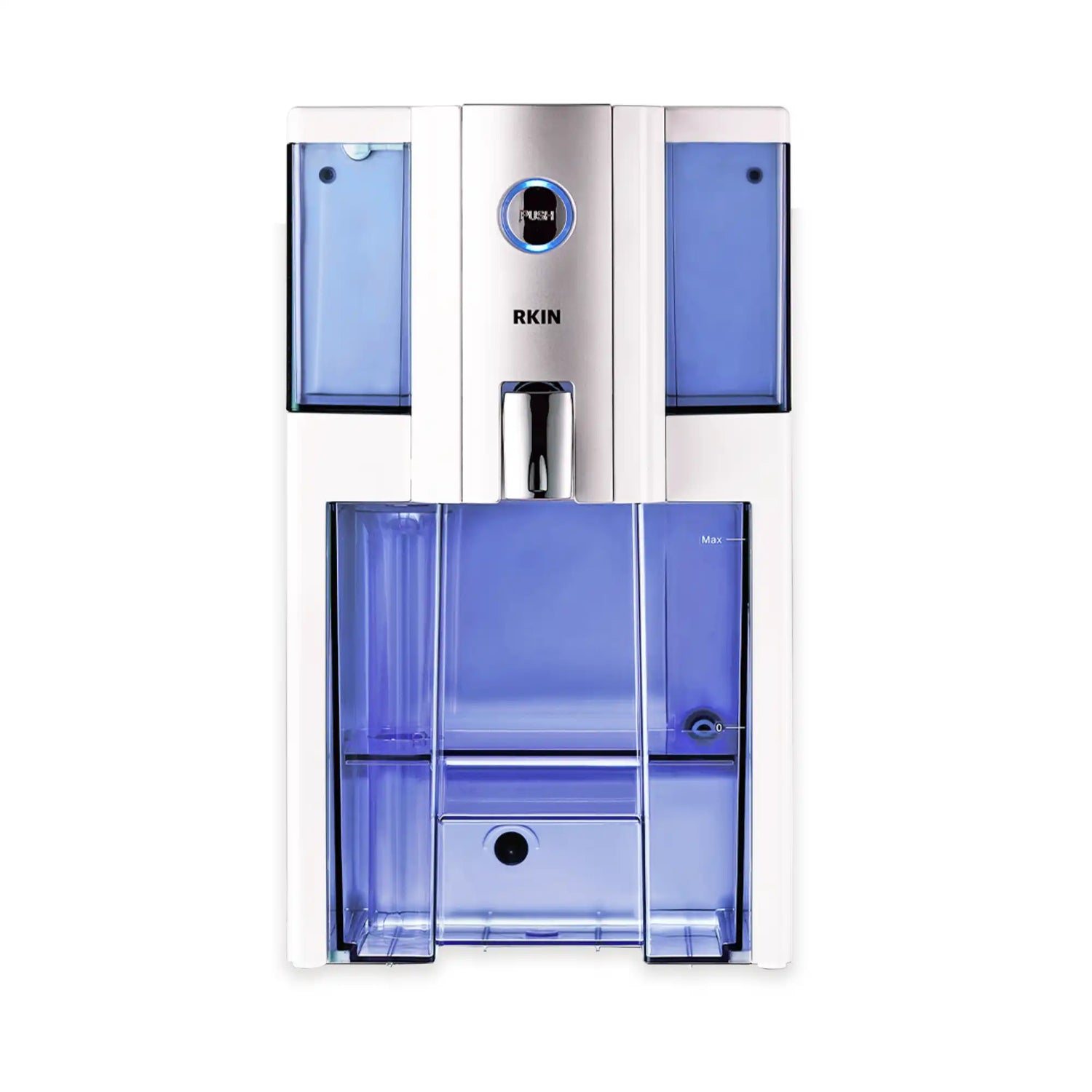
The RKIN Zero Installation Purifier is a countertop reverse osmosis system designed for renters, apartment dwellers, and homeowners who want pure filtered water without cutting into their cabinets or hiring a plumber. It connects directly to your existing faucet — no tools, no drilling, no waiting for an installation appointment. Just plug into a standard outlet.
From an environmental standpoint, it's one of the most accessible ways to eliminate single-use water bottles immediately. Once it's on your counter, you have filtered drinking water on demand. No more cases of bottled water stacked in the corner, no more plastic caps and labels adding to your recycling bin.
The system uses a multi-stage filtration process that removes sediment, chlorine, chloramines, heavy metals, and dissolved solids — producing clean drinking water that competes directly with premium bottled water brands. The difference is you're not generating plastic waste every time you fill a glass.
For Earth Month, the Zero Installation Purifier is worth considering if your primary goal is eliminating bottled water consumption as quickly as possible.
The RKIN OnliSoft: Eco-Friendly Water Conditioning Without Salt
If you have hard water, you've probably looked into water softeners. Traditional salt-based softeners work by exchanging calcium and magnesium ions (the minerals that cause hardness) with sodium ions. The process requires periodic regeneration — flushing the resin bed with a concentrated salt solution that then drains into the waste system.
That salt discharge is a documented environmental concern. In regions where wastewater is treated and recycled back into water supplies, elevated sodium levels from water softener discharge can complicate water treatment. In areas where treated wastewater irrigates crops or discharges into waterways, the sodium and chloride load affects soil structure and aquatic ecosystems.
The RKIN OnliSoft takes a different approach. It uses Template Assisted Crystallization (TAC) — a process that converts dissolved calcium and magnesium into microscopic crystals that remain suspended in the water rather than bonding to surfaces. The result is that your pipes, appliances, and fixtures are protected from scale buildup, without any salt addition, without any chemical discharge, and without any electricity.
The OnliSoft doesn't regenerate. It doesn't flush anything down the drain. It doesn't require salt deliveries, salt bags, or brine tanks. It conditions water continuously and passively — which makes it one of the genuinely eco-friendly alternatives in the water treatment space.
For homeowners in areas where salt-based softeners are restricted or banned (California, Texas, and other states have enacted or are considering restrictions), the OnliSoft is a compliant, effective alternative.
The RKIN Flash: Undersink Filtration for Clean Drinking Water
The RKIN Flash is a compact undersink reverse osmosis system designed for homeowners who want filtered water at the tap without a countertop footprint. It installs under the kitchen sink and connects to a dedicated faucet — giving you instant access to purified water while keeping your counter clear.
Modern undersink RO systems like the Flash use efficient membrane technology that dramatically reduces water waste compared to older RO designs. The filtered water output is used for drinking and cooking; the concentrate stream goes down the drain. But the ratio has improved significantly: today's efficient systems waste far less water than the previous generation of RO technology.
For Earth Month, the Flash makes sense if you're doing a kitchen renovation or you want a more permanent, integrated solution than a countertop unit. It's a one-time installation that serves the household for years — cutting out thousands of plastic bottles over its lifetime with no ongoing effort.
Salt-Free vs. Salt-Based: The Environmental Case Is Clear
If you're considering water softening as part of your Earth Month home upgrade, the environmental comparison between salt-based and salt-free systems is worth understanding clearly:
- Salt-based softeners: Effective at true softening (ion exchange removes minerals from water). Require ongoing salt purchases and delivery. Discharge brine during regeneration cycles. Some municipalities restrict or ban them due to wastewater system impact.
- Salt-free conditioners (like OnliSoft): Prevent scale without removing minerals. No salt, no chemical discharge, no electricity required. Compliant in all regions. Lower ongoing maintenance footprint.
For households primarily concerned with protecting appliances and plumbing from scale, a salt-free conditioner often accomplishes the goal with a much smaller environmental footprint. For households with very high hardness levels where true softening is the goal, the trade-offs are worth discussing — but for Earth Month purposes, the salt-free path is clearly the greener option.
Making the Switch: Where to Start
If you're ready to make a change this Earth Month, here's a simple framework for choosing the right system:
- Renter or apartment dweller: Start with the Zero Installation Purifier. No installation required, immediate impact on bottled water consumption.
- Homeowner with hard water concerns: Look at the OnliSoft for scale protection without salt discharge. Pair with a drinking water filter for full coverage.
- Homeowner wanting kitchen purification: Consider the Flash for undersink RO — clean drinking water on tap, no counter space used.
- Whole-home approach: Explore RKIN's collection of whole-house water treatment systems for layered protection across every tap in the home.
The best water filter for Earth Month 2026 is the one you actually install and use. Making the switch from bottled water to filtered tap water is one of the most direct environmental actions a household can take — and with modern systems, the water quality is genuinely excellent.
Browse RKIN's full range of eco-friendly water filtration systems at rkin.com/collections/whole-house-water-treatment and find the right fit for your home.
Frequently Asked Questions
What is the most eco-friendly type of water filter?
Salt-free water conditioners and efficient reverse osmosis systems with low waste ratios are among the most eco-friendly options. Salt-free systems like the RKIN OnliSoft require no chemical discharge, no electricity, and no salt deliveries. Modern RO systems have dramatically reduced water waste compared to older designs.
How much plastic waste does a home water filter save?
A typical household that switches from bottled water to a home filtration system can prevent 1,000–2,000 or more plastic bottles from entering the waste stream per year, depending on household size and consumption habits. Over a decade, that's tens of thousands of plastic bottles.
Are salt-free water softeners as effective as salt-based systems?
Salt-free water conditioners prevent scale buildup effectively by converting hardness minerals into crystal form that doesn't adhere to surfaces. They don't remove minerals from water the way salt-based systems do (true softening), but for most households concerned with appliance protection and plumbing longevity, they accomplish the goal without chemical discharge.
Do I need a plumber to install the RKIN Zero Installation Purifier?
No. The Zero Installation Purifier is designed to connect directly to your existing kitchen faucet without any tools, drilling, or plumbing work. It's a genuinely tool-free setup that typically takes less than 10 minutes.
Is Earth Month the right time to buy a water filter?
Any time is a good time to reduce plastic waste, but Earth Month (April) is when many homeowners make lasting changes to their environmental footprint. A water filtration system installed in April will typically pay for itself in reduced bottled water costs within the first year while preventing thousands of plastic bottles over its lifetime.


