


countertop-ro
Why Does Reverse Osmosis Water Taste Flat? The Fix Explained

You finally installed a reverse osmosis system. The water looks cleaner, smells like nothing, and the spec sheet says it's removing dozens of contaminants. Then you take a sip and pause. It tastes… empty. Thin. A little metallic, maybe, or just dead. You're not imagining it, and you're not doing anything wrong. That flat taste is the most common complaint new RO owners report, and there's a clear reason for it — plus a simple fix.
A 2016 peer-reviewed sensory study found that consumers rated reverse osmosis permeate as significantly less pleasant than remineralised water on blind taste panels. Your tongue isn't looking for purity. It's looking for a specific balance of calcium, magnesium, and bicarbonate that signals "fresh." Strip those out and the water reads as hollow, even if it's measurably cleaner than what came before.
What Reverse Osmosis Actually Removes
A reverse osmosis membrane is a physical filter with pore sizes around 0.0001 microns. Water gets forced through under pressure, and almost everything larger than a water molecule is rejected and flushed down the drain line. That's a huge list of things you want gone — lead, arsenic, nitrates, PFAS, fluoride, chlorine byproducts, pharmaceutical residues, microplastics, and most of the dissolved organic compounds that cause off-flavors.
But the membrane doesn't know what's harmful and what's pleasant. It just sees dissolved solids. Calcium and magnesium — the same minerals that make water taste crisp and spring-like — get rejected right alongside lead and arsenic. Bicarbonate, the buffer that keeps water from tasting sharp or metallic, goes with them. The result is water with a total dissolved solids (TDS) reading close to zero and a taste profile most people describe as "flat," "plastic," or "like nothing."
Why Flat Water Tastes That Way
Three things shift when minerals drop out of water:
Texture changes. Calcium and magnesium give water what sommeliers call "mouthfeel." Without them, water feels slightly slicker on the tongue, almost like it's missing weight.
pH drifts lower. Pure water in contact with air absorbs carbon dioxide and forms a small amount of carbonic acid. Without bicarbonate minerals to buffer it, RO water often sits in the 5.5-6.5 pH range — still safe, but noticeably on the acidic side. Some people pick this up as a faint sour or metallic edge.
Flavor carriers are gone. A small amount of mineral content actually amplifies other flavors, which is why most bottled spring waters aren't pure — they're remineralized or naturally mineralized. Strip the minerals and you strip the background notes that make water taste like water.
A peer-reviewed review of demineralized drinking water reached the same conclusion from a health angle: water with very low mineral content is less palatable and can even leach trace minerals from food during cooking. The practical takeaway for most households is about taste, not safety — but both point to the same conclusion. RO water benefits from getting some mineral content back before it reaches the glass.
The Fix: Remineralization
The solution is called remineralization, and it's been built into better RO systems for years. The idea is straightforward — after the membrane strips everything out, the water passes through a final stage that adds back a measured dose of healthy minerals before it hits the spigot.
There are two main approaches:
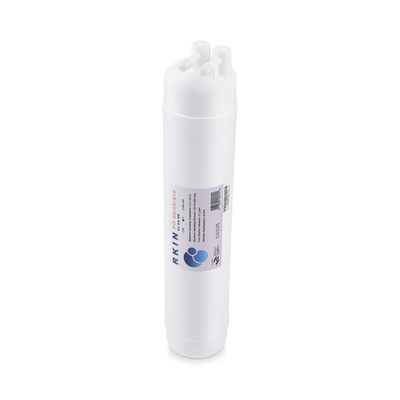
Calcium-based cartridges use food-grade calcium carbonate (the same compound found naturally in limestone-fed springs). As slightly acidic RO water flows through the cartridge bed, it dissolves a tiny amount of calcium and bicarbonate — enough to raise TDS into a pleasant 30-80 mg/L range and push pH back toward neutral or mildly alkaline.
Mineral-blend cartridges go further, adding magnesium, potassium, and sometimes trace elements. These cartridges aim for a "spring water" profile rather than just pH correction.
The key point is that remineralization happens in the final stage, after purification. All the contaminants are already out. What's added back is clean, food-grade, and measured in small amounts — enough to restore taste without reintroducing anything you were trying to filter out in the first place.
What to Look For in a Remineralizing RO System
Not every RO system includes a remineralization stage. If flat taste is part of why you're shopping, or part of why you're frustrated with the system you already have, three specs matter more than the rest:
- A dedicated mineral or alkaline post-filter — usually the last stage before the output faucet. Check the stage count and the cartridge type.
- Post-treatment pH in the 7.0-8.5 range — most quality remineralizers target slightly alkaline output, not neutral.
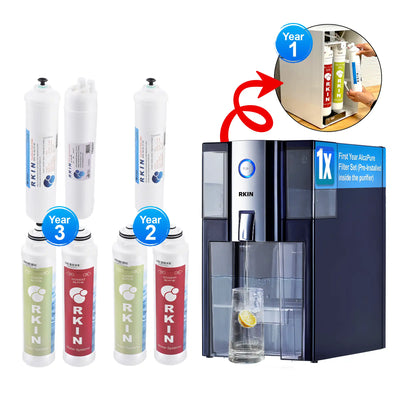
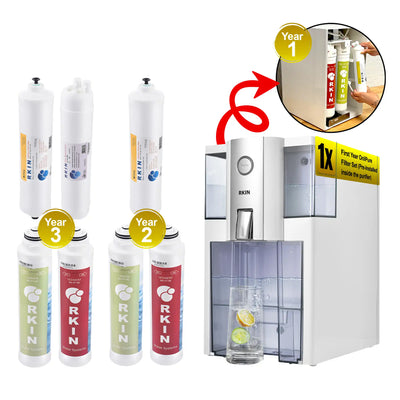
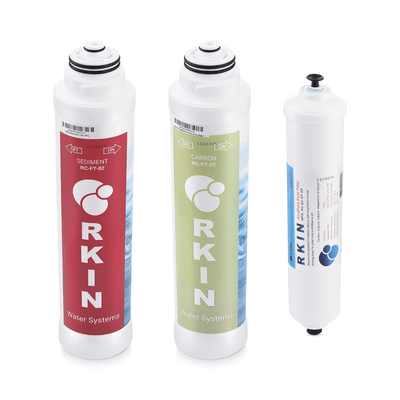
- Replaceable cartridge — mineral cartridges deplete over time and need replacement on a schedule, usually annually. A system where the mineral stage is integrated but not replaceable will taste flat again once the media is exhausted.
It's also worth checking whether the remineralization stage runs on every glass or only some. Some lower-end systems route the mineral cartridge through a bypass that's easy to forget about. You want a straight-through design.
How This Ties to the RKIN U1 4-in-1 Water Filter System
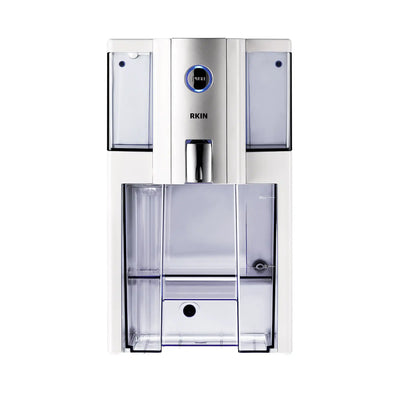
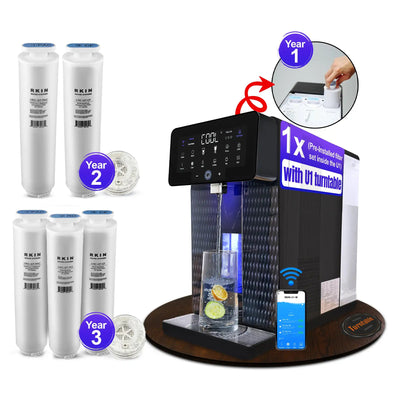
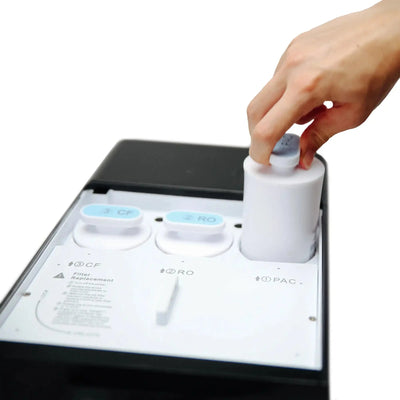
This is exactly the problem the RKIN U1 4-in-1 Water Filter System was built to solve. The U1 is a countertop unit with no plumbing and no drilling required — it uses a fill tank you top off from any faucet — and it runs water through five stages, ending with a remineralizing alkaline filter that adds calcium and raises pH into a naturally pleasant range.
The difference shows up in the glass. Water comes out with a slight mineral finish rather than the hollow flat taste of pure RO, while still clearing lead, PFAS, arsenic, fluoride, and the other contaminants the membrane is designed to remove. For households that don't want to modify their plumbing but still want proper RO quality without the flat taste, it's a straightforward fit.
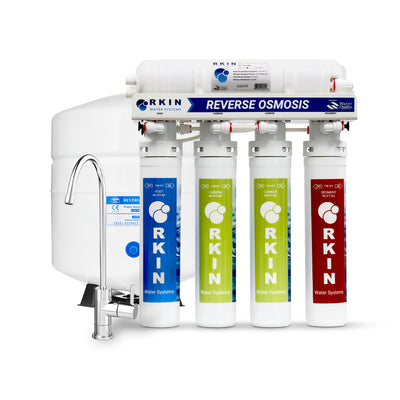
If you have a dedicated under-sink location, the RKIN Flash Undersink RO System offers a similar remineralization approach in a higher-flow format. Both are available at rkin.com with current pricing listed on the product pages.
Beyond Taste: Why Some People Prefer Slightly Alkaline Water
Flat taste is the immediate complaint, but there's a secondary reason to care about remineralization. Slightly alkaline water — pH in the 7.5-8.5 range — is often described as smoother and easier to drink in volume. People who struggle to hit their daily water intake sometimes find remineralized water easier to consume simply because it doesn't have that acidic edge.
We're careful not to overstate this. Claims that alkaline water cures or prevents specific conditions are not supported by the evidence, and we don't make them. What is supported, consistently, is that mineral content improves palatability. If RO water sits in your fridge untouched because your family doesn't like the taste, that's a real problem — and remineralization fixes it.
Frequently Asked Questions
Is it safe to drink RO water without minerals added back?
Yes. Demineralized water is safe for short-term drinking, and billions of people drink it from desalination plants and standard RO systems daily. The concerns with very low-mineral water are mostly about palatability and, over long periods, trace mineral intake from diet. Most households drink enough minerals from food that RO water by itself is not a health issue — it's a taste and drinkability issue.
Does remineralization put contaminants back into the water?
No, as long as the cartridge uses food-grade mineral media (typically calcium carbonate or a certified mineral blend). These materials are tested for heavy metal contamination before being used in drinking water applications. They add back calcium, magnesium, and bicarbonate — not the contaminants the RO membrane just removed.
How often do remineralization cartridges need to be replaced?
Most residential remineralization cartridges last 6-12 months depending on water volume and mineral media. You'll notice the shift back toward flat taste as the cartridge depletes, which is a good first-hand indicator. Always check the replacement schedule on your specific system's product page.
Will a remineralizing RO system also raise the pH?
Yes. Remineralization and pH correction are usually the same stage. Calcium carbonate cartridges typically raise RO water from around pH 6 back to pH 7.5-8.5. Mineral-blend cartridges can push it slightly higher. If your system includes a dedicated alkaline post-filter, both taste and pH should improve in the same pass.
Can I just add a pinch of salt or mineral drops to my RO water?
Technically, yes — mineral drops sold for drinking water will add back calcium and magnesium. But the result is less consistent than a dedicated cartridge stage, and it's easier to forget. If you're drinking RO water daily, an inline remineralization stage is more reliable than dosing each glass.
Why do some RO systems skip remineralization?
Cost and complexity, mostly. Adding a fifth or sixth stage increases the system's price and requires an extra replaceable cartridge. Lower-end systems skip it to compete on price. More complete systems — especially countertop units built for drinking-quality output — include it as standard.
Ready to Fix the Flat Taste?
RO water doesn't have to taste like nothing. A remineralizing final stage brings back the mineral profile your tongue recognizes as "good water" — without giving up anything the membrane already removed. If you're evaluating a new system or finally ready to upgrade the one you've got, make sure remineralization is part of the spec sheet.
The RKIN U1 4-in-1 Water Filter System builds the alkaline remineralization stage in by default — no plumbing, no drilling, just better-tasting water from a countertop unit. See current pricing and specs at rkin.com.






0 comments