


boiling water pfas
Does Boiling Water Remove PFAS? What the Science Says

When a boil-water notice hits your area, the instinct is simple: put a pot on the stove and let it roll. That instinct is right for one kind of problem and useless for another. Boiling handles living threats — bacteria, viruses, parasites. It does nothing for the contaminant class that has dominated water headlines for the past three years: PFAS, the "forever chemicals." The U.S. EPA set its first enforceable federal limits on six PFAS compounds in drinking water in April 2024, with public systems required to comply by 2029. If you have been boiling tap water hoping to clean it up, the chemistry is working against you.
What PFAS Actually Are
PFAS stands for per- and polyfluoroalkyl substances — a family of more than 12,000 synthetic chemicals used since the 1940s in nonstick cookware, stain-resistant fabric, firefighting foam, and food packaging. They earned the "forever chemicals" nickname because the carbon-fluorine bond at their core is one of the strongest in chemistry. It does not break down in soil, in water, or in the human body on any timescale that matters.
A 2023 U.S. Geological Survey study estimated that at least 45% of U.S. tap water contains one or more PFAS compounds. The Environmental Working Group's contaminant mapping has detected PFAS in water systems serving more than 200 million Americans. These chemicals reach drinking water through industrial discharge, landfill runoff, and decades of firefighting foam use near airports and military bases. Once they are in the water supply, conventional municipal treatment — chlorination, sand filtration, settling — does not remove them.
Does Boiling Remove PFAS? The Short Answer Is No
Boiling water does not remove PFAS. It makes the concentration worse.
Here is the chemistry. PFAS compounds are non-volatile, meaning they do not evaporate with the water. When you boil a pot of water, H2O molecules leave as steam while the PFAS molecules stay behind. As the water volume shrinks, the same amount of PFAS is now dissolved in less liquid. The result is a higher PFAS concentration in whatever water is left in the pot.
This is the opposite of what people assume. Boiling is genuinely effective against biological contaminants — the CDC recommends a rolling boil of at least one minute to kill pathogens during a boil-water advisory. But that same process concentrates dissolved chemical contaminants rather than eliminating them. The distinction matters: a boil-water notice is about microbes, not chemistry. PFAS contamination is a chemistry problem, and heat is the wrong tool for it.
What Else Does Not Work
Most of the everyday fixes homeowners reach for fall short on PFAS for the same underlying reason — these chemicals are tiny, dissolved, and chemically stubborn.
- Standard pitcher filters. Many basic pitcher filters use loose granular carbon designed for chlorine taste and odor. Their contact time with the water is short, and independent testing has shown inconsistent PFAS reduction across this category.
- Refrigerator filters. Built for taste and sediment, most fridge filters are not designed or certified for PFAS reduction.
- Letting water sit or freezing it. PFAS do not settle out, off-gas, or break down when water is left standing or frozen. The chemicals stay exactly where they were.
- Bottled water. Bottled water is not automatically PFAS-free. It is regulated as a food product, and testing has found PFAS in some bottled brands. You are also paying repeatedly for water you cannot verify.
The pattern is clear: anything that does not physically separate or chemically capture PFAS molecules will leave them in your glass.
What Actually Removes PFAS From Tap Water
Two filtration technologies have a strong evidence base for PFAS reduction, and the most reliable home systems combine both.
Reverse osmosis (RO). Reverse osmosis pushes water through a semi-permeable membrane with pores small enough to block dissolved contaminants while letting water molecules pass. The EPA identifies reverse osmosis as one of the most effective treatment methods for PFAS, capable of reducing a broad range of these compounds. Because RO works by physical size exclusion, it does not care whether a PFAS molecule is "short-chain" or "long-chain" — both are far larger than a water molecule.
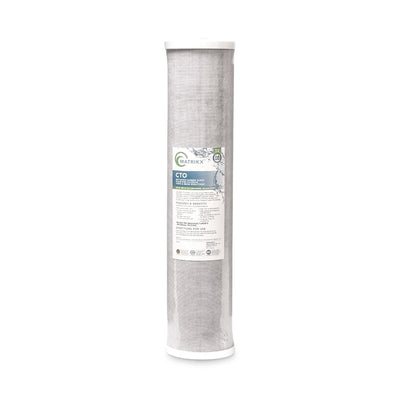
Activated carbon block. A dense carbon block — not loose granular carbon — adsorbs PFAS as water passes slowly through it. The longer contact time and tighter structure of a carbon block give it a meaningful advantage over a typical pitcher cartridge.
When you are evaluating a system, look for independent third-party testing against PFAS specifically, and check for certification to standards such as NSF/ANSI 58 (for reverse osmosis) and NSF/ANSI 53 (for health-related contaminant reduction). A system that pairs an RO membrane with a quality carbon block gives you two independent barriers rather than relying on one.
A Countertop Option With No Plumbing
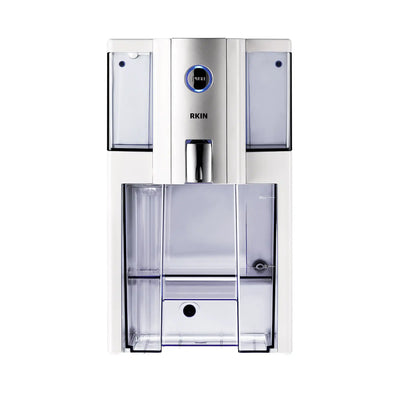
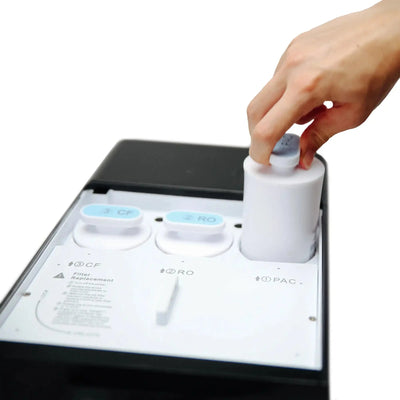
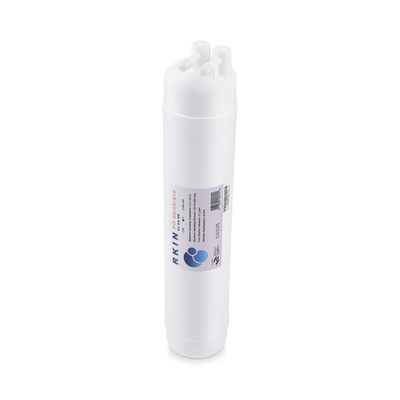
This is the problem the Zero Installation Purifier Countertop Reverse Osmosis Water Filter is built to solve. It runs a five-stage process — sediment, carbon, a 75 GPD reverse osmosis membrane, and a post-filter — and the RO membrane is the stage that handles dissolved contaminants like PFAS through physical size exclusion.
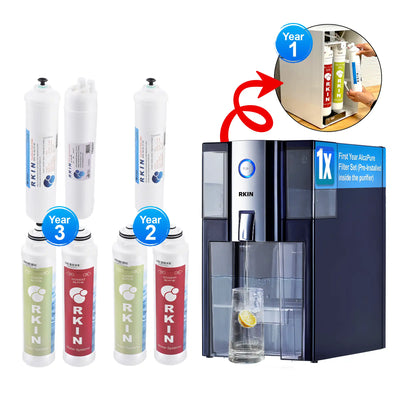
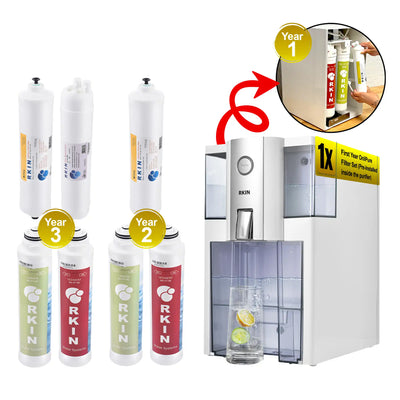
What makes it practical for most households is the "zero installation" part. It sits on the counter and connects to your faucet — no drilling, no plumbing modifications, no permanent fixtures. That matters for renters, for anyone who does not want a plumbing project, and for households that want PFAS-grade filtration without committing to an under-sink build. It comes in two editions: AlcaPure, which adds calcium and magnesium back and raises pH to 7–8, and OnliPure, which reduces total dissolved solids to near zero. You can see current specs and pricing at rkin.com.
Frequently Asked Questions
Does boiling water remove PFAS?
No. PFAS compounds are non-volatile, so they do not evaporate with steam. When water boils off, the PFAS stay behind in the remaining liquid, which actually raises their concentration. Boiling is effective against bacteria and viruses but does nothing to remove forever chemicals.
How can I tell if my tap water has PFAS?
Check your local water utility's annual Consumer Confidence Report, which many systems now include PFAS results in following the EPA's 2024 limits. You can also use a certified laboratory test kit. The Environmental Working Group's online tap water database is a useful starting point for understanding what has been detected in your area.
Does reverse osmosis remove PFAS?
Yes. The EPA identifies reverse osmosis as one of the most effective home treatment methods for PFAS. An RO membrane physically blocks dissolved contaminants by size exclusion, which reduces a broad range of PFAS compounds regardless of chain length.
Do refrigerator and pitcher filters remove PFAS?
Most do not. Standard refrigerator filters and basic pitcher filters are designed for chlorine taste and sediment, not PFAS. Some carbon-block products are tested for PFAS reduction — always check for independent third-party testing or NSF/ANSI 53 certification before relying on one.
Is bottled water free of PFAS?
Not necessarily. Bottled water is regulated as a food product, and testing has detected PFAS in some brands. Bottled water also leaves you paying repeatedly for water you cannot independently verify. A certified home filtration system gives you more consistent control over what you drink.
How often do reverse osmosis filters need replacing?
It depends on the system and your water quality. On the Zero Installation Purifier, the sediment and carbon stages are replaced periodically and the RO membrane every 24 months or as needed. Always follow the replacement schedule on the product page so the system keeps performing as designed.
Ready to Take PFAS Out of the Equation?
Boiling protects you from microbes, but it leaves forever chemicals exactly where they are — and in a smaller pot of water, even more concentrated. If PFAS is the contaminant you are worried about, the answer is filtration that physically separates these chemicals from your water.
The Zero Installation Purifier Countertop Reverse Osmosis Water Filter brings reverse osmosis filtration to your counter with no plumbing, no drilling, and no installation. See current specs and pricing at rkin.com.





0 comments