


how to remove iron stains from laundry
How to Remove Iron Stains From Laundry Washed in Well Water

You pulled a load of whites out of the dryer and they came out looking faintly orange. Or you noticed a rust-colored streak down a shirt you swear was clean two days ago. The sheets that used to be bright white now have a permanent yellow cast. The washer is fine. The detergent is fine. The well is the problem.
Iron in well water is the most common cause of "mystery" laundry stains in households on private wells. The U.S. Geological Survey reports that iron is one of the most common nuisance contaminants in U.S. drinking water, and concentrations above just 0.3 milligrams per liter are enough to leave visible stains on clothing, fixtures, and skin. Once iron is in the fabric, ordinary detergent and bleach won't get it out — chlorine bleach actually makes iron stains worse by oxidizing the iron and locking it permanently into the fibers.
Here's how to rescue the laundry you've already stained, and how to stop new stains from showing up in every load.
First: Confirm It's Actually Iron
Iron isn't the only contaminant that stains clothes. A quick visual check before you start treating:
- Orange, rust, or reddish-brown stains — iron (most common)
- Black or dark brown stains — manganese (often paired with iron in well water)
- Yellow tint, no defined stain — could be iron, could be tannins (organics from decaying plant matter, common in surface-influenced wells)
- Blue-green stains on white fabric — copper from corroding pipes, not a well issue
If your toilet bowl has an orange ring, your shower has rust streaks, and your dishwasher has dark spots inside, iron is almost certainly the culprit in the laundry too.
A $20 home iron test kit confirms it in 5 minutes, and you can also send a sample to a state-certified lab for a full mineral panel — recommended if you've never tested the well or it's been more than two years.
How to Remove Existing Iron Stains From Laundry
Do not use chlorine bleach. It bonds the iron permanently. Use one of these methods instead:
Method 1: Commercial Iron-Stain Remover (Most Reliable)
Products labeled as "iron out," "rust out," or "iron stain remover" contain sodium hydrosulfite or oxalic acid, both of which chemically reduce iron back to a soluble form that washes away. Common retail brands include Iron Out, Whink Rust Stain Remover, and Carbona Stain Devils #9.
Method: 1. Re-wash the stained items in hot water with the iron remover added per label directions 2. Do not add detergent on this cycle 3. Run a second cycle with normal detergent — no bleach 4. Air dry the first time. Heat from a dryer can set any residual stain.
This works on whites, colors, and most synthetics. Always spot-test first.
Method 2: Lemon Juice and Salt (For Small Stains)
For a single shirt or a small spot: 1. Lay the fabric flat over a bowl 2. Sprinkle salt on the stain 3. Squeeze fresh lemon juice over the salt until saturated 4. Set the bowl in direct sunlight for 1-2 hours 5. Rinse in cold water and launder normally — no bleach
The citric acid + UV combo lifts light iron staining on cottons and linens. Not recommended for delicates or dry-clean-only fabrics.
Method 3: Cream of Tartar Soak (Whites Only)
For an entire load of yellowed whites: 1. Fill a tub or large bucket with hot water 2. Dissolve 1 cup cream of tartar 3. Soak whites overnight 4. Wash normally with iron-stain remover added — no bleach
What Won't Work
- Chlorine bleach — sets iron permanently
- Standard oxygen bleach alone — sometimes helps slightly, often not enough
- Vinegar in the wash — too dilute to break the iron bond once set
- Re-washing with extra detergent — does nothing for mineral staining
The Real Fix: Stop Iron at the Source
Removing existing stains is reactive. As long as iron is still in the water, every load you wash is a coin flip on whether new stains appear. The only permanent solution is to filter the iron out before it reaches the washer.
How Much Iron Are You Dealing With?
Iron treatment depends on form and concentration:
- Under 0.3 mg/L — usually invisible, no treatment needed
- 0.3 to 3 mg/L — visible staining, treatable with most iron filters
- 3 to 10 mg/L — heavy staining, requires a dedicated iron-removal system
- Above 10 mg/L — severe; may need oxidation + filtration in stages
Iron also comes in two forms that need different handling:
- Ferrous (clear-water) iron — dissolved, water looks clear from the tap, turns orange after standing
- Ferric (red-water) iron — already oxidized, water comes out of the tap orange
Your test results — or a glass of water left on the counter for an hour — tells you which one you have.
Whole-House Treatment Is the Right Place to Solve This
Point-of-use filters at the kitchen sink don't help laundry, dishwashers, ice makers, or showers. Iron stains every fixture in the house, so the filter has to live where water enters the house — at the main line.
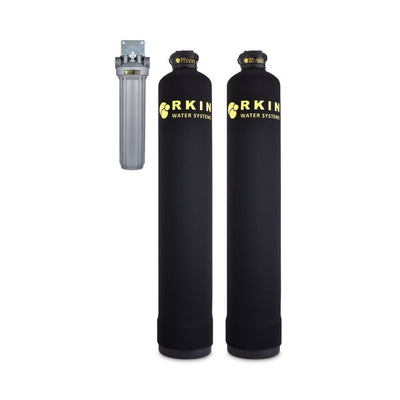
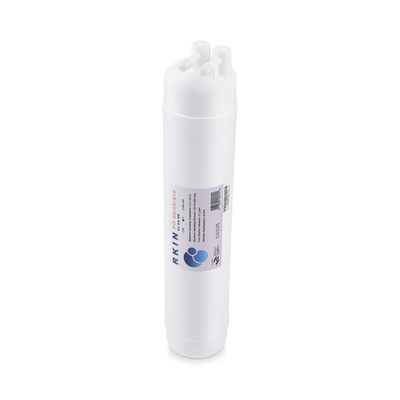
The RKIN Whole House Well Water Filter System is built specifically for the iron, sulfur, and manganese problems that hit private wells. It oxidizes dissolved iron into a filterable form and traps it before it reaches a single tap, washer, dishwasher, or showerhead. No salt, no chemical injection.
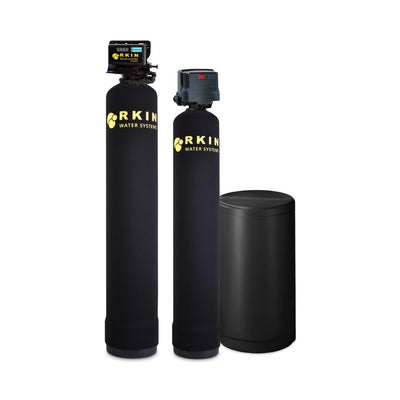
For combination problems — iron plus hardness, or iron plus chlorine if you're on a treated rural system — the RKIN OnliSoft Pro Salt-Free + Carbon Combo handles hardness conditioning and contaminant reduction in a single footprint. Pair it with the well filter if iron is also in the picture.
Pre-Filter Sediment First
If your well also pulls sand, silt, or rust particles already broken loose from old galvanized pipe, install a sediment pre-filter before the iron filter. The RKIN Dragon Self-Cleaning 90-Micron Sediment Filter protects the iron-removal media from clogging and extends the life of every downstream component.
How to Treat Laundry While You Wait for Treatment
If a whole-house solution is a few weeks out, you can keep stains at bay in the meantime:
- Add a cup of iron-stain remover to every wash with whites
- Skip the bleach drawer entirely — even on bedding and towels
- Wash whites separately and on warm, not hot — heat sets iron faster
- Air dry at first until you've confirmed no residual staining, then dryer is safe
- Run an "empty cycle" with iron remover in the washer once a month to clean iron buildup from the drum and lines
These habits won't fix the underlying problem, but they'll keep your wardrobe presentable while you plan the install.
Frequently Asked Questions
Why do my white clothes turn yellow or orange after washing?
Iron in well water reacts with detergent and oxygen during the wash cycle and oxidizes onto fabric. Even small amounts of iron — as little as 0.3 mg/L — can leave visible orange or yellow staining on white cotton. The stain builds up over multiple washes if untreated.
Can I use bleach to remove iron stains from laundry?
No. Chlorine bleach oxidizes iron and chemically locks it into the fabric, making the stain permanent. Always use a dedicated iron-stain remover — products containing sodium hydrosulfite or oxalic acid — and never combine the two products in the same wash.
How do I know if my well water has iron?
Visible signs include orange or rust-colored stains on toilets, sinks, tubs, and laundry; metallic-tasting water; and water that looks clear from the tap but turns orange after sitting in a glass for an hour. A $20 home test kit confirms iron content quickly. For a full picture, send a sample to a state-certified lab and request iron, manganese, hardness, and pH at minimum.
What's the difference between ferrous and ferric iron?
Ferrous iron (also called "clear-water iron") is dissolved and invisible at the tap — water turns orange only after standing or hitting air. Ferric iron is already oxidized and comes out of the tap with visible color or particles. Different filtration approaches handle each — your treatment system needs to match the form your well produces.
Do water softeners remove iron?
Standard salt-based softeners can handle small amounts of dissolved (ferrous) iron — up to about 1 to 3 mg/L depending on the unit — as part of the ion exchange process. They will not remove ferric iron, and they're not designed as a primary iron treatment. For wells with more than 3 mg/L iron, or any ferric iron, install a dedicated iron filter ahead of any softener.
Will an under-sink reverse osmosis system fix my laundry stains?
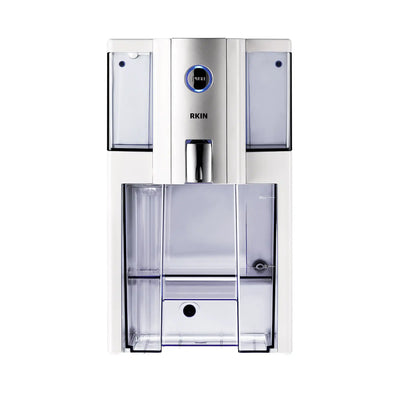
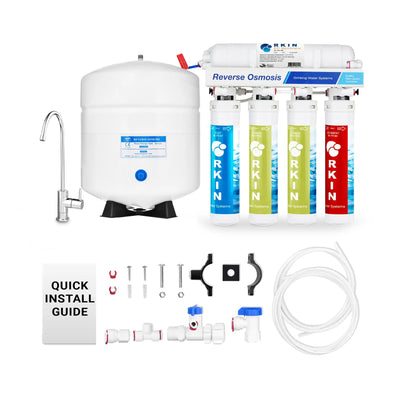
No. RO systems treat only the water at one tap, usually the kitchen sink. Laundry, showers, dishwashers, and ice makers all run on unfiltered water from the main line. Iron staining is a whole-house problem and needs a whole-house solution installed at the point of entry.
Get the Iron Out — Once
Stained laundry is the first complaint, but it's never the only one. Iron also leaves rings in toilets, streaks down showers, ruins ice makers, and shortens the life of every faucet aerator and washer hose in the house.
Solving it once at the main line stops all of it. The RKIN Whole House Well Water Filter System is engineered for the exact iron, sulfur, and manganese profile most U.S. wells throw off. Browse the whole-house treatment lineup or contact our team with your water test results and we'll point you to the right configuration for your well.





0 comments