





hard-water
Water Heater Flush No Sediment: What It Really Means

You drained your water heater, watched for the cloudy or gritty discharge everyone warned you about — and nothing came out. Just clear water from start to finish.
That might be the worst possible result. According to the Water Quality Association, roughly 85% of U.S. homes have hard water (WQA, 2024). If yours is one of them and your flush looked clean, there's a good chance the sediment isn't gone — it's packed so tightly at the bottom of the tank that it can't drain at all.
Why Sediment Builds Up in the First Place
Every time your water heater heats water, dissolved minerals — primarily calcium carbonate and magnesium — fall out of solution and settle to the bottom of the tank. This is a basic chemistry reaction: heat accelerates mineral precipitation. In hard water areas, it happens fast.
Over time, that mineral layer compacts. What starts as a loose, sandy sludge firms into a dense, rock-like crust. The harder your water and the older your heater, the thicker that crust gets.
Here's why this matters:
Efficiency loss. The U.S. Department of Energy estimates that just a quarter-inch of sediment buildup can reduce water heater efficiency by 25–40% (DOE, Energy Saver, 2023). Your burner or heating element has to work through that insulating layer to heat the water above it, which means longer run times and higher energy bills.
Hot spots and tank damage. In gas heaters, sediment traps heat at the bottom of the tank. You'll often hear popping or rumbling sounds — that's steam bubbles forcing their way through the crust. Those hot spots stress the tank lining and accelerate corrosion. In electric heaters, sediment buries the lower element, causing it to burn out prematurely.
Reduced capacity. A thick sediment bed physically displaces water volume. A 50-gallon tank with two inches of crust at the bottom might only hold 40 effective gallons.
Why clear water doesn't mean a clean tank. If you've gone more than two or three years without flushing, or if you have hard water and have never flushed, the sediment has almost certainly fused into a solid layer. When you open the drain valve, water flows over and around it — but the crust stays put. The result is clear discharge and a false sense of security.
A fully compacted sediment layer is also a breeding environment for anaerobic bacteria, including sulfate-reducing bacteria that produce the hydrogen sulfide responsible for that rotten-egg smell in hot water. Clear flush water doesn't rule any of this out.
What Doesn't Work (and What People Keep Trying)
A few common DIY fixes circulate online. They're worth knowing about, mostly so you can skip them.
The vinegar soak. Filling a heater with diluted white vinegar and letting it sit for several hours can dissolve light mineral deposits. If your sediment is fresh and loose, this may help. If it's compacted — which is exactly the scenario we're discussing — the vinegar won't reach the dense core of the crust. You'll spend hours on a partial fix at best.
Repeated quick flushes. Some guides recommend opening and closing the drain valve several times in rapid succession to dislodge buildup. On a young tank with soft sediment, this can work. On a tank with years of hardened scale, you're likely to do two things: not move the sediment, and damage the drain valve. Those valves are often plastic and get sticky or crack when operated after years of disuse. A cracked drain valve on a water heater is an emergency repair.
Increasing water temperature. The theory is that hotter water "burns off" deposits. It doesn't. It accelerates further precipitation of minerals. Running your heater hotter than 120°F also increases scalding risk without any sediment benefit.
The honest assessment: once sediment is compacted enough that a standard flush produces clear water, DIY chemical or mechanical methods rarely solve it. You're looking at professional sediment removal, a tank flush with a descaling pump, or tank replacement — depending on the heater's age and condition.
How to Flush a Water Heater Correctly (Before It Reaches That Stage)
If your heater is relatively new or you caught the problem early, here's the method that actually moves sediment:
- Turn off the cold water supply to the heater and set the thermostat to "pilot" (gas) or switch the breaker (electric). Let the water cool for at least an hour. Draining near-boiling water creates a burn risk and can warp PVC drain connections.
- Connect a garden hose to the drain valve and run it outside or to a floor drain — not a plastic utility sink you care about. Sediment will scratch it.
- Open the pressure relief valve slightly to allow air into the tank. Without an air inlet, you'll get a slow trickle or no flow at all due to vacuum pressure.
- Open the drain valve fully and let it run. Don't check it at 30 seconds and call it done. Let it run for 10–20 minutes.
- Stir the sediment. Turn the cold water supply back on briefly while the drain is still open. This agitates the bottom of the tank and flushes loose material that gravity wouldn't move on its own.
- Repeat the cold water flush two or three times until the discharge runs consistently clear.
- Close the drain valve, fill the tank, restore power or relight the pilot, and check the drain valve for drips.
The cold-water stir step is the one most guides omit. It's also the most effective part.
Frequency: In hard water areas (above 7 grains per gallon, or roughly 120 mg/L hardness), flush annually. In very hard water areas (above 14 grains per gallon), every six months is more realistic. If you don't know your water hardness, your local utility's water quality report — required to be published annually — will have it.
The Better Answer: Stop the Sediment Before It Starts
Flushing is maintenance. It doesn't solve the underlying problem, which is hard water entering your home and depositing minerals throughout your plumbing, fixtures, and appliances — not just your water heater.
A whole-house water treatment system placed at the point of entry addresses the source. The minerals that would have precipitated out in your tank are kept in suspension instead, passing through your plumbing without bonding to surfaces.
This protects more than just the water heater. Your dishwasher, washing machine, ice maker, showerheads, and any other appliance that sees hot water all benefit from the same protection.
Where RKIN Products Fit In
We make three systems worth knowing about depending on what you're dealing with.
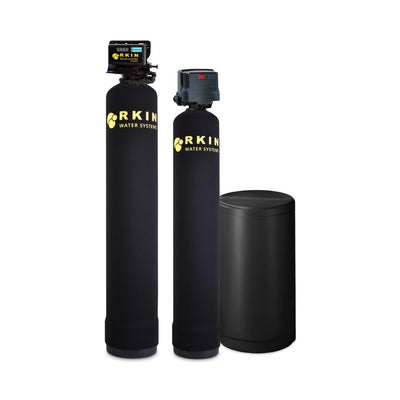
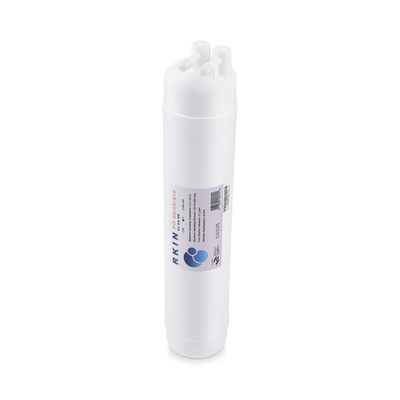
RKIN OnliSoft Salt-Free Water Conditioner — This is the right starting point for most homes with hard water. The OnliSoft uses a template-assisted crystallization (TAC) process to convert dissolved calcium and magnesium into harmless microscopic crystals that stay suspended in water rather than bonding to surfaces. No salt, no electricity, no brine discharge. It's a quiet system that works continuously without any regular maintenance beyond a media change every few years. If your main concern is scale in your water heater and appliances, this handles it.
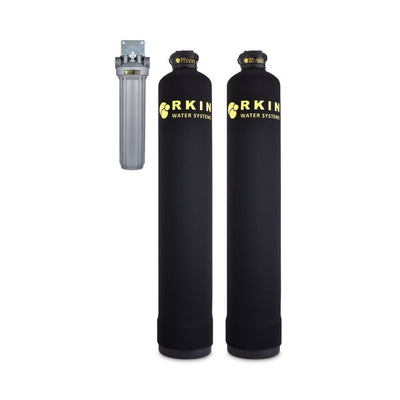
RKIN OnliSoft Pro Salt-Free + Carbon Combo — The OnliSoft Pro pairs the same scale-prevention media with a carbon filtration stage that reduces chlorine, chloramines, and organic compounds from municipal water. If your water has a taste, odor, or chemical concern alongside hardness, this is the system that addresses both in one unit. Worth considering if you're on city water and notice any off-taste in your hot water.
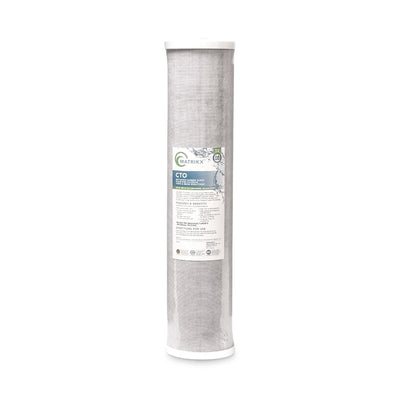
RKIN CBS Dual Carbon Whole House Filter — If your issue is sediment and particulates rather than (or in addition to) mineral hardness, the CBS Dual Carbon system includes filtration media designed to capture suspended particles before they reach your water heater and appliances. It's a good fit for homes on well water or municipal supplies with visible turbidity, and it pairs cleanly with the OnliSoft if you have both a hardness and a sediment problem.
In my experience, the most common whole-house setup for someone dealing with a scale-loaded water heater is the OnliSoft paired upstream with a sediment pre-filter. You stop the crust from forming, and you keep larger particles from entering the plumbing at all. The water heater then becomes a non-issue from a maintenance standpoint.
Frequently Asked Questions
Why did my water heater flush come out clear?
Clear flush water after years of no maintenance usually means the sediment has compacted into a dense layer at the bottom of the tank. Loose sediment drains out; compacted sediment doesn't move. Clear water indicates that water is flowing around the crust rather than carrying it out.
Is sediment in a water heater dangerous?
Sediment itself isn't a direct health concern, but it creates conditions that are. A thick crust can harbor anaerobic bacteria, including sulfate-reducing bacteria that produce hydrogen sulfide — the gas responsible for a rotten-egg smell in hot water. Sediment also reduces efficiency, stresses the tank, and shortens the heater's lifespan.
How often should I flush my water heater?
In hard water areas (above 7 grains per gallon hardness), annual flushing is the standard recommendation. In areas with very hard water, every six months is better. If you have a whole-house scale-prevention system installed, your flush intervals can often extend to every two to three years.
Can I fix a water heater with compacted sediment myself?
Possibly, but it depends on the heater's age and the severity of the buildup. A professional flush using a descaling pump can break up moderate compaction. If the tank is more than 10–12 years old and has never been flushed, replacement often makes more financial sense than investing in a repair.
Does a salt-free water conditioner really prevent scale?
Yes, within its design parameters. Salt-free conditioners using template-assisted crystallization (TAC) media have been independently validated to reduce scale formation by 90% or more in standardized testing (DVGW W512 protocol). They don't remove hardness minerals — they alter the minerals' form so they don't stick to surfaces. The result is a measurable reduction in scale buildup in water heaters, pipes, and appliances.
How do I know if I have hard water?
Check your municipal water quality report (required to be published annually by your water utility). If you're on a private well, an inexpensive water test kit will give you a hardness reading. Above 7 grains per gallon (120 mg/L) is considered hard; above 14 GPG (240 mg/L) is very hard and will cause noticeable scale buildup within months without treatment.
What to Do Right Now
If your last flush ran clear and your heater is more than five years old, get a professional assessment — particularly if you've noticed higher energy bills, longer heat-up times, or any rumbling sounds from the tank. Don't assume clear water means the problem solved itself.
If you're on hard water and want to stop the problem from coming back, the RKIN OnliSoft Salt-Free Water Conditioner is a straightforward place to start. No salt, no ongoing supply costs, no regeneration cycles. It handles scale at the source so your water heater — and everything else downstream — stays clean.
Questions about which system fits your home? Contact RKIN and we'll walk through your water quality situation before recommending anything.






0 comments