


hidden water leaks at home
Why Is My Water Bill So High All of a Sudden? 7 Hidden Causes

You opened the bill and did a double-take. Same family, same routines, same number of showers — and somehow the number on the page jumped 40%, 80%, sometimes 200% in a single billing cycle. Nothing visibly changed. Nothing's flooded. So where is the water actually going?
The honest answer: most "sudden" water bill jumps are not sudden at all. They're a slow leak, a stuck valve, or a malfunctioning appliance that finally crossed a threshold the meter could see. The EPA estimates the average U.S. household loses about 10,000 gallons per year to leaks, and roughly 10% of homes leak 90 gallons or more a day — enough to run an extra full bathtub down the drain every 24 hours. Once you know where to look, the cause usually shows up in under an hour.
Step One: Confirm It's Real (Not a Billing Error)
Before you tear apart the basement, rule out the cheap explanations.
- Read the meter yourself. Find your meter (usually curbside or in a basement box), write down the number, then check it again 2 hours later with no water running anywhere in the house. If the number moved, you have a real leak. If it didn't, the bill may be off — call the utility.
- Check the billing dates. Some utilities switch from estimated reads to actuals once or twice a year. A "true-up" bill after months of low estimates can look like a 200% spike when the average usage was actually constant.
- Check the rate. Many cities raised water and sewer rates in 2024 and 2025. A 15% rate hike on top of a hot, dry month can move a bill more than people expect.
If the meter is moving with everything off — keep reading.
Cause 1: A Silently Running Toilet
This is the single most common culprit, and it's almost always invisible. A flapper valve in the tank that doesn't seal lets water trickle from the tank to the bowl 24 hours a day. You won't hear it. You won't see anything in the bowl. A bad flapper can waste 1 to 4 gallons per minute — that's 1,440 to 5,760 gallons a day from a single toilet.
Test it: Drop a few drops of dark food coloring into the tank (not the bowl). Wait 15 minutes without flushing. If color shows up in the bowl, the flapper is leaking. A replacement flapper is under $10 at any hardware store and takes 5 minutes to swap.
Do this test on every toilet in the house. It's not unusual to find two leaking at once.
Cause 2: Outdoor Irrigation Running on Autopilot
If you have a sprinkler system, this is the second place to look — especially in spring. A few common failures:
- Stuck zone valve — one zone runs continuously instead of turning off
- Broken sprinkler head — water spraying sideways or pooling underground
- Wrong schedule — controller defaulting to "every day" instead of 2-3 times a week after a power outage or battery swap
- Drip line cracked by frost — leaks underground for weeks before grass turns green
Walk every zone manually with the controller. Look for soggy patches, geysers, and heads that don't pop up. A single broken head can leak hundreds of gallons per cycle.
Cause 3: A Water Softener Stuck in Regeneration
A salt-based water softener regenerates on a schedule — usually overnight, every few days. During regeneration, it flushes brine and rinse water down the drain. A normal cycle uses 35-65 gallons. A stuck or malfunctioning softener can regenerate every night, or in extreme cases, get stuck in the brine cycle and run continuously — wasting hundreds of gallons a day.
Signs your softener is the problem: - The salt tank is draining unusually fast (you're refilling weekly instead of monthly) - Water in the brine tank above the salt level - Constant trickling sound from the unit - The bypass valve is in the wrong position after recent service
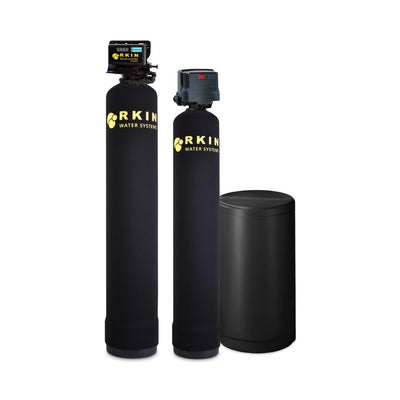
If you're tired of the salt, water, and electricity overhead of a traditional softener, salt-free systems like the RKIN OnliSoft Salt-Free Water Conditioner skip regeneration entirely — no brine flush, no wastewater, no monthly salt bag. The TAC media inside conditions hardness without ion exchange, which means there's nothing to "stick" mid-cycle and nothing draining to the sewer in the middle of the night.
Cause 4: A Slab Leak or Underground Service Line Leak
If the meter is moving but you can't find any indoor source, the leak is probably between the meter and the house — or under the slab.
Clues: - Wet patches in the yard with no rain - A section of grass that's noticeably greener - Damp baseboards or warm spots on a slab floor - A faint hissing sound near a wall when everything is off
Slab and service-line leaks are not DIY fixes. Shut the main off, confirm the meter stops, and call a plumber with electronic leak detection equipment. The earlier you catch it, the smaller the wall or concrete repair.
Cause 5: A Failed Reverse Osmosis or Water Heater
Two appliances quietly drain water without making a mess until they really fail.
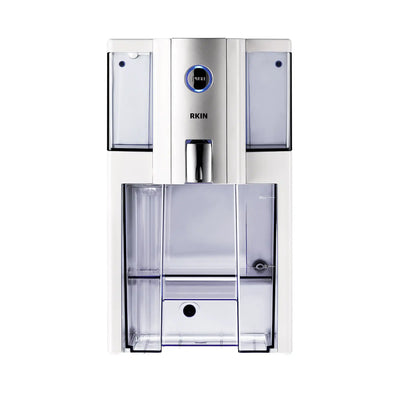
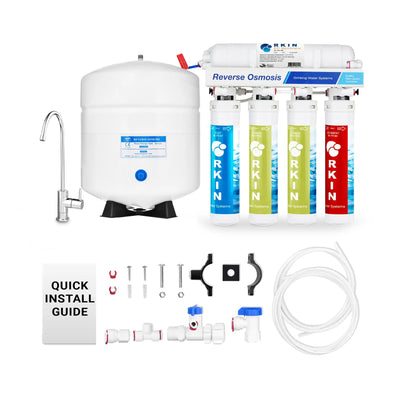
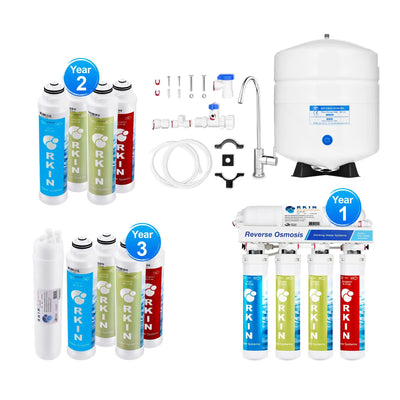
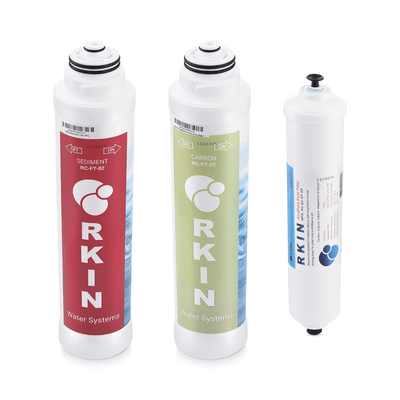
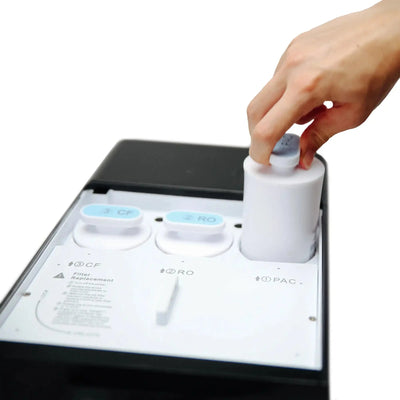
Reverse osmosis units with old, clogged membranes can get stuck in continuous flush mode, sending gallons to the drain line every hour. If you have an older RO with a tank under the sink and you've never replaced the membrane, that's worth checking. Modern tankless designs like the RKIN Flash Undersink RO System use a fraction of the wastewater of older 4:1 ratio systems — typically closer to 1.5:1 — and won't run continuously when the membrane wears out.
Water heaters with a failed tank can leak slowly into a drip pan, into the floor, or directly into a drain. Check the pan, check the floor around the base, and listen for the burner or element cycling on more often than usual.
Cause 6: Filter Backwash on Whole-House Systems
Some whole-house filter systems backwash automatically — flushing accumulated sediment to the drain on a timer. A stuck backwash valve, a controller set to backwash daily instead of weekly, or a controller stuck in backwash can dump hundreds of gallons.
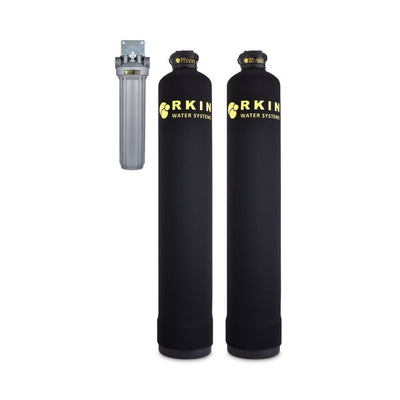
This is one reason RKIN designed the CBS Dual Carbon Whole House Water Treatment System without a backwash cycle — replaceable cartridges instead of a media bed mean no scheduled drain flush, no controller to fail, and no surprise water on the bill from a system "doing its job."
If your existing whole-house unit backwashes, check the controller. If it's been backwashing every day for the last month, you found your bill.
Cause 7: Seasonal Use You're Not Counting
Spring and early summer are the highest-bill months for most households. A few often-missed contributors:
- Filling the pool or spa — a 15,000-gallon pool fill can equal 3 months of normal indoor use
- Power-washing decks, siding, or driveways
- Topping off pools weekly for evaporation (especially in FL, TX, AZ)
- Watering new sod or a vegetable garden
- Houseguests — every additional person adds 50-100 gallons per day
If the bill jump lines up with one of these, you don't have a leak. You have a season.
How to Stop the Next Surprise Bill
- Read your meter weekly for one month. Pick a fixed time. You'll catch leaks within days instead of waiting on a bill.
- Test every toilet flapper twice a year with the food coloring trick.
- Walk your irrigation zones at the start of the season and after any controller power outage.
- Service softeners and filters annually — or switch to systems without regen cycles or backwash if low maintenance is the goal.
- Install a smart leak detector under sinks, near the water heater, and at any RO unit.
A 30-minute Saturday inspection is much cheaper than a 200% bill.
Frequently Asked Questions
How much can a running toilet add to my water bill?
A toilet with a leaking flapper can waste 1 to 4 gallons per minute, or 1,440 to 5,760 gallons per day. At average U.S. water and sewer rates of about $0.013 per gallon combined, that's $19 to $75 per day, or $570 to $2,250 per month. A single bad flapper accounts for the entire spike on most "sudden high bill" calls.
How do I check for a leak with my water meter?
Turn off every faucet, appliance, ice maker, and irrigation zone in the house. Note the meter reading. Wait 1-2 hours without using any water. If the reading changed, you have a leak somewhere in the system. Many modern meters also have a small triangle or dial that spins when even a trickle of water is moving — if it's spinning with everything off, you have a leak.
Can a water softener cause a high water bill?
Yes. A salt-based softener uses 35-65 gallons of water per regeneration cycle, and a malfunction can cause it to regenerate every day or get stuck running continuously. If your softener is the source, you'll usually see fast salt depletion and water above the salt level in the brine tank. Salt-free systems like the RKIN OnliSoft don't regenerate at all and avoid this category of failure.
Will my utility company forgive a high bill from a hidden leak?
Many utilities offer a one-time leak adjustment if you can show proof of repair (a plumber's invoice, a receipt for parts). Call billing as soon as you confirm and fix the leak — most programs require the request within 30-60 days of the bill.
How much water does a slab leak waste?
Slab leaks can range from a few gallons per day (a pinhole) to several hundred gallons per hour (a fully ruptured line). The bigger concern is the hidden damage to the foundation and flooring — by the time the bill spikes are obvious, water has often been soaking the slab for weeks.
Can a reverse osmosis system waste a lot of water?
Older RO systems used a 4:1 wastewater ratio — 4 gallons sent to the drain for every 1 gallon of filtered water produced. A clogged membrane or a stuck shut-off valve can push that even higher. Modern tankless designs operate closer to a 1.5:1 ratio, and a failing membrane signals through slow flow rather than continuous drainage.
Stop Paying for Water That Goes Down the Drain
A high water bill is almost always fixable in an afternoon. Walk the meter test first, then check toilets, irrigation, the softener, and any whole-house equipment that backwashes or regenerates.
If the audit points to your softener or RO system as the silent water hog, RKIN's whole-house treatment systems are designed without continuous regen or backwash cycles — so the equipment that makes your water better doesn't quietly send gallons to the sewer at 2 a.m. Browse the lineup or contact our team for a recommendation based on your water report and household size.





0 comments