





black particles in water
Black Specks in Tap Water? What Homeowners Should Check

Black specks in tap water usually mean one of four things: something broke down in the fixture, carbon fines came loose from a filter, sediment moved through the line, or minerals such as manganese are showing up as dark particles.
The right response is not panic and it is not guessing. It is isolation. You need to know whether the black particles come from one faucet, the hot water side, the whole house, a new filter, or the source water. That answer decides whether you clean an aerator, call a plumber, flush a line, test a well, or look at whole-house filtration.
Start With Where the Black Specks Appear
The location tells you more than the color. A few black flecks in one bathroom faucet point to a very different problem than black sediment at every cold tap after a storm or utility repair.
Use four clean glasses. Fill one from the kitchen cold tap, one from the kitchen hot tap after it runs, one from a bathroom cold tap, and one from the refrigerator dispenser if you have one. Let each glass sit on a white paper towel or near a white bowl so small particles are easier to see.
If only one faucet shows specks, start at that fixture. If only hot water shows specks, look at the water heater and hot-side plumbing. If the refrigerator shows specks, check the fridge cartridge and line. If every cold tap shows particles, the issue may be entering the home or moving through main plumbing.
The EPA’s Consumer Confidence Report page is a useful starting point for city-water homes because it explains what utilities report annually. But a yearly report will not always explain a same-day plumbing event inside your home. You still need the fixture check.
Common Causes of Black Particles in Water
Black specks can come from several sources. The goal is to narrow the list without making the problem bigger than it is.
- Rubber washer or gasket breakdown: Small black bits from a faucet washer, supply line, shutoff valve, or flexible hose can appear at one fixture.
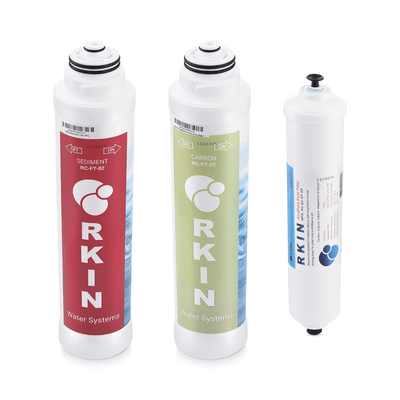
- Carbon fines from a filter: New or disturbed carbon filters can release small dark particles if they are not flushed correctly.
- Manganese or iron-related sediment: Dark staining or particles can be tied to minerals in some wells and distribution systems.
- Water heater debris: If the specks appear mostly on hot water, sediment or internal components may be involved.
- Utility or plumbing disturbance: Main breaks, hydrant flushing, repair work, or shutoff events can stir up material in lines.
- Well sediment: Private wells can pull in grit, organic matter, iron, manganese, or other particles depending on the well and local conditions.
Penn State Extension’s guide to common drinking-water problems and solutions is helpful because it separates taste, color, odor, and particles instead of treating every water complaint as one issue. That is the right mindset here.
What Not to Do First
Do not pour the specks into the drain and rely on memory. Save a sample. Use a clear glass, take a photo, and note the fixture, hot or cold side, date, and whether the water was first draw or after flushing.
Do not assume black specks mean your whole home needs a new system. A broken washer at one faucet is not a whole-house water problem. Replacing equipment before isolating the source can waste time and still leave the same fixture shedding particles.
Do not assume a filter is bad just because a new carbon cartridge released dark fines at first. Many carbon filters require flushing. Follow the filter instructions and compare water before and after the filter.
Also, do not ignore official notices. If your utility sends a do-not-use, boil-water, or flushing notice, follow that notice first. A home filter is not a reason to override a water provider’s emergency instruction.
A Simple Isolation Checklist
Run this checklist in order.
- Remove and rinse the aerator: Unscrew the faucet aerator, look for trapped black particles, then run water without the aerator for a short period.
- Compare hot and cold water: Particles only on hot water point toward the water heater or hot-side plumbing.
- Check recent changes: New filter, new softener, water heater work, shutoff, plumbing repair, hydrant flushing, or nearby main work can all matter.
- Flush gently: Run the affected cold tap and watch whether the particles clear or keep returning.
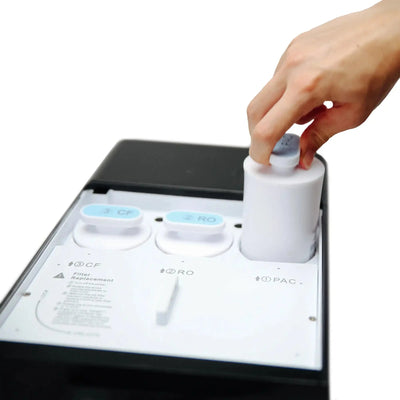
- Inspect cartridges: If you recently changed a carbon filter, confirm the correct flushing process and orientation.
- Collect a sample: If particles return, save them for a plumber, utility, or lab instead of guessing from a photo alone.
If the particles smear black on a paper towel, they may be organic, rubber, or carbon-related. If they feel gritty, sediment or mineral particles are more likely. That observation is not a lab test, but it helps you ask better questions.
City Water vs Well Water: Different Next Steps
City-water homes should check for utility events. Search your utility’s alerts, call the water provider, and ask whether there was hydrant flushing, a main break, pressure change, or repair near your address. Then compare your findings with the current water report.
Private well homes need a different process. The EPA private wells page states that well owners are responsible for testing and maintaining their own water. If black specks appear across the home, especially after heavy rain, pump work, pressure-tank work, or filter changes, a well test and mechanical inspection make sense.
For wells, do not stop at a visual guess. Test for the likely local concerns and the symptoms you see: sediment, iron, manganese, hardness, bacteria, nitrate, and other location-specific items. If the water also smells, stains fixtures, or changes color, include that in the lab or contractor conversation.
For city water, do not let a clean annual report erase a local plumbing issue. A utility report describes the system broadly. Your faucet still has its own plumbing, valves, hoses, fixtures, cartridges, and water heater.
When a Sediment Filter Makes Sense
A sediment filter makes sense when particles are entering the home or appearing at multiple fixtures. It is not the first fix for one failing faucet washer. It is also not a magic answer for dissolved contaminants. Sediment filters catch particles by size; they do not do the same job as carbon filtration, softening, conditioning, UV, or reverse osmosis.
That is why micron rating matters. A lower micron rating catches smaller particles but can clog faster when water has heavy sediment. A higher micron rating may last longer but allow finer particles through. The right choice depends on the particle load, water source, flow needs, and what the filter is protecting.
If you have a private well, a sediment stage is often used to protect downstream equipment from grit and suspended solids. If you have city water and particles show up after main work, the right action may be utility flushing and fixture cleaning, not a permanent main-line filter. The pattern matters.
The EPA’s drinking water regulations page is a reminder that water treatment is contaminant-specific. Particles, taste, hardness, PFAS, lead, and dissolved solids are not the same problem.
How RKIN fits this decision
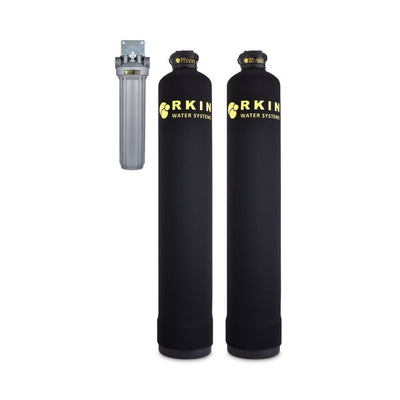
If inspection or testing confirms suspended sediment entering at multiple fixtures, compare appropriately sized whole-house sediment filters by flow rate, particle rating, pressure drop, and service schedule. Sediment filtration targets suspended particles; it does not address dissolved contaminants.
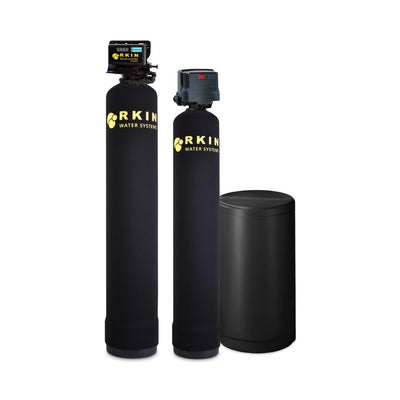
If the issue also includes taste or odor across the home, browse RKIN whole-house water treatment and match each stage to the source-water problem. Sediment filtration, carbon treatment, hardness treatment, and well-water oxidation are different jobs.
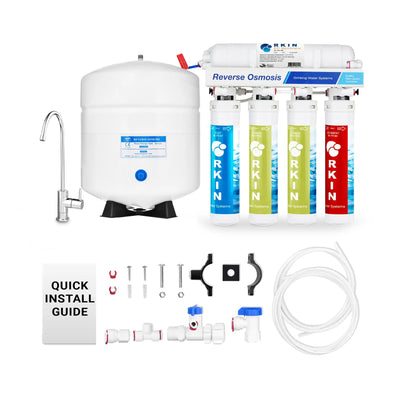
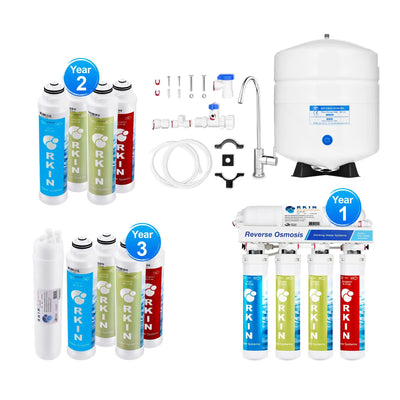
If the source is a fixture washer, supply line, water heater, or a new carbon cartridge, fix or flush that source first. A countertop or under-sink RO system is not the first response to black specks unless a separate drinking-water test identifies a problem that the exact model is documented to reduce.
In my house, I would not choose the product until I knew whether the black specks were fixture debris, filter carbon, sediment, or well minerals. The source decides the fix.
When to Test or Call a Pro
Call your utility if you are on city water and black specks appear at multiple fixtures after nearby road work, hydrant flushing, pressure loss, or a public notice. Ask whether other homes reported the same issue and what flushing steps they recommend.
Call a plumber if the specks appear from one fixture repeatedly, if hot water is the only source, if the water heater is old or recently serviced, or if black particles keep collecting in aerators. Fixture parts and water-heater issues are plumbing problems before they are filter problems.
Test the water if you are on a private well, if the particles return after flushing, if the water also changes color or smell, or if you cannot identify the source. Use a lab test that matches the symptom instead of a generic strip that gives vague answers.
Frequently Asked Questions
What causes black specks in tap water?
Common causes include deteriorating rubber washers, carbon fines from a filter, manganese or iron-related particles, water heater debris, plumbing work, utility flushing, and well sediment. Start by checking whether the specks appear at one fixture, only hot water, or every cold tap.
Are black particles in water always dangerous?
Not always, but you should not guess. Some black particles come from fixture parts or carbon filters, while others point to source-water or plumbing issues. Save a sample, isolate the fixture, follow any utility notice, and test if the particles keep returning.
Why are black specks coming from only one faucet?
One-faucet black specks often point to the aerator, faucet washer, supply line, shutoff valve, or fixture-specific cartridge. Remove and rinse the aerator, compare another faucet, and call a plumber if the particles return from that fixture only.
Can a water filter cause black specks?
Yes. Carbon filters can release fine black particles when new, disturbed, or not flushed according to instructions. If the specks started right after a filter change, flush the filter as directed and compare water before and after the filter.
Do I need a whole-house filter for black sediment?
Maybe, if black sediment appears at multiple fixtures and testing or inspection shows particles entering the home. If the issue is one faucet or a new cartridge releasing carbon fines, a whole-house filter may not be the right first fix.
Ready to Find the Source?
Black specks in tap water are a clue, not a diagnosis. Check where they appear, save a sample, clean the aerator, compare hot and cold water, and use testing or a plumber when the pattern does not clear.
If testing confirms suspended sediment entering the home, compare whole-house sediment filters by documented particle rating, required flow, pressure drop, and service schedule. For a fixture, water-heater, or cartridge source, correct that source before buying main-line equipment.





0 comments