

brown water after iron filter backwash
Dirty Water After Well Filter Backwash: What It Means

Dirty water for a minute after your well filter backwashes is not something to ignore, but it also does not automatically mean the filter is ruined. It usually means particles loosened during the backwash or rinse cycle are reaching the house side before the system has fully cleared.
The clue is timing. If the water turns gray, brown, or rusty right after the backwash cycle, then clears after a short flush, the issue is likely tied to rinse time, drain flow, media settling, or iron and manganese load. If the color stays all day, shows up at only one fixture, or appears even when the filter has not cycled, widen the diagnosis.
What a Backwash Cycle Is Supposed to Do
Many whole-house well filters use media beds to capture oxidized iron, manganese, sulfur-related compounds, sediment, or other particles. During normal service, water flows through the media and the media catches what it is meant to catch. Over time, that bed needs to clean itself.
A backwash cycle reverses flow through the tank and sends dirty water to drain. The goal is simple: lift and loosen the media bed, flush trapped particles out, then rinse the bed so clean water can return to the house. On many systems, this happens overnight so homeowners never notice it.
That automatic timing is helpful until something changes. A storm can stir up sediment. Heavy irrigation can pull more water through the well. A growing family can change daily demand. A drain line that was fine last year can clog slowly. When the first morning draw suddenly looks gray or rusty, the system is giving you a timing clue, not a complete answer. Take a photo of the sample and note whether the color clears, settles, or leaves grit behind.
Dirty water after the cycle means that last part did not finish cleanly. The rinse may have ended too soon. The drain line may be restricted. The well pump may not be providing enough flow during backwash. The media may be fouled, overloaded, or channeling. Or the well may be feeding more iron, manganese, or sediment than the system was selected to handle.
That is why the answer is not always “replace the filter.” You need to know whether the symptom is a setup issue, a maintenance issue, or a water chemistry issue.
Color Tells You Where to Look First
The color of the first draw after backwash is a useful clue.
Brown, orange, or rusty water often points toward iron. The EPA's secondary standards list iron at 0.3 mg/L as a benchmark for taste, staining, and appearance issues. Water can leave orange stains, collect in toilet tanks, or look rusty after oxygen changes dissolved iron into visible particles.
Gray or black water can point toward manganese, fine sediment, or media fines. The EPA's secondary standard for manganese is 0.05 mg/L. Manganese is often discussed with black staining or dark particles, but field symptoms vary by well chemistry.
Cloudy water that clears from the bottom up may be air. Cloudiness with grit in the bottom of a glass is more likely sediment. A rotten-egg odor points the investigation toward sulfur or hydrogen sulfide, especially if the smell is strongest in cold water from the well side.
Use those clues, but do not stop there. The CDC recommends annual private well testing for total coliform bacteria, nitrates, total dissolved solids, and pH. When staining, odor, or color appears, add iron, manganese, hardness, sulfur-related testing, and any local contaminants your county or lab recommends.
The Quick Home Checks Before You Call It Failed
Start with the easiest checks and write down what you see. A simple log saves time when you talk to a water specialist.
- Note the exact time the backwash starts and ends.
- Run a cold tap closest to the treatment system right after the cycle and time how long the color lasts.
- Fill a clear glass at 15 seconds, 45 seconds, and two minutes.
- Check whether hot water has the same color. If hot water is worse, the water heater may be holding sediment.
- Look at the drain line during backwash if it is visible. Weak flow can leave particles behind.
- Check whether the problem happens after every cycle or only after heavy water use, storms, irrigation, or long no-use periods.
Do not bypass equipment unless you know the plumbing and the next fixture can handle the raw well water. Also avoid changing several settings at once. If you lengthen the rinse, clean a screen, and change the backwash frequency on the same day, you will not know which step helped.
What Usually Causes Dirty Water After Backwash
Four causes show up again and again.
First, the rinse cycle may be too short. Backwash stirs up the media bed by design. If the system returns to service before the bed settles and rinses, the first water can carry fine particles to the house.
Second, backwash flow may be too weak. Heavy media needs enough flow to lift and clean. A restricted drain line, weak pump, clogged injector, or undersized plumbing can let iron and sediment stay in the media bed.
Third, the media may be overloaded. If the original water test understated iron or manganese, or if the well chemistry changed, the filter may be catching more than it can clear in a normal cycle.
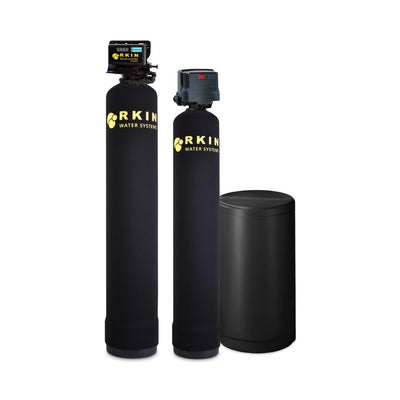
Fourth, the system may be mismatched to the water. A softener can handle hardness and small amounts of clear-water iron in some homes, but it is not the same as a dedicated iron, sulfur, and manganese filter. Carbon, sediment, softening, and oxidation media each solve different problems.
A 2025 Water Research paper on groundwater filtration found that backwashing affects iron and manganese removal behavior and can be followed by turbidity changes as filter media and particles resettle. Residential equipment is not the same as a municipal rapid sand filter, but the principle is useful: backwash is a cleaning event, and cleaning events can move particles if the cycle is not dialed in.
The RKIN Fit for Iron, Sulfur, and Manganese Wells
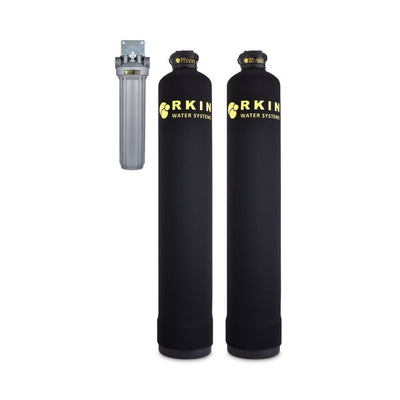
If lab testing shows iron, sulfur odor, or manganese as the main issue, the Sulfur, Iron, Manganese Well Water Filter System is designed for that category of well water problem. The system uses an air pocket and Greensand Fusion media to oxidize and reduce iron, sulfur, and manganese, then sends captured material out during backwash. See the product page here: Sulfur, Iron, Manganese Well Water Filter System.
If hardness is also part of the report, the right design may include a softener or conditioner after the well filter. If salty taste or high TDS is the real issue, that is a different path and may call for reverse osmosis instead. The lab report decides the order.
For whole-home water problems, the safest buying step is a certified lab test plus a short equipment review. Bring the raw-water result, the treated-water result, and the timing notes from the backwash symptom.
Me personally, I would log the timing and test the water before calling the filter failed.
Frequently Asked Questions
Is dirty water after well filter backwash normal?
A short burst can happen when particles loosen during backwash and rinse, but it should not be treated as normal if it repeats, gets worse, or lasts beyond a brief flush. Track the timing, color, and affected fixtures, then compare those notes with a current water test.
Why is my water gray after the well filter backwashes?
Gray water after backwash can come from fine sediment, media fines, manganese, air, or particles that did not rinse fully before the system returned to service. Fill a clear glass and watch whether it settles, clears, or leaves grit. That simple check helps narrow the cause.
Why is my water brown after an iron filter backwash?
Brown or orange water often points to iron particles. During backwash, trapped iron is supposed to flush to drain. If some reaches the house afterward, check rinse time, drain flow, pump flow, media condition, and the latest iron level from a certified lab test.
Should I replace the filter media right away?
Not first. Confirm the backwash and rinse settings, check drain flow, and test raw water and treated water. Media replacement may be needed if the bed is fouled or exhausted, but many post-backwash color issues start with flow, timing, or water chemistry changes.
What should I test for when well water changes color?
At minimum, keep up with annual private well testing for total coliform bacteria, nitrates, total dissolved solids, and pH, as CDC recommends. For color after backwash, add iron, manganese, hardness, pH, sulfur-related testing, and sediment or tannins if the lab or local health department recommends them.
Ready to Stop Guessing at Well Water Problems?
Dirty water after backwash is a timing clue. Test the water, record when the color appears, and match the system to the actual chemistry. If iron, sulfur, or manganese is confirmed, review the Sulfur, Iron, Manganese Well Water Filter System at Sulfur, Iron, Manganese Well Water Filter System or contact RKIN for a whole-home water review at contact RKIN.






0 comments