
high tds well water
Whole House Reverse Osmosis for Well Water: When It Fits

Whole house reverse osmosis can be the right answer for a well, but it should not be the first guess. When a homeowner sees salty taste, red debris, rotten-egg odor, and water that already feels soft, those are separate clues. Treating them as one problem can lead to the wrong system.
That diagnostic angle is timely because more homeowners are using forum advice, handheld meters, and screenshots of lab reports before calling a water specialist. The better move is to slow down and sort the water into jobs: dissolved minerals, sediment, odor, staining, hardness, and drinking-water concerns. The EPA says private wells should be tested annually for total coliform bacteria, nitrates, total dissolved solids, and pH, and its private well guidance says to test right away when water odor, color, or taste changes.
Start With the Report, Not the Equipment
A private well is its own water source. Your neighbor’s system, a forum comment, or a single TDS reading can point you in a direction, but it cannot replace a certified lab report.
The EPA’s private well guidance says well owners should test annually for total coliform bacteria, nitrates, total dissolved solids, and pH, and should test right away when water odor, color, or taste changes. EPA also gives useful clue-based testing prompts: salty taste can point toward chloride, sodium, and total dissolved solids; stained fixtures can point toward iron, copper, or manganese; objectionable smell can point toward hydrogen sulfide, corrosion, or metals.
That is why “whole house reverse osmosis for well water” should start with a question: what does the water report say the system needs to do?
A system that is perfect for high dissolved solids may not be the right first step for iron sediment. A carbon filter that improves taste may not reduce salt. A softener can handle hardness, but it will not make salty water taste less salty. Each symptom has a lane.
What Whole House Reverse Osmosis Actually Solves
Reverse osmosis uses pressure to push water through a semi-permeable membrane. That membrane separates water from many dissolved substances, which is why RO is often used when total dissolved solids, salt, or certain dissolved contaminants are the main concern.
Whole house RO applies that idea at the point of entry rather than at one faucet. Instead of filtering only drinking water, it filters water before it feeds fixtures and appliances. That can make sense in harder cases where the water source has high dissolved solids or a salt-related problem that affects more than the kitchen sink.
But whole-home RO is not a magic box. It needs the right feed-water conditions. Heavy sediment, iron, manganese, hardness, and hydrogen sulfide can foul or stress membranes if they are not addressed first. That is why pre-treatment is often part of a whole-home RO design.
Think of the membrane as the final decision-maker, not the mudroom. You do not want it doing the job of a sediment filter, iron filter, or odor-control stage.
Clue by Clue: What Your Well Symptoms May Mean
Salty taste usually points toward dissolved minerals such as chloride, sodium, sulfate, or a high total dissolved solids reading. The EPA’s secondary standards list total dissolved solids at 500 mg/L for hardness, deposits, colored water, staining, and salty taste. Sulfate is also listed at 250 mg/L for salty taste.
Red debris often points toward iron, pipe scale, or sediment. Orange staining near fixtures is usually a clue to iron. Black or brown staining can point toward manganese. Those need filtration and sizing based on actual levels, not just color.
Rotten-egg odor often points toward hydrogen sulfide or sulfur-related well conditions. It may need oxidation, specialized media, or a well-specific system before RO is considered.
Water that feels too soft can mean the home already has a softener, low hardness, or a sodium-heavy profile. If the water already tastes salty, adding or adjusting softening without a lab report can make the owner more confused.
When those clues arrive together, do not choose one giant answer from the symptom list. Build the order of treatment from the report.
What Does Not Work Well
A TDS meter alone does not tell you what the dissolved solids are. It shows a conductivity-based number. That number can be useful as a trend, but it cannot separate sodium from chloride, sulfate, hardness minerals, or other dissolved substances.
A pitcher filter is not designed for whole-home well problems. It may improve taste at one glass, but it will not handle sediment at the pressure tank, staining at showers, odor in hot water, or dissolved solids throughout the house.
A softener is not reverse osmosis. It exchanges hardness minerals, but it does not lower total dissolved solids in the same way an RO membrane can. If salty taste is the complaint, softening alone may not be the right answer.
Buying a whole-home RO system without pre-treatment planning can also backfire. If the feed water carries sediment, iron, sulfur, or hardness beyond what the membrane should see, the system can require more service than expected.
RKIN Product Fit for Whole-Home RO Decisions
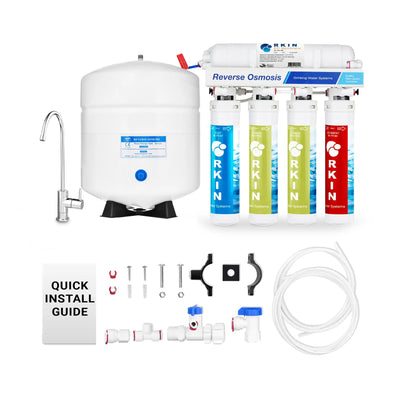
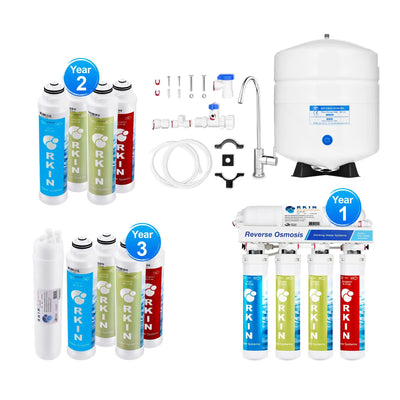
The Whole Home Reverse Osmosis System is the product match when the water report points to a whole-home dissolved-solids problem and the home needs RO-treated water beyond one faucet. It is the bigger answer, and it should be sized and paired with the right pre-treatment based on the well report.
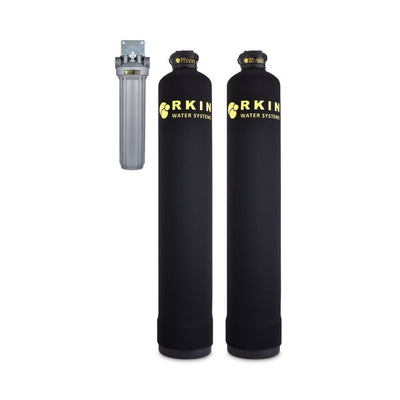
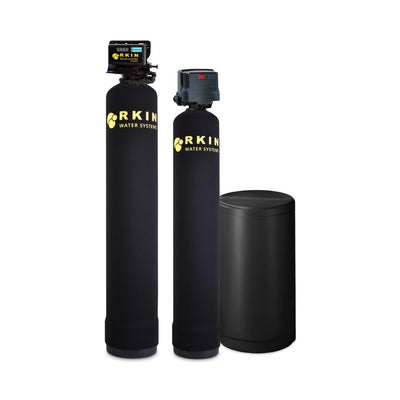
For many well homes, the right first step is not the RO membrane. It is sediment control, iron or sulfur treatment, or a well-specific whole-house setup. RKIN’s well water systems collection is built around issues like iron staining, sulfur smell, manganese, hardness, and sediment. If the report shows those as the main problems, fix that lane first.
The honest answer is: whole-home RO can fit, but it is not the default. If the report says salt or total dissolved solids are the root problem, it may be exactly the right conversation. If the report says iron, sulfur, or sediment are driving the complaint, the best design may start somewhere else.
A Simple Decision Order for Well Water
Use this order before choosing equipment:
- First, get a current lab report from a state-certified drinking water lab.
- Second, separate the symptoms into dissolved solids, sediment, odor, staining, and hardness.
- Third, choose pre-treatment before RO if iron, manganese, sulfur, hardness, or heavy sediment are present.
- Fourth, decide whether the problem needs treatment at one faucet or the whole home.
- Fifth, size the system around flow, storage, recovery, and household demand.
This is also where a water specialist earns the phone call. The wrong setup can technically filter water and still miss the homeowner’s real complaint. A good design should tell you what it will address, what it will not address, and what maintenance to expect.
One more point: whole-home RO usually changes the entire plumbing plan. You may need a storage tank, repressurization, a drainage path, and post-treatment choices based on household demand. Those details are not add-ons for their own sake; they are design requirements. A point-of-use system can be simpler when the concern is drinking and cooking water only.
Me personally, I would test the well before sizing whole-house reverse osmosis.
Frequently Asked Questions
Is whole house reverse osmosis good for well water?
It can be a fit when the lab report points to high total dissolved solids, salt, or dissolved substances that need RO treatment throughout the home. It is not the first answer for every well. Sediment, iron, sulfur, and hardness often need pre-treatment first.
Does salty well water mean I need whole house RO?
Not automatically. Salty taste is a clue to test for chloride, sodium, sulfate, and total dissolved solids. If those results show a dissolved-solids issue affecting the whole home, whole-home RO may be worth considering. If the issue is isolated to drinking water, a point-of-use RO system may fit better.
What should I test before buying a well water system?
At minimum, follow EPA guidance for total coliform bacteria, nitrates, total dissolved solids, and pH. For symptoms like salty taste, red debris, stains, or odor, ask the lab or local health department about chloride, sodium, sulfate, iron, manganese, hardness, hydrogen sulfide, and any local contaminants of concern.
Do I need prefilters before whole-home reverse osmosis?
Often, yes. Whole-home RO membranes should not be treated like sediment or iron filters. If the well has grit, iron, manganese, sulfur odor, or hardness, the system design may need pre-treatment to protect the RO membrane and keep the setup working as intended.
Is a countertop RO enough for well water?
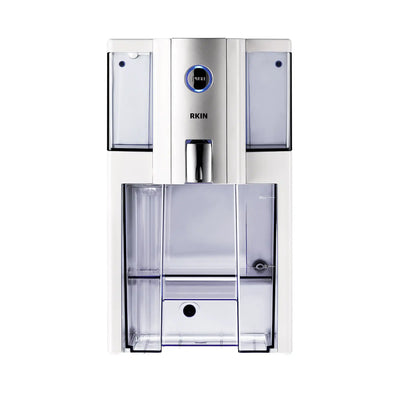
A countertop RO system can be a good fit when the goal is better drinking and cooking water at one location. If the well problem affects showers, laundry, appliances, and every tap, a whole-home plan may make more sense after the lab report is reviewed.
Ready to Match the System to the Report?
If your well water tastes salty, leaves red debris, smells like rotten eggs, or feels confusing, do not start with the biggest system. Start with the report and the job list.
Review the Whole Home Reverse Osmosis System or contact RKIN for help deciding whether your well needs RO, pre-treatment, or a different whole-home path.






0 comments