




do water softeners waste water
Do Water Softeners Waste Water? Salt-Free Summer Guide

Short answer: a traditional salt-based water softener uses extra water during regeneration. A salt-free conditioner does not regenerate the same way, so it does not use brine discharge cycles. Which one fits depends on whether you need true softening or scale control.
That question gets louder in summer. EPA WaterSense notes that outdoor water use can make up a large share of household water use in hot months, and drought maps change week to week. If your city is asking people to watch water use, it is fair to ask what your water treatment system is doing behind the scenes.
How does a salt-based water softener use water?
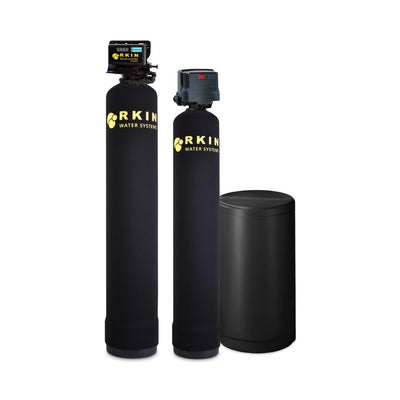
A salt-based water softener uses ion exchange. In plain English, it trades hardness minerals in the water for sodium or potassium ions on resin beads inside the tank. Over time, those resin beads fill up with hardness minerals and need to be cleaned.
That cleaning cycle is called regeneration. During regeneration, the system draws brine from the salt tank, rinses the resin, and sends the rinse water to drain. That is where the added water use comes from.
The exact amount depends on the system size, settings, water hardness, household water use, and how often the system regenerates. A properly sized and programmed softener should regenerate only when needed. An oversized, undersized, or poorly programmed system can waste more water and salt than necessary.
The important point is simple: salt-based softening is real softening, but it comes with a maintenance and discharge pattern. You add salt, the system regenerates, and wastewater goes to drain.
A second check is your regeneration schedule. If the system regenerates every night even when the household used very little water, the settings may not match the home anymore. Demand-initiated regeneration is usually more efficient than a fixed schedule because it responds to actual water use instead of a calendar.
Is that water use always a problem?
Not always. If your water is very hard, a salt-based softener can be the right tool. Hardness minerals behave like sugar dissolved in tea. Once they are dissolved, you do not remove them with a screen. Ion exchange is built for that job.
The trade-off is that some homes do not need that level of treatment. If the main complaint is scale on fixtures, spots, or mineral buildup on surfaces, a salt-free conditioner may be enough. If the home has very hard water and the goal is the slippery feel of softened water, a salt-based softener may still be the better fit.
Make the choice from the water test: use salt-based ion exchange when you want hardness removed, or salt-free conditioning when your goal is controlling scale without brine discharge.
In my house, I would not choose a salt-based system just because a salesperson said "hard water". I would want to know the hardness level, the number of people in the home, whether the home is on sewer or septic, and whether the goal is true softening or scale control.
How is a salt-free conditioner different?
A salt-free conditioner does not remove hardness minerals by ion exchange. Instead, it changes how hardness minerals behave so they are less likely to stick to surfaces as hard scale. RKIN OnliSoft uses Seed Assisted Crystallization (SAC) to condition hardness minerals for scale control.
Think of it like magnets. Hardness minerals still exist in the water, but the treatment changes their attraction to surfaces. That is why a salt-free conditioner is better described as scale control, not traditional softening.
The upside is that a salt-free conditioner does not need salt bags, does not run brine regeneration cycles, and does not send salty discharge to drain like a traditional softener. The trade-off is that it will not give the exact same feel as ion-exchange softened water.
That honest distinction matters. If you want the classic soft-water feel, choose salt-based softening. If you want to reduce scale concerns without salt or regeneration water, look at salt-free conditioning.
Why does this matter more in summer?
Summer already puts pressure on household water use. EPA WaterSense says outdoor watering can account for a large share of residential water use, especially in hotter regions. Drought.gov updates national drought conditions weekly, and NOAA's seasonal outlooks help show where dry conditions may persist.
A water treatment system is not the only water-use decision in the house. Irrigation, pools, car washing, leaks, and old fixtures can matter more. Still, if you are buying a system in summer, it makes sense to ask whether it regenerates, how often, and what goes to drain.
This is especially important if you are on a septic system or live in an area with salt-discharge concerns. Some communities watch chloride levels closely because salt from water softeners can enter wastewater streams. The Minnesota Pollution Control Agency has advised residents to use less softener salt where possible because chloride does not break down once it enters water.
That does not mean every salt-based softener is bad. It means the setup should match the water and the local context.
What should you check before choosing a softener?
Start with a hardness test. Hardness is commonly measured in grains per gallon or milligrams per liter as calcium carbonate. Without that number, you are guessing.
Next, ask what you want to change:
- If you want less scale on fixtures and appliances, salt-free conditioning may fit.
- If you want true softening and the classic soft-water feel, salt-based softening may fit.
- If you also dislike chlorine taste or odor across the home, pair scale control with carbon filtration.
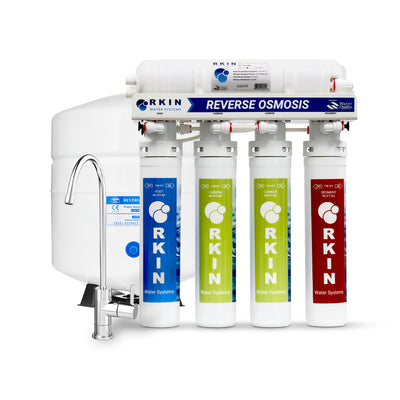
- If your concern is drinking-water contaminants, look at reverse osmosis instead of expecting a softener to do that job.
That last point is important. A softener is not a drinking-water contaminant filter. It is built for hardness. If your question is PFAS, nitrate, fluoride, arsenic, or TDS, you are now in reverse-osmosis territory, not softener territory.
Which RKIN option fits each situation?
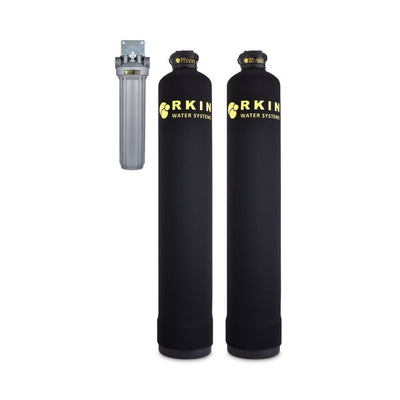
If your priority is scale control without salt or regeneration cycles, the RKIN OnliSoft Salt-Free Water Conditioner is built for that job. It is a whole-house conditioner for homeowners who want to address scale without the maintenance pattern of a salt-based softener.
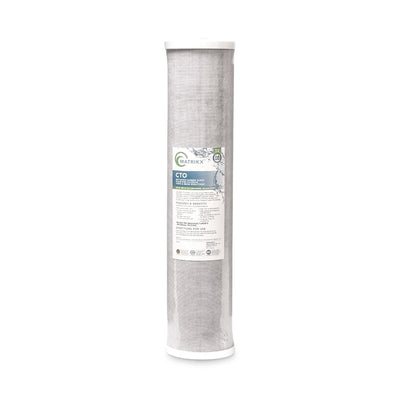
If you want scale control plus whole-house carbon filtration for taste, odor, and chlorine reduction, the RKIN OnliSoft Pro Salt-Free + Carbon Combo is the better comparison. It combines salt-free conditioning with carbon filtration, so the buying question is not just hardness. It is hardness plus water quality preferences across the house.
If your test shows very hard water and you want true ion-exchange softening, a salt-based softener may still be the right answer. No pressure either way. The cleanest recommendation comes from the hardness number and the outcome you actually want.
What does not fix hard-water water usage concerns?
Pitcher filters do not soften whole-house water. They can improve drinking-water taste, depending on the filter, but they do not protect a water heater, shower glass, or fixtures from scale.
Boiling water does not solve hardness for the home. It can leave minerals behind in a kettle, which is why kettles often show white buildup in hard-water houses.
A shower-head filter may improve shower experience for some people, but it is not a whole-house hard-water strategy. It covers one outlet, and it still does not answer the regeneration question if the home has a traditional softener upstream.
The right fix starts with naming the actual problem: water use, salt use, scale, soft-water feel, drinking-water taste, or contaminant reduction.
Frequently Asked Questions
Do salt-free water conditioners waste water?
Salt-free conditioners do not use the same brine regeneration cycle as salt-based softeners, so they do not send regeneration water to drain in that way. They are usually chosen by homeowners who want scale control without salt bags or softener discharge.
Is a salt-free conditioner the same as a water softener?
No. A salt-free conditioner is not the same as ion-exchange softening. It conditions hardness minerals to reduce scale behavior. A salt-based softener removes hardness minerals through ion exchange. Both can be useful, but they solve the problem differently.
How do I know if I need salt-based or salt-free treatment?
Test hardness first, then decide what you want to change. If you want true softening and soft-water feel, salt-based treatment may fit. If you mainly want scale control without salt or regeneration cycles, salt-free conditioning may fit.
Can I use reverse osmosis instead of a softener?
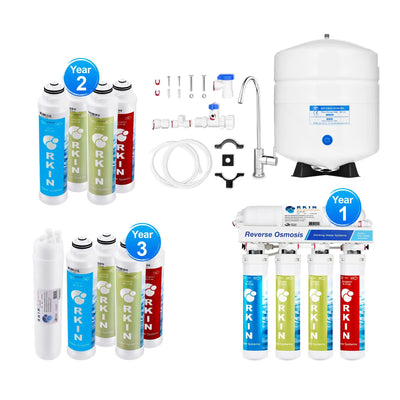
Reverse osmosis is for drinking water, not whole-house hardness control. It can be a strong choice at the kitchen sink for dissolved contaminants and taste, but it will not condition every shower, appliance, or fixture in the home.
Does a water softener help during drought restrictions?
A traditional softener still uses water when it regenerates. If water use is your main concern, ask how often the unit regenerates and whether salt-free conditioning would meet your goal. Also check for leaks and outdoor watering habits, which can drive a lot of summer usage.
Ready to Control Scale Without Salt?
If your goal is scale control without salt bags or regeneration cycles, start with the salt-free path. Compare the RKIN OnliSoft Salt-Free Water Conditioner and decide whether you also want whole-house carbon filtration before choosing a system.





0 comments