
does reverse osmosis remove pharmaceuticals from water
Does Reverse Osmosis Remove Pharmaceuticals from Water?

Short answer: reverse osmosis can reduce many pharmaceutical residues, but performance depends on the compound, membrane, operating conditions, maintenance, and verified test data for the exact system. A normal annual water report does not prove those unregulated residues are absent.
That question became more visible in 2026. On April 2, 2026, the EPA announced its draft Sixth Contaminant Candidate List and, for the first time, named pharmaceuticals and microplastics as priority drinking-water contaminant groups. That does not mean every home has a pharmaceutical problem. It means the concern has moved from internet worry to federal research priority.
For homeowners, the practical search query is simple: does reverse osmosis remove pharmaceuticals from water? The honest answer is that RO can be one of the strongest home drinking-water technologies, but the exact claim depends on the contaminant, the system design, testing data, and filter maintenance.
Why Pharmaceuticals Show Up in Water Conversations
Pharmaceuticals can enter water through several paths: human waste, improper disposal, septic systems, wastewater discharge, and runoff. Utilities process water to meet enforceable drinking-water rules, but not every emerging contaminant has a final federal limit or routine household-level result.
The EPA's 2026 CCL 6 announcement is useful because it separates two ideas that often get mixed together. A contaminant can be on a watch list before it has a national drinking-water standard. A benchmark can help agencies evaluate data without being an enforceable rule. A utility report can satisfy current requirements without answering every question a homeowner has about what may be in the source water.
That is why the first step is not panic shopping. It is checking what is actually known about your water. If you are on city water, start with your Consumer Confidence Report, local utility notices, and any state monitoring pages. If you are on a private well, you own the testing plan. The EPA recommends annual private-well testing for total coliform bacteria, nitrates, total dissolved solids, and pH, plus additional testing when local conditions or water changes point to other concerns.
Pharmaceuticals are harder than hardness, chlorine, or sediment because you cannot see them, taste them, or measure them with a basic TDS meter. A TDS meter tells you dissolved mineral load. It does not tell you whether a specific drug residue, PFAS compound, or disinfection byproduct is present.
What Does Not Work for Pharmaceutical Concerns
Boiling is not a pharmaceutical-removal plan. Boiling can be part of a boil-water notice for microbes when local officials recommend it, but it does not make dissolved chemical contaminants disappear. In some cases, boiling reduces water volume and concentrates what remains.
A pitcher or refrigerator filter may improve taste, but taste improvement is not the same as contaminant reduction. Carbon can adsorb many organic compounds, yet performance depends on the carbon type, contact time, flow rate, cartridge age, and the exact substance being tested. A small filter that is overdue for replacement should not be treated like a lab-verified treatment barrier.
Bottled water is not a clean long-term answer either. It may be useful during an emergency notice or while you are waiting for lab results, but it does not diagnose your home's water. It also creates storage, waste, and consistency problems. If your real question is what your tap contains, the answer starts with testing and source-water information.
The biggest mistake is buying by broad label language. Phrases like “advanced filtration” or “removes contaminants” do not tell you enough. Look for the specific contaminant category, the test standard, the tested model, the capacity, and the replacement schedule. If those details are missing, assume the claim is incomplete.
How Reverse Osmosis Fits
Reverse osmosis works by forcing water through a thin membrane that separates many dissolved substances from the treated water stream. The EPA explains that RO systems use a three-, four-, or five-stage process and require filter and membrane replacement to keep performance on track. That maintenance point matters as much as the membrane itself.
For pharmaceutical questions, RO is usually worth considering because it is a broad drinking-water treatment approach. It is not just a taste filter. It is designed around separation at the membrane, often paired with carbon stages before or after the membrane. Those carbon stages can help with chlorine, taste, odor, and some organic compounds, while the membrane handles many dissolved contaminants.
Still, do not turn that into a universal claim. “Does reverse osmosis remove pharmaceuticals?” is not as precise as “Was this exact system tested for the pharmaceutical or contaminant class I care about?” The right filter decision should be tied to a performance data sheet, third-party testing, certification where applicable, and a replacement schedule you can actually follow.
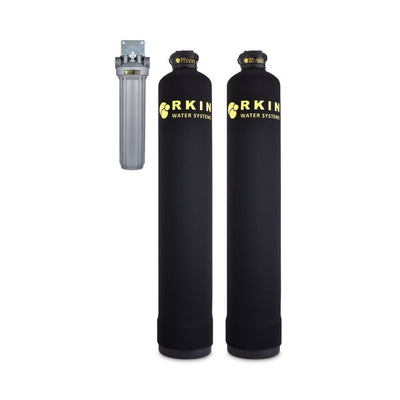
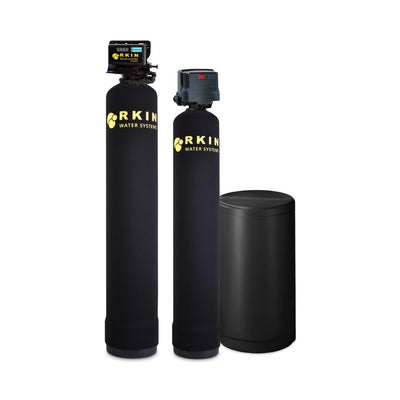
Also pay attention to where you want treatment. A point-of-use RO system filters water at one tap or appliance. That is usually the right place to start when the concern is drinking water, coffee, cooking water, or ice. A whole-house system filters water before it branches through the home, but whole-house RO is a different design category with storage, pump, flow, and plumbing requirements. Do not assume a kitchen RO and a point-of-entry RO are interchangeable.
How to Choose a Filter Without Overbuying
Start with your source. City-water households should read the latest utility report and search for local notices about source-water changes, treatment changes, PFAS monitoring, lead service lines, and unregulated contaminants. Private-well households should use a certified lab and ask which added panels make sense for nearby land use, septic conditions, agriculture, industry, flooding, or known local issues.
Then match the system to the job. If your concern is taste and chlorine, carbon may be enough. If your report points to dissolved solids, arsenic, fluoride, nitrate, PFAS, or a broad drinking-water treatment need, reverse osmosis deserves a closer look. If your concern is hardness scale throughout the home, RO at the kitchen is not the right whole-home answer; that is a conditioning or softening question.
Read the performance data. Look for the exact model, not only the brand. Confirm the contaminant names. Confirm whether the test is third-party or certified. Confirm the filter life. A filter only helps if the household replaces cartridges and membranes on schedule.
Finally, be honest about installation. If you rent, cannot modify plumbing, or do not want a drain-line connection under the sink, a countertop system may make more sense. If you own the home and want a dedicated faucet, an under-sink system may be the cleaner long-term setup.
Where RKIN Fits
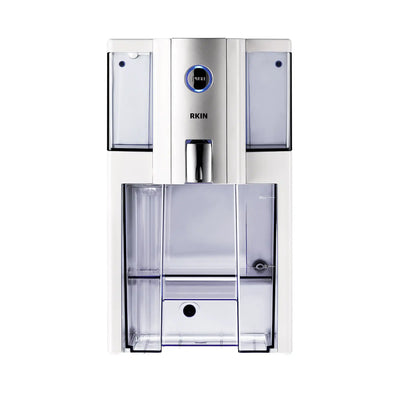
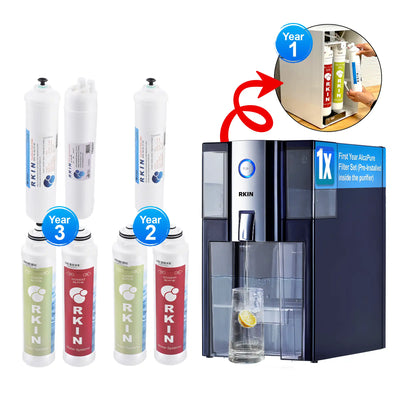
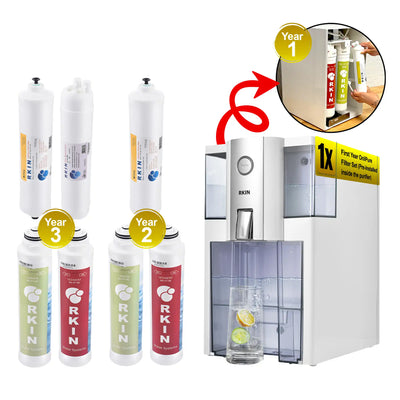
This is what the RKIN Zero Installation Purifier is designed for: RO-grade drinking water without a plumbing project. It uses a countertop reverse osmosis design for households that want stronger filtration at the tap but cannot, or do not want to, cut into the sink cabinet.
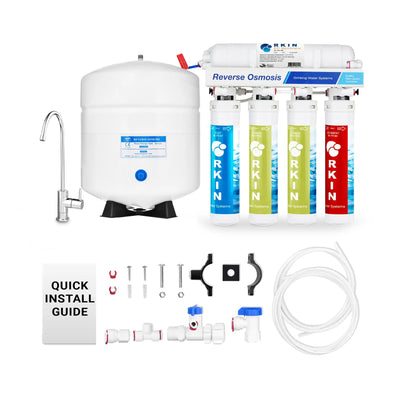
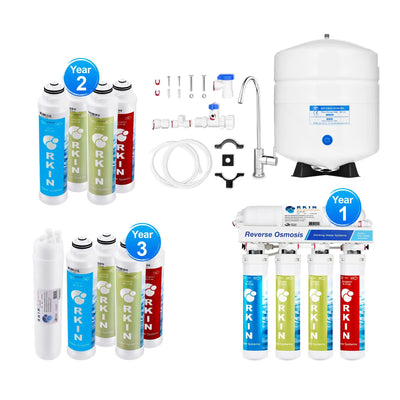
If you prefer a permanent under-sink setup, the RKIN Flash Undersink RO System fits the same drinking-water-first logic with a dedicated installed system. The right choice is less about which one sounds more technical and more about your home: countertop flexibility or under-sink installation.
In either case, do the diagnostic work first. Your water report, your installation limits, and your maintenance habits should choose the system. That is the RKIN rule in my house: test first, match the tool to the problem, and do not buy a whole-home system when a kitchen tap system solves the actual concern.
Frequently Asked Questions
Does reverse osmosis remove pharmaceuticals from drinking water?
Reverse osmosis can reduce many dissolved contaminants, and it is one of the strongest home drinking-water technologies to review for pharmaceutical concerns. The exact answer depends on the specific compound, the system design, test data, and maintenance. Look for performance data for the exact model instead of relying on broad “advanced filtration” language.
Are pharmaceuticals regulated in drinking water?
Not in the same way as contaminants with enforceable national drinking-water limits. In 2026, EPA placed pharmaceuticals on the draft Sixth Contaminant Candidate List as a priority group for research and possible future regulatory review. That listing is not the same as a final drinking-water standard for every pharmaceutical compound.
Will boiling water remove drug residues?
No. Boiling can be useful during some microbial boil-water notices when local officials recommend it, but it is not a reliable method for removing dissolved chemical contaminants. If pharmaceuticals or other emerging contaminants are your concern, use source-water information, lab testing where appropriate, and a filter with relevant performance data.
Is a carbon filter enough for pharmaceuticals?
Sometimes carbon can help with certain organic compounds, but “carbon filter” is too broad to be a buying answer. Performance depends on the carbon type, contact time, flow rate, cartridge age, and the compound tested. For a drinking-water concern, compare the carbon claim against RO options and the exact test data.
Should I filter the whole house for pharmaceuticals?
Usually, start with the water you drink and cook with unless your test results point to a whole-home issue. A point-of-use RO system at the kitchen is often the most practical first step for drinking water. Whole-house treatment uses different sizing, flow, storage, and maintenance logic.
Ready to Upgrade Your Drinking Water?
If your concern is what is coming out of the kitchen tap, start with the system built for that job. Review the RKIN Zero Installation Purifier for countertop reverse osmosis with no plumbing changes, or compare it with the RKIN Flash Undersink RO System if you want a permanent under-sink install.






0 comments