


drain keeps backing up after snaking
Drain Keeps Backing Up After Snaking? Here's Why

You called a plumber. They ran a snake through the line. They said it was clear and handed you an invoice. Seven days later the same toilet is bubbling, the bathroom sink is draining slow, and you're staring at the ceiling wondering if you got ripped off.
You probably didn't. The plumber did exactly what you paid them to do. The problem is that snaking a line doesn't fix what built the clog in the first place — it punches a hole through it. And in roughly 1 in 4 American homes, the thing rebuilding that clog isn't grease or hair. It's the water itself.
Why a snake doesn't actually fix the clog
A drain snake (or "auger") is a long flexible cable with a cutting head on the tip. The plumber feeds it down the line, hits the obstruction, and either chews through it or hooks it and pulls it out. Water starts flowing again. Job done.
Except the snake leaves the pipe walls in roughly the same shape it found them. If those walls are coated in scale, soap scum, or biofilm, you've still got a half-blocked pipe — just with a hole punched through the middle. As soon as a few weeks of normal household use deposit fresh material onto those walls, the bore narrows again and you're back to slow drains and gurgling toilets.
This is why the same drain often backs up on roughly the same schedule. It's not bad luck. It's a deposit-rate problem.
The 4 things actually causing repeat clogs
When a drain re-clogs after professional snaking, one of these four causes is almost always behind it:
- Mineral scale from hard water. Calcium and magnesium in your water precipitate out of solution as the water sits in pipes, especially around bends and traps. Over months and years, this scale narrows pipe diameter from the inside.
- Soap scum. When hard-water minerals react with soap, they form a sticky, waxy residue that coats pipe walls. This is the gray film you scrub off your shower door — same chemistry, different surface.
- Biofilm. Bacteria colonize the slime layer on pipe interiors. The biofilm itself is mostly water but acts like flypaper for hair, grease, and food particles. Hot-water-side drains are especially prone to this.
- Pipe damage upstream. Tree roots intruding through a cracked sewer line, a belly (sag) in the lateral, or a partially collapsed cast-iron section. These are real and require a camera inspection — not a snake.
The first three are water-quality problems. The fourth is a structural problem. They're easy to tell apart, but most homeowners (and a lot of plumbers) skip the diagnostic step and just keep snaking.
How to tell which one you're dealing with
If only one drain backs up and it's the bathroom sink, kitchen sink, or shower, the culprit is almost always local — soap scum, hair, or biofilm in the trap or branch line. A snake works once. If it returns within a month, you have a deposit-rate problem driven by your water.
If multiple drains back up at the same time — toilet bubbles when the washing machine drains, shower fills when you flush — the issue is in the main line, not a branch. This is when you need a camera, not another snake.
If the water in your area is hard (above 7 grains per gallon — check your utility's annual water quality report or test with a strip), assume mineral scale is contributing to every drain in the house, not just the obvious ones. The USGS map shows that more than 85% of U.S. homes have moderately hard or harder water.
What snaking won't fix — and what will
Hydro-jetting is the next step plumbers usually recommend. A high-pressure water jet (3,000–4,000 PSI) scours the pipe walls in a way a snake can't. For grease in a kitchen line or roots in a sewer lateral, jetting works. It buys you a much longer reprieve than snaking — sometimes years.
But jetting doesn't address why the deposits formed. If your incoming water is loaded with calcium, magnesium, iron, or chlorine, scale and soap scum will start rebuilding the moment the jet truck pulls away.
This is where the conversation has to shift from drain cleaning to water treatment.
The water-supply fix most homeowners never consider
Plumbers fix pipes. They don't usually look at what's flowing through them. But the chemistry of your water determines how fast deposits form, how much soap you need to use, and how thick the biofilm gets in your warm-water lines.
Two changes upstream of your drains can dramatically slow the deposit cycle:
1. Soften or condition the water. Removing or neutralizing hardness minerals stops the scale-and-soap-scum cycle at the source. Salt-based softeners physically remove calcium and magnesium. Salt-free conditioners (template-assisted crystallization) change the structure of those minerals so they don't bond to surfaces. Either approach reduces the rate at which scale builds inside your drains, your water heater, your dishwasher, and your shower head.
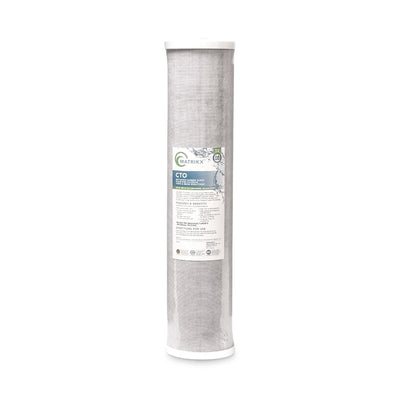
2. Filter sediment and chlorine before it reaches the house. A whole-house carbon and sediment filter removes the chlorine that breaks down rubber seals, the sand and silt that settle in P-traps, and the iron that stains everything it touches. This protects every drain, fixture, and appliance downstream.
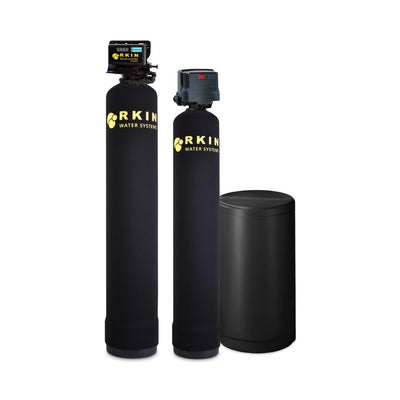
For homes on hard municipal water, the combo of softening and carbon filtration addresses every contributor on the water-supply side. For well-water homes — where iron, sulfur, and sediment loads can be brutal — a dedicated well-water filter handles the heavy lifting before the softener ever sees the water.
The RKIN approach for repeat-clog homes
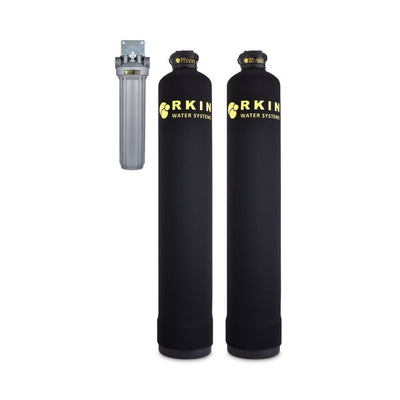
If your drains keep backing up and a plumber has ruled out structural issues, the RKIN OnliSoft Pro Salt-Free + Carbon Combo is built for exactly this scenario. It pairs salt-free water conditioning (no salt bags, no brine discharge, no maintenance schedule) with a dual-stage carbon filter that pulls chlorine, chloramines, and sediment out of every drop entering your home. The TAC media changes the crystal structure of hardness minerals so they pass through your pipes without bonding to the walls — the soap-scum reaction never gets going.
For well-water homes dealing with iron, sulfur, or manganese on top of hardness, the RKIN Well Water Whole House Filter handles those contaminants before they reach the rest of your plumbing — and before they coat your drain lines.
Both systems install on the main water line and protect every fixture, drain, and appliance in the house at once. The drain backups don't just slow down — the dishwasher runs better, the water heater lasts longer, and your shower stops needing weekly scrubbing.
Frequently Asked Questions
Why does my drain back up a week after snaking?
A snake punches a hole through the clog rather than removing the underlying buildup on pipe walls. If your water is hard or your home has older pipes, scale and soap scum start rebuilding immediately. The clog returns on roughly the same schedule because the deposit rate is constant.
Can hard water actually clog drains?
Yes — indirectly. Hard water itself doesn't clog drains, but the mineral scale it deposits narrows the pipe bore over time, and the soap scum that forms when soap reacts with calcium and magnesium creates a sticky coating that traps hair, grease, and food particles. Over years, this dramatically reduces effective pipe diameter.
Is hydro-jetting better than snaking for repeat clogs?
For grease and root intrusion, yes. Hydro-jetting scours the pipe walls in a way a snake can't, so it removes the deposits rather than just punching through them. But if hard water or chlorine are still feeding the deposit cycle, jetting only buys you more time — it doesn't stop the underlying chemistry.
How do I know if I have hard water?
Check your utility's annual Consumer Confidence Report (the EPA requires every public water system to publish one). Anything above 7 grains per gallon is considered hard. You can also buy a $10 test strip at a hardware store, or look for the telltale signs: white crust on faucets, soap that won't lather, spots on dishes, scratchy laundry.
Will a water softener stop my drains from backing up?
It will dramatically slow the buildup that contributes to repeat clogs, but it won't reverse damage that's already there or fix structural pipe problems. The right approach: have a plumber camera-inspect the line first to rule out cracks, bellies, or root intrusion, then address the water-supply chemistry to stop new deposits from forming.
Do I need a softener if I'm on city water?
Most U.S. municipal water is moderately hard or harder. City treatment plants don't soften water — they just disinfect it. If your test strip reads above 7 gpg, the case for whole-home conditioning is the same whether you're on a well or a city line.
Stop fighting the same clog every month
If your drains keep backing up after professional snaking, the problem isn't your plumber. It's what's in your water. The RKIN OnliSoft Pro Salt-Free + Carbon Combo addresses both sides of the deposit cycle — hardness chemistry and chlorine — at the main water line. No salt bags, no brine, no scheduled regenerations. See current pricing and specs at rkin.com.






0 comments