




hard water
We Got a $11,500 Water Treatment Quote. Here’s What the System Actually Costs.

A family posted on Reddit this week. They're on a shared well, got their water tested, and a company called "Leaf" quoted them $11,500 to fix it.
Their water test results: 9.3 grains per gallon (GPG) hardness, TDS of 683 mg/L.
That's moderately hard water. It's real, it's worth treating, and it has straightforward solutions. But $11,500 is not one of them.
This post breaks down what those numbers actually mean, what treatment you genuinely need, and what it realistically costs — so you can walk into any future conversation with full information.
What Your Water Test Numbers Mean
Two numbers came up in that Reddit post: GPG hardness and TDS. Neither is obscure, but door-to-door salespeople routinely use them to make normal water sound like a hazmat situation.
9.3 GPG hardness — The EPA classifies water above 7 GPG as "hard." At 9.3 GPG, you'll see scale on fixtures, soap that doesn't lather well, spots on dishes, and over time, reduced appliance lifespan. This is the kind of water that benefits from a water softener. It is not the kind of water that requires industrial intervention.
TDS of 683 mg/L — Total Dissolved Solids measures everything dissolved in the water: calcium, magnesium, sodium, trace minerals. The EPA's secondary standard (aesthetic guidance, not a health limit) is 500 mg/L. At 683, you're above that threshold. The reason: hard water is hard because of dissolved calcium and magnesium. Soften the water and TDS drops. The two numbers are telling the same story.
Neither number indicates contamination. Neither requires a five-figure system. Both are solved by the same category of equipment.
What a $11,500 Quote Actually Buys You (and What It's Really For)
Door-to-door water treatment companies — Leaf, Kinetico, Rainsoft, and others — operate on a specific business model: a free water test, an in-home visit, and a high-pressure sales appointment. The quote they give you covers the equipment plus a large markup to fund the sales channel, the commission, the follow-up calls, and sometimes long-term service contracts.
A Leaf system typically includes a water softener, a carbon pre-filter, and possibly an under-sink reverse osmosis unit. Those are real, useful components. The markup over fair market value for similar equipment runs between 3x and 6x, depending on what they install and how aggressive the sales rep is.
That's not a secret. The company's business model depends on customers not knowing what the same equipment costs elsewhere. Your job is to know.
What 9.3 GPG Hard Well Water With High TDS Actually Needs
For a household on a shared well with 9.3 GPG hardness and TDS of 683, the appropriate treatment setup has two components:
1. A Whole-Home Water Softener or Conditioner
This treats the hardness at the point of entry — before the water reaches appliances, showers, and fixtures. There are two approaches:
- Salt-based softener: Ion exchange removes calcium and magnesium ions and replaces them with sodium ions. This is the definitive hardness solution at 9.3 GPG. The water coming out genuinely feels different — slick, clean, no scale. Requires adding salt bags to the brine tank every few weeks to a couple of months depending on household water use.
- Salt-free conditioner: Physically transforms calcium and magnesium into a form that doesn't stick to pipes and surfaces — the minerals remain in the water but stop precipitating as scale. No sodium added to your water. No salt to buy. The water won't have the "soft" feel of ion exchange, but scale buildup stops. Good option if sodium in drinking water is a concern or you want zero ongoing consumables.
Both options work for 9.3 GPG. The choice depends on your preference for feel vs. zero maintenance.
2. A Whole-Home Carbon Filter (for Well Water)
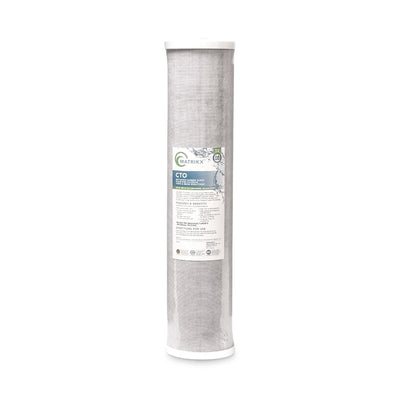
Well water doesn't go through municipal chlorination, but it often carries sediment, organic matter, and odor compounds from the aquifer. Pairing a softener with a whole-home carbon filter addresses taste, odor, and sediment alongside the hardness. Many systems bundle these together.
Optional: Under-Sink Reverse Osmosis for Drinking Water
If you want the highest quality water specifically at your kitchen tap — removing TDS, any residual minerals, and trace contaminants — an under-sink RO system at the point of use makes sense. This is not the same as treating the whole house. It's targeted at what you drink and cook with.
What That Setup Actually Costs
Fair market pricing for the above — from established brands with real warranties and real support — runs from roughly $800 to $2,000 for most homes, depending on system size, whether you want salt-free or salt-based, and whether you add an under-sink RO.
That's a fraction of $11,500.
The equipment doing the same job at 3x to 6x markup isn't better equipment. It's the same category of product with a door-to-door sales overhead built in.
Questions to Ask Before You Buy Anything
Whether you're evaluating a door-to-door quote or researching brands online, these questions separate good systems from padded ones:
- What is the flow rate? For a 3-bedroom home, you need at least 10 gallons per minute to run multiple fixtures simultaneously without pressure loss. Some budget whole-home systems rate at 7–8 GPM — fine for smaller homes, marginal for anything larger.
- What's the ongoing cost? Salt bags, replacement filter cartridges, annual service calls. A cheap system with proprietary $180 filter sets you need every six months can cost more over five years than a more expensive upfront system with standard media. Get the total cost of ownership, not just the purchase price.
- What warranty actually covers? "Lifetime warranty" is meaningless without knowing what's included. Control valves, tanks, and media all have different expected lifespans. Get the specific warranty terms for the specific parts.
- Is there a real manual and support line? This matters when something doesn't work at 9 PM on a Sunday. Door-to-door brands often route support through the original dealer. Direct-to-consumer brands route to their own team.
- Do they service your area, or just sell into it? Some national brands sell everywhere but service nothing. Know who actually comes out if you need installation help or a repair.
RKIN's Whole-Home Options for Hard Well Water
RKIN makes whole-home water treatment systems designed specifically for the kinds of water conditions described in that Reddit post — hard well water with elevated TDS, no municipal treatment upstream.
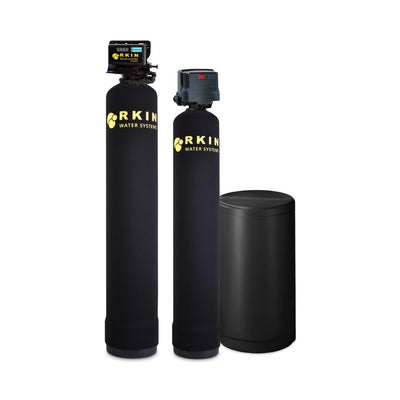
The Water Softener and Whole House Carbon Filter Combo handles both the hardness and filtration in one integrated unit. Salt-based ion exchange at the softening stage, dual carbon filtration at the filter stage. Comes with a 7-year warranty on the control valve. See current pricing at rkin.com.
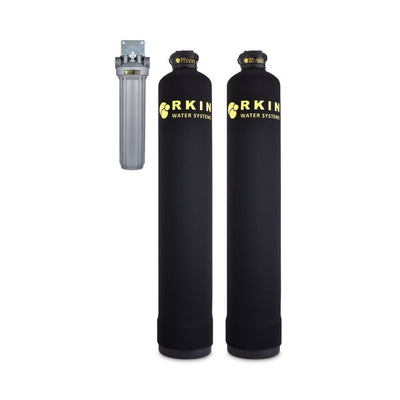
The OnliSoft Pro Salt-Free Water Conditioner and Whole House Carbon Filter System takes the same approach without salt — template-assisted crystallization conditioning plus dual carbon filtration. No sodium added, no salt to manage, zero-maintenance media. See current pricing at rkin.com.
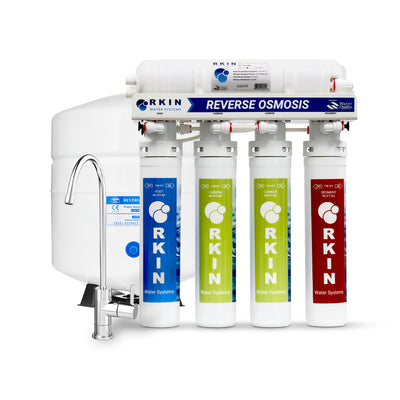
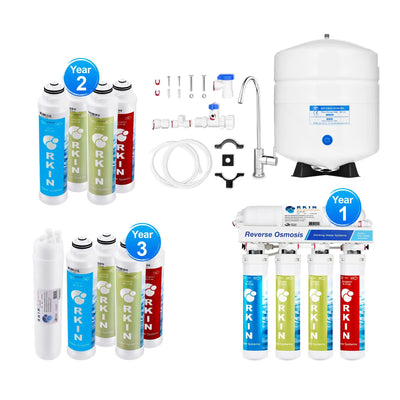
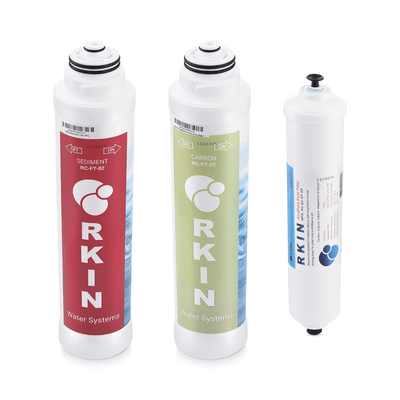
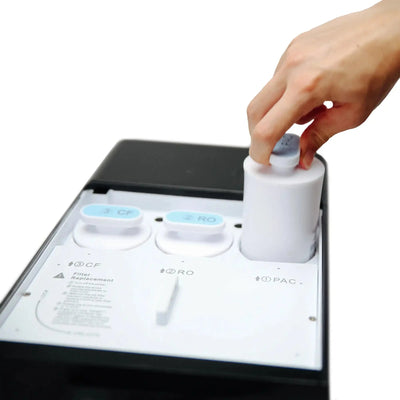
If drinking water is the primary concern and you want targeted RO at the tap, the Flash Undersink Reverse Osmosis System installs under your kitchen sink and delivers filtered water through a dedicated faucet. It pairs with either whole-home system.
For the family that got the $11,500 quote: one of these systems, sized for their home, solves the problem their water test identified. It's the same category of solution. It costs less. And it comes with a support team you can actually call.
The Bigger Picture
Door-to-door water treatment has been generating outrage on Reddit and in consumer advocacy communities for years — not because the underlying problem (hard water, filtration) isn't real, but because the pricing disconnects so far from the actual cost of the solution.
The best defense is knowing what your water test means before someone else interprets it for you. At 9.3 GPG and TDS 683, you have a real but common water problem with a real but affordable solution. It doesn't require $11,500. It requires a well-matched softener or conditioner, possibly a carbon filter, and optionally an under-sink RO if you want the best drinking water quality on top of that.
That's it. No mystery. No crisis. Just equipment that fits the numbers.
Visit the RKIN whole-home water treatment collection to see the full range of options, sizing guides, and current pricing.
Frequently Asked Questions
Is 9.3 GPG hard water actually dangerous?
No. Hard water is an aesthetic and appliance efficiency issue, not a health issue. The EPA classifies hardness as a secondary standard — meaning it's not a health-based contaminant, just one that affects taste, appearance, and equipment lifespan. At 9.3 GPG, you'll see real problems with scale and soap performance, but the water is not unsafe to drink untreated.
What does TDS 683 mean for a shared well?
TDS (Total Dissolved Solids) at 683 mg/L is above the EPA's aesthetic guideline of 500 mg/L, but it primarily reflects the dissolved calcium and magnesium causing your hardness. Treat the hardness and the TDS drops. The high TDS by itself isn't an independent problem — it's a symptom of the same hardness you're already aware of.
Do I need a $10,000 water treatment system for 9.3 GPG hardness?
No. The equipment that treats 9.3 GPG hard well water — a water softener or salt-free conditioner, optionally paired with a carbon filter — costs between roughly $800 and $2,000 from reputable direct-to-consumer brands. High quotes from door-to-door companies reflect sales channel overhead, not equipment quality.
Salt-free or salt-based softener for hard well water?
Both work at 9.3 GPG. Salt-based systems use ion exchange to genuinely remove hardness minerals, giving water a noticeable "soft" feel and producing zero scale. Salt-free systems (conditioners) physically alter mineral crystal structure so scale doesn't form — the minerals remain in the water but stop depositing. Salt-based is the more thorough solution; salt-free is the lower-maintenance one. If sodium in your water is a dietary concern, salt-free is the better fit.
Should I add an under-sink RO to a whole-home softener?
It's worth considering if drinking water quality is your primary concern. A whole-home softener treats hardness throughout the house. An under-sink RO removes a broader range of dissolved solids and contaminants at the point of drinking. The two systems serve different purposes and pair well together, but neither requires the other to function.
What questions should I ask a water treatment company before buying?
Ask about the flow rate (10 GPM minimum for most 3-bedroom homes), the total cost of ownership including filter replacements over five years, the specific warranty terms for each component, and what the actual support and service process looks like. Get the quote itemized — equipment cost, installation cost, and service contract cost separately. Compare the equipment specs to direct-to-consumer alternatives before signing anything.
Is Leaf Home Water Treatment a reputable company?
Leaf Home Water Solutions is a legitimate company that sells real water treatment equipment. Their products work. The consistent complaint in consumer reviews and community discussions is pricing — specifically that their door-to-door model produces quotes that are significantly higher than the same category of equipment available through direct-to-consumer brands. Before accepting any in-home quote, research the specific system they're proposing and compare it to market alternatives.



0 comments