

I Drilled Into a Water Pipe — Step-by-Step Recovery
Share
You hang a shelf. The bit slips. You hear a hiss, then a damp patch starts spreading across the drywall. Your stomach drops, and the question lands hard: where is the shutoff, and how bad is this going to get?
If that's where you are right now — close the laptop, scroll down to the first 60 seconds section below, and act. Then come back when the leak is stopped. The next 20 minutes matter more than the next 20 hours, and most of the long-term damage from a drilled pipe doesn't come from the hole. It comes from the water that keeps moving while a homeowner runs around looking for tools they've never used before.
The first 60 seconds: stop the water
Before you photograph it, before you call anyone, before you Google "is my house ruined" — turn the water off.
You have two shutoffs in most homes:
- Whole-house shutoff. Usually on the wall where the main water line enters the house, often in a basement, garage, crawl space, or a utility closet on a slab foundation. Half-turn quarter ball valve, or a multi-turn gate valve. Turn it clockwise until it stops.
- Outside curb stop. A small cast-iron lid in the lawn or sidewalk near the street. Requires a long T-shaped key. Use it only if the indoor valve fails or you can't find one.
If the leak is hot water and you can isolate it, the heater also has its own shutoff at the cold-water inlet on top of the tank.
Once water is off, open the lowest faucet in the house (a basement utility sink or an outside hose bib). That drains the line and stops pressure from forcing more water out of the puncture while you work.
What kind of pipe did you actually hit?
The repair depends entirely on what's behind the drywall. Before you reach for tape or epoxy, identify the pipe:
- Copper. Reddish-brown metal, harder, often has soldered or sweated joints. Rigid.
- PEX. Flexible plastic tubing in red, blue, or white. Common in homes built since 2000.
- CPVC. Cream or yellowish rigid plastic. Common in 1990s–2000s construction.
- Galvanized steel. Gray, threaded joints, heavy, usually older homes (pre-1970).
- PVC. White rigid plastic. Almost always drain or vent — should not be pressurized supply.
If you can see the puncture, take a picture. The clean photo is more useful to a plumber than any description you'll be able to give over the phone.
A drilled pipe is not a "patch it with rubber tape" job, no matter what a YouTube short claimed. The bit doesn't make a clean hole — it tears, and the surrounding pipe is now stressed. A real repair means cutting out a one-foot section and splicing in new material with a coupling rated for the pipe type. Push-to-connect fittings (the brass ones with the little plastic ring) are the most homeowner-friendly option for copper and PEX. CPVC needs solvent welding. Galvanized usually means calling a plumber.
Dry out faster than you think you need to
The hole is fixed. The wall is wet. Now you have 24 to 48 hours before mold becomes the bigger problem.
The CDC notes that mold can begin growing on damp materials within 24–48 hours. The clock starts the moment the water stops moving, not the moment you notice it.
Pull the wet drywall — at least 12 inches above the visible water line. Drywall wicks vertically, and the dry-looking section above the wet patch is rarely actually dry. Pull insulation if it got wet (fiberglass holds water; closed-cell foam does not). Run a fan and a dehumidifier on the cavity for at least 48 hours before you close it back up.
If your homeowner's insurance is going to cover this, document it now: photos of the puncture, photos of the wet drywall before you cut it, a short video walking through the affected room. Insurers want pre-repair evidence, not post-repair receipts.
What this incident is really telling you
Most homeowners go their entire ownership of a house never thinking about the water moving through the walls until a moment like this forces them to. That's the actual lesson hiding in a drilled pipe: you don't know your water system. Not the layout, not the shutoffs, not what's flowing through it.
That last part matters more than the others, because a leak happens once. The water you drink, cook with, and bathe your kids in — that's every day.
A 2024 EWG analysis of public water systems identified hundreds of contaminants in U.S. drinking water, many of them at levels that meet EPA legal limits but exceed health-based guidelines from the same agency. "Legal" and "optimal" are not the same standard. Most homeowners assume the utility is filtering for everything that matters. It isn't.
The pipe you just drilled into has been carrying that water past every shower, kitchen tap, and ice maker in your house. The same way you now know where your shutoff is, it's worth knowing what's actually in the water on the other side of the wall.
What homeowners do once they actually look
Once you've been through a leak, the next sensible step is a basic understanding of three things:
- Where every shutoff in the house is. Map them. Tag them. Show every adult in the household.
- What the local water report says. Your water utility publishes an annual Consumer Confidence Report. Search "[your city] water quality report 2024." It lists the contaminants found and their levels.
- Whether your home needs treatment. This depends on the report, the pipes (older copper can leach lead from solder; galvanized can contribute iron), and what you're actually tasting and seeing at the tap.
For most homes on city water, the right baseline is a whole-house carbon filter on the main line, after the meter and before any branch fixtures. Carbon takes out chlorine, chloramines, the taste and odor compounds, and a meaningful share of the volatile organic compounds the utility doesn't address. It's the single biggest upgrade most homes can make for the lowest ongoing maintenance.
For drinking water specifically, a reverse osmosis system at the kitchen sink, or a countertop unit if your kitchen plumbing is finicky, gets you the broadest contaminant reduction available outside of a lab.
A quieter path if you don't want to touch your plumbing again this year
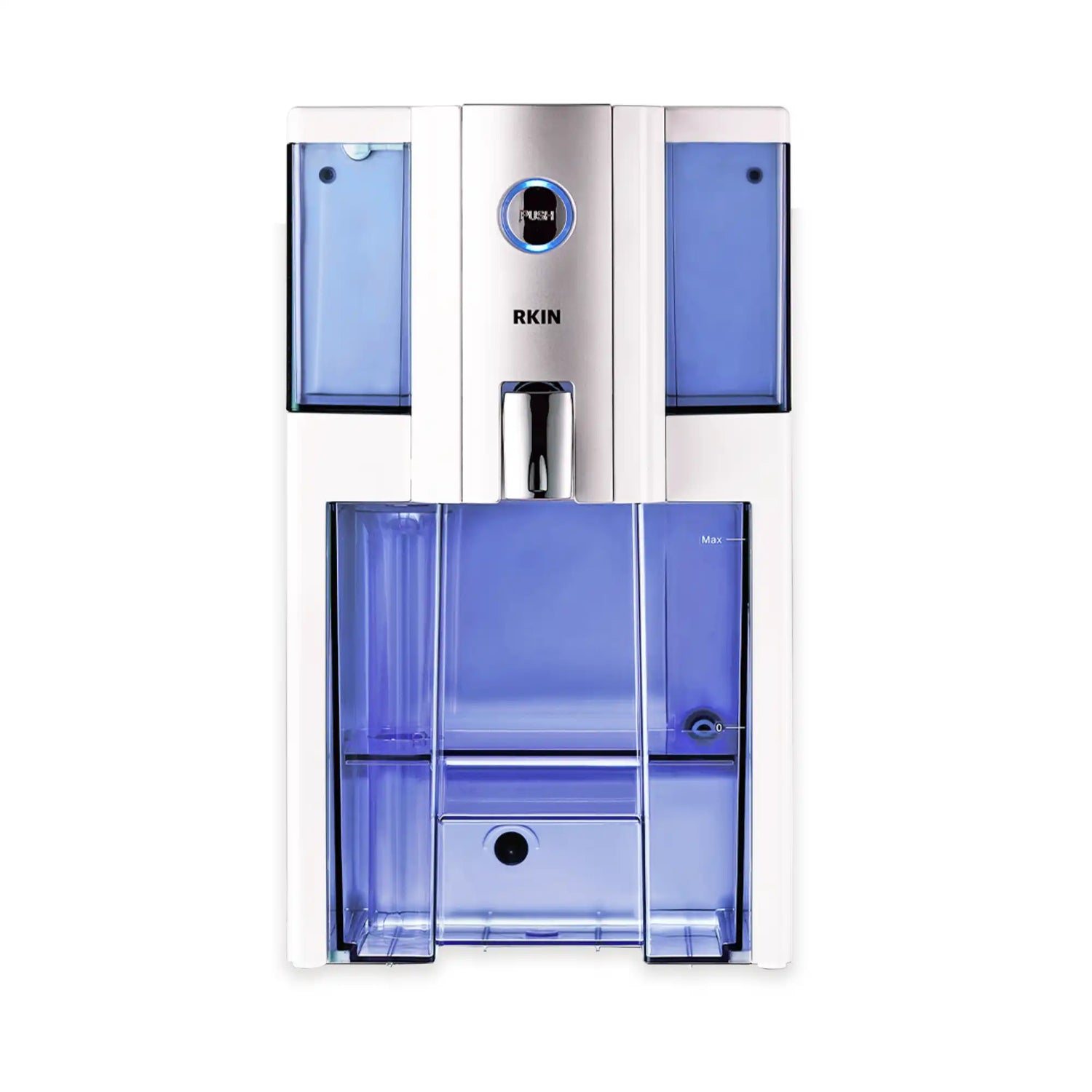
If the drilled-pipe story has you uninterested in opening another wall any time soon, the path of least resistance for cleaner drinking water is the Zero Installation Purifier. It's a countertop reverse osmosis system that connects to a standard kitchen tap with a quick-connect adapter and runs on a regular wall outlet. No plumber, no drilled holes, no shutoffs.
For homeowners who want the upgrade but want to skip the part where someone with a drill goes back into the same wall, this is the version of "better water" that doesn't ask you to schedule another contractor visit. RO removes chlorine, lead, fluoride, arsenic, PFAS, nitrates, and the broad spectrum of contaminants that municipal treatment isn't built to address.
If you're already past this leak and ready to look at the long-term plan — softening, sediment, iron, full-home RO — the whole house water treatment collection is where most homeowners start once they've decided to actually understand their water.
Frequently Asked Questions
Will my homeowner's insurance cover the damage from drilling into a water pipe?
Most policies cover sudden and accidental water damage from a burst pipe, including ones the homeowner caused. They do not cover the repair of the pipe itself, only the resulting damage to drywall, flooring, and possessions. Document everything before you start cleanup, and call your insurer before doing major repairs so the claim sequence is on record.
How do I find a water pipe in a wall before I drill?
Use a stud finder with metal-and-AC detection (most mid-range models do both). Drill in the lower third of the wall when possible — supply lines usually run higher or lower than mid-wall, and electrical typically sits 12–18 inches off the floor. If you're hanging something where supply lines are likely (above a sink, behind a shower wall, near a hose bib), shorten the screw or use anchors that don't penetrate more than half an inch.
Can I just patch a small drill hole in a copper pipe with tape?
No. Pipe repair tape and epoxy putty are emergency stopgaps for the time it takes you to drive to the hardware store. They are not a permanent fix. The pipe wall is now compromised at that point, and pressure cycles will eventually push through any patch. Cut and splice is the only durable repair.
How long can I leave the water shut off while I repair the pipe?
As long as you need to. Drain the lowest tap, leave a faucet open in the affected area to relieve pressure, and turn off the water heater so it isn't trying to heat an empty tank. There's no urgent damage from leaving the system unpressurized for a day or two.
Should I get my water tested after a pipe repair?
If you cut into copper or galvanized, run the tap for two to three minutes after you turn the water back on to flush any debris from the splice. Testing isn't strictly necessary for the repair itself, but a water leak that opened up a wall is a reasonable moment to test for lead, hardness, chlorine, and TDS — especially if the home is older than 1986 (when lead solder was banned for potable water).
What's the difference between a whole-house filter and a countertop reverse osmosis system?
A whole-house filter treats every drop of water entering the home — every shower, every tap, every appliance. Most use carbon to remove chlorine, taste, and odor. A reverse osmosis system removes a much wider range of dissolved contaminants but treats only the water at one tap or, for whole-home RO, the entire supply after a softener stage. The two layers stack: whole-house carbon for protecting fixtures and skin, RO for what you drink.
Ready to Actually Understand Your Water?
The leak gets fixed in a day. The water itself is the part that runs through your house every day for years.
The Zero Installation Purifier is the simplest way to upgrade what you drink without opening another wall. Connects to your kitchen tap, runs on a standard outlet, no plumber.
For a longer-term plan, the whole house water treatment collection is where most homeowners start once they've decided to take the system seriously.


