


RKIN
PFAS and Nanoplastics in Your Water: What the Science Says and How to Protect Your Family in 2026

Two water contamination stories have dominated the headlines over the past year. One involves "forever chemicals" that don't break down — ever. The other involves tiny plastic particles showing up in places nobody expected, including bottled water.
Both are real. Both are backed by serious research. And both point to the same practical conclusion: the last line of defense between contaminated water and your family is the filter you put in your home.
This guide covers what PFAS and nanoplastics are, what the latest science tells us about exposure risks, which filter technologies actually remove them, and how to pick the right system for your household.
Part 1: PFAS — The Forever Chemical Problem
What Are PFAS?
PFAS stands for per- and polyfluoroalkyl substances — a group of over 15,000 synthetic chemicals used since the 1950s in nonstick cookware, food packaging, stain-resistant fabrics, firefighting foam, and industrial coatings.
They're called "forever chemicals" because the carbon-fluorine bond in PFAS molecules is one of the strongest in organic chemistry. They don't break down in the environment. They don't break down in your body. They accumulate over time.
A 2023 USGS study estimated that nearly half of all U.S. tap water contains detectable levels of PFAS. That number hasn't changed much since — and with regulatory rollbacks happening at both the federal and state level in early 2026, individual households are increasingly on their own.
Health Risks Linked to PFAS Exposure
Research from the EPA, ATSDR, and multiple peer-reviewed studies has linked PFAS exposure to:
- Increased cancer risk — kidney and testicular cancers in particular
- Thyroid disruption — interfering with hormone regulation
- Weakened immune response — reduced vaccine effectiveness, especially in children
- Liver damage — elevated cholesterol and liver enzymes
- Reproductive problems — decreased fertility and developmental effects
- Increased preeclampsia risk during pregnancy
The Regulatory environment in 2026
The EPA set enforceable PFAS limits in 2024 at 4 parts per trillion (ppt) for PFOA and PFOS — two of the most studied compounds. But in May 2025, the EPA announced it would keep those MCLs while extending the compliance deadline for water utilities to 2031 — giving suppliers two additional years. The agency also signaled its intent to rescind regulations for four other PFAS compounds that were covered under the original Biden-era rule.
Meanwhile, the Environmental Working Group reported in June 2025 that 165 million Americans are now at risk of drinking PFAS-contaminated tap water — a number that keeps climbing as more utilities complete testing.
Here's what that means for you: federal rules cover only a handful of the thousands of PFAS chemicals in circulation. Compliance deadlines are getting pushed back. And even if your municipal water eventually meets the new standards, trace levels of unregulated PFAS compounds may still be present.
Waiting for regulators to solve this problem isn't a plan. A point-of-use water filter is.
Part 2: Nanoplastics — The Problem Inside the Bottle
A New Study Changed the Conversation
In February 2026, researchers at Ohio State University published a study in Science of the Total Environment that turned a common assumption on its head.
Led by PhD candidate Megan Jamison Hart and senior author John Lenhart (professor of environmental engineering), the team analyzed water samples from four treatment plants near Lake Erie and six brands of bottled water using scanning electron microscopy paired with optical photothermal infrared spectroscopy — techniques that can detect plastic particles down to the nanoscale.
What they found:
- Bottled water contained 3x more nanoplastic particles than treated municipal tap water
- Over 50% of all detected particles were nanoplastics — smaller than 1 micrometer
- The most common plastics in bottled water came from the packaging itself
- Nanoplastic concentrations were higher than previous studies had estimated
"For the average person who is thirsty and wants a drink, the best way to do that would be drinking it straight out of the tap rather than grabbing pre-bottled water," Hart said in the Ohio State press release.
Why Nanoplastics Matter
Nanoplastics are plastic fragments smaller than 1 micrometer — that's 1/1000th of a millimeter. A single nanoplastic particle can be 1,000 times smaller than the width of a human hair.
Their size is exactly what makes them concerning. Researchers believe nanoplastics may cross biological barriers that larger particles can't — including the blood-brain barrier. A 2024 report in Smithsonian Magazine noted that microplastics have been found in human brain tissue.
As Hart put it: "While we don't really fully understand the human health risks associated with nanoplastic exposure, it's still better to try and mitigate that risk because evidence indicates that they do cause problems, even if we're not fully aware of what those are yet."
Where Do Nanoplastics Come From?
- Degrading plastic waste — UV exposure and weathering fragment larger plastics into nanoscale pieces
- Plastic packaging — confirmed by the Ohio State study as a direct contamination source for bottled water
- Industrial discharge — manufacturing processes release plastic particles into waterways
- Synthetic clothing — washing synthetic fabrics sheds microfibers that degrade further
- Water infrastructure — some treatment systems use plastic components that shed particles over time
Part 3: Which Filters Actually Remove PFAS and Nanoplastics?
Not every filter handles these contaminants. Here's what the research shows — no spin, just data.
Reverse Osmosis — The Most Effective Home Technology
Reverse osmosis pushes water through a semipermeable membrane with pores around 0.0001 microns. That's small enough to block both PFAS molecules and nanoplastic particles (which range from 0.001 to 1 micrometer).
For PFAS: A 2020 study from Duke University and NC State, published in Environmental Science & Technology Letters, tested home water filters and found RO systems reduced PFAS levels by 94% or more. Some two-stage systems achieved near-complete removal. RO was the most consistent performer across all tested PFAS compounds, including harder-to-capture short-chain variants like GenX.
For nanoplastics: A 2024 systematic review in the Journal of Environmental Chemical Engineering confirmed that membrane separation processes like RO show higher removal rates for micro- and nanoplastics than conventional treatment. A separate study found RO removed 99.9% of microplastics and nanoplastics from tap water.
The physics is straightforward: if the contaminant is larger than the membrane pore, it doesn't pass through. RO membranes filter at the molecular level. PFAS molecules and nanoplastic particles are both too large to slip by.
Activated Carbon — Partial Protection
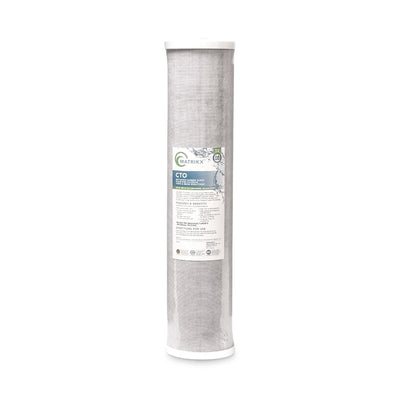
Activated carbon (especially carbon block filters) can adsorb certain PFAS chemicals onto its surface. The Duke study found carbon filters reduced PFAS by 0% to 73% — a wide range that depended on filter type, maintenance, and specific PFAS compounds.
For nanoplastics, carbon filters aren't designed for particle removal at the nanoscale. They may catch some larger microplastic fragments, but nanoplastics pass through the gaps.
Carbon filters certified to NSF/ANSI 53 for PFOA/PFOS are better than uncertified ones, but they can't match RO consistency.
Pitcher Filters — Not Built for This
Standard pitchers like Brita and PUR are designed for taste and chlorine. The Duke study found some pitcher filters showed zero measurable PFAS reduction. They're not rated or designed for nanoplastic removal either. Specialty pitchers (like Clearly Filtered) claim higher removal for specific contaminants, but independent third-party data is limited.
Gravity Filters — Unverified Claims
Systems like Berkey have marketed PFAS removal claims, but they don't hold NSF/ANSI certification for PFAS reduction. Without independent lab verification, there's no reliable way to confirm the numbers on their spec sheets. The EPA and NSF both recommend choosing certified systems.
Whole House Systems — Great for Other Things
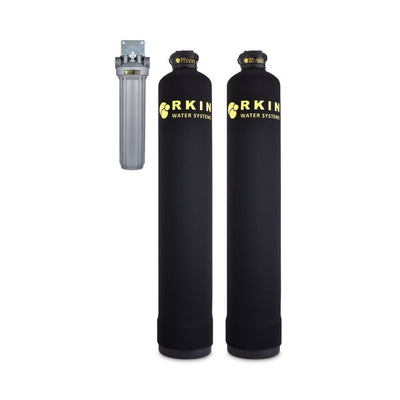
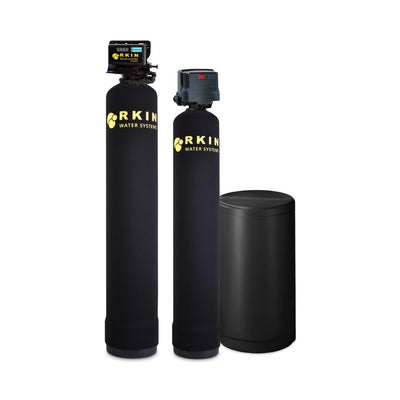
Whole house carbon filters handle chlorine, sediment, and general water quality well. But they typically lack the membrane technology and contact time needed for PFAS at parts-per-trillion levels or nanoplastics at the sub-micron scale. For these contaminants, a point-of-use system at the kitchen sink or countertop is the right tool.
Filter Comparison: PFAS and Nanoplastic Removal
| Product | Type | PFAS Removal | Nanoplastic Removal | NSF Certification | Installation |
|---|---|---|---|---|---|
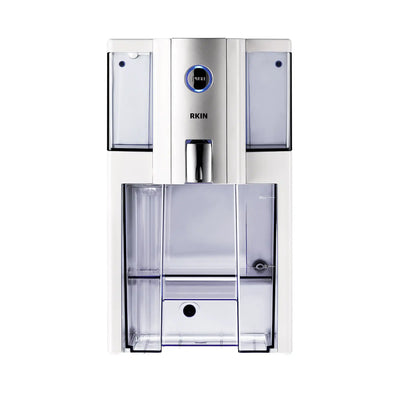
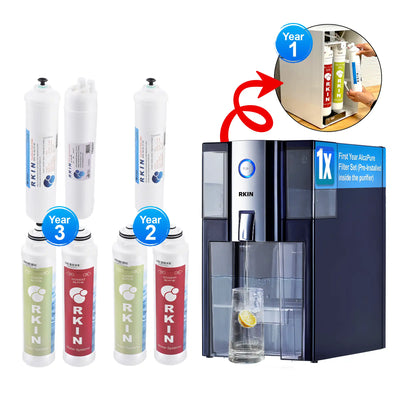
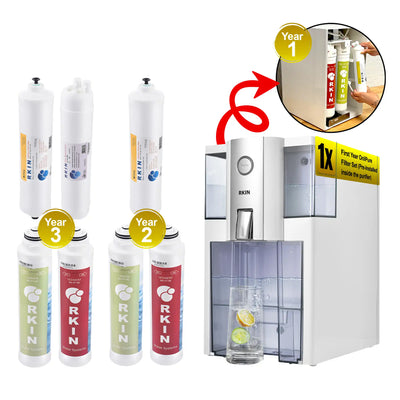
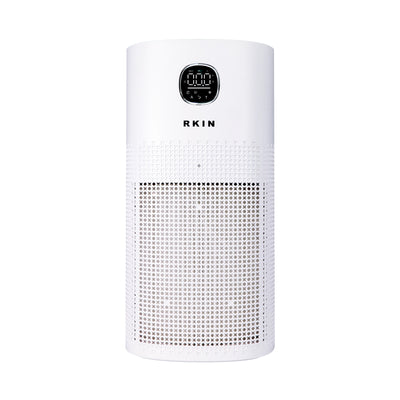
| Zero Installation Purifier | Countertop RO | Up to 99% | Highly effective (RO membrane) | IAPMO R&T to NSF/ANSI 58 | None — countertop |
| RKIN U1 4-in-1 | Countertop RO | Up to 99% | Highly effective (RO membrane) | 3rd Party Tested | None — countertop |
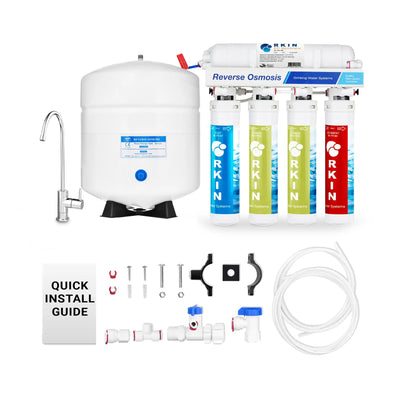
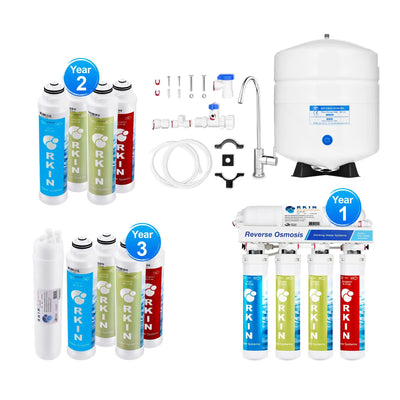
| RKIN Flash | Undersink RO | Up to 99% | Highly effective (RO membrane) | NSF/ANSI 58 | Under-sink, ~30 min |
| AquaTru Classic | Countertop RO | Up to 94% | Effective (RO membrane) | IAPMO to NSF/ANSI 53 | None — countertop |
| Clearly Filtered | Pitcher (carbon) | Up to 99.5%* | Not rated | NSF 42, 53, 401 (select) | None — pitcher |
| Brita Standard | Pitcher (carbon) | Not rated | Not rated | NSF 42 only | None — pitcher |
| Big Berkey | Gravity (carbon) | Claimed 99.9%** | Not rated | No NSF PFAS cert | None — gravity |
| Culligan MaxClear | Under-sink carbon | Up to 96% | Not rated | NSF 53 (PFOA/PFOS) | Under-sink |
*Clearly Filtered removal claims are based on manufacturer-commissioned testing, not independent third-party certification for all listed compounds.
**Berkey PFAS claims are based on internal testing without NSF/ANSI certification. Berkey products have faced regulatory issues in some states.
Why RKIN Systems Check the Right Boxes
Three things matter when you're choosing a filter for PFAS and nanoplastics: verified performance, third-party certification, and whether you'll actually use it every day.
Independent Certification You Can Look Up
The RKIN Zero Installation Purifier is certified by IAPMO R&T to NSF/ANSI 58 — the standard built specifically for reverse osmosis systems. That certification covers TDS, Fluoride, Lead, Hexavalent Chromium, and Trivalent Chromium reduction. You can verify it yourself on the IAPMO product listing directory.
This isn't a number on a marketing page. It's a result from an accredited third-party lab.
No Installation Barrier
The biggest problem with quality water filters is that people buy them and never install them. The Zero Installation Purifier removes that obstacle entirely. It works like a coffee maker — fill the tank, press the button, and you have purified water in about 15 minutes. No plumbing. No landlord approval. No tools.
The U1 takes a similar countertop approach with added functionality: hot water, cold water, and room temperature water from one unit with a 200 GPD membrane for faster throughput.
For homeowners who want everything hidden under the sink, the Flash installs in about 30 minutes with basic tools and runs on water pressure alone — no electricity needed.
Two Post-Filter Options
Both the Zero Installation Purifier and Flash come in two editions:
- AlcaPure — adds calcium and magnesium back after purification, bringing pH to an alkaline 7–8 range. Tastes like spring water.
- OnliPure — delivers near-zero TDS for lab-grade purity, similar to distilled water.
The RO membrane and pre-filter stages are identical in both. PFAS and nanoplastic removal performance is the same. The difference is what happens after purification.
The Cost Math
Per gallon, including filter replacements, the Zero Installation Purifier costs a fraction of bottled water — and based on the Ohio State study, gives you fewer nanoplastics too. See current replacement filter pricing at rkin.com. A family buying bottled water pays year after year for water that the research now shows is more contaminated with plastic particles.
How to Find Out What's in Your Water
Check Your Utility's Report
Every water utility publishes an annual Consumer Confidence Report (CCR). With the EPA's 2024 PFAS limits, utilities must now test and report PFAS levels. Find yours through the EPA's CCR search tool.
Get a Home Water Test
If you're on a private well or want specific numbers for your tap, a home test kit gives you a detailed breakdown. RKIN offers a PFAS Water Test through SimpleLab that covers multiple PFAS compounds.
Use the EWG Database
The Environmental Working Group's Tap Water Database lets you search by zip code to see what contaminants have been detected in your local supply.
Understanding NSF Certifications
When comparing filters, the certification letters tell you what's been verified:
- NSF/ANSI 42 — Taste and chlorine only. No PFAS or nanoplastic claims.
- NSF/ANSI 53 — Health-related contaminants (lead, some PFAS). Now includes PFOA/PFOS reduction testing for carbon filters.
- NSF/ANSI 58 — Reverse osmosis systems. Includes PFAS reduction testing. The most relevant standard for RO-based filters.
- NSF/ANSI 401 — Emerging contaminants (some pharmaceuticals). Not specifically a PFAS standard.
The key takeaway: For PFAS and nanoplastic protection, look for NSF/ANSI 58 on RO systems or NSF/ANSI 53 with specific PFOA/PFOS claims on carbon systems. A filter certified only to NSF 42 won't protect you from either contaminant.
5 Steps to Reduce Your Exposure Right Now
- Filter your tap water with reverse osmosis. Tap water starts with fewer nanoplastics than bottled water. Adding an RO system at home drops both PFAS and nanoplastic levels to near zero.
- Stop buying bottled water. The Ohio State data is clear: the bottles themselves are a primary source of nanoplastic contamination. Every bottle you skip is less plastic exposure.
- Use glass or stainless steel for storage. After filtering, don't put clean water back into plastic containers.
- Stick to your filter replacement schedule. The Duke study found that overused carbon filters can actually release previously captured contaminants back into the water. RO membranes are more forgiving, but timely replacement keeps performance at its peak.
- Test your water. Know your starting point before choosing a system. It takes the guesswork out of the equation.
Frequently Asked Questions
Do Brita filters remove PFAS or nanoplastics?
Standard Brita filters are certified to NSF 42 for taste improvement only. They are not designed, rated, or certified for PFAS or nanoplastic removal.
Can boiling water remove PFAS?
No. Boiling actually concentrates PFAS by evaporating water while leaving the chemicals behind. Filtration through reverse osmosis or certified carbon is the only proven home method.
Does reverse osmosis remove nanoplastics?
Yes. RO membrane pores (~0.0001 microns) are far smaller than nanoplastic particles (0.001–1 micrometer). The particles physically can't pass through the membrane.
How often should I replace filters?
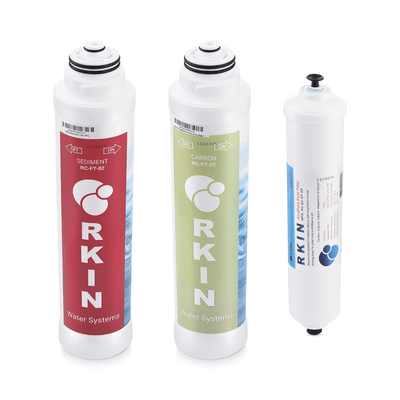
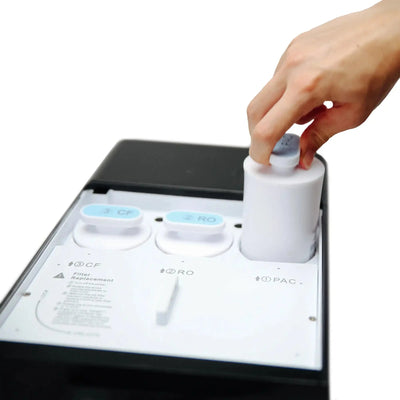
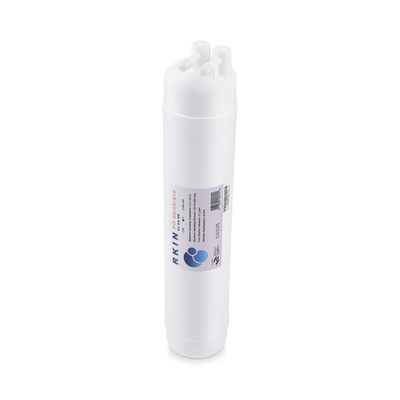
For RKIN systems, pre-filters every 6 months and the RO membrane annually under normal household use. Following the schedule matters — it's what keeps removal rates consistent over time.
Is bottled water safer than tap water?
For nanoplastics, no. The Ohio State study found bottled water contains 3x more nanoplastic particles than treated tap water, largely from the plastic packaging itself. For PFAS, bottled water isn't consistently tested or regulated for forever chemicals the way municipal supplies now are.
The Bottom Line
PFAS don't break down. Nanoplastics are everywhere — and the bottles marketed as "pure water" are making the problem worse.
You can't control what's in your municipal water supply or what ends up in the plastic packaging at the store. But you can control the last step before water hits your glass.
Reverse osmosis is the most effective point-of-use technology for both of these contaminants. That's not a marketing claim — it's membrane physics backed by peer-reviewed research.
The RKIN Zero Installation Purifier puts that protection on your countertop with no plumbing, no installation appointment, and no guesswork about whether it works. Certified. Tested. Ready to go.
Test your water, pick a system that's independently verified, and stop worrying about what's in your glass.
Disclaimer: This article is for informational purposes only and does not constitute medical advice. Health effects described are based on published research from the EPA, ATSDR, Ohio State University, Duke University, and other peer-reviewed sources. Individual water quality varies — we recommend testing your water before selecting a filtration system.
Sources:
- Hart, M.J., et al. "A comparative analysis of micro- and nanoplastics in treated drinking water and bottled water." Science of the Total Environment, Volume 1011, 2026, Article 181148. DOI: 10.1016/j.scitotenv.2025.181148
- Ohio State University News. "Some bottled water worse than tap for microplastics, study shows." February 2026. news.osu.edu
- Herkert, N.J., et al. "Assessing the Effectiveness of Point-of-Use Residential Drinking Water Filters for Perfluoroalkyl Substances." Environmental Science & Technology Letters, 2020. (Duke University / NC State)
- USGS. "Tap Water Study Detects PFAS 'Forever Chemicals' Across the US." 2023.
- EPA PFAS National Primary Drinking Water Regulation, 2024. EPA retained PFOA/PFOS MCLs at 4 ppt, extended compliance to 2031 (May 2025 announcement).
- Environmental Working Group. "New EPA Data Shows 165M People Exposed to Forever Chemicals in U.S. Drinking Water." June 2025.
- Hossain, M.B., et al. "Removal of microplastics and nanoplastics in water treatment processes: A systematic literature review." Journal of Environmental Chemical Engineering, 2024.
- NSF International. "Forever Chemicals and the Advancement of Filtration Standards."
- RKIN IAPMO R&T Certification Listing, File No. 0012496.
RKIN has been making pure drinking water accessible to families since 2008. All RKIN reverse osmosis systems ship free within the Continental U.S. and are backed by a 1-year satisfaction guarantee. Questions? Reach our team at 1-800-803-4551 or live chat Mon–Fri, 9 AM–5 PM.






0 comments