
carbon filter not lowering tds
Why Your Carbon Filter Is Not Lowering TDS at Home

A new carbon filter can make water taste cleaner and still leave your TDS meter almost unchanged. That is not a failed install by itself. It is a sign that the filter and the meter are measuring different things.
The timing is right for this question because homeowners are comparing multi-stage whole-home setups in water forums and noticing the same surprise: big sediment and carbon housings can improve taste, odor, and clarity, but the number on a TDS meter may barely move. The EPA lists total dissolved solids under its secondary drinking water standards, which are guidance for taste, odor, color, and equipment effects. If you want the number to drop, the treatment method matters.
What Your TDS Number Is Really Telling You
TDS stands for total dissolved solids. A handheld meter estimates dissolved charged material in water by reading electrical conductivity. It does not identify what those solids are. Calcium, magnesium, sodium, chloride, sulfate, bicarbonate, and many other dissolved ions can all push the number up.
That means a TDS reading is useful, but narrow. It can help you compare tap water to reverse osmosis water. It can help you spot a sudden change after months of stable readings. It can also show whether a reverse osmosis membrane is still doing its job.
What it cannot do is grade your entire water supply. A low number does not prove every concern is gone. A high number does not tell you which substance is causing the reading. The EPA secondary standard for TDS is 500 mg/L, but secondary standards are not the same as enforceable primary contaminant limits. They are mainly about taste, color, odor, staining, and equipment performance.
This is where homeowners get misled. They install a carbon filter, test the water with a meter, and assume nothing happened because the number stayed near the same. The water may have changed in ways the meter cannot see.
Why Carbon Filters Usually Do Not Lower TDS
Carbon filtration is built for a different job. Activated carbon is very good at adsorbing many compounds that affect taste and odor, including chlorine-related taste on city water and some organic chemical concerns when the carbon type and contact time match the problem.
But most of the minerals that make up TDS are dissolved ions. They are not floating particles that a basic sediment filter catches. They are not always substances that carbon grabs well. They are dissolved into the water itself.
Picture stirring salt into a glass. Once it dissolves, you cannot remove it with a coffee filter. The water may look clear because the salt is in solution. TDS works the same way. A carbon cartridge may reduce chlorine taste, earthy odor, or certain organic compounds while calcium, magnesium, sodium, chloride, and sulfate keep passing through.
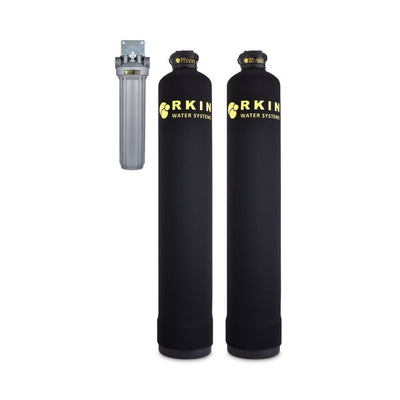
That is why a triple housing with sediment, carbon, and specialty media can still show a high TDS reading. It may be doing useful work. It just is not the tool designed for broad dissolved-solids reduction.
What Does Lower TDS at Home?
Reverse osmosis is the common home technology used when the goal is a large drop in dissolved solids at a drinking-water tap. RO pushes water through a membrane that rejects many dissolved ions and routes the reject stream away from the filtered water.
NSF describes NSF/ANSI 58 as the standard for point-of-use reverse osmosis systems. The standard includes requirements for material safety, structural integrity, TDS reduction performance, efficiency rating, recovery rating, contaminant reduction performance, and user information. NSF also notes that TDS reduction is a required claim under that standard.
Distillation can also reduce TDS, but it is usually slower and less practical for daily household drinking water. Deionization can reduce dissolved ions too, but it is more common in aquarium, lab, or specialty uses, not as the everyday answer for a family kitchen.
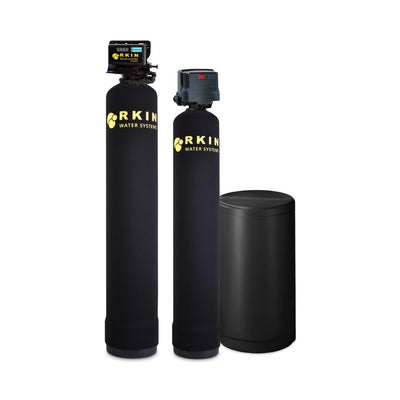
A water softener is another common source of confusion. Salt-based softeners exchange hardness minerals for sodium or potassium. That can reduce scale from calcium and magnesium, but it does not usually make a TDS meter read dramatically lower. In some cases, the reading can even stay similar because one dissolved ion is being exchanged for another.
The Right Way to Troubleshoot a High TDS Reading
Start with the question you are trying to answer. If the question is, "Did my carbon filter improve taste and odor?" a TDS meter is the wrong tool. You need chlorine testing, product performance data, or a lab test matched to the concern.
If the question is, "Is my RO membrane reducing dissolved solids?" then a TDS meter can be useful. Test the feed water and the RO water with the same meter, at the same temperature range, after the system has flushed properly. A large difference between those two readings tells you the membrane is rejecting dissolved solids.
If the question is, "What is actually in my water?" use your city Consumer Confidence Report or a certified lab test. Private-well owners should test based on local geology, nearby land use, flood history, and state or county guidance. A meter alone will not show nitrate, PFAS, lead, arsenic, microbes, or disinfection byproducts by name.
A practical troubleshooting order looks like this:
- Confirm the filter is installed in the right flow direction.
- Flush new carbon cartridges according to the manufacturer directions.
- Test untreated water and treated water side by side.
- Use chlorine or contaminant-specific tests for carbon-filter questions.
- Use a TDS meter mainly for reverse osmosis membrane checks.
- If the number changed suddenly, confirm with a lab or utility report before buying equipment.
This avoids the most common mistake: judging every filter by the one number it was never designed to change.
Matching the Filter to the Problem
A sediment prefilter helps catch sand, rust, silt, and visible particles before they enter later stages. It protects downstream media and can improve flow consistency when source water carries grit.
A carbon filter helps with taste, odor, chlorine, and certain chemical concerns, depending on the carbon type, bed size, flow rate, and contact time. Whole-home carbon is often chosen by city-water homeowners who want treated water at showers, laundry, appliances, and taps.
A salt-free conditioner is aimed at scale behavior, not broad contaminant reduction. It can be a fit when the main issue is hard-water scale and the homeowner wants to avoid salt, brine discharge, and the slick feel of softened water.
Reverse osmosis is the point-of-use answer when the drinking-water goal includes dissolved solids reduction or a broader contaminant reduction profile at the kitchen tap. It does not replace a whole-home system for every tap. It handles the water you drink and cook with.
Most homes do not need one magic box. They need the right layers in the right order.
Where RKIN Fits
If your carbon filter is improving taste but not lowering TDS, the next step is usually to decide whether you need whole-home treatment, drinking-water RO, or both.
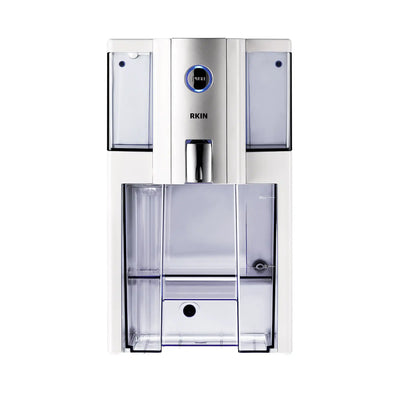
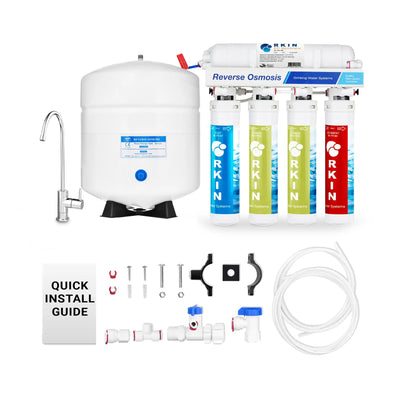
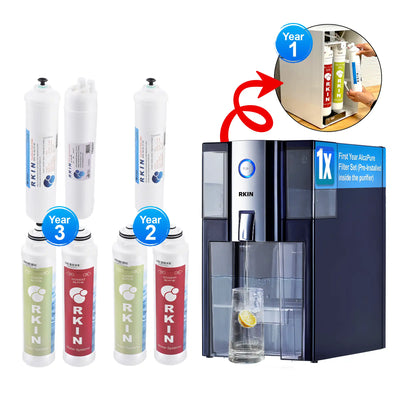
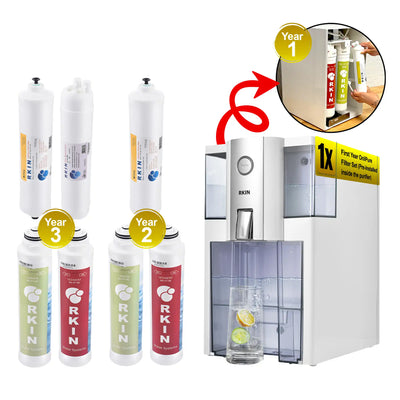
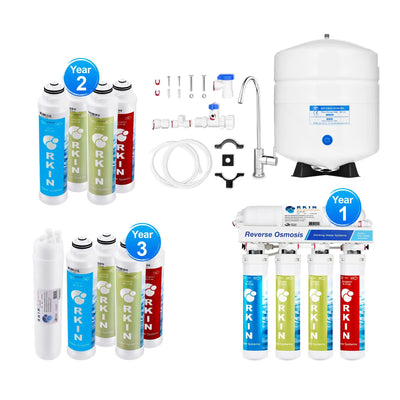
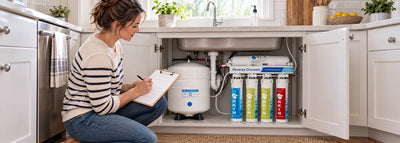
For drinking water, the RKIN Zero Installation Purifier Countertop Reverse Osmosis Water Filter is designed for homeowners and renters who want RO filtration without permanent plumbing changes. For a built-in under-sink option, the RKIN Flash Undersink RO System connects at the kitchen sink and stores filtered water in its compact tank.
For whole-home city-water concerns like chlorine taste, odor, and general incoming-water treatment, start with RKIN's whole house water treatment collection. The better setup depends on your source water, test results, installation preferences, and whether the main problem is dissolved solids, scale, taste, odor, or a mix of issues.
Me personally, I would use TDS as one clue, not the whole diagnosis.
Frequently Asked Questions
Why is my TDS still high after a carbon filter?
A carbon filter usually does not remove most dissolved minerals and salts. It can improve taste, odor, and certain chemical concerns while calcium, magnesium, sodium, chloride, and other dissolved ions pass through. If the goal is a large TDS reduction at a drinking-water tap, reverse osmosis is usually the more relevant technology.
Does a whole house carbon filter reduce TDS?
A whole house carbon filter may lower some substances that affect taste and odor, but homeowners should not expect a major TDS drop from carbon alone. TDS is mostly dissolved ions. Carbon is not the same as a reverse osmosis membrane, distiller, or deionization system.
Is high TDS unsafe?
High TDS is not a complete safety answer by itself. EPA lists TDS as a secondary standard tied to taste, appearance, and equipment effects. The important question is what dissolved substances are causing the number. Use a Consumer Confidence Report or certified lab test when you need contaminant-specific answers.
Can a water softener lower TDS?
A salt-based softener is made to reduce hardness minerals by ion exchange. It may reduce scale from calcium and magnesium, but it does not usually make a TDS meter read much lower. The dissolved material is changed, not simply removed from the water.
What filter should I use if I want lower TDS drinking water?
For drinking water, reverse osmosis is the common home choice for lowering TDS. Look for clear performance data, the right fit for your kitchen, and filter replacement guidance you can follow. Countertop RO works well when you do not want plumbing changes; under-sink RO works well when you want a built-in faucet.
Ready to Match the System to Your Water?
A TDS meter is a clue, not a full diagnosis. If your carbon filter is doing one job and your meter is asking a different question, solve the mismatch before replacing equipment.
Compare RKIN reverse osmosis and whole-home options at RKIN countertop water filters or RKIN whole house water treatment. If you are not sure where to start, send your water concern through RKIN support and we will help you choose the right path.





0 comments