
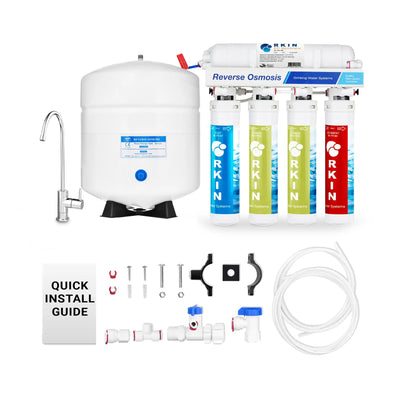
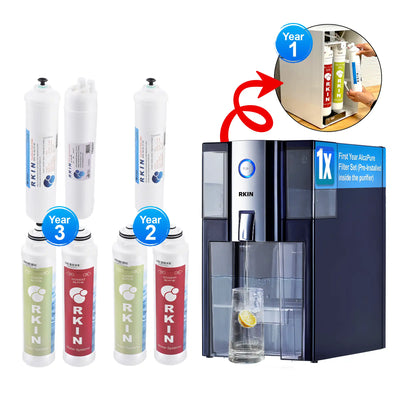
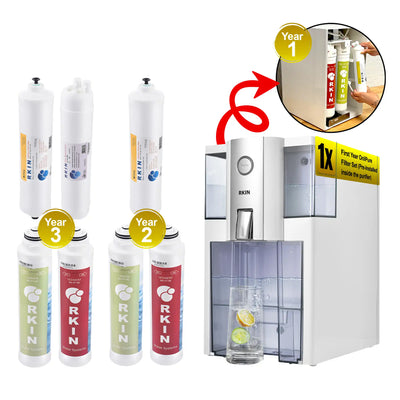
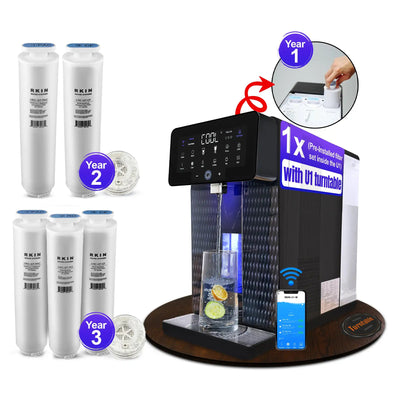


NSF 53 PFAS filter
PFAS Filter Certification: What NSF 53 and 58 Mean

NSF/ANSI 53 is commonly used for health-effect reduction claims in filtration products, while NSF/ANSI 58 applies to residential reverse-osmosis systems. Neither standard number proves PFAS reduction by itself: the certification must name the exact product and PFAS compounds covered.
That distinction matters more now because the EPA finalized federal drinking-water limits for six PFAS in 2024. Homeowners are seeing PFAS in utility updates, local news, and product pages. The useful move is not panic. It is learning how to read filter proof before you buy.
Why PFAS Claims Are Easy to Misread
PFAS is a family of chemicals, not one single item on a label. Product pages often use the word PFAS broadly because that is how people search. Lab reports are more exact. They may name PFOA, PFOS, PFHxS, PFNA, HFPO-DA, or another compound.
That difference matters. A filter may have data for PFOA and PFOS but not every PFAS compound on your report. Another filter may use broad language without showing the test method, standard, lab, or reduction claim. Both can sound strong in a headline, but they are not the same level of proof.
The EPA's 2024 PFAS filter fact sheet names three home treatment categories people should know: granular activated carbon, reverse osmosis, and ion exchange. That does not mean every product in those categories performs the same way. Design, certification, flow rate, maintenance, and cartridge life all matter.
In my house, I would not buy from the phrase "PFAS filter" alone. I would look for the exact reduction claim and the proof behind it.
What Certification Language Is Actually Telling You
Certification language can feel technical, but the idea is simple. A standard sets the test framework. A certifier or third-party lab checks whether the product meets a stated claim under that framework. A product page should make it clear what standard applies and which contaminant claims are covered.
For PFAS, homeowners often see NSF/ANSI 53 and NSF/ANSI 58 mentioned. NSF/ANSI 53 is commonly tied to health-related contaminant reduction for filtration products such as carbon systems. NSF/ANSI 58 is the standard associated with residential reverse osmosis drinking-water treatment systems.
The standard alone is not enough. You still need the contaminant claim. A product certified to a standard for one claim is not automatically certified for every contaminant. For PFAS shopping, look for PFOA and PFOS language at minimum, then compare it with the specific compounds in your water report.
Also watch for vague language. "Tested," "lab verified," and "certified" do not always mean the same thing. Tested by whom? Against what standard? For which compound? At what capacity? If the answer is not easy to find, keep asking.
What Does EPA Say Works for PFAS?
The EPA's PFAS filter guidance points homeowners toward granular activated carbon, reverse osmosis, and ion exchange. Each has a different fit.
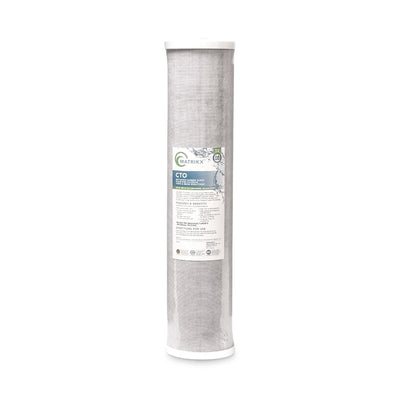
Granular activated carbon can reduce certain PFAS when the filter is designed with enough contact time and maintained correctly. Carbon performance depends on media type, cartridge size, flow rate, and how long water stays in contact with the media.
Reverse osmosis uses pressure to push water through a semipermeable membrane. The Water Quality Association explains reverse osmosis as a process that reduces dissolved solids by sending water through a membrane. RO is usually a point-of-use drinking-water technology, meaning it filters the water you drink and cook with rather than every tap in the house.
Ion exchange can also be used for PFAS in certain designs. Like carbon, it needs the right resin, sizing, and maintenance. The technology name alone is not proof.
The best question is not "Which technology sounds strongest?" It is "Which tested product matches my report, my water use, and my maintenance tolerance?"
Red Flags on PFAS Filter Product Pages
The first red flag is a claim with no compounds named. "Reduces forever chemicals" sounds clear, but it is incomplete. Look for PFOA, PFOS, and any other listed compounds the product says it reduces.
The second red flag is a standard with no claim. A product can mention a standard, but you still need to know what the certification covers. Do not assume NSF/ANSI 42 for taste and odor equals PFAS reduction. It does not by itself answer the PFAS question.
The third red flag is no maintenance detail. PFAS filtration is not a one-time purchase. Cartridges and membranes have service lives. If you do not replace them on schedule, performance can drop. A serious product should tell you how maintenance works.
The fourth red flag is trying to use the wrong appliance. A refrigerator filter, pitcher, softener, or basic sediment filter may improve one part of your water, but that does not prove PFAS reduction. If the claim is not documented, treat it as not proven.
The fifth red flag is relying on taste. PFAS does not announce itself in a glass. You cannot smell it, see it, or judge it from clarity. Testing and product proof matter because your senses are not enough.
Start With the Report, Then Match the Filter
If you are on city water, read your Consumer Confidence Report and any PFAS-specific utility notice. The report may not answer every plumbing or fixture question inside your home, but it can identify whether PFAS is part of the public-water conversation in your area.
If you are on a private well, order a lab test if PFAS is a concern. Private wells are not managed the same way public systems are, so the responsibility sits with the homeowner. A well can look clear and still need testing for specific contaminants.
Once you have a result, match the filter to the report. If the result names PFOA and PFOS, look for a product claim that names PFOA and PFOS. If the result names other PFAS compounds, ask whether the product has data for those compounds too.
Do not skip the practical questions. Where will the system live? How much water do you need each day? Will you maintain it on time? Do you want drinking-water treatment only, or do you need a point-of-entry conversation for the whole house?
Where RKIN Fits
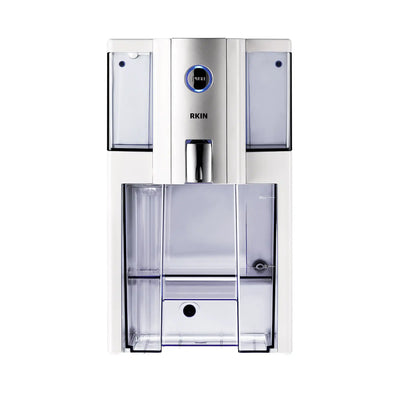
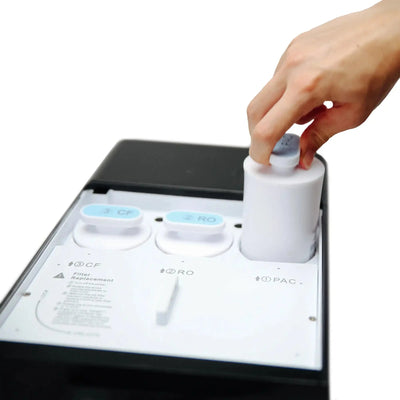
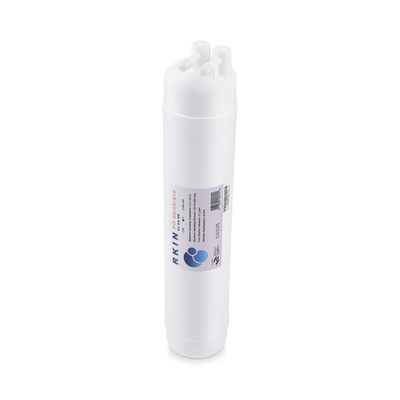
For no-plumbing drinking-water treatment, the RKIN Zero Installation Purifier Countertop Reverse Osmosis Water Filter is built around reverse osmosis without a sink-cabinet install. The product page lists IAPMO R&T certification to NSF/ANSI 58 for TDS, fluoride, lead, hexavalent chromium, and trivalent chromium. That current certification sentence does not name PFAS, so do not infer a PFAS claim without a current listing that names the compound.
If PFAS is the specific concern, use testing to create the starting point. The PFAS Water Test is the focused option when you want to know whether PFAS is showing up in your water before choosing treatment. If the test points toward drinking-water treatment, reverse osmosis is one of the EPA-named technology categories to consider.
That is the honest order: test, read the proof, choose the system that matches the job.
A PFAS Filter Proof Checklist
Before you trust a product page, look for these five items:
- The exact PFAS compounds named in the claim.
- The standard or test framework used for that claim.
- The certifier, lab, or published test document behind the claim.
- The maintenance schedule for the cartridge or membrane.
- The fit: countertop, under-sink, whole-house, or another format.
If a filter cannot answer those questions, you may still decide to buy it for taste, convenience, or general filtration. Just do not pretend it has answered the PFAS question.
Frequently Asked Questions
What is PFAS filter certification?
PFAS filter certification is proof language showing that a product was evaluated for specific PFAS reduction claims under a stated standard or test framework. The useful details are the exact compounds, the standard, the certifier or lab, and the product model tested.
What is the difference between NSF/ANSI 53 and NSF/ANSI 58?
NSF/ANSI 53 is commonly tied to contaminant-reduction claims for filtration products such as carbon systems. NSF/ANSI 58 is the standard associated with residential reverse osmosis systems. For PFAS, do not stop at the standard number. Check whether PFOA, PFOS, or other PFAS compounds are named.
Does reverse osmosis reduce PFAS?
Reverse osmosis is one of the treatment categories the EPA names for PFAS reduction. Product design and proof still matter. Look for product-specific contaminant-reduction data and compare it with the PFAS compounds shown on your water report.
Can a carbon filter remove PFAS?
Some carbon filters can reduce certain PFAS when properly designed and maintained. Carbon type, flow rate, cartridge size, and contact time matter. Do not assume every carbon filter handles PFAS unless the product has documented reduction claims for the compounds you care about.
Should I test for PFAS before buying a filter?
If PFAS is your main concern, testing gives you a cleaner decision. It tells you whether PFAS was detected and which compounds were measured. From there, you can compare the result with the filter's documented claims instead of shopping from fear.
Ready to Check the Proof, Not the Buzzword?
If PFAS is on your mind, start with a result and a proof checklist. Review the PFAS Water Test if you need a focused lab result. For no-plumbing reverse osmosis drinking-water treatment, compare the RKIN Zero Installation Purifier Countertop Reverse Osmosis Water Filter and read the product proof before choosing.





0 comentarios