


hydrogen sulfide well water
Water Smells Like Rotten Eggs After Filter? What to Do

First compare hot and cold taps, then bypass or inspect the new filter if the manual allows. A hot-only odor often points toward the water heater; odor at both temperatures can involve the source water, plumbing, or treatment media. Isolate the source before choosing treatment.
That distinction matters. Hydrogen sulfide, sulfur bacteria, a water heater anode rod, stagnant plumbing, and undersized treatment can all create the same smell at the tap. The right fix starts with source isolation, not guessing at another cartridge.
Why rotten-egg smell can show up after a filter install
The most common rotten-egg odor in household water comes from hydrogen sulfide gas or sulfur bacteria activity. The Minnesota Department of Health describes the odor as a common well-water complaint and notes that it may come from the water supply, plumbing, or water heater.
A new whole-house filter can make the timing confusing. If the system removes chlorine, improves sediment removal, or changes water flow through plumbing, an odor that was masked before may become easier to notice. If the install included a softener, bypass loop, pressure tank work, or water heater flushing, the smell may also be tied to stagnant water disturbed during the project.
That does not mean the filter is bad. It means the system should be treated like a diagnostic clue. Ask three questions first:
- Does the smell happen on hot water only? That points toward the water heater.
- Does the smell happen on cold water too? That points toward the well, pressure tank, or incoming line.
- Did the smell begin only at one fixture? That points toward a drain, faucet, or local plumbing issue.
If the odor is strongest when hot water runs, do not blame the new filter yet. If it is present before the water reaches the heater, the treatment plan needs to look upstream.
Step one: separate hot water from cold water
Run cold water from a tap close to where water enters the house. Let it run for a minute, then smell the water in a clean glass away from the sink drain. Repeat the same test with hot water.
If only hot water smells, the water heater is the likely suspect. Penn State Extension notes that a magnesium rod in a water heater can contribute to hydrogen sulfide odor by reacting with sulfates in water. The University of Georgia Extension also notes that hot water can release the gas into the air, which is why the smell can be stronger during showers or dishwashing.
If cold water smells too, the water heater may still add to the odor, but it is not the only source. The well water itself, sulfur bacteria, dissolved sulfide, iron, manganese, and pH all need to be checked.
One more practical test: smell the water, not the drain. Fill a clean cup, step away from the sink, and smell the cup. A sink trap can smell like sulfur even when the water is fine. That simple move prevents a lot of wrong equipment decisions.
Step two: check whether the filter is the wrong tool
A standard sediment filter catches particles. A carbon cartridge can improve taste and odor when the problem is chlorine or certain organic compounds. Neither one is automatically a complete sulfur treatment plan for well water.
That is where homeowners get stuck. They install a general whole-house filter, the water looks clearer, but the egg smell remains. The filter may be doing its job; it is just not built for the specific sulfur condition in that water.
Sulfur treatment depends on the form and amount of the problem. Low-level odor may respond to one approach. Strong odor with iron and manganese may need oxidation plus filtration. Odor tied to bacteria may need disinfection and follow-up testing. Odor that only appears in hot water may need water heater service, not a bigger filter.
Before buying another system, write down the pattern:
- Hot only: water heater, anode rod, heater temperature, or stagnant hot-water plumbing.
- Cold and hot: incoming well water, pressure tank, sulfur bacteria, or treatment mismatch.
- One bathroom only: fixture, drain, or branch line.
- After vacation or low use: stagnant water in plumbing or a rarely used fixture.
This is the part most sales pages skip. You cannot size or select sulfur treatment from smell alone.
What to test before changing equipment
For a private well, the cleanest next step is a current water test. The EPA private wells guidance tells homeowners to test when there is objectionable taste or smell, staining, scale, equipment wear, or other water changes.
If the smell appeared right after installation, save the test timing too. Note the install date, the first day the odor appeared, whether any cartridges were changed, and whether the water heater was drained or shut off. That timeline helps separate a water-quality issue from an installation issue. It also gives a water professional something useful to work from instead of starting with the vague complaint that the new filter “made the water smell.”
For rotten-egg odor after a filter install, ask the lab or water professional about testing for:
- Hydrogen sulfide or sulfide odor indicators
- Iron and manganese
- pH and alkalinity
- Total dissolved solids
- Hardness
- Bacteria indicators when contamination or sulfur bacteria are suspected
Do not skip pH. Acidic water can corrode metal plumbing and may change how odor and metals show up. Do not skip iron and manganese either. They often travel with sulfur complaints and can affect which treatment method works.
If a filter was installed recently, also check the basics: bypass valve position, cartridge orientation, pressure drop, backwash programming if the system has a control valve, and whether any old cartridge housing was left in line. A simple install issue can mimic a water chemistry problem.
When a well-water system makes sense
If testing confirms sulfur along with iron or manganese in the incoming well water, a targeted whole-house well system may be the right path. This is where a generic carbon filter and a well-water treatment system are not the same thing.
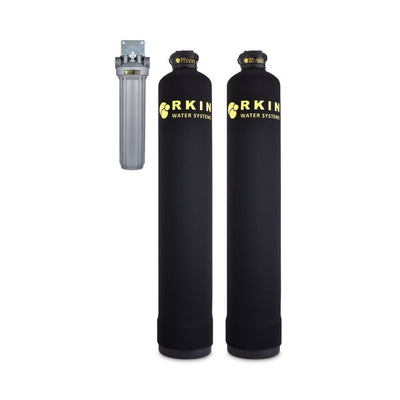
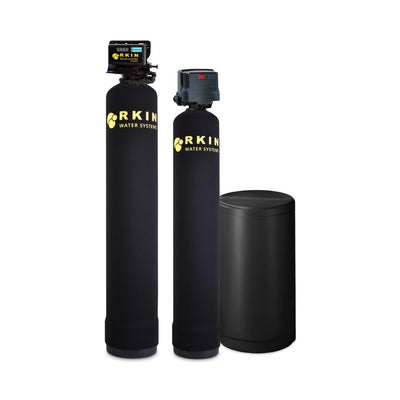
The RKIN Well Water Whole House Filter is designed for homes dealing with iron, sulfur, and manganese concerns across the house. The goal is to treat the water before it reaches showers, laundry, fixtures, and the water heater.
That does not mean every rotten-egg smell needs that system. If the odor is hot-water only, start with the heater. If the odor is from a drain, fix the drain. If a test shows a different issue, match the system to the report.
In my house, I would not install another filter until I knew whether the smell was hot-only, cold-and-hot, or fixture-specific. The test pattern tells you whether you are solving water chemistry, plumbing, or equipment setup.
What not to do
Do not shock the well repeatedly without understanding the source. Disinfection can be appropriate in some cases, but it is not a permanent fix for every sulfur smell. Do not keep stacking cartridges if the water report says the issue requires oxidation. Do not assume a softener removes sulfur odor. A softener handles hardness; sulfur is a different problem.
Also avoid treating odor as a reason to ignore testing. Smell is useful, but it is not a full water report. Two homes can have the same egg smell and need different solutions.
The practical order is simple: isolate the source, test the water, check the install, then choose treatment.
Frequently Asked Questions
Why does my water smell like rotten eggs after installing a filter?
The filter may have changed flow, removed chlorine odor that was masking sulfur, or exposed an existing well-water issue. The smell can also come from the water heater, a drain, sulfur bacteria, or a treatment system that is not designed for hydrogen sulfide.
Is rotten-egg smell usually hot water or cold water?
It can be either. Hot-water-only odor often points toward the water heater or anode rod. Cold-and-hot odor points toward incoming water, the well, pressure tank, or treatment setup. Test both before blaming the filter.
Will a carbon filter remove sulfur smell from well water?
Sometimes at low levels, but it is not a universal sulfur solution. Strong odor, iron, manganese, sulfur bacteria, or water chemistry issues often need a more targeted plan. A water test should guide the system choice.
Should I test my well water if it smells after a filter install?
Yes. A recent water test helps separate sulfur, iron, manganese, pH, bacteria indicators, hardness, and other factors. Testing also prevents buying a system that solves the wrong problem.
What RKIN system is designed for sulfur, iron, and manganese?
The RKIN Well Water Whole House Filter is designed for well-water concerns involving iron, sulfur, and manganese. It should be matched to a water report and installed based on the home’s actual water conditions.
Ready to stop guessing at sulfur odor?
If your water started smelling like rotten eggs after a filter install, do the hot-versus-cold test first. Then use a current water report to choose the right fix.
For confirmed well-water sulfur, iron, or manganese concerns, review the RKIN Well Water Whole House Filter or contact RKIN with your water test so we can point you in the right direction.





0 comentarios