




acondicionador de agua sin sal
Water Softener Dripping: When a Small Leak Matters

A water softener dripping is easy to ignore because it looks small. A few drops near the drain line, bypass valve, brine tank, or control head can feel like a weekend problem. But water systems run on pressure, timers, seals, and valves. A small leak can be the first sign that one of those parts is no longer behaving.
The timing matters too. Summer brings more showers, laundry, irrigation, guest bathrooms, and appliance demand. If your softener is already tired, that extra cycling can expose a leak that was barely visible in spring. EPA WaterSense says common household leaks can waste large amounts of water over a year, and the same plain rule applies here: do not let a drip become background noise.
First, Identify Where The Drip Is Coming From
Before you diagnose the softener, locate the water. Put a dry towel under the unit, wipe the area clean, and watch where the first wet spot appears. Do not start by tightening every fitting you see. Over-tightening plastic fittings or old bypass valves can make the problem worse.
If water is coming from the drain line, the softener may be in regeneration, the drain connection may be loose, or the control valve may be stuck sending water to drain. A softener should use the drain during regeneration. It should not run to drain all day.
If water is near the bypass valve, look for a cracked O-ring, loose clip, stressed fitting, or valve body leak. Bypass assemblies see pressure every day. A small drip there can become a bigger leak when the valve is moved or when pressure spikes.
If water is around the brine tank, check whether the tank is overfilling, whether the float is stuck, or whether the brine line is loose. Salt sludge can also interfere with normal brine draw. That does not mean the whole system is bad, but it does mean the unit needs attention.
If water is on top of the control head, stop and call a pro. Electrical controls and water do not mix. Leave the system in bypass if you can do so safely and the leak slows, then get service.
Why A Tiny Drip Can Point To A Bigger Pattern
A softener is a mechanical appliance. It meters water, triggers regeneration, moves brine, rinses resin, and returns to service. Each step depends on seals and moving parts. When homeowners notice dripping, the cause is often one of four patterns.
The first pattern is pressure stress. If household pressure is high, fittings, valves, and seals age faster. A pressure reducing valve or expansion tank issue can show up as leaks at the weakest point. The softener may be the messenger, not the root cause.
The second pattern is drain trouble. A kinked, blocked, frozen, or poorly routed drain line can force water where it does not belong. If the line is pushed too far into a drain, lacks an air gap where required, or sits higher than the equipment allows, regeneration can fail or leak.
The third pattern is neglected salt and brine maintenance. A salt bridge, mushy salt, or dirty brine tank can interfere with brine draw and refill. Recent RKIN posts have covered salt bridges and softener water use because these are common homeowner problems. This article is different: the drip is the visible symptom that tells you to stop guessing and inspect the physical parts.
The fourth pattern is wrong equipment for the actual problem. Some homes have hard-water scale concerns but do not need a traditional salt-based softener. Others do need softening because hardness is high and the homeowner wants that specific result. The right answer depends on the water report, plumbing, local discharge rules, and maintenance tolerance.
What To Check Before Calling For Replacement
Start with the bypass. If your softener has a clear bypass position and you know how to use it, move the system to bypass and watch the leak. If the leak stops, the problem is likely inside the softener or its immediate fittings. If the leak continues, the problem may be upstream plumbing.
Next, check whether the unit is regenerating. Many softeners regenerate overnight. A softener dripping during a scheduled regeneration may be easier to trace than one dripping at random. If it never stops running to drain, that is not normal operation.
Look at the drain line path. It should be secure, not crushed, not kinked, and not jammed into a drain in a way that violates local plumbing rules. A poor drain setup can create noise, leaks, and cross-connection concerns.
Check the brine tank water level. Some water in the brine tank is normal. A tank that keeps filling, overflows, or never draws brine points to a float, injector, valve, or salt issue. Do not add more salt until you know whether the tank is already too full.
Read the water meter if your home has one. The EPA WaterSense leak guidance recommends using meter movement as a clue when no fixtures are on. If the meter moves while everything is off, isolate the softener with bypass and check again.
What Usually Does Not Work
Ignoring the drip is the worst option. Water finds floors, drywall, stored boxes, electrical outlets, and nearby equipment. Even when damage is not dramatic, constant dampness around a utility area is not a maintenance plan.
Adding more salt is not a leak repair. Salt level matters for a traditional softener, but a wet floor is not solved by topping off the tank. If the brine system is already malfunctioning, extra salt can make cleanup harder.
Replacing random parts can also waste time. A bypass O-ring, drain elbow, brine float, injector, control valve, or pressure issue can all look like “the softener is leaking” from across the room. Identify the first wet point before you buy parts.
A pitcher or under-sink drinking-water filter will not solve a leaking softener. Those filters may improve the water from one outlet, but they do not fix a pressurized whole-house appliance. Handle the leak as plumbing first, water quality second.
When Salt-Free Scale Control Makes More Sense
If your traditional softener is leaking but otherwise solved a real hardness problem, repair may be the right move. When hardness is high, you prefer softened water, and local rules allow salt discharge, a serviced softener can still be a valid choice.
But if the reason you bought a softener was mainly scale on fixtures, water heater protection, or less white buildup, a salt-free conditioner may fit better. Salt-free systems condition hardness minerals so they are less likely to form hard scale on surfaces. They do not remove hardness minerals the same way a salt-based softener does, and they will not give the same slippery soft-water feel.
That distinction matters. We would rather tell you the trade-off before you buy. If you want actual ion-exchange softening, choose equipment built for that. If you want lower-maintenance scale control without hauling salt, look at salt-free options.
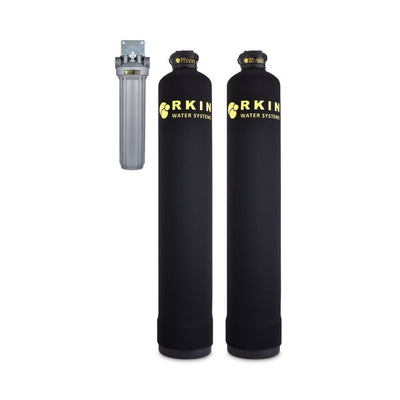
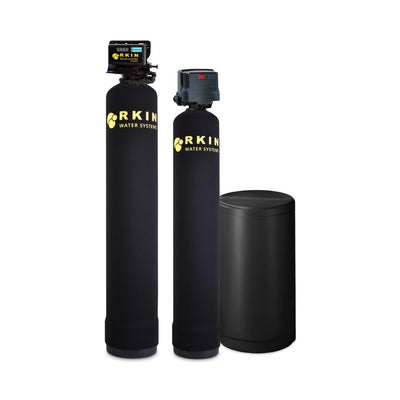
RKIN’s whole house water treatment collection includes salt-free scale-control options for homes that want a different maintenance path. The CBS Whole House Salt-Free Water Conditioner is designed for whole-home scale control without a brine tank. For homes that also want carbon filtration, the CBS PPH Salt-Free Anti-Scale System with Dual Carbon Filtration combines anti-scale media with carbon filtration.
How To Decide Your Next Step
Use a simple decision path. If water is near electrical controls, bypass the unit if safe and call for service. If water appears only during regeneration, document the cycle time and inspect the drain line. If the brine tank is overfilling, do not keep adding salt. If the bypass valve drips, handle it like a pressurized plumbing repair.
Then look at the age and maintenance history. A newer unit with one bad fitting may be worth fixing. An older unit with repeated valve issues, salt bridges, drain trouble, and pressure problems may be telling you it is time to rethink the setup.
Finally, pull a water report or test result. Hardness, iron, manganese, chlorine, sediment, and TDS all point to different equipment. A leak tells you something is wrong with the appliance. A water test tells you what the replacement, if needed, should solve.
Frequently Asked Questions
Why is my water softener dripping from the drain line?
A drain-line drip may be normal during regeneration, but it should not run all day. If water keeps flowing to the drain, the valve may be stuck, the drain line may be restricted, or the control cycle may not be finishing. Check the cycle status and call a pro if it does not stop.
Can I put my water softener in bypass if it is leaking?
Often, yes, if you know the bypass valve and can move it without forcing it. Bypass can help isolate whether the leak is inside the softener or in the surrounding plumbing. If the valve is cracked, stuck, or leaking more when touched, stop and call for service.
Is a leaking water softener an emergency?
It depends on the leak location and volume. Water near electrical controls, a fast leak, or water spreading across finished flooring deserves fast service. A slow drip in an unfinished utility area still needs attention because pressure leaks can get worse.
Will a salt-free water conditioner leak less than a softener?
A salt-free conditioner removes the brine tank and regeneration cycle from the setup, so there are fewer brine-related parts. It is still plumbing equipment under pressure, so it must be installed correctly. It is a scale-control choice, not the same as removing hardness minerals.
Should I replace my softener with a salt-free system?
Maybe. If you want lower-maintenance scale control and do not need the slippery feel of softened water, salt-free can make sense. If your water is very hard and you specifically want ion-exchange softening, repair or replacement with a softener may be a better fit.
Ready To Fix The Drip Without Overbuying?
A water softener drip is not a reason to panic, but it is a reason to inspect. Find the first wet point, use bypass carefully, check the drain path, and use a water test before choosing replacement equipment.
If you are ready to compare repair versus a lower-maintenance salt-free setup, start with RKIN’s whole house water treatment options. Send us your water source, hardness result, and leak location, and we will help you narrow the next step.




0 comentarios