




emergency-preparedness
How to Protect Your Drinking Water During a City Water Crisis

Your City's Water Supply Is More Fragile Than You Think
In April 2026, Corpus Christi, Texas, made national headlines when dwindling reservoir levels triggered an emergency scramble for water across South Texas. Cities, chemical plants, and rural communities all rushed to tap local aquifers — and the people who suffered most were the ones who assumed their tap water would always be there, always be clean.
This wasn't a freak event. A 2023 EPA infrastructure assessment found that aging U.S. water systems need over $625 billion in upgrades over the next 20 years. When a city's supply runs low or its treatment plant gets overwhelmed, the water that still reaches your faucet often contains higher levels of sediment, disinfection byproducts, and contaminants that the system can no longer filter effectively.
What Happens to Tap Water Quality During a Crisis
Most people picture a water crisis as the taps going completely dry. That's rare. What's far more common — and more dangerous — is water that still flows but gets worse in ways you can't see or taste.
Here's what typically happens when a municipal system is under stress:
- Higher sediment loads — Treatment plants drawing from depleted reservoirs or emergency sources pull in more particulate matter. A 2022 study published in Water Research found that turbidity spikes during supply disruptions can increase bacteria and protozoa levels in treated water by 2-5x.
- Elevated disinfection byproducts (DBPs) — When source water quality drops, plants increase chlorine dosing. That kills pathogens but creates trihalomethanes (THMs) and haloacetic acids (HAAs) — both regulated by the EPA because long-term exposure is associated with health concerns.
- Contaminant breakthroughs — PFAS, nitrates, lead from aging pipes, and volatile organic compounds can all spike when treatment systems are strained. The EWG's 2024 Tap Water Database identified over 320 contaminants in U.S. drinking water systems, many at levels above health guidelines even during normal operations.
- Boil-water advisories — These address bacteria and parasites, but boiling does nothing for chemical contaminants like PFAS, lead, or nitrates.
The point isn't to scare you. It's that the gap between "normal operations" and "compromised water" is smaller than most homeowners realize.
Why Bottled Water Isn't a Real Plan
When a boil-water advisory hits, grocery stores sell out of bottled water within hours. You've seen the photos — bare shelves, rationing, lines around the block.
Even if you stockpile, the math doesn't work for anything beyond a few days. The average family of four uses about 1 gallon per person per day for drinking and cooking alone. That's 28 gallons a week — roughly 224 bottles. And that doesn't cover pet water, baby formula preparation, or cooking.
Bottled water also isn't the quality upgrade people assume. A 2024 study from Columbia University found an average of 240,000 detectable nanoplastic particles per liter of bottled water — far more than tap water in most cases. You're trading one set of concerns for another.
What Actually Protects Your Home Water Supply
The most reliable approach is point-of-use filtration that works regardless of what's happening upstream. Reverse osmosis (RO) is the gold standard for drinking water because it physically removes contaminants at the molecular level — not just improving taste, but actually separating your water from what shouldn't be in it.
Here's what to look for in a system that functions as genuine protection:
- Multi-stage filtration — Sediment pre-filter, activated carbon, RO membrane, and post-filter working in sequence. Each stage catches what the others miss.
- NSF/ANSI 58 testing — This is the standard for reverse osmosis systems. It verifies removal of TDS, lead, and other specific contaminants under controlled conditions.
- No plumbing modification required — During an actual emergency, you don't want a system that needs a plumber to install. Countertop units that connect to your existing faucet give you clean water the same day you set them up.
- Independent water supply — A system with its own storage tank means you have filtered water available even if pressure drops or the utility shuts off briefly.
Whole-House vs. Point-of-Use: Which Makes Sense
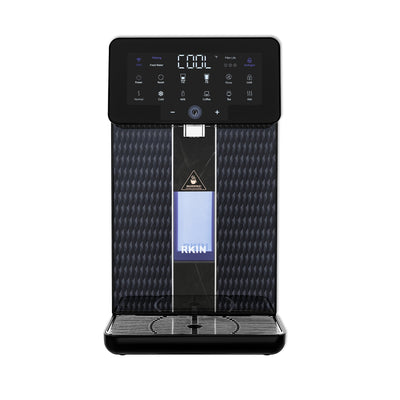
If you're starting from zero, a countertop RO system is the fastest path to safe drinking water. No installation appointment, no plumbing changes, no landlord permission. Plug it in, connect it to your faucet, and you're filtering.
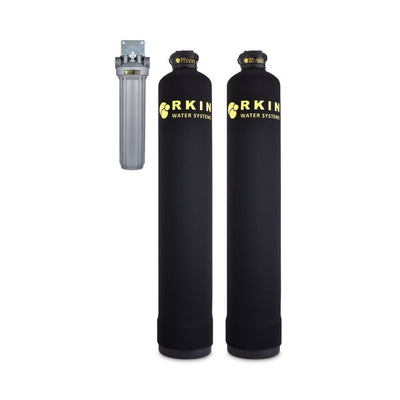
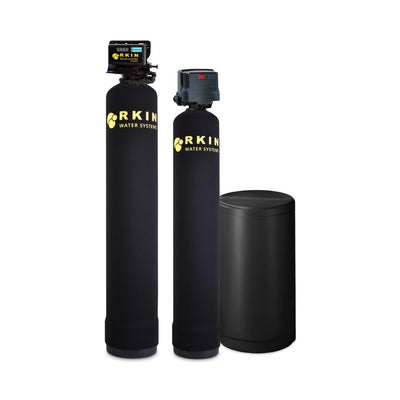
If you own your home and want protection for every tap — including showers, laundry, and appliances — a whole-house system paired with a drinking water RO unit gives you complete coverage. The whole-house system handles sediment, chlorine, and hardness at the point of entry. The RO system at your kitchen handles the drinking water to a higher standard.
The combination matters because whole-house systems alone don't remove dissolved contaminants like PFAS, lead, or nitrates at the molecular level that reverse osmosis does. And a countertop RO alone doesn't protect your water heater, dishwasher, or shower fixtures from sediment and hard water damage.
How the RKIN Zero Installation Purifier Fits
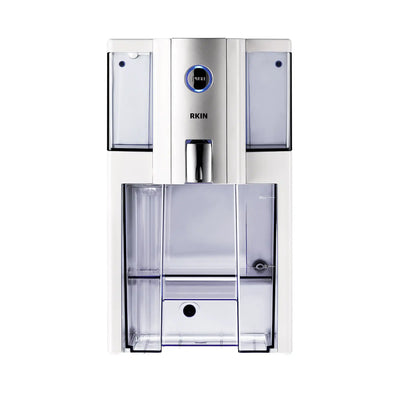
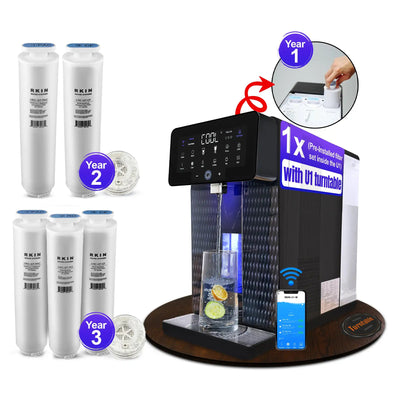
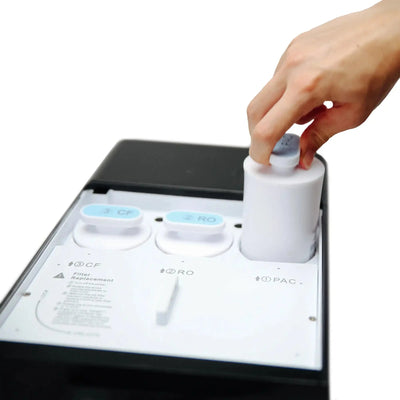
This is exactly what the RKIN Zero Installation Purifier was designed for. It's a countertop reverse osmosis system that connects to your standard kitchen faucet — no plumbing modification, no under-sink installation, no electrician. You set it on your counter, attach the diverter to your faucet, plug it in, and it starts producing filtered water.
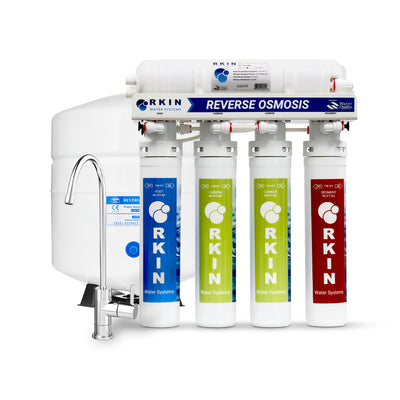
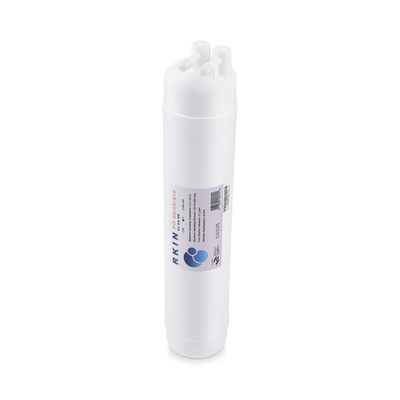
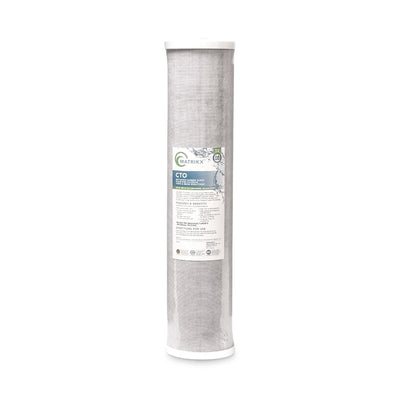
It runs a 4-stage filtration process: sediment pre-filter, carbon block, reverse osmosis membrane, and post-carbon polishing filter. The result is drinking water with 90%+ TDS reduction — which means the dissolved solids, chemicals, and contaminants that survive municipal treatment get caught before they reach your glass.
For homeowners who want whole-house protection on top of that, the RKIN whole-house filtration systems address sediment, chlorine, and hard water at the main line — protecting every fixture and appliance in your home.
Building a Water Resilience Plan
You don't need to wait for a crisis to start. A practical home water resilience plan looks like this:
- Know your baseline. Request your city's annual Consumer Confidence Report (CCR). It's free and legally required. Compare the listed contaminant levels against EWG health guidelines, which are often stricter than EPA legal limits.
- Get a point-of-use RO system. This is your primary defense for drinking and cooking water. A countertop unit works immediately with no installation wait time.
- Consider whole-house filtration. If you own your home, a whole-house carbon filter or salt-free conditioner protects your plumbing, appliances, and skin from sediment, chlorine, and hard water.
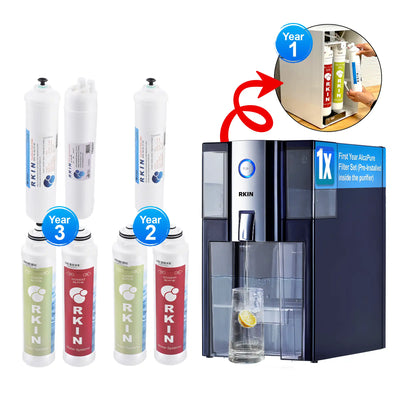
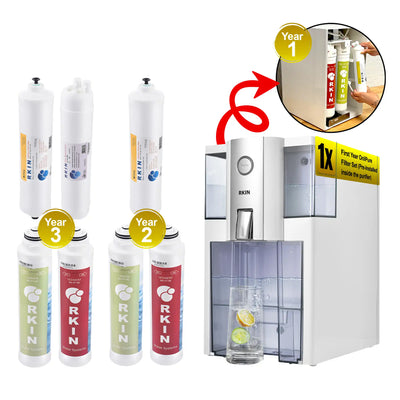
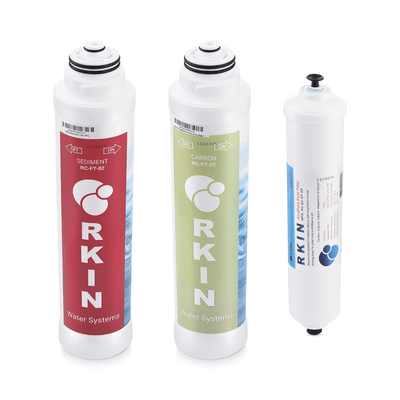
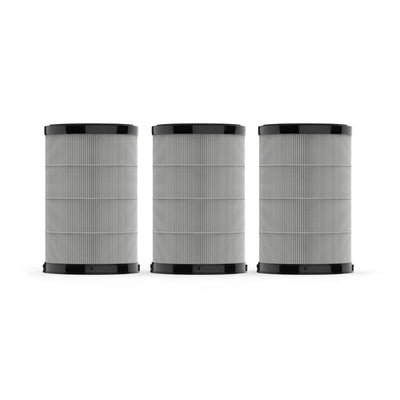
- Keep spare filters on hand. During a water quality event, your filters work harder. Having a replacement set means you don't lose protection at the worst possible time.
- Store 3 days of water. Even with filtration, keep 1 gallon per person per day as a backup for complete supply interruptions.
Frequently Asked Questions
Does reverse osmosis remove PFAS from tap water?
Yes. Reverse osmosis membranes are effective at removing PFAS compounds from drinking water. A 2020 study by Duke University and North Carolina State University found that RO systems reduced PFAS concentrations by over 90% in home tap water samples.
Can I use a countertop water filter during a boil-water advisory?
A standard carbon pitcher filter won't make water safe during a boil-water advisory — it doesn't remove bacteria or parasites. A reverse osmosis system with a membrane rated at 0.0001 microns does physically block these organisms, but always follow your local utility's official guidance during advisories.
How long does a countertop RO system last before I need to replace filters?
Most countertop RO systems need filter replacements every 6-12 months depending on your water quality and usage. The RO membrane typically lasts longer — 12-24 months under normal conditions. During a water quality event with higher sediment or contaminant loads, filters may need replacement sooner.
Is municipal tap water tested for all contaminants?
No. The EPA regulates about 90 contaminants under the Safe Drinking Water Act, but the EWG has identified over 320 contaminants in U.S. tap water. Many emerging contaminants — including most PFAS compounds — weren't regulated until recently, and some still aren't.
What's the difference between a water filter and a water purifier?
A water filter (like a carbon block) reduces chlorine, taste, and some contaminants through adsorption. A water purifier using reverse osmosis physically separates water from dissolved contaminants at the molecular level, achieving much higher removal rates — typically 90-99% of total dissolved solids.
Ready to Protect Your Home Water Supply?
You can't control what happens to your city's reservoir or treatment plant. But you can control what reaches your glass. The RKIN Zero Installation Purifier gives you countertop reverse osmosis filtration with zero plumbing — set it up today, drink cleaner water tonight. Ships free.




0 comments