

Is It Safe to Drink Water With Limescale? What to Know
Share
You poured a glass of water, spotted a few white flakes floating in it, and paused. Those flakes are limescale — the same mineral crust that builds up in your kettle — and the obvious question follows: is this actually safe to drink?
The short answer is yes. The Environmental Protection Agency classifies water hardness as a secondary, or aesthetic, standard — a quality issue, not a health hazard. But "safe" and "ideal" aren't the same thing, and there are good reasons people still choose to treat hard water for drinking. Here's the full picture.
What Limescale Actually Is
Limescale is calcium carbonate. It forms when hard water — water rich in dissolved calcium and magnesium — is heated or evaporates, leaving the minerals behind as a chalky white deposit. You see it on kettle elements, around faucets, and as spots on glassware.
When loose flakes end up in your glass, they're simply pieces of that deposit that broke free, often from a kettle or water heater. Calcium and magnesium are minerals the human body uses every day — they're present in food, supplements, and most natural water sources. Drinking water that contains them, or even small flakes of them, is not considered dangerous.
The U.S. Geological Survey estimates around 85% of American homes have hard water, which means the vast majority of the country drinks water with dissolved hardness minerals every day without harm.
What the Research Says About Hard Water
Major health bodies have looked at this directly. The World Health Organization, in its reviews of drinking water quality, has stated there is no convincing evidence that hard water causes adverse health effects, and notes that calcium and magnesium in water contribute to dietary intake of those minerals.
So the consensus is reassuring: hard water and the limescale it produces are not a recognized health risk. The minerals are the same ones nutritionists encourage people to get enough of.
That said, hardness is still flagged as an aesthetic concern for real reasons — taste, appearance, and the practical damage it does around the home. Those are the issues most people are actually trying to solve when they ask whether they should filter hard water.
Why People Still Choose to Treat It
If hard water is safe, why do so many homeowners filter or condition it? A few practical reasons:
- Taste: Heavy mineral content gives water a flat, slightly metallic, or chalky taste. Many people simply prefer the cleaner taste of treated water.
- Floating flakes: Visible white bits in a glass are unappetizing, even when they're harmless.
- Scale damage: The same minerals that flake into your glass build up in water heaters, coffee makers, dishwashers, and pipes, reducing efficiency and shortening appliance life.
- Spotty dishes and dull laundry: Hard water leaves residue on glassware and can make fabrics feel stiff.
- Other contaminants: Hardness often travels alongside things you do want removed — chlorine taste, sediment, and in some areas trace metals or other contaminants.
In other words, treating hard water is usually about quality of life and protecting your home, not about removing a health threat.
What Doesn't Solve the Drinking-Water Side
People try a few common fixes that fall short for drinking water specifically:
Boiling. Boiling hard water actually makes the flake problem worse for drinking — it drives minerals out of solution, which is why your kettle scales up in the first place. It doesn't reduce the mineral content of the water you drink.
Standard pitcher filters. Most basic pitcher filters improve taste and odor but don't meaningfully reduce dissolved calcium and magnesium. They won't stop the flakes.
Bottled water. It works for the glass in your hand, but it's an ongoing expense, generates plastic waste, and does nothing for the water you cook with or make coffee with.
The Approach That Works for Drinking Water
For drinking water specifically, reverse osmosis (RO) is the most thorough option. RO pushes water through a semipermeable membrane with openings small enough to block dissolved minerals along with a wide range of other contaminants. The result is water with very low mineral content — no flakes, no chalky taste, and a clean, neutral profile.
When choosing an RO system, look for third-party testing or certification to standards such as NSF/ANSI 58, which covers RO performance. Certification confirms the system actually reduces what it claims to.
It's worth noting the distinction between drinking water and whole-house treatment. RO is the right tool for the water you drink and cook with. If your goal is also to stop scale buildup in appliances and pipes throughout the house, that's a separate job for a whole-house softener or salt-free conditioner. Many homes use both: a whole-house conditioner for scale and an RO system at the kitchen for drinking water.
The RKIN Approach
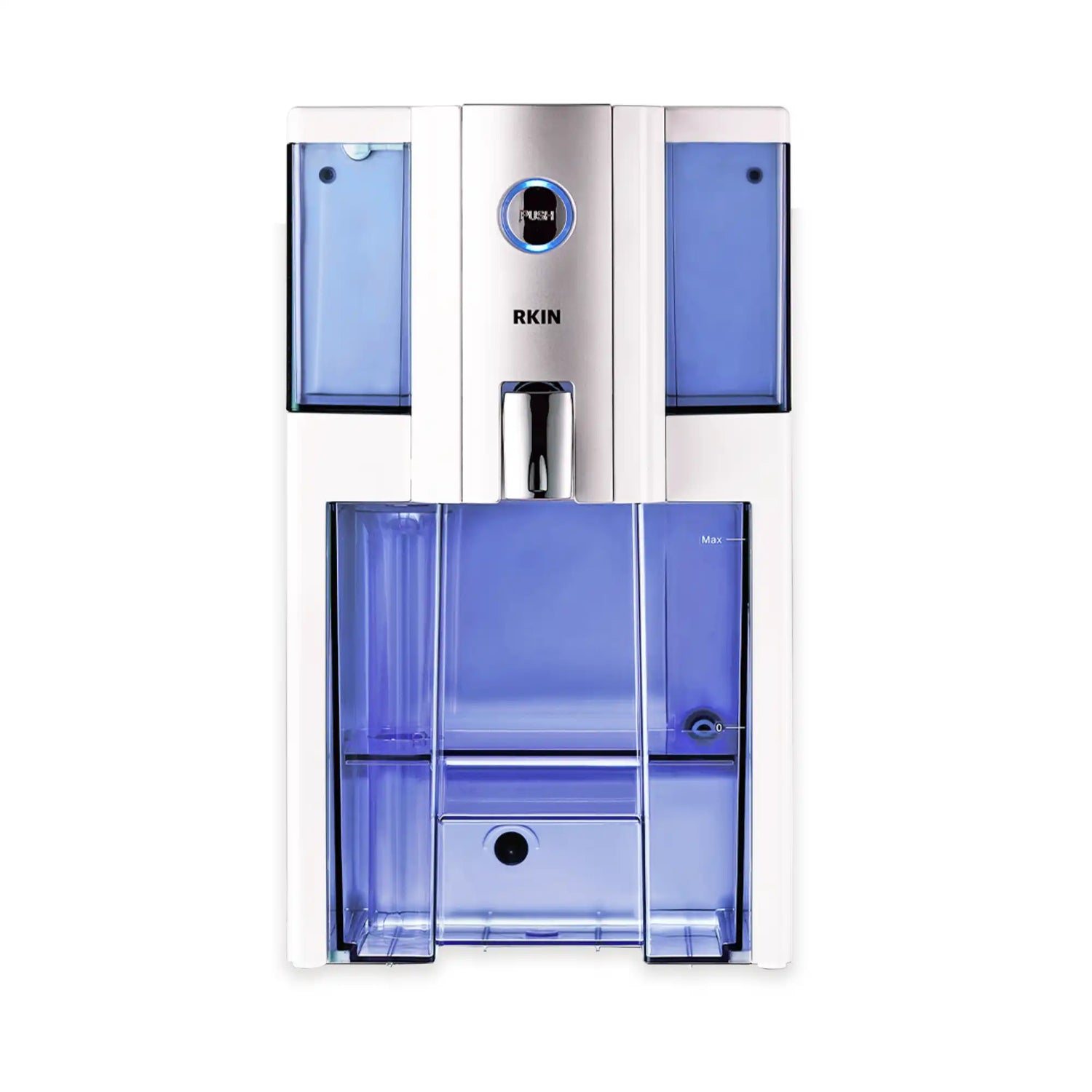
For clean, mineral-free drinking water without any installation, the RKIN Zero Installation Purifier is a countertop reverse osmosis system that needs no plumbing — it connects to your faucet and is ready to use. It removes the dissolved minerals behind limescale flakes along with a broad range of other contaminants, producing the clean-tasting water RO is known for.
If counter space is tight, the RKIN U1 4-in-1 Water Filter System is a compact countertop RO unit with a fill tank — also zero-installation, just plug it in. Both are designed for renters and homeowners who want better drinking water without modifying their plumbing. See current pricing and full specs at rkin.com.
Frequently Asked Questions
Is it safe to drink water with limescale flakes in it?
Yes. Limescale is calcium carbonate, made of minerals the body uses regularly. The EPA classifies water hardness as an aesthetic issue, not a health hazard. Floating flakes are unappetizing but are not considered dangerous to drink.
Can hard water make you sick?
Health organizations including the World Health Organization have found no convincing evidence that hard water causes adverse health effects. The calcium and magnesium in hard water are the same minerals found in food. Hard water is treated for taste, appearance, and appliance protection rather than safety.
Does boiling water remove limescale?
No — boiling does the opposite. Heating hard water drives dissolved minerals out of solution, which is why kettles scale up. Boiling can actually increase the flakes in your drinking water rather than reduce the mineral content.
Does reverse osmosis remove the minerals that cause limescale?
Yes. Reverse osmosis pushes water through a membrane fine enough to block dissolved calcium and magnesium, so RO water is very low in the minerals that form limescale. That's why RO water tastes clean and leaves no flakes or chalky residue.
Should I filter all my home's water or just my drinking water?
It depends on your goal. To improve drinking and cooking water, a countertop reverse osmosis system at the kitchen is enough. To stop scale buildup in appliances and pipes throughout the house, you also need a whole-house softener or salt-free conditioner. Many homes use both.
Why does my water have white flakes only sometimes?
Flakes usually break loose from scale that has accumulated inside a kettle or water heater, so they appear in batches rather than constantly. Hot water tends to carry more visible flakes than cold because heat accelerates scale formation.
Ready for Cleaner-Tasting Water?
Limescale in your water is safe to drink — but it doesn't have to be something you put up with. If the flakes and the flat mineral taste bother you, reverse osmosis gives you clean, neutral water with no installation required.
The RKIN Zero Installation Purifier delivers RO-quality drinking water straight from your countertop — no plumbing, no tools. See current pricing and specs at rkin.com.


