




drinking-water-safety
Lead in Drinking Water: How It Gets There and How to Remove It

In 2024, the EPA estimated that roughly 9.2 million lead service lines still deliver water to American homes. Lead doesn't come from the treatment plant — it dissolves off the pipes between the street and your faucet, which means your utility's water can pass every test at the source and still arrive at your tap with dangerous levels of lead.
Unlike chlorine or sulfur, lead has no taste, no smell, and no color. You won't notice it. And the consequences — especially for children under six — are irreversible. Here's what every homeowner needs to know about how lead enters drinking water, what the regulations actually say, and which filtration methods reliably remove it.
How Lead Gets Into Your Water
Lead enters your water through a process called corrosion. When water sits in or flows through lead-containing plumbing, small amounts of lead dissolve into the water. Several factors accelerate this:
- Lead service lines: Homes built before 1986 may have lead pipes connecting the water main to the house. The EPA's revised Lead and Copper Rule (LCRR), finalized in 2024, requires utilities to inventory and begin replacing these lines — but the full replacement timeline stretches to 2037.
- Lead solder: Even homes built in the 1980s and early 1990s may have copper pipes joined with lead-based solder, which wasn't federally banned until 1986. Acidic or low-mineral water accelerates leaching from these joints.
- Brass fixtures and faucets: Older brass fittings can contain up to 8% lead. The 2014 Reduction of Lead in Drinking Water Act lowered the allowable lead content to 0.25%, but fixtures installed before that date remain in millions of homes.
- Water chemistry: Soft water (low mineral content), acidic water (low pH), and hot water all dissolve lead faster. If your utility doesn't add corrosion inhibitors like orthophosphate, lead leaching increases significantly.
The critical takeaway: lead contamination usually happens inside or immediately outside your home, not at the water treatment facility. That's why your utility's annual Consumer Confidence Report may show zero lead — while your actual tap water contains measurable amounts.
What "Safe" Actually Means (and Doesn't)
The EPA's action level for lead is 15 parts per billion (ppb). But this number is widely misunderstood. The action level isn't a safety threshold — it's a regulatory trigger. When more than 10% of tested homes in a water system exceed 15 ppb, the utility must take corrective action.
The actual health guidance is more conservative:
- The American Academy of Pediatrics recommends a maximum of 1 ppb for water used in schools
- The FDA's limit for bottled water is 5 ppb
- The CDC and EPA both state that no level of lead exposure is considered safe for children
A 2023 study published in The Lancet Public Health estimated that low-level lead exposure contributes to over 5.5 million deaths annually worldwide from cardiovascular disease — affecting adults, not just children. The problem is larger and more persistent than most homeowners realize.
Why Standard Filters Fall Short
Not every water filter removes lead. In fact, most of the popular options homeowners try first don't address it effectively:
- Standard carbon pitcher filters: Basic activated carbon reduces chlorine taste and odor but does not reliably remove dissolved lead. Some premium pitcher filters carry NSF/ANSI 53 certification for lead, but their capacity is limited — often just 40 gallons before the filter saturates and lead passes through.
- Refrigerator filters: Most fridge filters are NSF 42 certified (taste and odor only) and are not designed for lead reduction. Check the spec sheet — if it doesn't list NSF/ANSI 53 for lead, it's not removing it.
- Boiling: Boiling water actually concentrates lead rather than removing it. As water evaporates, the lead remains — and the concentration per liter increases.
- Flushing the tap: Running cold water for 30 seconds to 2 minutes can reduce lead levels temporarily by clearing standing water from the pipes. But it doesn't eliminate the source, wastes water, and doesn't help with constant low-level leaching during normal flow.
For reliable lead removal, you need a filtration technology that physically separates dissolved heavy metals from the water at the molecular level.
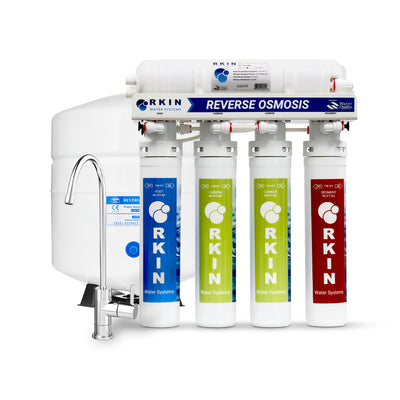
What Actually Works: Reverse Osmosis
Reverse osmosis (RO) is one of the most effective methods for removing lead from drinking water. An RO membrane has pores approximately 0.0001 microns in size — small enough to block lead ions, which are roughly 0.18 nanometers in diameter.
According to the CDC, reverse osmosis systems can reduce lead concentrations by 95% or more when properly maintained. The key factors that determine effectiveness:
- NSF/ANSI 58 certification: This standard specifically tests RO systems for contaminant reduction, including lead. Look for systems tested and certified by an accredited third-party lab.
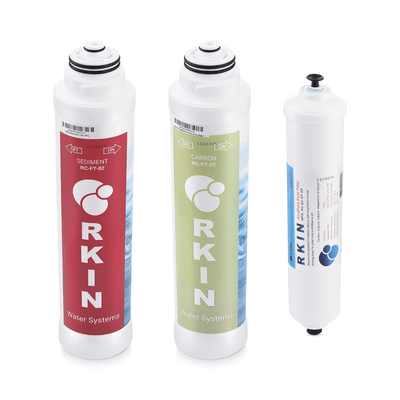
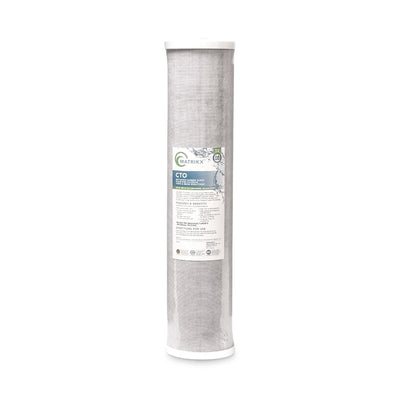
- Pre-filtration stages: Sediment and carbon pre-filters protect the RO membrane from chlorine damage and particulate fouling, extending membrane life and maintaining lead removal performance.
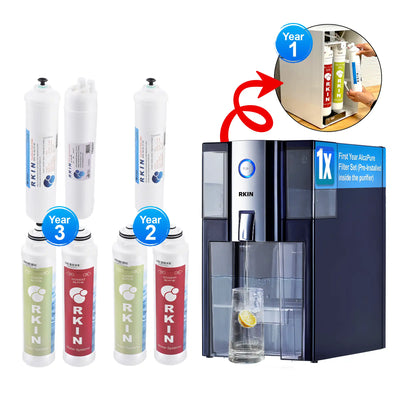
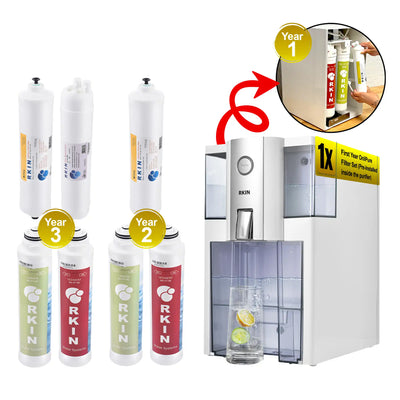
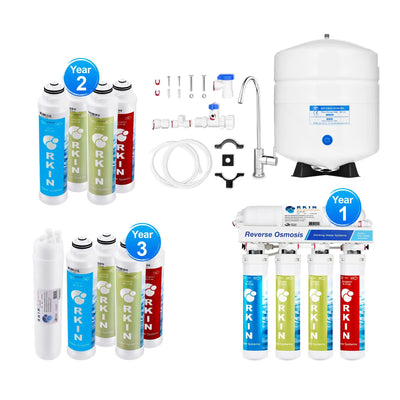
- Filter replacement schedule: An RO system only works as well as its maintenance. Worn-out filters lose effectiveness. Follow the manufacturer's replacement schedule — typically every 6 to 12 months for pre-filters and post-filters.
Other effective technologies include distillation (effective but slow and energy-intensive) and KDF/activated alumina media (used in some specialty whole-house applications). But for point-of-use drinking water, RO remains the gold standard for lead removal.
Testing Your Water for Lead
Before investing in any filtration system, test your water. Here's how to get reliable results:
- First-draw sample: Collect your sample first thing in the morning — or after the water has sat in the pipes for at least 6 hours — without running the tap. This gives you the worst-case lead reading from pipe corrosion during stagnation.
- Certified lab testing: Use a state-certified laboratory. The EPA maintains a directory at epa.gov. Lab tests typically cost $20 to $50 and give you results in parts per billion — far more accurate than DIY strip tests.
- Test multiple taps: Lead levels can vary by fixture. A kitchen faucet with old brass internals may read differently than a newer bathroom faucet. Test the taps you drink from.
If your results come back above 5 ppb from any drinking water tap, point-of-use filtration is strongly recommended — especially if children or pregnant women live in the home.
Whole-House vs. Point-of-Use: Which Approach for Lead?
This depends on where the lead enters your water:
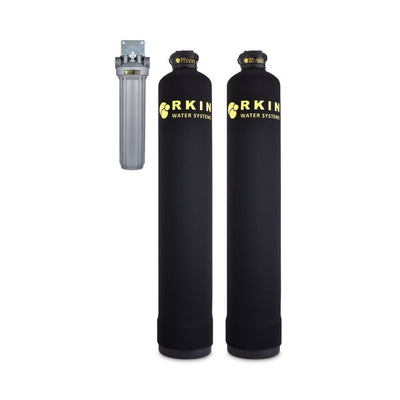
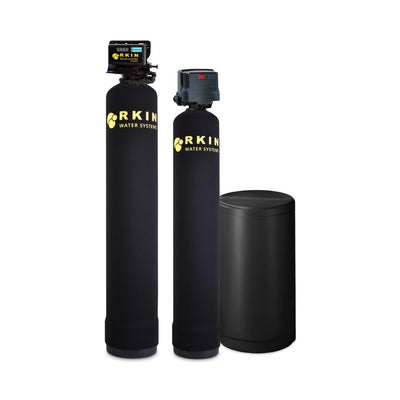
- Lead service line (from the street to your house): A whole-house filtration system treats water before it reaches any internal plumbing. The RKIN OP1L Certified Whole House Lead and Cyst Removal System is designed specifically for this scenario — certified for lead, cyst, and PFAS reduction at the point of entry.
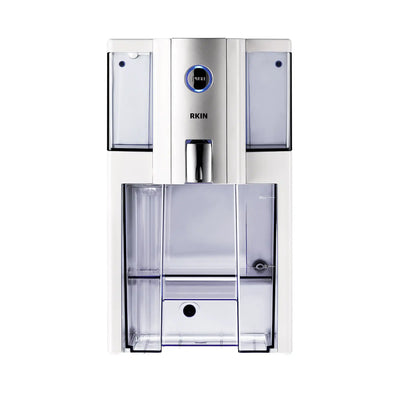
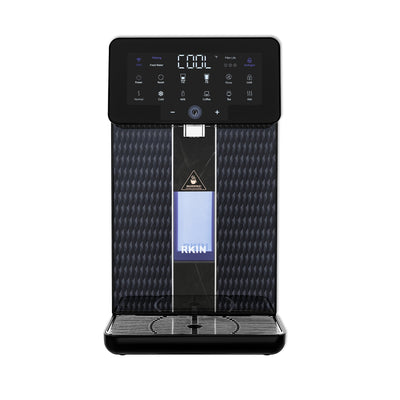
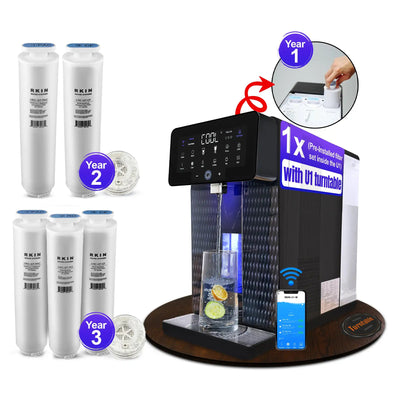
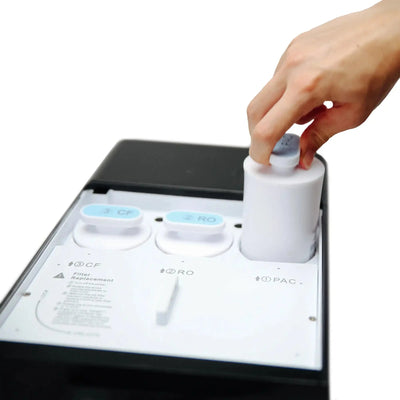
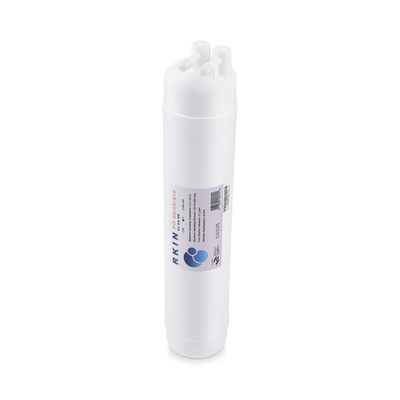
- Internal plumbing (old solder, brass fittings): Point-of-use reverse osmosis at your kitchen tap ensures the water you actually drink and cook with is filtered right before consumption. The RKIN U1 4-in-1 Water Filter System is a countertop RO system with five-stage filtration — including a sediment pre-filter, dual carbon stages, an RO membrane, and UV sterilization. No plumbing changes required.
- Both: If you have a lead service line and older internal plumbing, the most thorough approach is a whole-house system for baseline treatment plus a countertop or under-sink RO for drinking water.
What the New EPA Lead Rule Means for You
The EPA's 2024 Lead and Copper Rule Improvements (LCRI) represent the most significant update to federal lead regulations in three decades. Key changes homeowners should know:
- Water utilities must complete a full inventory of lead service lines by October 2027
- Mandatory replacement of all lead service lines within 10 years (by 2037)
- The action level trigger drops from 15 ppb to 10 ppb
- Utilities must notify homeowners within 24 hours if sampling reveals lead above the action level
While these regulations are a step forward, the timeline means millions of homes will continue receiving water through lead pipes for another decade. Filtration provides protection now — not in 2037.
Frequently Asked Questions
Does boiling water remove lead?
No. Boiling water actually increases lead concentration because water evaporates while lead stays behind. The CDC specifically advises against boiling as a method for addressing lead in drinking water. Use a certified reverse osmosis or lead-specific filter instead.
How do I know if my home has lead pipes?
Check two things: your home's age (pre-1986 homes are higher risk) and the pipe material. Find your water service line where it enters the house and scratch it with a key. Lead pipes are soft, dull gray, and leave a shiny silver mark when scratched. Your utility may also have records — contact them or check your city's lead service line inventory, which is required by the EPA by October 2027.
Can a whole-house filter remove lead?
Yes, if it's specifically designed for lead reduction. Standard whole-house carbon filters address chlorine and sediment but not dissolved lead. You need a system with lead-specific media, like the RKIN OP1L, which is certified for lead, cyst, and PFAS reduction at the point of entry.
What is the safest level of lead in drinking water?
There is no safe level of lead exposure, according to both the CDC and EPA. The EPA action level of 15 ppb (dropping to 10 ppb under new rules) is a regulatory trigger, not a health-based safety standard. The American Academy of Pediatrics recommends no more than 1 ppb in school water fountains.
How often should I replace my RO filter if I have lead?
Follow the manufacturer's recommended schedule — typically every 6 to 12 months for sediment and carbon pre-filters. The RO membrane itself lasts longer, usually 2 to 3 years, but performance depends on your water quality. If your incoming lead levels are high, more frequent replacement ensures consistent removal rates.
Take Control of Your Water Quality
Lead contamination is a fixable problem — but waiting for your utility to replace lead service lines could mean another decade of exposure. A certified reverse osmosis system or a whole-house lead filter gives you clean water now, regardless of what's happening upstream.
The RKIN U1 4-in-1 Water Filter System delivers five-stage filtration including RO and UV sterilization — no plumbing changes, no installation wait. Plug it in, fill the tank, and start drinking cleaner water today. See the RKIN U1 at rkin.com.


0 comments