


allergies water filter
Spring Allergies and Your Tap Water: The Hidden Connection

Every spring, the same pattern shows up. The pollen count climbs, your eyes start watering, and the over-the-counter antihistamines that worked fine last year suddenly feel like they are barely taking the edge off. Most people blame the trees. They are not entirely wrong — but they are missing half the picture. The water coming out of your faucet changes in spring too, and for sensitive bodies, that change can stack on top of seasonal allergies and make a moderate week feel miserable.
Spring is the single most chemically volatile season for U.S. tap water. A 2024 EPA Water Quality Trends report flagged early spring (March through May) as the period of highest variability in disinfection byproducts, sediment levels, and trace contaminants in surface-water-fed municipal systems. The cause is straightforward: snowmelt and spring rain wash everything off the ground — pesticides, fertilizer, road runoff, organic debris — into the rivers and reservoirs that feed your treatment plant. The treatment plant responds by turning up the chlorine. And that combination is exactly the wrong cocktail for a body already in allergy mode.
What Changes in Your Tap Water Each Spring
Three specific shifts happen in most municipal water systems between March and May, and any one of them can amplify allergy symptoms in sensitive people.
Higher chlorine and chloramine levels. When spring runoff carries more organic load into source water, treatment plants increase disinfection to maintain residual safety in the distribution pipes. Free chlorine concentrations at the tap can double from winter baselines, especially in older systems with longer pipe runs. Chlorine is a known respiratory irritant and skin sensitizer at the concentrations sometimes seen in spring tap water.
Disinfection byproducts (DBPs) spike. When chlorine reacts with the dissolved organic material in spring runoff, it forms trihalomethanes (THMs) and haloacetic acids (HAAs). The EPA tracks these because long-term exposure has been linked to a range of health concerns. For day-to-day allergy sufferers, the immediate issue is that THMs are volatile — they evaporate from a hot shower, and you breathe them in. A 2023 University of Wisconsin study found indoor air THM concentrations during a 10-minute hot shower can exceed outdoor air concentrations by a factor of 10 to 40, depending on the building's ventilation.
Pollen and biofilm fragments. Most municipal water gets filtered well enough to remove visible particles, but very fine particulate — including biofilm fragments shed from inside aging distribution pipes — can pass through. These particles are typically harmless to drink, but for people with reactive skin or respiratory systems, washing your face or rinsing your eyes with water carrying these fragments can add insult to injury during peak allergy weeks.
Why It Hits Sensitive People Harder
For a healthy person with no allergies, the chemistry change in spring water is unnoticeable. The body handles trace chlorine, low-dose THMs, and tiny particulate without registering anything is happening. That is by design — the EPA sets municipal water standards for the average healthy adult.
For a person whose immune system is already activated by tree pollen, grass pollen, and the cascade of histamine-driven inflammation those allergies create, the same chemistry is no longer invisible. Reactive skin gets more reactive. Already-irritated airways get more irritated. Already-watering eyes water more.
This shows up most clearly in three places:
Showers feel worse. A hot shower aerosolizes whatever is in your water. People who have lived with mild eczema, contact dermatitis, or just sensitive skin often notice it flares hardest in March and April — and a meaningful portion of that flare is downstream of the shower head, not the pollen outdoors. The American Academy of Dermatology has noted seasonal flares of atopic dermatitis correlate strongly with peak chlorine seasons in U.S. cities.
Drinking water tastes "off." Spring is when more people complain about a chemical or pool-like taste in their tap water. The receptors on your tongue do not change — the water did. If you are already congested from allergies, the dulled sense of taste makes that off-flavor more disorienting.
Symptoms persist into the evening. Pollen counts drop after sunset, but the chemistry of your water does not. People who do their nighttime routine with high-DBP tap water — washing their face, brushing their teeth, drinking a glass before bed — often feel residual symptoms long after the outdoor air has cleared.
What Doesn't Help
A few common spring-allergy strategies do nothing for the water side of the problem.
Pitcher filters with basic activated carbon improve taste but are not rated for THMs and HAAs. The contact time between the water and the carbon is too short, and the carbon volume is too small to handle the volatile organic load that shows up in spring water.
Boiling water before drinking does drive off some volatile chlorine, but it concentrates non-volatile contaminants like HAAs in the remaining water. Boiling is the wrong tool here.
Hot showers with the bathroom door open help with humidity buildup but do almost nothing about THMs in the air, because the gases evaporate from the water as it leaves the showerhead and stay in the breathing zone for the duration of the shower.
Switching to bottled water for drinking only ignores the bigger exposure path: the shower, where breathing and skin contact deliver more chlorine and THMs in 10 minutes than a full day of drinking tap water.
What Actually Helps
The most effective intervention for water-sensitive people during spring is whole-house carbon filtration paired with a quality reverse osmosis system at the kitchen sink.
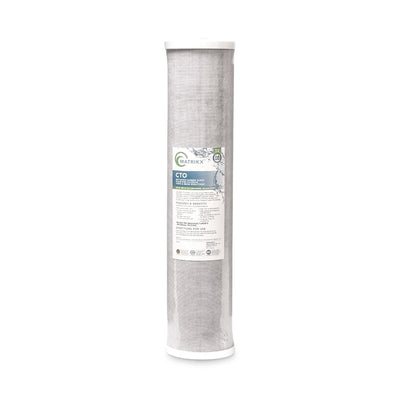
A whole-house carbon filter at the point where water enters the home removes free chlorine, chloramine, and the volatile organic compounds responsible for THMs and HAAs. That means every shower, every faucet, every laundry load is using water that has been stripped of the spring chemistry spike before it reaches you. For people with reactive skin and respiratory sensitivity, this is the change that delivers the most relief.
A reverse osmosis system at the kitchen sink handles the drinking water layer. RO membranes reject more than 99 percent of dissolved solids, including the lead, arsenic, fluoride, and PFAS compounds that occasionally show up at higher levels in spring runoff-fed systems. For drinking, cooking, coffee, and ice, RO water is consistently the cleanest option you can have at home.
Together, these two systems cover the full exposure picture: skin and lungs in the bathroom and laundry, and gut exposure at the sink. They run in the background, ask nothing of you day to day, and stay in service through the seasonal chemistry shifts that make spring water the most variable of the year.
The RKIN Approach
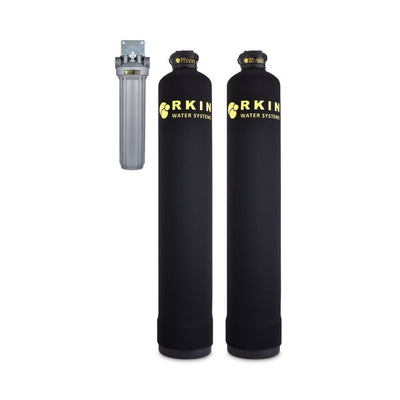
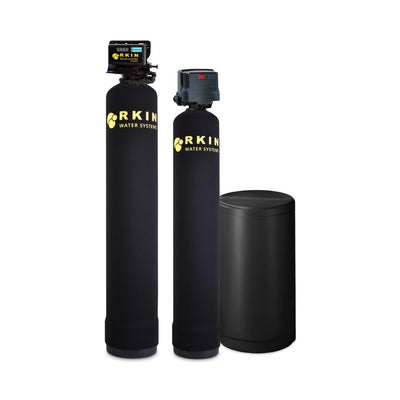
For homeowners on city water who want to address the spring chemistry shift comprehensively, the RKIN OnliSoft Pro Salt-Free + Carbon Combo handles chlorine, chloramine, and the organic precursors to THMs and HAAs at the point where water enters the home — while also addressing hard water without adding salt to your wastewater. It is the closest thing to a single-equipment solution for whole-house spring water issues.
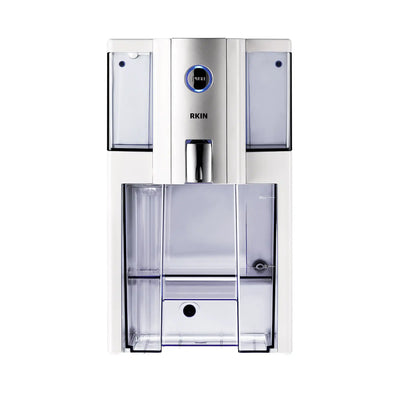
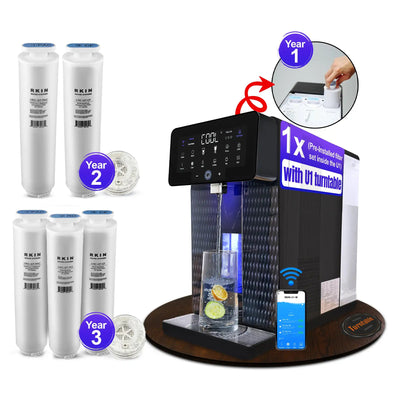
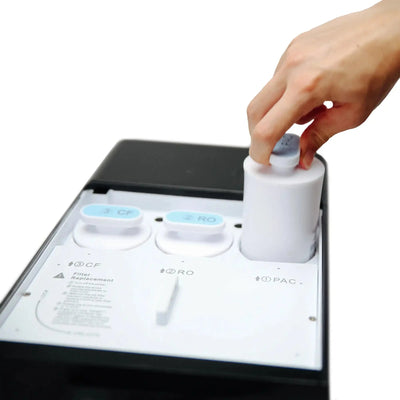
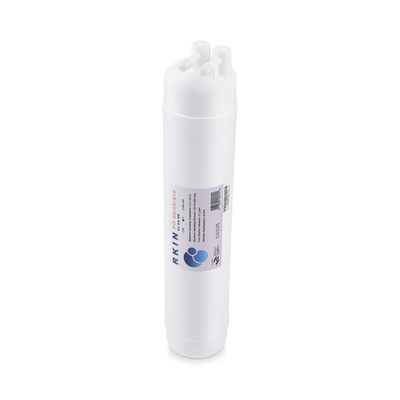
For drinking water, the RKIN U1 4-in-1 Water Filter System is a countertop reverse osmosis unit that requires no plumbing — it sits on the counter, uses a fill tank, and plugs into a standard outlet. It runs a five-stage filtration process (sediment, carbon, RO, UV, post-filter) that is independently tested for PFAS, lead, arsenic, fluoride, and TDS reduction. For renters, condo owners, or anyone who wants RO-grade drinking water without committing to under-sink installation, it is the simplest path.
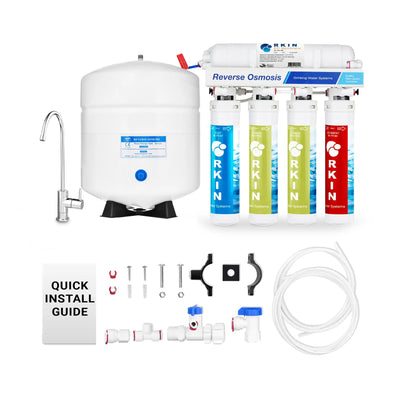
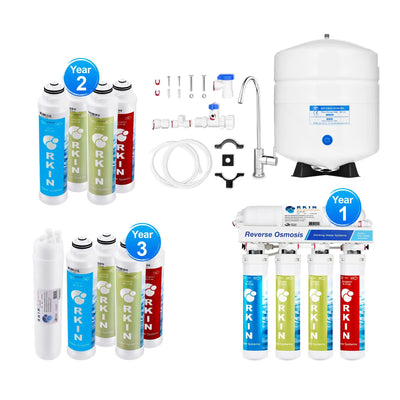
For homes that prefer an under-sink installation, the RKIN Flash Undersink RO System connects to the cold-water line under the kitchen sink, uses no electricity, and stores filtered water in a 3.2-gallon tank for instant access at the faucet.
Frequently Asked Questions
Can tap water actually make seasonal allergies worse?
Tap water itself does not cause pollen allergies, but the higher disinfection byproducts and chlorine levels common in spring municipal water can amplify symptoms in sensitive people — particularly skin reactions, respiratory irritation in the shower, and taste disturbance for people already congested. The EPA and CDC both acknowledge that disinfection byproducts can be respiratory and skin irritants at residential exposure levels.
Is the chlorine in tap water really an issue if it's at "safe" levels?
"Safe" in EPA terms is defined for the average healthy adult. People with allergies, asthma, eczema, or chemical sensitivity are not the calibration baseline. A whole-house carbon filter removes free chlorine and chloramine before they reach the shower, which is the highest-exposure point for chlorine in most homes.
What's the difference between chlorine and chloramine in water?
Chlorine is the older disinfectant. Chloramine — chlorine combined with ammonia — has become more common because it stays stable longer in pipes. Both are effective disinfectants. Chloramine is harder to remove than chlorine, so any filter you choose for spring water should be specifically rated for chloramine reduction, not just "chlorine."
How quickly will I notice a difference after installing a filter?
Most people with skin sensitivity notice a difference within the first week of showering with carbon-filtered water, because the daily insult to reactive skin stops compounding. Drinking water taste improvements are immediate. Respiratory symptoms tied to shower-aerosolized THMs typically improve within two to four weeks as the body's overall inflammatory load drops.
Do I need both a whole-house filter and an RO system?
For people with allergies or chemical sensitivity, yes — they cover different exposure paths. The whole-house filter handles skin, hair, and breathing exposure at every faucet and shower. The RO system handles the drinking water exposure path with a much higher level of reduction. Either one alone leaves a meaningful gap.
Are there certifications I should look for?
Look for NSF/ANSI 42 (chlorine and aesthetic effects) and NSF/ANSI 53 (health-related contaminants like lead and VOCs) on whole-house carbon filters. For RO systems, look for NSF/ANSI 58 (reverse osmosis performance) and independent third-party testing for PFAS reduction.
Ready to Get Through Spring Without the Water Adding to It?
Spring is when water variability is at its highest, and it lines up exactly with the season most allergy-prone people are already feeling overwhelmed. Filtering at the point where water enters your home, plus having clean drinking water at the kitchen sink, removes one of the few exposure paths you can fully control.
Visit rkin.com to see current options for whole-house carbon filtration and countertop RO systems built for the way water actually behaves in spring.






0 comments