


fridge filter not lasting 6 months
Why Does My Fridge Water Filter Run Out So Fast?

Your refrigerator's filter light turns red after eight weeks. The manual says six months. You buy a new one, pop it in, and the water dribbles out at half the pressure it used to. Two months later, the light is red again. You're now spending more on filters than you used to spend on bottled water — and the water still tastes off.
A 2023 NSF International field study found that refrigerator water filters in homes with moderate sediment or iron content reach 50% capacity in roughly one-third of their rated lifespan. The filter isn't defective. The light isn't lying. Your incoming water is carrying more contaminants than a point-of-use filter the size of a paper towel roll was ever designed to handle.
What's Actually Clogging the Filter
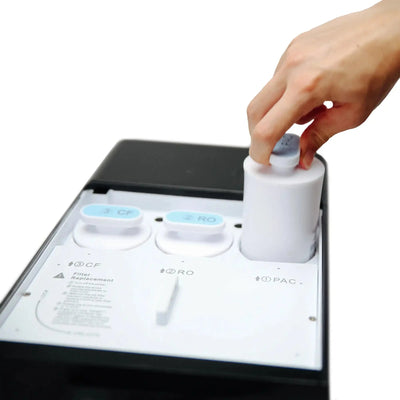
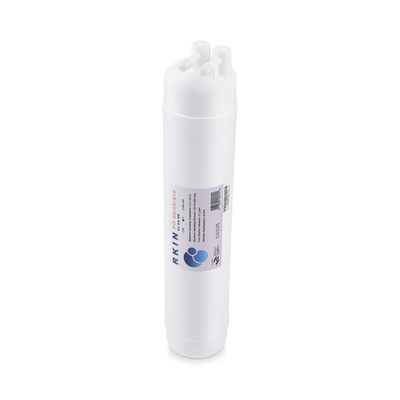
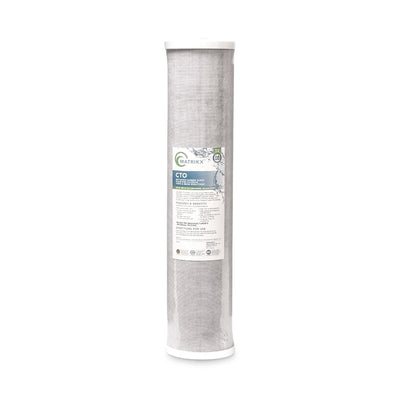
A fridge filter is a carbon block — usually a small cylindrical cartridge with activated carbon that adsorbs chlorine, taste, odor, and a short list of NSF 42/53 contaminants. It's designed for treated, sediment-free municipal water. What it gets in real homes is something different.
Three things kill these filters early:
- Sediment: Sand, silt, rust flakes from old pipes, and dirt from well sources physically block the carbon. The filter clogs from the outside in. Flow rate drops first; effective filtration drops next.
- Iron and manganese: Common in well water and some municipal systems. Both metals oxidize on contact with carbon and form rust-colored deposits that seal off the filter's surface area within weeks.
- Heavy chlorine load: Some municipal utilities (especially in summer) crank chlorine and chloramine concentrations to control microbial growth. Carbon adsorbs chlorine until its sites are saturated, then quits.
Most homeowners assume the filter is rated for "their" water. It isn't. Filter lifespan ratings assume average municipal water with no significant sediment and only nuisance levels of chlorine. The instant your incoming water carries anything beyond that, the rated lifespan becomes a marketing number.
How to Tell What's Killing Yours
You can usually narrow it down in under five minutes. Pull the spent filter and look at it.
- Outer surface stained orange or rust-colored: Iron. Common with well water, but also shows up on city water if your supply line travels through old galvanized pipes.
- Outer surface gray, brown, or muddy: Sediment. Wells, recent main breaks, or aging infrastructure.
- Outer surface looks clean but the carbon inside is dark and the filter still smells like chlorine: Heavy chlorine/chloramine load. The carbon saturated before the physical filter clogged.
- Slimy black or pink coating: Biological growth. Usually means the filter sat dormant too long or your incoming water has elevated bacteria. Different problem — needs a different fix.
A 2024 American Water Works Association report noted that iron and sediment together account for roughly 60% of premature refrigerator filter failures in homes on private wells. On municipal water, chlorine spikes and aging service lines are the more common culprits.
Why "Just Buy a Bigger Filter" Doesn't Work
The instinct is to find a higher-capacity replacement cartridge. A few aftermarket brands sell "extended life" versions of common fridge filter formats. They help marginally — usually 20–30% more capacity — but they don't solve the underlying problem.
- The filter housing inside the fridge is a fixed size. There's no room for more media.
- Higher-capacity filters often trade flow rate for media volume. You get slower dispensing in exchange for a slightly longer change interval.
- None of them are designed for iron or sediment. Asking a carbon block to handle iron is like asking a sponge to filter sand.
Switching to bypass mode (some fridges allow this) saves money on filters but leaves you drinking whatever's in the line. That's a worse outcome than overpaying for fridge filters.
The Real Fix — Filter the Water Before It Reaches the Fridge
Refrigerator filters are point-of-use polishers. They were never meant to be the only line of defense between a well or a corroded service line and your drinking glass. The right strategy is to treat the major contaminants before water enters the home, then let the fridge filter do its actual job — final taste and odor polish.
What that looks like in practice depends on your water source.
On well water with iron or sediment: A whole-house well filter handles iron, manganese, sulfur, and sediment before any of it reaches your fridge, ice maker, washing machine, or water heater. Fridge filters last their full rated lifespan. Water heaters stop building rust. Laundry stops yellowing.
On city water with chlorine or sediment: A whole-house carbon filter removes chlorine, chloramine, taste, odor, and most sediment at the point of entry. Every fixture in the house benefits — showers stop smelling like a pool, fridge filters stop clogging, and chlorinated taste disappears.
For drinking water specifically: A dedicated countertop or under-sink RO system removes the contaminants a fridge filter can't touch — PFAS, lead, arsenic, nitrates, fluoride, microplastics. Useful as a final polish for drinking and cooking water if you want maximum protection at the tap.
How RKIN Handles This
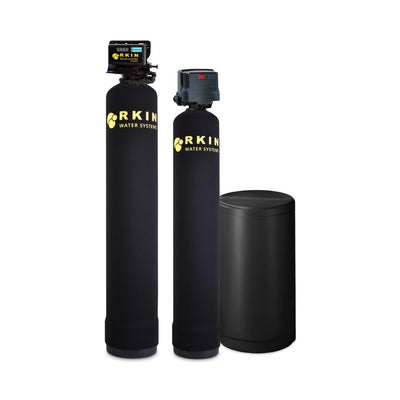
For homes on well water dealing with iron, sulfur, or sediment, the RKIN Well Water Whole House Filter tackles the contaminants that destroy fridge filters fastest. Iron, manganese, and sulfur get removed before they ever reach the fridge, so the small carbon block inside the appliance can last its full intended lifespan.
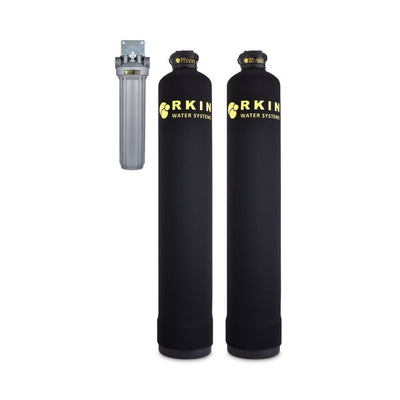
For homes on city water where chlorine and sediment are the issue, the RKIN CBS Dual Carbon Whole House Filter uses two stages of carbon to strip chlorine, chloramine, and the taste/odor compounds that overwhelm point-of-use filters. Every tap in the house gets the same clean water, and the fridge filter goes back to being a final polish instead of the only filter standing between you and the city main.
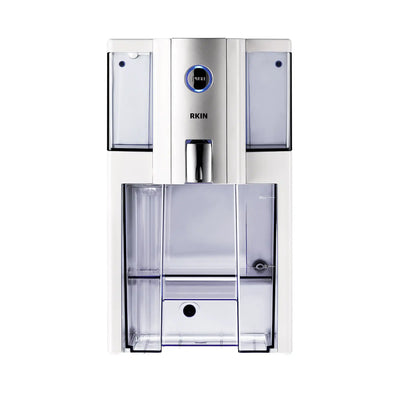
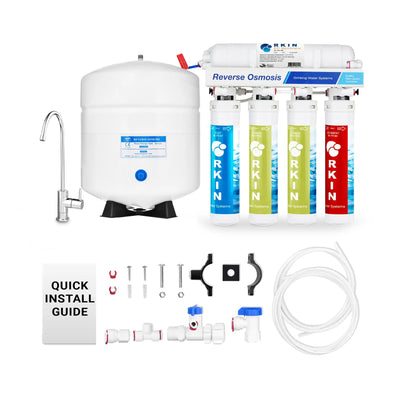
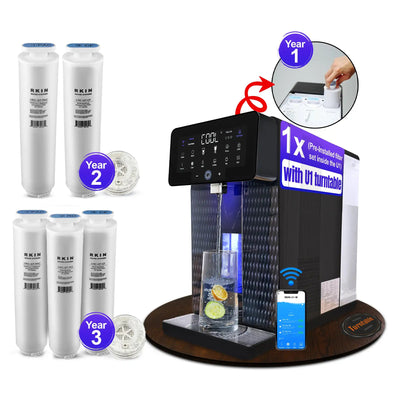
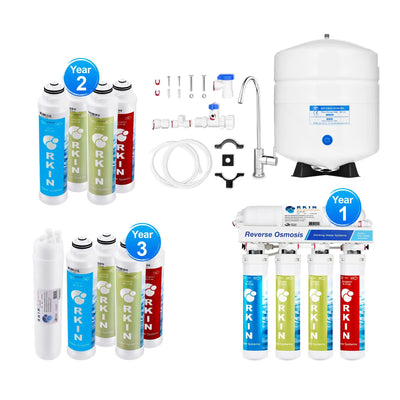
If you want maximum drinking-water protection on top of either, the RKIN U1 4-in-1 Water Filter System sits under the sink and adds reverse osmosis filtration for PFAS, lead, fluoride, and other contaminants no fridge filter can address.
Frequently Asked Questions
Why does my new refrigerator water filter run out in 2 months instead of 6?
Sediment, iron, or heavy chlorine in your incoming water is overloading the filter's capacity. The 6-month rating assumes average municipal water with minimal sediment. Well water, water from aging service lines, or high-chlorine city water can reduce filter life by 50–75%.
Is it bad to keep using a fridge filter past its replacement date?
Yes. A saturated carbon filter stops removing chlorine and contaminants — and it can also become a place where bacteria grow because the carbon traps organic matter. Past the change date, you're often drinking water that's worse than what comes straight from the tap.
Will a whole-house filter make my fridge filter last longer?
Almost always. A whole-house carbon filter or well-water system removes the contaminants (sediment, iron, chlorine) that prematurely exhaust point-of-use filters. Most homeowners see their fridge filters last their full rated lifespan after installing whole-house pretreatment.
Do refrigerator filters remove PFAS or lead?
Most standard refrigerator filters are NSF 42 certified for taste and odor only. A smaller number carry NSF 53 certification for lead, but very few are certified for PFAS, arsenic, or pharmaceuticals. For comprehensive contaminant reduction, a reverse osmosis system at the sink delivers far more removal than any in-fridge filter.
My well water keeps turning my fridge filter orange. What is that?
Iron — usually ferric iron (oxidized) from the well or ferrous iron (dissolved) that oxidizes once it hits the carbon. Either way, a whole-house iron and sulfur filter installed at the point of entry will stop it before it reaches the appliance.
Can I bypass the fridge filter entirely if I have a whole-house system?
You can, and many homeowners do — especially if they also have an under-sink RO system for drinking water. Most fridges have a bypass plug available from the manufacturer that lets you skip the filter housing without affecting ice or water dispensing.
Ready to Stop Replacing Filters Every Two Months?
You now know why your fridge filter is dying early and what's actually in your incoming water doing the damage. Point-of-use filtration was never the right place to fight iron, sediment, or chlorine overload.
For well water, the RKIN Well Water Whole House Filter handles iron, sulfur, and manganese at the source. For city water, the RKIN CBS Dual Carbon Whole House Filter strips chlorine and chloramine before it gets to any tap or appliance. Treat the water once at the point of entry and the fridge filter goes back to being something you change twice a year, not six times a year.





0 comments