


how to remove sulfur smell from water
Why Does My Water Smell Like Rotten Eggs? Causes and Fixes

You turn on the kitchen faucet, lean in to fill a glass, and a sharp rotten-egg smell hits your face. The water looks fine. Coffee tastes off. Showers leave a faint sulfur scent on your skin. If you're on well water, this is one of the most common complaints homeowners report. According to the EPA's guidance on private water wells, hydrogen sulfide is one of the most common nuisance contaminants in U.S. groundwater — especially in regions with iron-rich bedrock or organic-heavy soils.
That smell isn't just unpleasant. It's a signal. Something in your water — or your water heater — is producing hydrogen sulfide (H₂S), and ignoring it usually means more expensive damage later: corroded fixtures, ruined laundry, dark stains, and pinhole leaks in copper plumbing.
What Actually Causes the Rotten Egg Smell
The smell comes from hydrogen sulfide gas dissolved in your water. H₂S is produced by a few different mechanisms, and the fix depends on which one is happening in your home.
- Sulfate-reducing bacteria (SRB): These bacteria live in low-oxygen environments — deep wells, water heater tanks, plumbing dead-legs — and convert naturally occurring sulfate into hydrogen sulfide. They're harmless to drink in small amounts but produce the strongest smell.
- Decaying organic matter in the aquifer: Wells drilled through shale, peat, or oil-bearing rock often pull water that carries dissolved H₂S directly from the source.
- Sacrificial magnesium anode rod reacting: Every water heater has a metal rod inside that corrodes on purpose to protect the tank. When that rod reacts with sulfates in the water, it can generate H₂S — but only in the hot water side.
- Iron and sulfur bacteria working together: In wells with high iron, certain bacteria use both iron and sulfur in their metabolism, producing slime, dark stains, and a strong sulfur smell.
The Hot Water vs. Cold Water Test
Before you do anything else, run this 30-second diagnostic. It tells you exactly where the problem lives.
Smell only in hot water? The cause is almost always the water heater — either the anode rod reacting with sulfates, or bacteria living inside the tank. The municipal or well supply is fine. Fix: replace the magnesium anode with an aluminum/zinc anode, then flush and chlorinate the tank. A plumber can do this in under two hours.
Smell in both hot and cold? The problem is upstream of the heater — your well, your service line, or a treatment system that's lost effectiveness. This is the case that needs whole-house treatment.
Smell only at one faucet? The problem is a bacterial colony in that fixture's aerator or supply line. Soak the aerator in vinegar overnight and flush the line.
Why "Just Let It Run" Doesn't Work
Homeowners often try cheap fixes first. Most don't hold up.
- Running the faucet to "clear it out": If H₂S is being produced continuously by bacteria or the source water, the smell comes right back within hours.
- Pitcher filters: Activated carbon pitchers can mask very mild H₂S smell briefly, but they saturate fast and don't address the source. You'll be replacing cartridges constantly.
- Bleach in the well: Shock chlorination can kill sulfate-reducing bacteria temporarily, but bacteria almost always return within weeks unless the underlying conditions change. It's a band-aid, not a fix.
- Bottled water for drinking: Solves the taste problem at the kitchen sink but does nothing about the showers, laundry stains, water heater corrosion, or fixture damage happening throughout your house.
The reason these fail is simple: hydrogen sulfide is a gas dissolved in your water. To remove it permanently, you have to either oxidize it (convert it into elemental sulfur that can be filtered out) or absorb it with the right media before it reaches your fixtures.
What Actually Removes Sulfur Smell at the Source
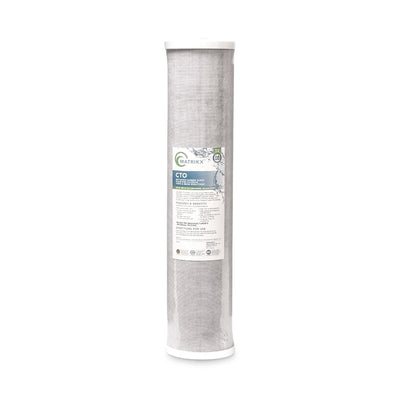
For mild-to-moderate H₂S (under 1 mg/L), a high-quality whole-house carbon filtration system with the right contact time often handles it. The carbon adsorbs the gas as water passes through, and properly sized media beds can last years before needing media replacement.
For moderate-to-heavy H₂S (1–6 mg/L) — especially when iron and manganese show up alongside — you need a specialized well water filter that uses an oxidizing media bed. The media (commonly a manganese dioxide blend) converts dissolved H₂S, iron, and manganese into insoluble particles, which then get backwashed out of the tank automatically. No chemicals, no daily maintenance, no salt.
What to look for in a sulfur treatment system:
- Multi-contaminant capability: Most homes with sulfur smell also have iron and manganese in the water. A system that handles all three saves you from stacking multiple units.
- Automatic backwash: The media bed self-cleans on a timer or by water-volume trigger. No manual rinsing required.
- Properly sized media tank: Undersized tanks have insufficient contact time and let H₂S slip through. Match the tank to your household flow rate.
- No salt or chemicals: Salt-free systems avoid the soft-water side effects and don't require constant chemical dosing.
The RKIN Solution for Sulfur Smell
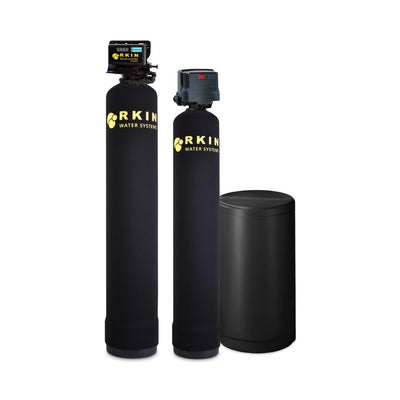
The RKIN Well Water Whole House Filter System is designed exactly for this problem — wells with hydrogen sulfide, iron, and manganese. It uses an oxidizing media bed combined with an automatic backwash valve, so the system regenerates itself on a schedule and removes the buildup of sulfur particles before they reach your fixtures. There's no salt to refill, no chemical injection, and no daily maintenance.
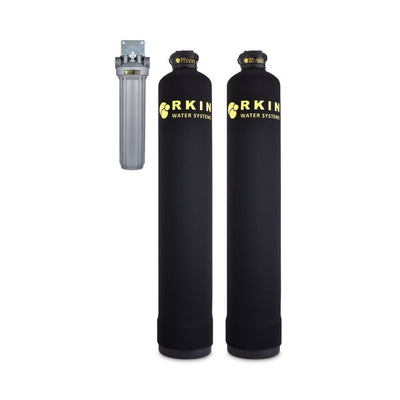
For homes where the smell is milder or the well doesn't have heavy iron, the RKIN Whole House Water Filter System with a properly sized carbon bed handles mild H₂S along with chlorine, chloramines, and sediment in one tank. Either way, the goal is the same: stop the smell at the source so every faucet, shower, and appliance in the house gets clean water — not just the kitchen sink.
What Happens If You Ignore Sulfur in Your Water
Hydrogen sulfide is corrosive. Left in your plumbing for years, it does measurable damage:
- Copper pipes: H₂S accelerates pitting corrosion, leading to pinhole leaks — often 5–10 years sooner than copper would normally fail.
- Water heaters: The interior tank lining degrades faster, and the anode rod gets eaten in months instead of years.
- Fixtures: Chrome, brass, and stainless steel develop dark sulfide stains that don't polish off.
- Laundry and silver: Whites turn yellow-gray, silver tarnishes within days, and dark sulfide deposits build up inside the washing machine.
- Appliance lifespan: Dishwashers, ice makers, and refrigerator water lines see shortened service life from continuous H₂S exposure.
The cost of replacing fixtures, fighting laundry stains, and dealing with premature plumbing failure adds up far faster than treating the water once.
Frequently Asked Questions
Is hydrogen sulfide in water dangerous to drink?
At typical residential concentrations (below 1 mg/L), H₂S in drinking water is unpleasant but not considered acutely harmful by the EPA. Higher concentrations can cause nausea, and the gas itself is hazardous in enclosed spaces — well pits and water treatment rooms should be ventilated. The smell becomes detectable at very low levels, so by the time you notice it, you're well below toxicity thresholds for ingestion. The bigger concern is corrosion and damage to plumbing and appliances.
Why does only my hot water smell like rotten eggs?
This usually means the smell is being generated inside your water heater, not in your supply. The magnesium anode rod (a sacrificial metal designed to corrode in place of the tank) can react with sulfates in your water to produce hydrogen sulfide. Replacing the magnesium rod with an aluminum/zinc alloy rod, followed by flushing and chlorinating the tank, resolves this in most homes.
Can a regular carbon filter remove sulfur smell?
Activated carbon can adsorb mild hydrogen sulfide — usually under 1 mg/L — if the media bed is large enough to provide adequate contact time. Small pitcher or faucet filters saturate quickly and aren't a long-term fix. For moderate or heavy H₂S, you need an oxidizing media system that converts the gas into filterable particles, not just an adsorbent.
Will a water softener remove the rotten egg smell?
No. Salt-based water softeners are designed to exchange calcium and magnesium for sodium — they don't oxidize or adsorb hydrogen sulfide. In fact, the resin bed inside a softener can become a breeding ground for sulfate-reducing bacteria if the water already carries H₂S. A softener should be installed downstream of a sulfur treatment system, not used as a substitute for one.
How do I test my water for sulfur?
The smell itself is a strong indicator, but for proper treatment sizing, get a full well water test that measures hydrogen sulfide, iron, manganese, pH, and total sulfate. Many county extension services offer affordable testing, or you can use a certified mail-in lab. Don't rely on home test strips for H₂S — they're often inaccurate at low concentrations.
How often do I need to maintain a sulfur removal system?
A properly sized oxidizing media system with automatic backwash needs almost no daily attention. The media bed itself typically lasts 5–10 years before needing replacement, depending on water volume and H₂S levels. The sediment prefilter on the front end is the only routine consumable — replace it every 6–12 months. See rkin.com for product-specific replacement schedules.
Ready to Stop the Sulfur Smell for Good?
You don't have to live with rotten-egg water or watch it slowly damage your plumbing and appliances. The RKIN Well Water Whole House Filter System treats hydrogen sulfide, iron, and manganese in one tank — automatic backwash, no salt, no chemicals. Visit rkin.com to see specs, certifications, and sizing for your household.





0 comments