


best whole house water filter for well water
Best Whole House Water Filter for Well Water: How to Choose

The best whole house water filter for well water is the one built for what your lab test actually found. Iron, sulfur and manganese call for an oxidizing filter. Hardness calls for a softener. Sand and grit call for a sediment filter in front of everything else. Many wells have more than one of these, so the right answer is often a combination, chosen from a test report instead of a "best of" list.
That is good news for your budget. When you treat what is in your water, you don't pay for stages you don't need, and you don't end up with orange stains or a rotten-egg smell that the wrong filter never touched. Here's how to read your well's symptoms, which system matches each problem, and how RKIN's whole-house options fit together.
Start With a Lab Test, Not a Guess
If you own a private well, keeping track of what's in the water is up to you. The EPA recommends testing a private well every year for total coliform bacteria, nitrates, total dissolved solids and pH, and testing for anything else you suspect (EPA private well guidance).
For choosing a whole-house filter, start with iron, manganese, hardness, pH and TDS. If you notice a rotten-egg smell, ask the lab about hydrogen sulfide testing; sulfate is a different measurement. RKIN's well water system page notes that for most people on well water, a metals and minerals test is enough to choose equipment, and that a tannins test is also needed if you see yellow coloration or staining. RKIN's Metals and Minerals Water Test, made with SimpleLab, covers metals, minerals and calculated hardness. Its listed panel does not include pH, TDS, hydrogen sulfide or bacteria. The broader Drinking Water Test: Level 1 + Bacteria includes pH, TDS, total coliform and E. coli; ask the lab about hydrogen sulfide testing separately.
Match the Symptom to the Problem
Your eyes and nose give you clues before the report arrives. The EPA's secondary standards list the nuisance effects of several common well water problems (EPA secondary drinking water standards):
- Rusty color, metallic taste, reddish or orange staining: iron. The EPA's secondary level is 0.3 mg/L.
- Black to brown color, black staining, bitter metallic taste: manganese. The secondary level is 0.05 mg/L.
- Rotten-egg smell: ask the lab about hydrogen sulfide testing.
- White crust on faucets, spots on glasses, scale in the water heater: hardness.
- Sand, grit or cloudy water after heavy pumping: sediment.
Clues help you ask the right questions. They don't replace the test. Two homes with orange stains can need different equipment, depending on iron level, pH and whether manganese or tannins are also present.
Which Whole-House Filter Fits Which Problem
| Your test shows | What usually fits | RKIN option |
|---|---|---|
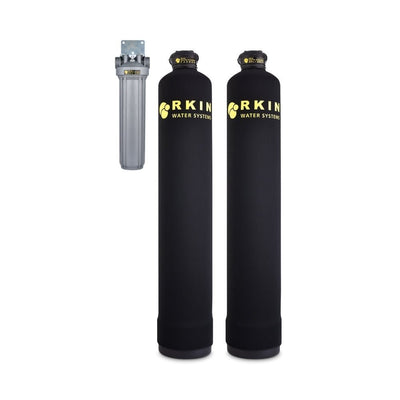
| Iron, sulfur (rotten-egg smell) or manganese | Oxidizing well water filter | Sulfur, Iron, Manganese Well Water Filter System |
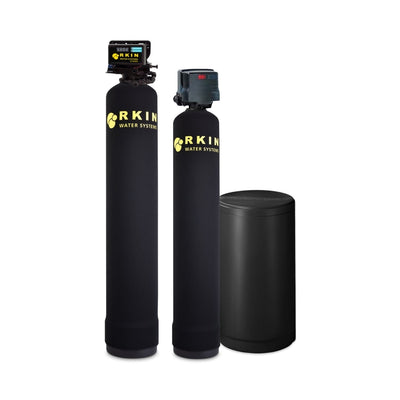
| Iron, sulfur or manganese plus hardness | Well filter followed by a water softener | Advanced Water Softener and Well Water Filter Combo |
| Hardness only | Water softener | RKIN Water Softener System |
| Sand, silt or grit | Spin-down sediment filter in front of other equipment | Self-Rinsing Spin Down 90 Micron Sediment Filter |
| Coliform bacteria | Talk to your local health department first; UV disinfection is a point-of-entry option | Stainless Steel High Output UV Water Disinfection System |
Iron, sulfur and manganese: an oxidizing filter
The Sulfur, Iron, Manganese Well Water Filter System works in two stages, according to its product page. First, water passes through an air pocket, where iron, sulfur and manganese are oxidized and dissolved oxygen is added. Then a Greensand Fusion media bed removes the oxidized contaminants. An Enpress Vortech distribution system is designed for efficient backwashing with less water.
It runs on a Bluetooth-enabled smart control valve that monitors water use, keeps a backup of settings during power outages, and plugs into a regular 120V outlet through an AC adapter. The app is optional. The box includes a bypass valve, the AC adapter, two 1" MNPT elbow fittings, a 15 ft drain line hose and the installation manual. So plan for an outlet and a drain near the install spot. For a closer look at how the air pocket and media bed work together, see how an iron and sulfur filter for well water works.
Iron plus hardness: a well filter and softener combo
Many wells have both. The Advanced Water Softener and Well Water Filter Combo pairs the same well filter with RKIN's salt-based softener. The softener's metered control valve regenerates only when necessary, which saves salt and water, and a safety float in the brine tank helps prevent overflow. If your test shows iron or sulfur along with hard water, one combo covers both.
Sand and grit: a sediment filter first
RKIN's sediment filter page notes that sand, silt, rust and other sediment can damage plumbing fixtures and appliances and clog faucet aerators and showerheads. The Self-Rinsing Spin Down 90 Micron Sediment Filter uses a long-lasting 90 micron stainless steel screen and dual pressure gauges. Its product page lists a 27 gallon per minute flow rate, 26-125 psi operating pressure and a working temperature of 39.2-113°F, so it belongs indoors or in a protected space.
Bacteria: call the health department, then plan disinfection
A positive coliform result needs local guidance first. Your county or state health department can tell you how to respond and when to retest. For ongoing disinfection at the point of entry, RKIN's Stainless Steel High Output UV Water Disinfection System is designed for whole-home use. Its page points to the specification sheet for proper water chemistry requirements, so review that sheet against your test before installing.
How the Pieces Fit Together
When a well needs more than one system, the order matters. Sediment comes out first, so sand and grit don't reach the equipment behind it. Problem-specific treatment, such as the iron, sulfur and manganese filter or a softener, comes next. A UV system goes where its specification sheet says it should, based on the water chemistry it needs. If you also want purified drinking water, RO at the kitchen sink is the last step.
You don't have to work that out alone. Send RKIN your lab report, your home's bathroom count and where the water line enters the house, and we'll lay out which systems you need and the order to install them. That saves you from buying a stage you don't need or skipping one you do.
Mistakes That Make a Good Filter Look Bad
- Buying before testing. A softener alone won't fix a rotten-egg smell, and an iron filter won't fix hard water.
- Skipping the drain and power plan. Backwashing filters and softeners need a drain line and an outlet nearby.
- Ignoring sediment. Sand and grit can clog aerators, showerheads and appliances.
- Never retesting. Test again after installation, and keep up the yearly tests the EPA recommends.
If you also want purified drinking water, add RO at the kitchen sink after whole-house treatment.
Frequently Asked Questions
What is the best whole house water filter for well water?
The best whole house water filter for well water is the one matched to your lab results. Iron, sulfur and manganese call for an oxidizing filter, hardness calls for a softener, and sand calls for a sediment filter. Many wells need a combination, such as a well water filter followed by a water softener.
Do I need to test my well water before buying a filter?
Yes. The EPA recommends testing private wells every year for total coliform bacteria, nitrates, total dissolved solids and pH. For choosing equipment, iron, manganese, hardness and pH matter most. RKIN recommends metals and minerals testing for equipment selection. That panel omits pH, TDS, hydrogen sulfide and bacteria, so ask the lab about additional tests. Add a tannins test if you see yellow water or staining.
Will a water softener remove iron and sulfur from well water?
Don't count on a softener alone for iron, sulfur or manganese. Those problems call for a filter built for them, such as RKIN's Sulfur, Iron, Manganese Well Water Filter System, which oxidizes them in an air pocket and removes them in a Greensand Fusion media bed. If your water is also hard, a well filter and softener combo handles both.
Does a whole house well water filter need electricity and a drain?
RKIN's well water filter uses a 12V DC smart control valve that plugs into a regular 120V outlet with an AC adapter, and it comes with a 15 ft drain line hose for backwashing. Plan for an outlet and a drain near the install location before installation day.
How do I know if my well water has bacteria?
You need a lab test. The EPA recommends testing private wells every year for total coliform bacteria. RKIN's Drinking Water Test: Level 1 + Bacteria includes total coliform and E. coli. If a test comes back positive, contact your local health department for next steps before relying on any treatment equipment.
Get a Well Water System Matched to Your Test
The right whole-house setup for well water starts with a lab report and ends with equipment that treats what you actually have. Skip the guesswork and the stages you don't need.
Contact RKIN with your lab report. We'll help you choose the equipment and installation order for your well. If you haven't tested yet, tell us your symptoms so we can help you identify the tests to request before ordering a kit.






0 comments