


iron and manganese filtration
Manganese in Well Water: Testing and Treatment for Black Stains

Manganese in well water can cause black or brown stains in toilets, sinks and laundry, and a bitter metallic taste. A lab test confirms whether manganese is present. An oxidizing whole-house filter selected for your water can reduce it before it reaches your fixtures. The EPA's secondary standard for manganese, which covers those staining and taste effects, is 0.05 mg/L.
Start with your test results, then choose treatment for the manganese level and the rest of your water chemistry. RKIN's well water filter uses air and a media bed to reduce manganese throughout the home. Here's how to recognize the signs and check whether it fits your well.
Signs Your Well Has a Manganese Problem
Manganese often hides in plain sight. Fresh from the tap, the water can look clear. The trouble shows up later, when the dissolved manganese reacts with air and turns into dark particles.
The EPA lists the effects of manganese above its secondary level as black to brown color, black staining and a bitter metallic taste (EPA secondary drinking water standards). In a home, that usually looks like:
- Black or dark brown rings in toilet bowls and tanks.
- Dark streaks in sinks, tubs and shower walls that come back days after cleaning.
- Gray or dingy laundry, especially whites.
- A bitter, metallic taste in water, coffee and tea.
- Dark buildup on faucet aerators, showerheads and filter cartridges.
Iron often travels with manganese. Iron's stains run rusty orange or red, while manganese leaves black and brown. If you see both colors, your well likely has both, and the same filter can handle them together.
Why a Lab Test Comes First
Stains point you in the right direction, but they don't tell you how much manganese is there or what else is in the water. That matters, because the right equipment depends on the full picture: manganese, iron, hardness, pH and whether tannins are present.
RKIN's well water filter page notes that for most people on well water, a metals and minerals test is enough to identify the issues and choose equipment, and that a tannins test is also needed if you see yellow coloration or staining. The Metals and Minerals Water Test is processed by a certified lab through SimpleLab and reports manganese along with iron and the other metals that drive equipment choices.
The EPA also recommends testing private wells every year for total coliform bacteria, nitrates, total dissolved solids and pH (EPA private well guidance). The metals panel helps select equipment; it does not replace these annual well tests. After installation, test manganese in the treated water to check reduction. RKIN says not to use this filter where water is microbiologically unsafe. If testing finds contamination above health standards, contact your public health department for the next steps.
How a Whole-House Filter Removes Manganese
An ordinary sediment cartridge cannot trap dissolved manganese as a particle. RKIN's well water filter uses oxidation followed by a media bed to reduce it.
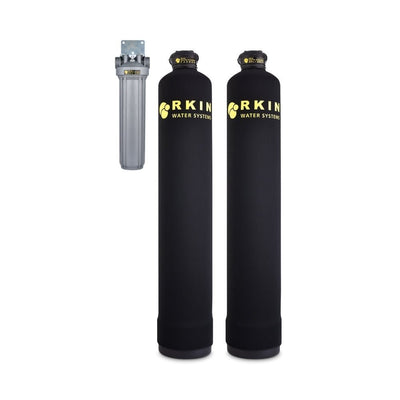
That's how RKIN's Sulfur, Iron, Manganese Well Water Filter System works. According to its product page, it treats water in two stages:
- Stage 1, air pocket. As water passes through the air pocket, iron, sulfur and manganese are oxidized, and dissolved oxygen is added to the water.
- Stage 2, Greensand Fusion. A media bed built for reducing iron, manganese and sulfur removes the oxidized contaminants.
An Enpress Vortech distribution system is designed for more efficient backwashing with less water, helping clean the media bed during backwashing. A Bluetooth smart control valve monitors water use and keeps a backup of its settings during power outages. It plugs into a regular 120V outlet through an AC adapter, and the app is optional.
For you, that means whole-house manganese treatment without chemicals to add. Have RKIN confirm the system fits your test results, then test the treated water to check its performance.
Manganese Plus Hard Water? One Combo Handles Both
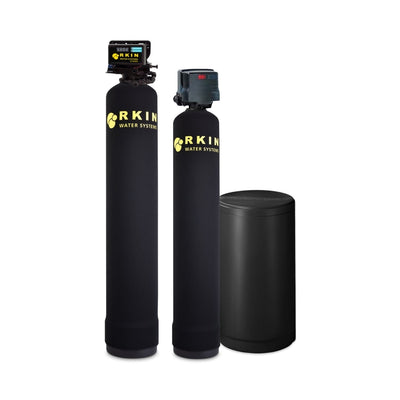
Many wells with manganese also have hard water. A water softener alone isn't the answer for manganese, and a manganese filter doesn't remove hardness. If your test shows both, the Advanced Water Softener and Well Water Filter Combo pairs the well water filter with RKIN's salt-based softener. The softener's metered control valve regenerates only when it needs to, which saves salt and water.
| Your test shows | What fits | RKIN option |
|---|---|---|
| Manganese, iron or sulfur | Oxidizing whole-house filter | Sulfur, Iron, Manganese Well Water Filter System |
| Manganese or iron plus hardness | Well filter followed by a softener | Advanced Water Softener and Well Water Filter Combo |
| Not sure yet | A certified lab test | Metals and Minerals Water Test |
Why the Stains Keep Coming Back
If you've scrubbed a toilet clean and seen the black ring return within days, you've met the core problem: cleaning treats the surface, not the water. Every flush and every faucet run brings in fresh manganese, and it settles out again wherever water sits or dries.
That's also why fixes that work at one spot don't solve the house. A shower filter or a pitcher handles one outlet. A sediment cartridge catches particles, but dissolved manganese slips through it until it oxidizes later, inside your plumbing or on your fixtures. Whole-house treatment targets the manganese before water reaches your taps, toilets and appliances. Choose the equipment from your test results and verify manganese reduction after installation.
Mistakes That Keep a Manganese Problem Alive
- Buying before testing. Without numbers for manganese, iron, hardness and pH, it's easy to buy equipment that targets the wrong problem.
- Expecting a softener to do the job. A softener is built for hardness. Put a manganese filter in front of it when both problems are present.
- Skipping the drain and power plan. Backwashing filters need a drain line and an outlet near the install spot.
- Never retesting. Well water can change over time. Retest after installation, and keep up the yearly tests the EPA recommends.
Each of these is easy to avoid with a test report in hand. Send RKIN your results before you buy, and we'll match the equipment to what your well actually has.
Plan the Install
A little planning makes installation day easy:
- Point of entry. The filter treats the whole house, so it goes where the main line enters, ahead of a softener.
- A drain nearby. Backwash water needs a drain. The system ships with a 15 ft drain line hose.
- An outlet. The control valve plugs into a regular 120V outlet.
- A bypass. The included bypass valve keeps water flowing to the house during service.
The box also includes the AC adapter, two 1" MNPT elbow fittings and the installation and product manual. Want the details on how the air and media stages work together? Read how an iron and sulfur filter for well water works.
Frequently Asked Questions
What does manganese in well water look like?
Manganese usually shows up as black or dark brown stains in toilets, sinks, tubs and laundry, and it can give water a bitter metallic taste. The EPA lists black to brown color, black staining and bitter metallic taste as its effects above the secondary level of 0.05 mg/L.
How do I test my well water for manganese?
Use a certified lab test. RKIN's Metals and Minerals Water Test reports manganese, iron and hardness to help select equipment. Add a tannins test if you see yellow water or staining. The metals panel does not replace the EPA's annual tests for total coliform bacteria, nitrates, total dissolved solids and pH.
Will a water softener remove manganese?
Don't count on a softener alone for manganese. A filter built for it, such as RKIN's Sulfur, Iron, Manganese Well Water Filter System, oxidizes manganese in an air pocket and removes it in a Greensand Fusion media bed. If your water is also hard, a well filter and softener combo handles both.
What is the best filter for iron and manganese in well water?
An oxidizing whole-house filter is the usual choice when iron and manganese show up together. RKIN's well water filter oxidizes iron, manganese and sulfur in its air pocket and removes them in a Greensand Fusion media bed, treating every tap in the house.
Why do black stains come back after I clean them?
Cleaning removes the stain, not the cause. Each time fresh well water runs, it brings more dissolved manganese, which turns into dark particles as it meets air and settles on fixtures again. A correctly selected whole-house filter can reduce manganese before it reaches your fixtures; retesting the treated water checks the result.
Does RKIN's well water filter need electricity and a drain?
Yes. The Bluetooth smart control valve plugs into a regular 120V outlet with an AC adapter, and the system comes with a 15 ft drain line hose for backwashing. Plan for both near the point where water enters your home.
Stop Fighting Black Stains
If you're scrubbing black rings out of the toilet every week, manganese is likely the reason, and it's fixable. Confirm it with a lab test, then ask RKIN to match whole-house treatment to your results and plan a treated-water test after installation.
See the Sulfur, Iron, Manganese Well Water Filter System. Have your lab report? Send it to RKIN, and we'll confirm the filter fits your well and whether you need a softener with it.






0 comments