


air injection iron filter
Iron and Sulfur Filter for Well Water: How Air and Media Work

An iron and sulfur filter for well water works in two steps: air oxidizes the dissolved iron, sulfur and manganese, then a media bed traps the particles so clean water flows to the house. Dissolved iron and hydrogen sulfide need treatment matched to their measured levels and your water chemistry. Once oxygen turns them into solid particles, a filter bed can catch them, and a regular backwash flushes them down the drain.
That design targets three common well water complaints together: orange stains, black stains and the sulfur smell. It only works when it's matched to what your water actually contains, though. Here's how the process works, what to test before you buy, what this kind of filter won't fix, and how RKIN's system is built.
What Iron, Manganese and Sulfur Do to Your Water
These three problems usually show up as stains and smells before anyone runs a lab test. The EPA's secondary drinking water standards list the noticeable effects for iron and manganese, and an odor standard that includes the "rotten-egg" smell (EPA secondary drinking water standards):
| Problem | EPA secondary level | What you notice |
|---|---|---|
| Iron | 0.3 mg/L | Rusty color, sediment, metallic taste, reddish or orange staining |
| Manganese | 0.05 mg/L | Black to brown color, black staining, bitter metallic taste |
| Odor | 3 TON (threshold odor number) | Smells such as "rotten egg" |
Secondary standards cover taste, color, odor and staining. They're guidelines for appearance and comfort, not health limits. Still, iron at a few tenths of a milligram per liter is enough to stain a white sink, and sulfur smell is hard to live with at any level.
How an Air-Based Iron and Sulfur Filter Works
Dissolved iron can leave water looking clear at the tap before orange staining appears in the toilet tank or laundry. Sulfur smell usually comes from a dissolved gas. A sediment filter catches suspended particles. Carbon works differently and can adsorb some dissolved compounds, but it does not replace treatment selected for iron, manganese or hydrogen sulfide.
An air-based iron and sulfur filter changes that in two stages:
- Oxidation. Water passes through a pocket of air at the top of the tank. Oxygen reacts with dissolved iron, manganese and sulfur and turns them into solid particles.
- Filtration. The water then flows down through a bed of filter media that traps those particles.
Over time the trapped particles build up in the bed. The control valve runs a backwash on a schedule: it reverses the flow, lifts the media and flushes the particles to the drain. In air-based systems, the backwash also refreshes the air pocket for the next cycle.
Because oxygen does the oxidizing, this design doesn't need chemical feed pumps. That's a big reason homeowners choose it for whole-house treatment.
What to Test Before You Buy
An iron and sulfur filter is sized and set up around your water, so start with a lab test rather than a guess. The EPA recommends testing private wells every year for total coliform bacteria, nitrates, total dissolved solids and pH, and testing for anything else you suspect (EPA private well guidance).
If you notice a rotten-egg smell, ask the lab about hydrogen sulfide testing. For equipment selection, also check:
- Iron and manganese, in mg/L.
- pH, which affects how well oxidation works.
- Hardness, to know whether you also need a softener.
- Tannins, if you see yellow or tea-colored water.
- Bacteria, because a filter for iron and sulfur isn't a disinfection system.
RKIN's well water filter page notes that for most people on well water, a metals and minerals test is enough to choose equipment, and that a tannins test is also needed if you see yellow coloration or staining. RKIN's Metals and Minerals Water Test, made with SimpleLab, is a mail-in package for certified laboratory testing. Its listed panel does not include pH, TDS, hydrogen sulfide or bacteria, so ask the lab about additional tests.
What an Iron and Sulfur Filter Won't Fix
Matching the filter to the test also means knowing its limits:
- Hard water. Calcium and magnesium cause scale, not orange stains. A salt-based water softener removes hardness minerals. A salt-free conditioner targets scale without removing those minerals. Ask RKIN which approach fits your water; the well filter goes before either system.
- Bacteria. If a test finds coliform bacteria, contact your local health department before relying on any treatment. Disinfection is a separate step.
- Tannins. Tea-colored water from decaying plant matter needs its own test and its own plan. See our guide to tannins in well water.
- Sand and grit. Heavy sediment should be caught in front of the filter so it doesn't load up the media bed.
If you've already installed a softener and still see orange stains, that's a common sign the well needs a filter built for iron.
Signs Your Iron and Sulfur Filter Needs Attention
Once a filter is in, your fixtures tell you how it's doing. Call RKIN or check your manual if you notice any of these:
- Orange or black stains coming back on sinks, toilets or laundry.
- The rotten-egg smell returning, especially first thing in the morning.
- A drop in water pressure across the house.
- Backwash settings changed after a long power outage or valve service.
Each of these can have a simple cause, such as a bypass valve left open or a changed setting. A quick retest tells you whether your well water itself has changed.
RKIN's Sulfur, Iron, Manganese Well Water Filter System
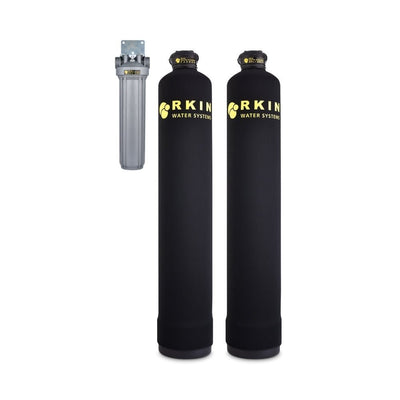
RKIN's Sulfur, Iron, Manganese Well Water Filter System uses this oxygen-based design for the whole house. Here's how its product page describes the system:
- Stage 1, air pocket: as water passes through the air pocket, iron, sulfur and manganese are oxidized, and dissolved oxygen is added to the water.
- Stage 2, Greensand Fusion: a media bed for efficient reduction of iron, manganese and sulfur. It removes the oxidized contaminants from the water.
- Enpress Vortech distribution system: designed to provide increased backwash efficiency using less water.
- Bluetooth Smart Control Valve: monitors water use for peak efficiency and keeps a built-in backup of settings during power outages. It runs on 12V DC and plugs into a regular 120V outlet with an AC adapter. A mobile app helps with setup and monitoring, but the app isn't required.
- In the box: the well water filter, a bypass valve, an AC adapter, two 1" MNPT elbow fittings, a 15 ft drain line hose, and the installation and product manual.
The product page describes the system as maintenance free, with certified components and detailed, step-by-step installation instructions.
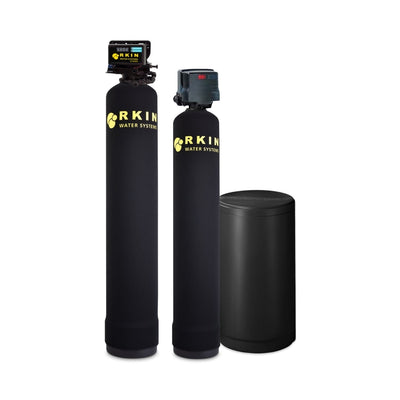
If your test also shows hard water, RKIN offers the well filter as a combo with a salt-free conditioner or a salt-based water softener, depending on whether you want scale control or hardness removal.
Plan the Install Before It Arrives
A few details make installation day go smoothly:
- Put it at the point of entry. The filter treats water for the whole house. Confirm the installation order with RKIN, including any sediment pretreatment and softener.
- Plan for a drain. Backwash water needs a drain, and the system comes with a 15 ft drain line hose.
- Have an outlet nearby. The control valve plugs into a regular 120V outlet.
- Use the bypass valve. It lets you keep water running to the house during service.
- Retest after installation. A follow-up test confirms the system is doing its job, and yearly tests keep you ahead of changes in your well.
Frequently Asked Questions
How does an iron and sulfur filter for well water work?
It works in two steps. Air oxidizes dissolved iron, manganese and sulfur into solid particles, and a filter media bed traps them. A regular backwash flushes the trapped particles to the drain and refreshes the air pocket.
Will an iron and sulfur filter remove the rotten-egg smell?
An air-based iron and sulfur filter is built to oxidize and remove sulfur, which is behind the rotten-egg smell in many wells. RKIN's Sulfur, Iron, Manganese Well Water Filter System oxidizes sulfur in its air pocket and removes it in a Greensand Fusion media bed. Test first to confirm the cause of the smell.
Do I need a water softener with an iron and sulfur filter?
Only if your water is also hard. An iron and sulfur filter treats iron, manganese and sulfur, not calcium and magnesium. If your test shows hardness, a well filter and softener combo handles both, with the well filter installed first.
What should I test before buying an iron and sulfur filter?
Test iron, manganese, pH and hardness, and ask the lab about hydrogen sulfide testing if you notice a rotten-egg smell. RKIN recommends metals and minerals testing for equipment selection. That panel omits pH, TDS, hydrogen sulfide and bacteria, so ask the lab about additional tests. Add a tannins test if you see yellow water or staining. The EPA also recommends testing private wells every year for bacteria, nitrates, TDS and pH.
Does RKIN's well water filter need electricity?
Yes. The Bluetooth Smart Control Valve runs on 12V DC and plugs into a regular 120V outlet with an AC adapter. It keeps a built-in backup of its settings during power outages.
Get the Right Filter for Your Well
Orange stains, black stains and the rotten-egg smell usually trace back to iron, manganese and sulfur. An air-based filter handles all three when it's matched to your test results.
Contact RKIN with your lab report. We'll check whether the Sulfur, Iron, Manganese Well Water Filter System fits your well and whether you also need hardness treatment. Ask your lab about hydrogen sulfide testing if you notice a rotten-egg smell.






0 comments