


cloudy tap water after rain
Cloudy Tap Water After Rain: What It Can Mean at Home

Cloudy tap water after rain is not one single problem. It can be harmless trapped air, stirred-up sediment, a utility flushing issue, or a sign that source water changed after a storm.
That is why the timing matters. Heavy summer rain can move soil, organic material, and runoff into waterways. Public water plants are built to treat changing source water, and private wells need extra attention because the homeowner is responsible for testing and upkeep. Your job at home is to separate a simple air-bubble issue from a water-quality question that deserves a test.
First: Do the Five-Minute Glass Test
Fill a clear glass with cold water and set it on the counter. Watch it for five minutes.
If the cloudiness clears from the bottom up, the issue is usually air. Tiny air bubbles can make water look milky when pressure changes in plumbing or utility lines. As the bubbles rise, the glass clears. That pattern is annoying, but it is different from sediment sitting at the bottom.
If particles settle downward, you may be seeing sediment. That can happen after main work, hydrant flushing, a pressure change, a storm, or well disturbance. Sediment can be tan, gray, reddish, black, or gritty. It may show up in faucet aerators, toilet tanks, washing-machine screens, or filter housings.
If the water stays cloudy, smells unusual, has color, or shows oily film, do not guess from appearance alone. Check your utility notices if you are on city water. If you are on a private well, plan on lab testing before choosing treatment.
The glass test is not a lab result. It is a quick triage step that helps you decide what to check next.
Why Rain Can Change How Tap Water Looks
Rain does not enter a sealed public water pipe the way it enters a ditch. But rain can still change the water-treatment picture upstream. Storms can increase runoff, move organic material, stir sediment in reservoirs, and change the workload at a treatment plant.
Utilities manage those changes with treatment steps such as screening, settling, filtration, and disinfection. Many plants use coagulation and flocculation to help small particles clump together so they can be removed more easily. That is the same basic science people notice in wastewater videos: tiny particles that will not settle alone can behave differently when treatment chemistry helps them gather into larger floc.
The point for a homeowner is simple: clear water and treated water are not the same claim. A plant may make water look clear while also meeting regulated standards. A glass at home may look clear while still raising a question about a specific contaminant. Appearance helps you notice a change, but it does not replace the water report or a test.
The EPA’s basic drinking-water guidance explains that public water systems must meet drinking-water standards, while private wells are handled differently. That difference is the fork in the road after a storm.
City Water: What to Check After a Storm
If you are on city water and cloudy water shows up after rain, start with the utility. Look for a boil-water notice, pressure advisory, flushing notice, water-main break update, or Consumer Confidence Report. The EPA says a Consumer Confidence Report lists detected contaminants and whether a water system met applicable standards for the reporting period.
If the cloudy water clears from the bottom up, run cold water for a few minutes and check whether the issue fades. Use a faucet without a filter first so you know whether the issue is coming from the supply, the fixture, or the filter.
Remove and rinse the faucet aerator if particles are visible. Aerators catch grit, pipe scale, and small debris. If only one faucet has the issue, the aerator or that fixture may be the first place to inspect.
If every faucet is affected, note the time, color, odor, and whether neighbors have the same issue. Call the utility if the water is discolored, has a strong odor, does not clear, or follows known main work. Do not use a home filter as a substitute for a public advisory. If officials issue boil or do-not-use instructions, follow those instructions first.
Private Well: Why Rain Raises the Stakes
Private wells are different. The EPA’s private well guidance notes that private well owners are responsible for testing and maintaining their own wells. After heavy rain, flooding, or nearby work, that responsibility matters.
Cloudiness after rain can point to surface-water intrusion, disturbed sediment, a cracked well cap, poor drainage around the casing, pump issues, or changes in the aquifer. The water may clear quickly and still deserve testing if the timing lines up with flooding or a visible change around the well.
Do a visual check outside. Look for standing water near the wellhead, a missing or loose cap, cracked casing, damaged electrical conduit, recent excavation, septic issues, or new erosion. Keep runoff away from the well. If floodwater reached the well, do not treat that as a normal cloudy-water event.
A sediment filter can catch visible grit, but it cannot tell you whether the well is safe to use. For a private well, cloudiness after heavy rain is a reason to test before choosing a filter. Test results tell you whether the issue is sediment only, bacteria, nitrate, iron, manganese, hardness, PFAS, or something else.
What Home Filters Can and Cannot Do
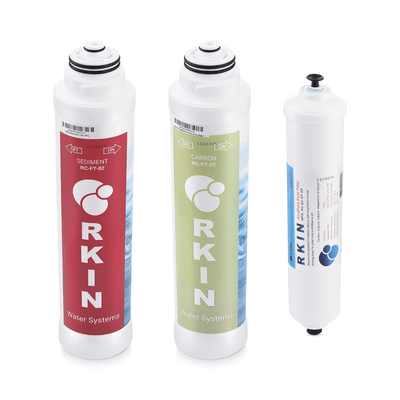
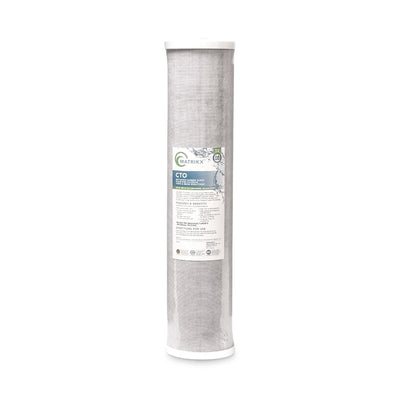
A sediment filter can reduce visible particles. That makes it useful when the issue is sand, silt, rust flakes, or pipe scale. It does not answer dissolved contaminants or microbial questions by itself.
A carbon filter can improve taste and odor and reduce certain substances depending on the product design and claim. It is not a magic step for every rain-related issue. Contact time, media type, flow rate, and maintenance all matter.
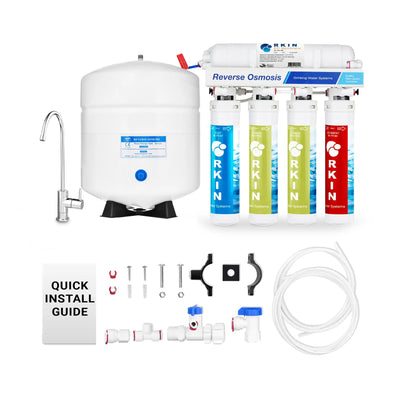
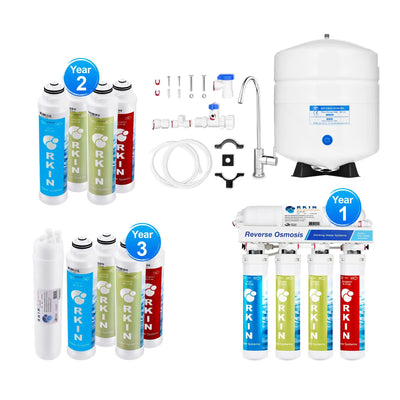
Reverse osmosis is usually a point-of-use drinking-water technology. It is often used at the kitchen for drinking and cooking water. It is not a whole-house sediment solution, and it should not be the first answer if every faucet is pushing grit after a storm.
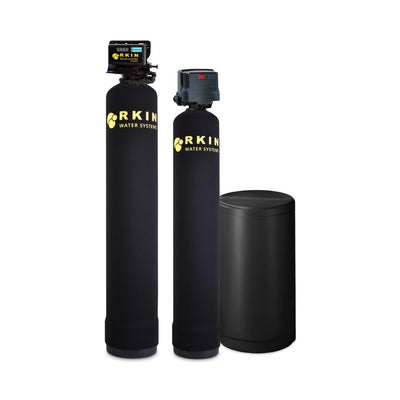
A water softener or salt-free conditioner is a scale-management lane. It can help with hardness symptoms, but it does not replace sediment filtration, carbon filtration, RO, or well testing.
The right answer often stacks in order: test or identify the source, remove sediment if needed, address whole-house issues at the main line, and use drinking-water RO where the concern is water you drink and cook with.
Where RKIN Fits
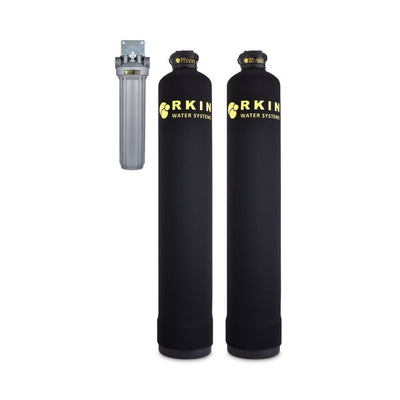
If cloudy water is showing up at every faucet, start with the source. City-water users should check the utility notice and water report. Well-water users should test. For whole-home treatment conversations, the RKIN Whole House Water Treatment collection is the starting point because sediment, carbon, conditioning, and well-water issues are usually main-line questions.
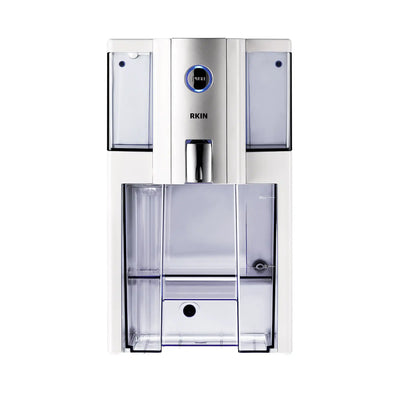
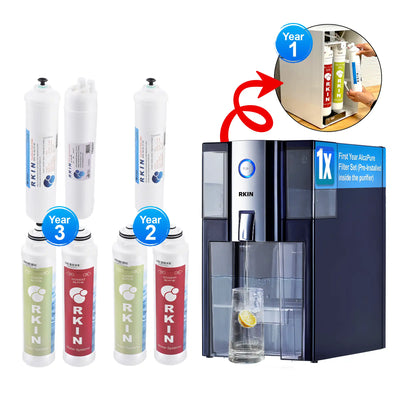
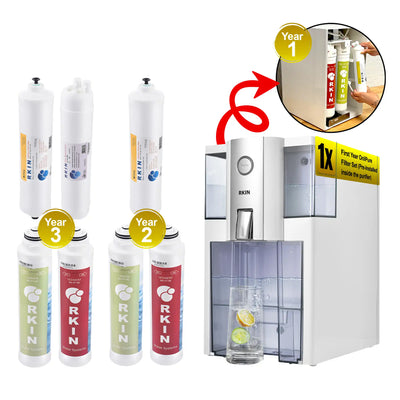
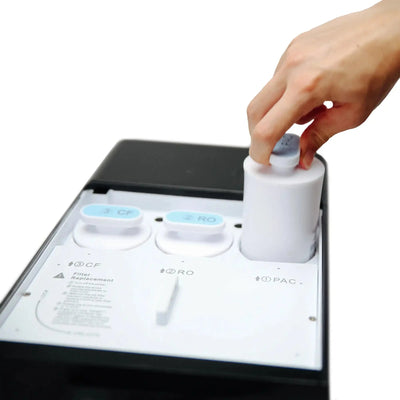
If the concern is the water you drink and cook with after the source question is handled, the RKIN Zero Installation Purifier Countertop Reverse Osmosis Water Filter is a no-plumbing RO option for the kitchen. It is not a fix for a flooded well or a public advisory, but it can be the right drinking-water lane when your goal is point-of-use RO without drilling.
For homeowners who want help choosing between whole-home treatment and drinking-water treatment, the practical first step is to match the symptom to the location. Every faucet points upstream. One faucet points local. Drinking-water taste points to the kitchen lane. Storm timing points to testing.
When to Stop Using the Water and Call
Do not keep guessing if the water has a fuel, sewage, chemical, or strong rotten odor. Do not ignore a boil-water notice or pressure advisory. Do not use water from a private well that was covered by floodwater until you get guidance and testing.
Call the utility if you are on city water and the issue affects every faucet, does not clear, or lines up with a main break or pressure loss. Ask whether there is an active advisory, flushing work, or a known issue in your pressure zone.
Call a well professional or local health department if you are on a private well and cloudiness follows flooding, major rain, visible wellhead damage, or nearby septic trouble. Ask which tests make sense for the event instead of ordering a random bundle.
Call RKIN when the source question is answered and you need help matching treatment to the report. That is the clean order. Guessing from a cloudy glass can send you toward the wrong filter.
A Homeowner Checklist After Rain
Use this order before buying anything:
- Run the five-minute glass test.
- Check whether one faucet or every faucet is affected.
- Remove and rinse faucet aerators if particles are visible.
- Check utility advisories if you are on city water.
- Inspect the wellhead if you are on a private well.
- Test private-well water after flooding, well damage, or a major change.
- Match the filter to the result, not just the appearance.
Cloudiness is a clue. The pattern, location, timing, and test result tell you what to do next.
Frequently Asked Questions
Why is my tap water cloudy after rain?
Cloudy tap water after rain can come from air bubbles, sediment, utility flushing, pressure changes, or source-water changes after a storm. Use the glass test first. If it clears from the bottom up, air is likely. If particles settle, check for sediment and the source of the issue.
Is cloudy water after rain always unsafe?
No. Cloudy water is not one single condition. Air bubbles can be harmless, while sediment, odor, color, or storm-related well changes deserve more attention. If there is a public advisory, follow it. If you use a private well after flooding or heavy rain, testing is the safer next step.
Should I filter cloudy tap water or test it first?
If the issue is new, storm-related, or affects every faucet, identify the source before buying a filter. A sediment filter can help with particles, but a lab test or utility notice tells you whether there is a broader water-quality issue.
Can reverse osmosis fix cloudy water?
Reverse osmosis is mainly a drinking-water treatment lane. It can be useful at the kitchen after the source issue is understood, but it is not the first fix for whole-house sediment, flooded wells, or an active public-water advisory.
What filter do I need if rain brings sediment into my well water?
Start with a well inspection and lab test. If the issue is confirmed as sediment, a whole-house sediment stage may be part of the answer. If the test shows other issues, treatment should match those findings instead of relying on sediment filtration alone.
Ready to Match the Symptom to the Right Filter?
If cloudy tap water showed up after rain, start with the glass test, utility notice, or well test. Then choose treatment by location and result. For main-line issues, review RKIN Whole House Water Treatment. For no-plumbing kitchen RO after the source question is clear, see the RKIN Zero Installation Purifier Countertop Reverse Osmosis Water Filter.





0 comments