

Does a Water Softener Remove Chlorine? The Honest Answer
Share
Short answer: no. A standard water softener is designed to remove calcium and magnesium — the two minerals that make water hard. It is not built to handle chlorine, and if you run heavily chlorinated municipal water through a traditional softener for long enough, the chlorine can actually shorten the life of the resin inside it.
That surprises a lot of homeowners. You spent real money on a softener, your shower feels better, your water heater is safer — and yet your tap water still smells like a swimming pool when you fill a glass. This guide explains exactly why that happens, what each type of system actually does, and how to get both hardness and chlorine handled without doubling up on hardware you do not need.
What a Water Softener Actually Does
A traditional salt-based water softener uses a bed of resin beads that swap sodium ions for the calcium and magnesium ions in your incoming water. That ion exchange is why soft water feels slippery in the shower, why soap lathers better, and why your water heater does not crust over with scale. It is a hardness solution. Full stop.
A softener does not trap smells, does not remove tastes, and does not deal with disinfectants like chlorine or chloramine. Those molecules pass straight through the resin bed and come out the other side untouched. According to the EPA's National Primary Drinking Water Regulations, chlorine is intentionally added to city water at up to 4 parts per million to disinfect it during distribution — and it is still in the glass when you pour one.
Salt-free water conditioners, including systems that use TAC (template-assisted crystallization) media, work differently. Instead of removing hardness, they change how the minerals behave so they do not stick to pipes, fixtures, and heating elements. That is great for scale prevention, but it is still not a chlorine solution.
Why People Assume Softeners Handle Chlorine
Part of the confusion comes from how systems are sold. "Whole house water system" gets used loosely. Some vendors bundle a softener with a carbon tank and call the combination a "whole house filter." Others market salt-free conditioners as do-it-all systems without making clear that the hardness side and the chlorine side are two separate jobs with two separate technologies.
The other half of the confusion is that soft water does feel different. It rinses cleaner, it feels smoother on the skin, and a lot of people assume any chlorine smell must be gone too because the water generally feels better. The easiest test: fill a clean glass, let it sit on the counter for five minutes, then smell it. If you still get that faint pool smell, your system is not touching the chlorine.
What Actually Removes Chlorine
Chlorine and chloramine are removed by activated carbon. Carbon is porous, chemically attractive to these disinfectants, and widely tested against NSF/ANSI Standard 42, the industry benchmark for aesthetic reduction of chlorine, taste, and odor.
You will see carbon in three common forms at home:
- Whole-house carbon tanks — a large media bed installed on the main water line, treating every tap in the house.
- Carbon cartridges in under-sink or countertop systems — smaller, faster to change, and focused on drinking water at a single tap.
- Carbon pre-filters inside a reverse osmosis system — sit in front of the RO membrane to protect it from chlorine damage.
If your goal is pool-smell-free showers and laundry that does not pick up a chemical odor, a whole-house carbon filter is the right tool. If your goal is clean, great-tasting drinking water at the kitchen sink, a point-of-use carbon or reverse osmosis system is a better fit — and usually cheaper to maintain.
When You Actually Need Both
Most homes on city water in the U.S. get both disinfectants and some level of hardness. If you are in that camp, doing only one side of the equation leaves the other problem intact. Signs you need both:
- Fixtures and glassware show white scale buildup and tap water smells like chlorine.
- Soap and shampoo rinse poorly and family members complain about dry skin that a lotion never quite fixes.
- Water heater runs loudly or inefficient despite being newer than five years.
- Coffee, tea, or ice tastes flat or chemical even when the appliance is clean.
In that case, the cleanest solution is a two-stage setup: a salt-free conditioner or softener that handles the hardness side, plus a carbon filter that handles the chlorine side. Both are point-of-entry — installed on the main line — so every tap benefits.
What to Look For in a Chlorine Filter
If you are shopping for a carbon-based whole-house system, a few things matter more than marketing:
- Flow rate — the system must deliver enough gallons per minute to supply your house without a pressure drop when two showers and a dishwasher are running.
- Capacity — tank-based carbon systems are often rated in total gallons or years of service. Make sure the rating matches your household water use.
- Third-party testing — look for systems tested or certified to NSF/ANSI 42 for chlorine, taste, and odor reduction.
- Maintenance schedule — sediment pre-filters still need swapping on a schedule (typically every 6 to 12 months depending on feed water).
- Warranty — anything under a year tells you the manufacturer is not confident in the build.
One more practical note: chloramine is harder to remove than free chlorine and often requires a different carbon blend or a longer contact time. If your city uses chloramine (many do — your local water quality report will say so), double-check that the system you are considering is rated for chloramine specifically, not just chlorine.
How RKIN Approaches the Combo Problem
This is exactly the problem the RKIN OnliSoft Pro Salt-Free + Carbon Combo is designed for. It pairs a salt-free conditioner for scale prevention with a whole-house carbon stage for chlorine, taste, and odor — in a single skid installed at the point of entry. No salt. No wastewater. No electricity needed for the conditioning side.
Homes that only have a chlorine and chloramine problem — without significant hardness — are usually better served by the standalone RKIN CBS Dual Carbon Whole House Filter. It is a tank-based carbon system, rated for up to a million gallons or ten years of service depending on the model, with a simple annual sediment pre-filter swap.
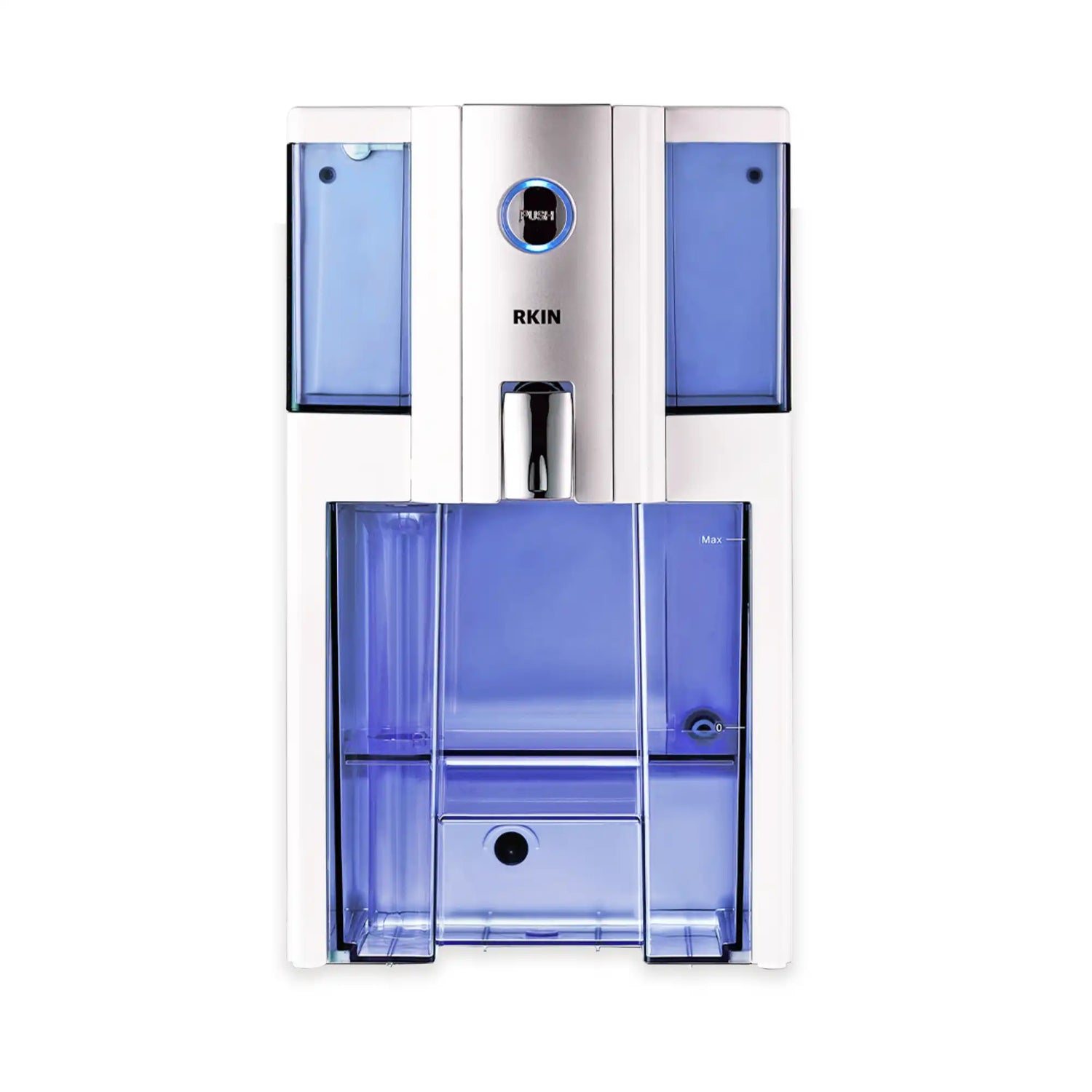
And if the priority is just clean drinking water at the kitchen sink — not a whole-house upgrade — a compact countertop system like the Zero Installation Purifier handles chlorine (via its carbon pre-filter) and plenty more, without touching the plumbing.
Frequently Asked Questions
Does a salt-free water conditioner remove chlorine?
By itself, no. A salt-free conditioner changes how hardness minerals behave to prevent scale — it does not remove chlorine. If you need both, look for a combo system that pairs the conditioning media with a dedicated carbon stage, or install a separate whole-house carbon filter in series.
Will chlorine damage a water softener?
Prolonged exposure to chlorine and especially chloramine degrades softener resin over time, shortening its service life. Many homes with municipal water install a carbon pre-filter ahead of the softener specifically to protect the resin. If your softener is already showing reduced capacity earlier than expected, chlorine exposure may be part of the reason.
Do I need a whole-house carbon filter or just one at the sink?
It depends on what bothers you. If the chlorine smell only matters in your drinking water, a point-of-use filter at the kitchen sink is the simpler, cheaper fix. If you can smell chlorine in the shower, laundry, or bathroom sinks — or your skin reacts to it — a whole-house carbon filter is the better investment.
How do I know if my water has chlorine or chloramine?
Your local water utility publishes an annual water quality report (Consumer Confidence Report) that states which disinfectant is used. You can also pick up a basic chlorine test strip kit at a hardware store. Chloramine testing requires a more specific test — most home test kits measure free chlorine only.
How often do carbon filters need to be replaced?
Cartridge-based carbon filters (countertop or under-sink) typically need replacement every 6 to 12 months. Tank-based whole-house carbon systems last much longer — a well-sized RKIN whole-house carbon filter is rated for up to a million gallons or about ten years depending on the model. The sediment pre-filter in front of the tank should still be swapped on a 6-to-12-month cycle.
Can reverse osmosis remove chlorine?
Yes. Every reverse osmosis system uses a carbon pre-filter specifically to remove chlorine before the water hits the RO membrane — chlorine destroys RO membranes if it reaches them. So any RO system is effectively doing chlorine removal at the drinking-water tap, in addition to the deeper contaminant reduction the membrane itself provides.
The Bottom Line
A water softener fixes hardness. A carbon filter fixes chlorine. If your water has both problems, you need both technologies — but you do not need two separate, bulky systems bolted to your wall. A single combo system handles both jobs on one footprint, and a point-of-use RO takes care of the kitchen sink for drinking and cooking.
If you are not sure which setup fits your home, start with your water quality report and a simple hardness test kit. The answers are in those two documents. Once you know the numbers, the right system picks itself.
Browse the full RKIN whole-house lineup to see which system fits your water profile, or reach out to our team if you want a second opinion before you buy.


