




calcium buildup shower door
How to Remove Calcium Buildup on Shower Doors Fast

White crust on a shower door is usually hard-water scale: dissolved calcium and magnesium left behind after water dries. You can clean it with the right acid-based cleaner and a non-scratch pad, but if the spots keep coming back every week, the bigger issue is the water feeding the shower.
That distinction matters. Cleaning removes the symptom. Conditioning hard water reduces the repeat cycle.
What causes calcium buildup on shower doors?
Hard water carries dissolved minerals, mostly calcium and magnesium. When shower water hits glass, tile, faucets, and fixtures, some of that water evaporates. The minerals do not evaporate with it. They stay behind as a chalky white film, cloudy spots, or rough crust around edges.
The University of Georgia Extension explains that hardness minerals are common in private wells and public supplies, and that hard water can interfere with soap and leave scale on plumbing and fixtures. Penn State Extension also notes that hard water is commonly measured in grains per gallon or milligrams per liter as calcium carbonate.
Think of sugar in tea. Once the sugar dissolves, you cannot remove it with a screen. Hardness acts the same way in water. It is dissolved, so a simple sediment filter that catches grit will not solve scale by itself.
Bathrooms make scale obvious because showers create the perfect conditions: hot water, repeated evaporation, soap residue, and large glass surfaces. The same minerals can also show up as white spots on dishes, crust around faucet aerators, cloudy coffee makers, stiff towels, and buildup on shower heads.
How do you clean calcium buildup without damaging glass?
Start with the least aggressive method that works. Shower glass can scratch, and some coated glass doors have care instructions from the manufacturer. If you still have those instructions, follow them first.
For ordinary uncoated glass, this sequence is a safe starting point:
- Wet the glass with warm water.
- Apply white vinegar or a bathroom descaling cleaner made for mineral deposits.
- Let it sit long enough to soften the scale, but do not let it dry on the surface.
- Use a non-scratch pad or microfiber cloth.
- Rinse well.
- Dry the glass completely with a squeegee or towel.
For thick crust around metal hardware, apply cleaner carefully and avoid long contact on natural stone, marble, or sensitive finishes. Acidic cleaners can etch stone and damage some metals. That is why spot testing matters.
If the scale is heavy, one pass may not do it. Do two gentle passes instead of one harsh scrape. Razor blades, abrasive powders, and stiff metal tools can leave permanent marks on glass and hardware.
Why does calcium buildup keep coming back?
If the water is hard, scale comes back because the source keeps delivering dissolved minerals. You can clean the door today and see spots again after a few showers. That is not a cleaning failure. It is a water chemistry problem.
Here are the clues that point to hard water as the root cause:
- White spots on glassware after the dishwasher dries
- Crust around shower heads and faucet aerators
- Soap that feels like it does not rinse easily
- Dry-looking film on tile after cleaning
- Appliances that need descaling often
- Stiff or dull-feeling laundry
A squeegee helps because it removes water before minerals dry on the glass. Better ventilation helps too. But those habits reduce deposits; they do not change the hardness level.
That is where many homeowners get stuck. They buy stronger cleaners, but the bathroom keeps rebuilding the same white film because the incoming water never changed.
What is the difference between removing scale and preventing scale?
Removing scale means dissolving existing mineral deposits from a surface. Preventing scale means changing what happens before water reaches the surface.
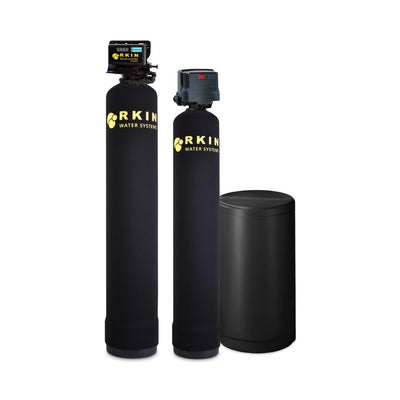
A water softener uses ion exchange to swap hardness minerals for sodium or potassium ions. This reduces hardness and helps with soap performance. A salt-free conditioner does not remove calcium and magnesium from the water. Instead, it changes how minerals behave so they are less likely to stick as hard scale.
That difference is important. If your main complaint is soap feel and you want the classic slippery softened-water feel, a salt-based softener may be the better fit. If your main complaint is scale on fixtures and you want to avoid salt, brine discharge, and routine salt bags, a salt-free conditioner may make more sense.
There is no right way or wrong way. The right answer depends on what bothers you most.
In my house, I would not buy a large salt-based system just because one shower door has spots. I would first check whether the whole home has scale symptoms: dishes, faucets, water heater, shower heads, and laundry. If the pattern is whole-house, then conditioning the water at the main line starts to make sense.
Does a water filter remove calcium buildup?
This is where wording gets confusing. A “filter” can mean many things.
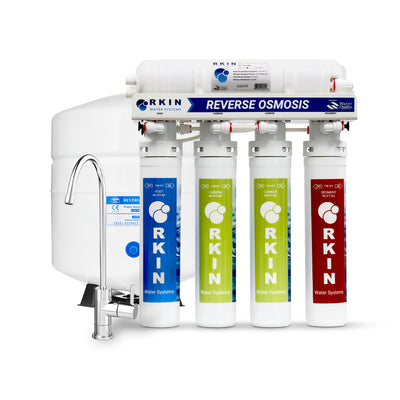
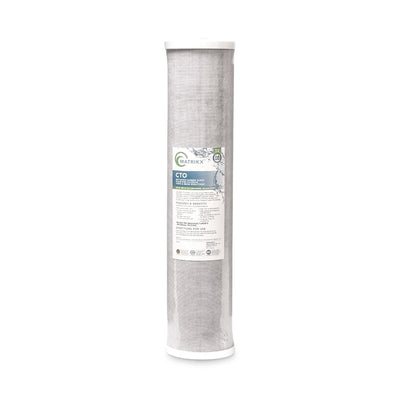
A sediment filter catches particles like sand, rust, or grit. It does not remove dissolved hardness. A carbon filter improves taste and odor, especially chlorine-related issues, but it is not a hardness solution. Reverse osmosis can reduce dissolved minerals at one drinking-water tap, but it is usually not used to filter shower water unless you install a whole-home RO system.
For bathroom scale, you are usually comparing water softening, water conditioning, or whole-home RO.
Here is the practical version:
- For drinking water taste and total dissolved solids, look at reverse osmosis.
- For chlorine taste and odor through the home, look at carbon filtration.
- For shower scale and fixture buildup, look at softening or conditioning.
- For iron, sulfur, or manganese on well water, test first because those need different equipment.
The reason I would separate those categories is because buying the wrong equipment is easy. A great drinking-water filter can still leave your shower door spotted. A great scale conditioner can still leave you wanting RO for drinking water.
RKIN options for bathroom scale
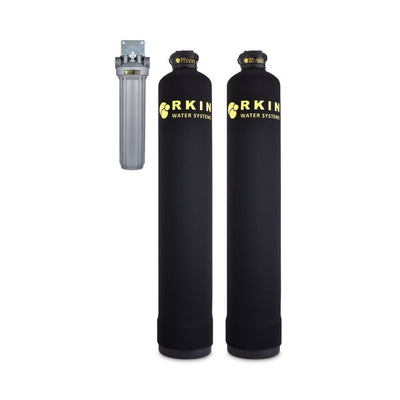
For homeowners who want to reduce scale formation without hauling salt bags, the RKIN OnliSoft Pro Salt-Free + Carbon Combo is designed for whole-home scale control plus carbon filtration in one setup. It pairs salt-free conditioning with whole-house carbon filtration, so it is a fit for city-water homes dealing with scale and chlorine taste or odor.
If you want scale control only, the RKIN OnliSoft Salt-Free Water Conditioner focuses on the hardness-mineral behavior side of the problem. It installs at the main line, so it conditions water before it reaches showers, faucets, and appliances.
If you are on a private well, test first. Iron, manganese, sulfur odor, pH, and sediment can change the equipment choice. Calcium scale may be only one part of the stack.
How to keep shower glass clear between cleanings
Once you remove the existing buildup, prevention is easier if you reduce drying time.
Use a squeegee after showers. It sounds too simple, but removing water before it evaporates removes the minerals before they can dry on the glass. Keep a microfiber towel nearby for corners and hardware. Run the bathroom fan long enough to clear humidity. If you have very hard water, use a weekly maintenance cleaner rather than waiting until the deposits turn crusty.
Also check the shower head. If spray patterns are uneven or nozzles are plugged, scale is building there too. Soak the shower head according to the manufacturer’s instructions, then rinse well. If clogging returns quickly, that is another clue that the water itself needs attention.
The best setup is boring: clean the existing glass, condition the source if the pattern is whole-house, and use a quick dry-down habit so the bathroom does not become a weekly scrubbing project.
Frequently Asked Questions
What dissolves calcium buildup on shower doors?
Mild acidic cleaners, including white vinegar or bathroom descalers made for mineral deposits, can help dissolve calcium buildup on glass. Always check the shower-door manufacturer’s care instructions, spot test first, and avoid acidic cleaners on natural stone or sensitive finishes.
Is calcium buildup the same as hard water stains?
Most white shower-door spots are hard-water scale from calcium and magnesium minerals. Soap residue can mix with scale and make the film harder to remove. If the spots return quickly after cleaning, hard water is likely part of the problem.
Will a regular water filter stop shower scale?
Usually, no. Sediment filters catch particles, and carbon filters improve taste and odor, but dissolved hardness minerals pass through many basic filters. Shower scale usually calls for a softener, conditioner, or another system designed for hardness control.
Does a salt-free conditioner remove calcium from water?
No. A salt-free conditioner does not remove calcium and magnesium the way a salt-based softener does. It changes how hardness minerals behave so they are less likely to stick as scale. That makes it useful for homeowners focused on fixture buildup without salt maintenance.
Should I choose a salt-based softener or a salt-free conditioner?
Choose based on the problem. If you want the classic softened-water feel and maximum hardness reduction, a salt-based softener may fit. If you want scale control without salt bags or brine discharge, a salt-free conditioner may be the cleaner match.
Can hard water damage a shower door?
Hard-water scale can make glass look cloudy and rough, and aggressive scraping can damage the surface during cleaning. The water itself is usually more of a maintenance problem than a sudden failure point, but letting deposits build makes cleaning harder.
Ready to Stop Scrubbing the Same White Spots?
Clean the glass first, then decide if the pattern is bigger than one shower door. If you see scale across fixtures, dishes, and appliances, review the RKIN OnliSoft Pro Salt-Free + Carbon Combo. It is built for homeowners who want whole-home scale control without turning bathroom cleaning into a weekend job.
Sources: University of Georgia Extension, Water Quality and Common Methods; Penn State Extension, Water Softening.


0 comments