
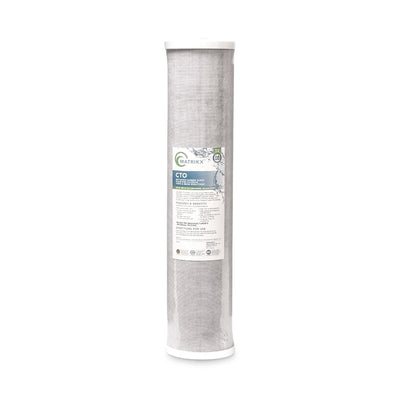


chloramine water filter
Why Tap Water Smells Like Chlorine in Summer Months

Short answer: your tap water can smell more like chlorine in summer because warm weather, higher water demand, and utility treatment changes can make disinfectant odor more noticeable at the tap. That does not automatically mean the water is unsafe, but it is a good reason to understand what you are smelling and which filter setup actually fits the problem.
The key distinction is this: chlorine smell is usually a taste-and-odor issue first, not proof of a single contaminant. If the smell is new, strong, or paired with cloudy water, pressure loss, flooding, or a boil-water notice, check your local utility alerts before you shop for equipment.
Why does tap water smell like chlorine in summer?
Public water systems add disinfectant so water stays protected as it travels through pipes to your home. The U.S. Environmental Protection Agency explains that many systems use chlorine or chloramine for this purpose, and the disinfectant has to last through the distribution system, not just at the treatment plant.
Summer can make that smell stand out for a few practical reasons.
First, warmer water can release odor faster. A glass of cold water may smell mild, while the same water at room temperature smells sharper. Second, many regions see higher demand in hot months. More lawn watering, showers, laundry, and pool filling can change how water moves through the local system. Third, some utilities adjust treatment seasonally to keep a disinfectant residual throughout the line.
Chloramine matters here too. Chloramine is made by combining chlorine and ammonia. EPA notes that chloramine is used by many water systems because it lasts longer in pipes than free chlorine. That longer-lasting quality is useful for utilities, but it can also mean the water has a persistent chemical taste that a basic pitcher may not handle well.
None of this means you should panic. It means you should diagnose the source before guessing at the fix.
Is chlorine smell in tap water dangerous?
For city water customers, a chlorine or chloramine smell is often a sign that the disinfectant is still present when the water reaches your house. EPA sets rules for disinfectants and disinfection byproducts in public water systems, and local utilities publish annual Consumer Confidence Reports with detected levels.
The more useful homeowner question is not, “Is any chlorine smell bad?” It is, “Is this normal for my water system, or did something change?”
Here is the simple check:
- If the smell has always been there and is strongest in summer, it may be normal seasonal variation.
- If the smell suddenly becomes intense in every fixture, check your water utility’s website for maintenance, flushing, or advisory notices.
- If the smell appears only in hot water, the water heater may be part of the issue.
- If you use a private well, chlorine smell usually points to recent shock chlorination or treatment equipment, not a public disinfectant residual.
If it is okay, take ten minutes and pull your city’s latest water quality report. The reason for doing that first is simple: chlorine, chloramine, hardness, lead, PFAS, iron, and sulfur each call for different equipment. A filter that is great for taste may not be the right answer for scale, metals, or well water odor.
What does not work well for chlorine taste and odor?
A few common fixes help in a narrow way, but they are easy to overestimate.
Leaving water in an open pitcher can let some free chlorine smell dissipate. It is less useful for chloramine, which is more stable. Boiling water is not the answer for routine chlorine taste either. Boiling can concentrate some dissolved substances as water evaporates, and it does not give you a practical whole-home solution.
Bottled water is another workaround, not a diagnosis. It moves the problem to storage, plastic waste, and repeat errands. It also does nothing for shower odor, laundry, ice, coffee, cooking water, or fixtures.
Basic pitcher filters can improve taste, but they are limited by small cartridge size and slow flow. A sponge analogy fits here: once a small cartridge gets saturated, performance can drop. If your goal is better-tasting drinking water only, a countertop or under-sink system may be enough. If the smell bothers you at showers, laundry, and every sink, the better conversation is whole-house treatment.
There is no right way or wrong way. It depends on where you notice the problem.
Which filter removes chlorine smell from water?
Activated carbon is the workhorse technology for chlorine taste and odor. Carbon has a large surface area that adsorbs many taste-and-odor compounds as water passes through it. For chloramine, the contact time and carbon type matter more, because chloramine is more persistent than free chlorine.
Reverse osmosis can also improve drinking water taste because it filters water at the point of use and reduces a broader range of dissolved substances. That said, reverse osmosis at one faucet does not treat the whole home. If the complaint is “my drinking water tastes like pool water,” RO may be a clean answer. If the complaint is “my shower and laundry smell like chlorine,” a whole-house carbon setup is usually a better fit.
A good selection process looks like this:
- Start with your water source: city water or private well.
- Identify the disinfectant: chlorine or chloramine, if your city report lists it.
- Decide whether the issue is drinking water only or the whole house.
- Match the equipment to the job instead of buying the biggest system by default.
Me personally, I would not start with whole-home reverse osmosis for a chlorine smell if the city water report otherwise looks normal. In my house, I would handle taste-and-odor with carbon first, then use reverse osmosis where I want polished drinking water. Whole-home RO is more like a Ferrari: amazing in the right driveway, but not the first car everyone needs.
RKIN options for chlorine smell in summer
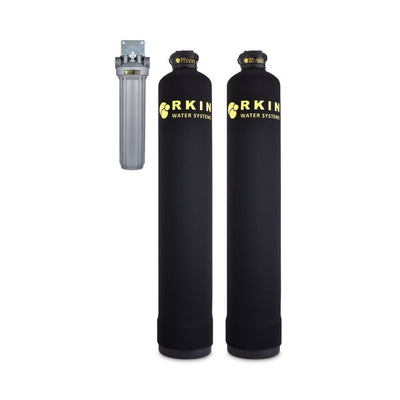
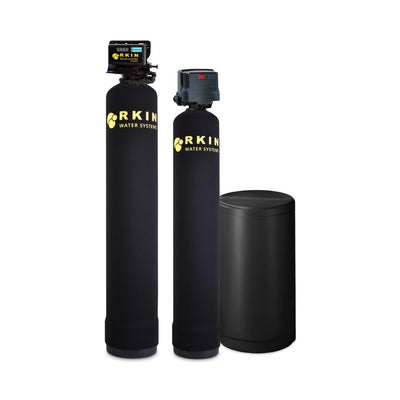
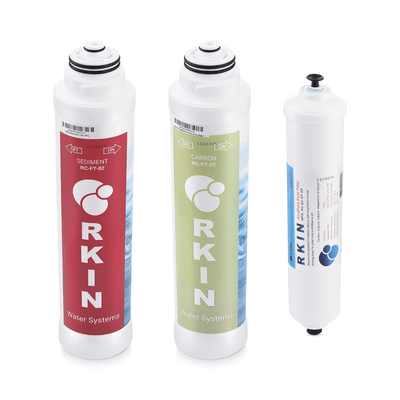
For a city-water home where chlorine taste and odor show up at every tap, the RKIN carbon whole-house category is the natural place to start. The RKIN Whole House Water Filter System is built around whole-home carbon filtration, so the water entering showers, laundry, and sinks is filtered before it moves through the house.
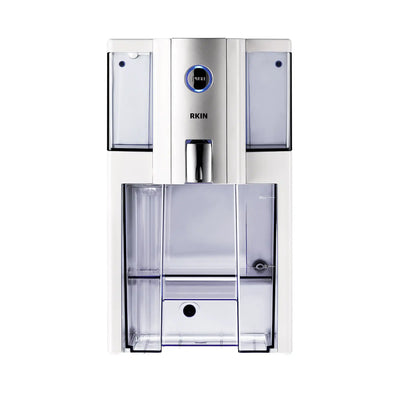
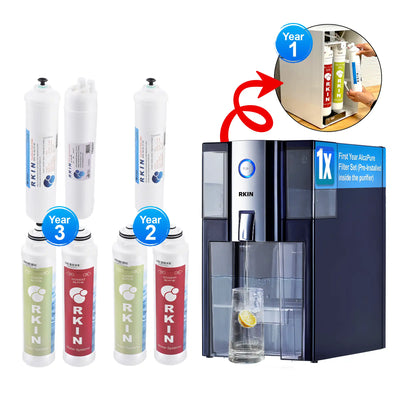
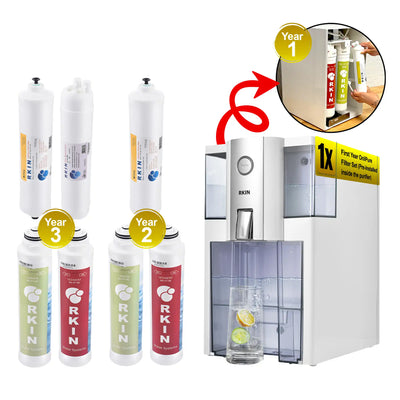
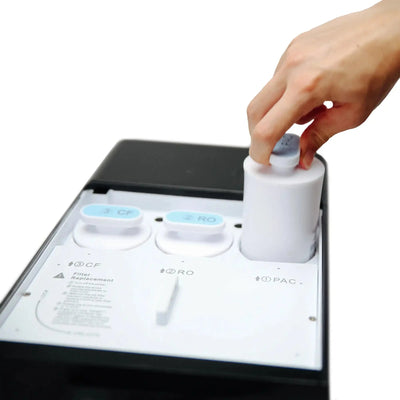
If the issue is mostly drinking water, coffee, ice, and cooking, a point-of-use RO system can make more sense. The RKIN Zero Installation Purifier is a countertop reverse osmosis option for renters or homeowners who do not want plumbing changes. The front-loading design also matters in daily use: you fill it at counter height instead of lifting a heavy tank to a top-fill position.
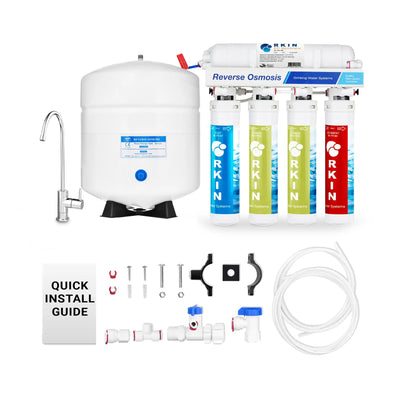
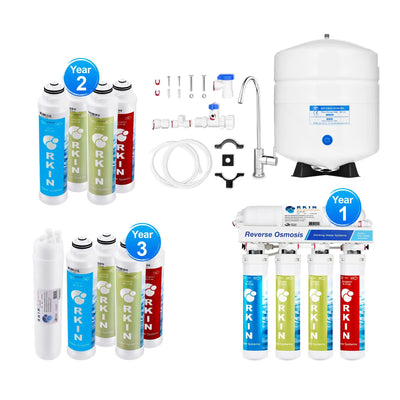
For homeowners who prefer an under-sink setup, the RKIN Flash Undersink RO System filters drinking water from a dedicated faucet and includes a compact storage tank.
When should you test your water?
Testing is smart when the smell is new, when you are comparing equipment, or when you do not know what your city report means for your home.
City water customers can start with the annual report. It usually lists disinfectant residuals, disinfection byproducts, lead and copper monitoring, and other regulated substances. Private well owners should test directly because there is no utility report for an individual well.
You should also test or call your utility if the chlorine smell arrives with any of these changes:
- Sudden pressure drop
- Brown, yellow, or cloudy water
- Construction or hydrant flushing nearby
- A boil-water notice
- Flooding near a well or pressure tank
- A strong odor from only one fixture
The reason I would test before buying is because water issues stack. A home can have chlorine smell plus hard water. Or chloramine plus old plumbing. Or good city water plus a water heater odor. The right setup depends on the stack, not one symptom.
Frequently Asked Questions
Why does my tap water smell like chlorine all of a sudden?
A sudden chlorine smell can come from utility flushing, seasonal treatment changes, warmer water, or changes in water demand. Check your utility alerts first. If the smell is only in one fixture or only in hot water, the issue may be inside the home rather than the city supply.
Does a carbon filter remove chlorine smell?
Yes, activated carbon is commonly used for chlorine taste and odor. Chloramine can require more contact time and the right carbon design, so not every small pitcher or faucet filter performs the same way. Match the system to your water report and flow needs.
Does reverse osmosis remove chlorine from drinking water?
Reverse osmosis systems usually include carbon prefiltration before the RO membrane, which helps reduce chlorine taste and odor in drinking water. RO is a point-of-use solution unless you install a whole-home RO system, so it will not filter every shower and fixture by itself.
Is it okay to drink water that smells like chlorine?
A mild chlorine smell in city water can be normal because public systems maintain a disinfectant residual. If the odor is very strong, new, or paired with cloudy water, pressure changes, or an advisory, check your utility notice and consider testing before relying on taste alone.
What is the difference between chlorine and chloramine?
Chlorine is a disinfectant used in many water systems. Chloramine is formed when chlorine is combined with ammonia, and EPA notes it lasts longer in distribution pipes. That persistence can make chloramine taste harder to remove with small, low-contact filters.
Do I need a whole-house filter for chlorine smell?
If you only notice taste in drinking water, a countertop or under-sink RO system may be enough. If the smell shows up in showers, laundry, and every sink, a whole-house carbon system is the cleaner fit. No pressure either way; it depends where the problem shows up.
Ready to Make Chlorine Taste Less Annoying?
Start with the symptom: drinking water only, or the whole house. If it is the whole house, review the RKIN Whole House Water Filter System. If it is just drinking water, compare RKIN’s countertop and under-sink reverse osmosis options. Does that kind of clarify the next step?
Sources: EPA, Chloramines in Drinking Water; CDC, About Drinking Water.





0 comments