




does pfas boil off
Does PFAS Boil Off? What Actually Removes Forever Chemicals

Boiling has been the universal "fix-it" for water problems since before indoor plumbing existed. Kill bacteria, kill parasites, sterilize the bottle. So when news broke that PFAS — the so-called "forever chemicals" — had been detected in nearly half of U.S. tap water samples, a lot of people did the obvious thing. They put a kettle on the stove and figured the problem was handled. It wasn't.
PFAS are not bacteria. They are not parasites. They are extremely stable synthetic molecules that were specifically engineered to resist heat, oil, water, and breakdown of any kind. That's why they're called "forever chemicals" — and it's the reason boiling doesn't work. In fact, boiling water with PFAS in it makes the contamination worse, not better. A 2023 USGS study estimated that at least 45% of U.S. tap water contains one or more PFAS compounds. If you're in that 45% and you've been boiling, you've been concentrating them.
Why Boiling Concentrates PFAS Instead of Removing Them
The principle behind boiling water for safety is simple. Heat kills living things. Bring water to 100°C, hold it there for a minute, and any bacteria, virus, or parasite dies. That works because pathogens are biological. They have proteins that denature when heated.
PFAS are not biological. They're synthetic chemistry — long chains of carbon and fluorine atoms bonded together. The carbon-fluorine bond is one of the strongest in organic chemistry. To break it, you need conditions far beyond what a household stove can produce. Industrial PFAS destruction requires temperatures above 1,000°C, plasma reactors, or specialized chemical processes. A boiling kettle doesn't come close.
What boiling does do is evaporate water. Around 4% of the water in a typical 10-minute boil leaves the pot as steam. The PFAS molecules don't go with it — they're too heavy and don't volatilize at boiling temperatures. They stay behind, dissolved in the remaining liquid. So you end up with the same amount of PFAS in less water, which means the concentration goes up.
A 2024 study published in Environmental Science & Technology measured PFAS concentrations in water before and after boiling. Concentrations rose by roughly 4-7%, in line with what physics predicts. Not by orders of magnitude — but in the wrong direction.
What PFAS Actually Are
PFAS stands for per- and polyfluoroalkyl substances. There are around 12,000 known compounds in this family. The most studied are PFOA and PFOS, which were used in non-stick cookware, stain-resistant carpets, water-repellent fabrics, food packaging, firefighting foam, and a long list of industrial applications from the 1940s onward.
The properties that made them useful — resistance to water, grease, heat, and stains — are the same properties that make them dangerous. They don't break down in the environment. They accumulate in soil, groundwater, surface water, animals, and humans. The EPA estimates that over 98% of Americans have detectable levels of PFAS in their blood.
In April 2024, the EPA finalized the first-ever national drinking water standards for six PFAS compounds, with maximum contaminant levels as low as 4 parts per trillion for PFOA and PFOS. Utilities have until 2027 to comply. Until then — and in many cases after — the responsibility for filtering PFAS at the tap falls on the homeowner.
Why "Just Drink Bottled" Isn't the Answer
The instinctive backup plan when tap water has issues is to switch to bottled. With PFAS, this doesn't help.
A 2021 Johns Hopkins study tested 100 bottled water brands and found that 39 of them had measurable PFAS levels, with several exceeding what would soon become the federal limit for tap water. Bottled water is regulated by the FDA under different rules than tap water — which is regulated by the EPA — and PFAS testing has not historically been required.
Beyond that, plastic bottles introduce their own contamination concerns. A 2024 Columbia University study found roughly 240,000 plastic particles per liter in tested bottled water — about 100 times more than previous estimates. Bottled water isn't a cleaner alternative. It's a different set of contaminants.
The cost adds up too. The average U.S. household spends $300-$500 per year on bottled water, and that's before counting recycling, storage, and disposal. A point-of-use filter at the tap costs less over a decade than two years of bottled water.
What Actually Removes PFAS from Water at Home
Three filtration technologies have been independently verified to remove PFAS effectively. The rest don't work, regardless of marketing claims.
Reverse osmosis
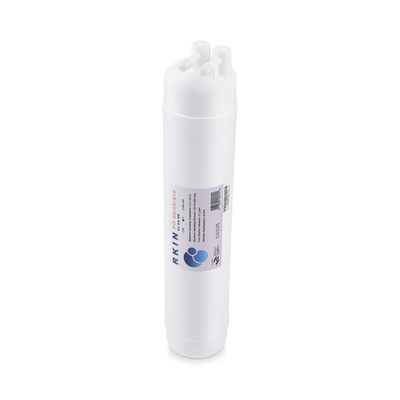
Reverse osmosis (RO) pushes water through a semi-permeable membrane with pore sizes around 0.0001 microns — small enough to block PFAS molecules along with virtually everything else dissolved in the water. RO is the most effective whole-water purification technology available for residential use. EPA testing has found that RO removes 90-99% of PFAS compounds depending on the specific molecule.
RO also removes lead, arsenic, fluoride, nitrates, chlorine, chloramine, dissolved solids, and most pharmaceutical residues. It's the closest thing to bottled water you can produce from a tap — without the plastic.
Activated carbon (granular and block)
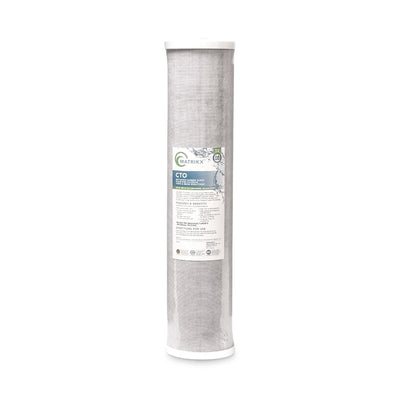
High-grade activated carbon filters can remove PFAS through adsorption, where PFAS molecules stick to the carbon surface. Carbon block filters (more compressed than granular) typically perform better. Performance varies significantly by manufacturer and carbon quality. Look for third-party testing against NSF/ANSI 53 for PFOA/PFOS reduction.
Carbon is less effective than RO and the cartridges saturate over time, meaning they have to be replaced on schedule or they stop working — and can even release captured PFAS back into the water.
Ion exchange resins
Specialized ion exchange resins designed for PFAS bind the molecules through chemical exchange. They're effective but expensive and typically used in larger whole-house or commercial systems rather than countertop or under-sink units.
What does NOT work
- Pitcher filters (basic activated carbon) — most are not certified for PFAS reduction
- Refrigerator filters — same issue; most are not PFAS-rated
- Boiling — concentrates PFAS instead of removing it
- UV light — kills pathogens, does nothing to PFAS
- Distillation — works but slow and energy-intensive
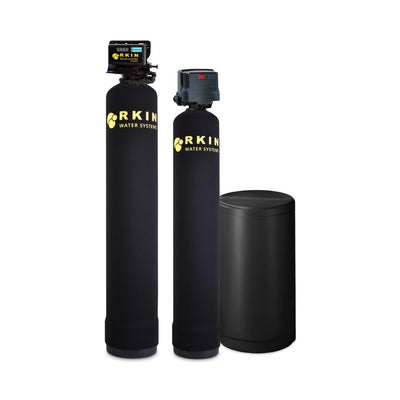
- Water softeners — designed for hardness minerals, not PFAS
What to Look For When Choosing a PFAS Filter
Three things to verify before buying:
-
Third-party PFAS testing. The manufacturer should publish test results from an independent lab showing PFAS reduction performance for the specific filter you're considering. Generic "removes contaminants" claims aren't enough.
-
The right certifications. NSF/ANSI 58 covers reverse osmosis. NSF/ANSI 53 covers PFAS reduction by carbon. Look for these on the spec sheet.
-
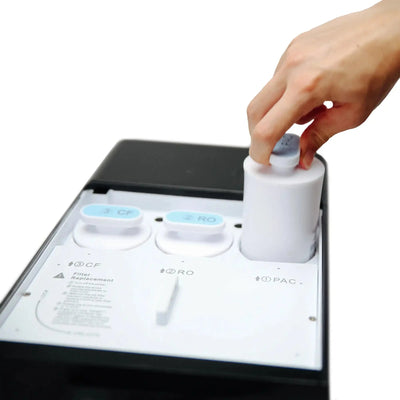
A realistic replacement schedule. PFAS filters need regular cartridge replacement. If the schedule sounds too good to be true (years between changes), it probably is. RO membranes last 2-5 years; carbon stages typically need replacement every 6-12 months.
How RKIN Approaches PFAS
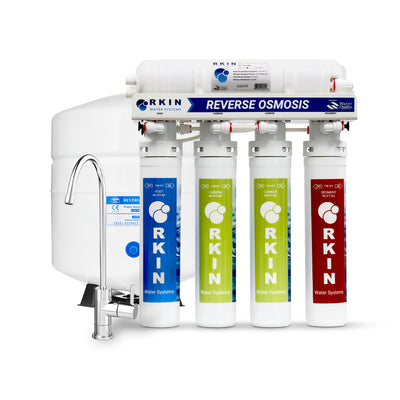
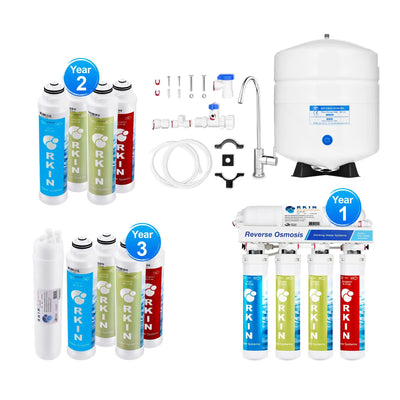
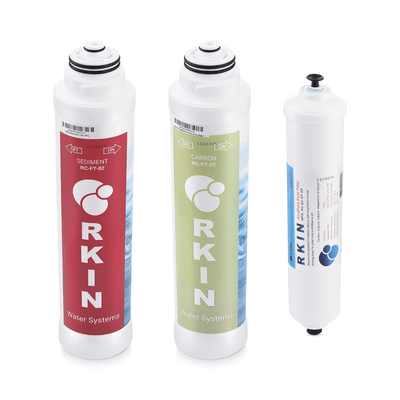
The RKIN U1 4-in-1 Water Filter System is a reverse osmosis system designed specifically for the contaminants modern homeowners worry about — PFAS, lead, arsenic, fluoride, and TDS. It uses a 5-stage filtration process with a RO membrane and dedicated remineralization stage to restore the minerals the body actually wants in drinking water. It's been 3rd-party tested for reduction of PFAS and the major contaminant categories.
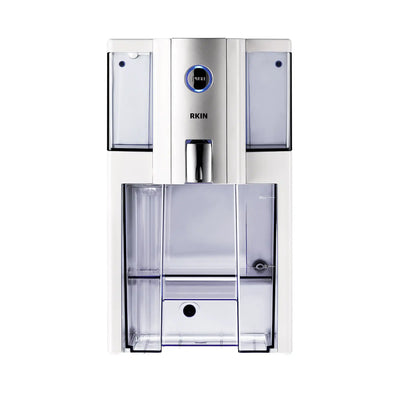
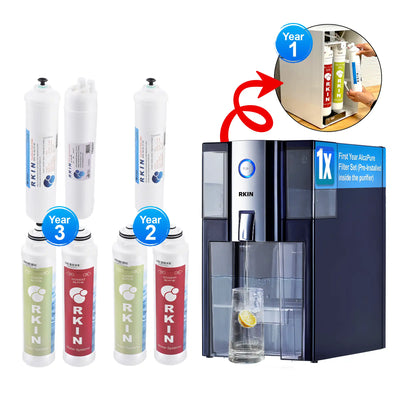
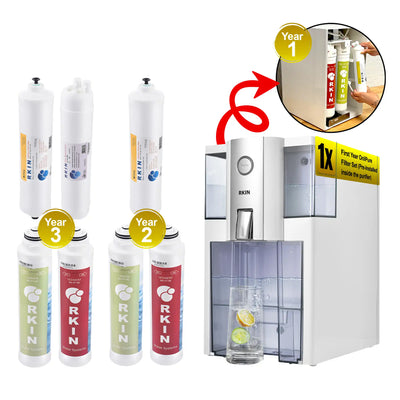
For homeowners who don't want under-sink plumbing work, the RKIN Zero Installation Purifier delivers the same reverse osmosis performance in a countertop format. No plumbing, no tools — fill the reservoir and the system handles the rest.
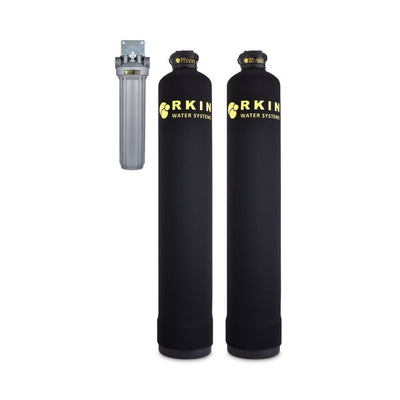
For point-of-entry treatment that protects everything in the house from drinking water to shower water, the RKIN Whole Home Reverse Osmosis System applies RO to the entire household supply.
Frequently Asked Questions
Does boiling water remove PFAS?
No. Boiling water removes biological contaminants like bacteria and parasites, but PFAS molecules are heat-stable and do not break down at boiling temperatures. Because some water evaporates as steam during boiling but PFAS stays behind, boiling actually slightly concentrates PFAS — making the contamination worse, not better.
What's the most effective PFAS water filter for home use?
Reverse osmosis is the most effective residential filtration for PFAS, typically removing 90-99% of the most common PFAS compounds. High-grade activated carbon block filters certified to NSF/ANSI 53 for PFOA/PFOS reduction are a secondary option. Pitcher filters and refrigerator filters generally do not remove PFAS unless specifically certified.
How do I know if my tap water has PFAS?
Your water utility's Consumer Confidence Reports, published annually, now include PFAS testing data. You can also order an EPA Method 537.1 PFAS test for around $250-$400 to test your home tap directly. The USGS estimates that nearly half of U.S. tap water has detectable PFAS levels.
Are PFAS dangerous at the levels found in tap water?
The EPA has set legal limits as low as 4 parts per trillion for PFOA and PFOS based on health research linking long-term PFAS exposure to a range of adverse outcomes. Because these compounds accumulate in the body over years, removing exposure at home is the most direct way to reduce intake while utilities work toward 2027 compliance with the new federal standards.
Will my city's water treatment plant remove PFAS?
Most existing municipal treatment facilities were not designed to remove PFAS. New EPA rules require utilities to begin compliance testing in 2024-2025 and meet limits by 2027, but most are still in the planning and infrastructure-build phase. Until then, point-of-use filtration is the most reliable way to remove PFAS at the tap.
How long do PFAS-rated filters last?
Reverse osmosis membranes typically last 2-5 years. Carbon pre-filters and post-filters need replacement every 6-12 months. Following the manufacturer's replacement schedule is critical — saturated filters lose effectiveness and can re-release captured PFAS back into the water supply.
Ready to Upgrade Your Water?
PFAS are in the water of roughly half the country, and federal limits don't go into full effect until 2027. Boiling won't fix it. Bottled water often has its own contamination. Filtration at the tap is the only reliable way to remove forever chemicals from your drinking water today.
The RKIN U1 4-in-1 Water Filter System uses reverse osmosis to remove PFAS, lead, arsenic, fluoride, and TDS — 3rd-party tested for the contaminants that matter. See the full lineup at rkin.com.





0 comments