


does reverse osmosis remove perchlorate
Perchlorate in Drinking Water: RO Filter Guide for Homes

If perchlorate just appeared in a utility notice, lab report, or local headline, the first question is usually direct: what home water filter handles perchlorate, and do you need reverse osmosis?
The timing matters. The EPA’s perchlorate drinking water page lists a January 2026 proposed rule and a February 19, 2026 public hearing for perchlorate under the Safe Drinking Water Act. That does not mean every home has a perchlorate problem. It does mean more homeowners are going to see the word in water reports and wonder what to do next.
Why perchlorate is showing up in water conversations
Perchlorate is not a taste problem. You cannot look at a glass of water and know whether it is there. The EPA describes perchlorate as a chemical commonly used in solid rocket propellants, munitions, fireworks, vehicle airbag initiators, matches, and signal flares. EPA also notes that perchlorate can occur naturally in some arid regions and may appear as an impurity in hypochlorite solutions used for water treatment and in nitrate salts used in fertilizer and other products.
That mix of industrial, treatment-related, fertilizer-related, and natural sources is why the first step is not guessing. The first step is to find out whether perchlorate is actually part of your water picture.
For city water, start with your utility’s Consumer Confidence Report or a direct utility notice. EPA’s 2026 perchlorate materials say the proposed Consumer Confidence Report requirements would include the maximum contaminant level, maximum contaminant level goal, detected range, highest detected level used for compliance, and likely sources when perchlorate is reported. In plain English, your city report should tell you whether the contaminant was detected and what number the utility is working from.
Private wells are different. The EPA’s private well guidance says well owners should test annually for total coliform bacteria, nitrates, total dissolved solids, and pH, and should test for other contaminants if they suspect those may be present. If perchlorate is a local concern, ask a state-certified lab whether it belongs on your test panel.
What does not answer a perchlorate question
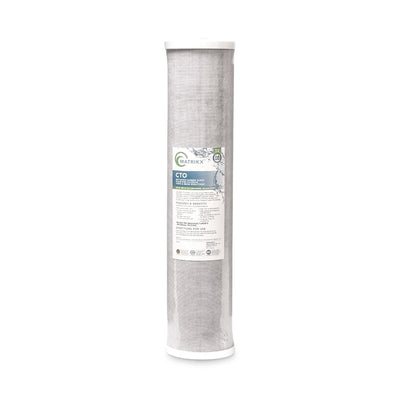
A pitcher filter can make water taste better, but taste improvement is not the same as a perchlorate reduction claim. Carbon filters are useful for certain taste, odor, chlorine, and organic-compound concerns, depending on the exact product. Perchlorate is a dissolved ion, so the label needs to name the contaminant or the treatment method needs to be verified for it.
Boiling is also the wrong tool. Boiling can help with some biological emergencies when a notice instructs you to do it, but it does not make dissolved inorganic contaminants disappear. If anything, boiling water down can leave dissolved material in a smaller amount of water.
A TDS meter is not a perchlorate meter. Total dissolved solids can help you see whether a reverse osmosis membrane is broadly reducing dissolved solids, but it cannot identify perchlorate by itself. A low TDS reading is not a lab result.
A whole-house sediment filter is not a perchlorate solution either. Sediment filtration is aimed at particles such as sand, silt, rust, or visible debris. That can be valuable in the right home, especially on a well, but it should not be presented as a treatment for a dissolved contaminant unless the exact system has a tested claim for that target.
What treatment methods EPA lists
EPA’s public-water fact sheet for the 2026 proposed perchlorate rule lists ion exchange, biological treatment, and reverse osmosis as proposed Best Available Technologies for removal of perchlorate from drinking water. It also says certified point-of-use reverse osmosis devices are available for small systems serving 3,300 people or fewer to reduce perchlorate levels below proposed limits.
For a homeowner, the practical takeaway is not “buy anything with a technical label.” It is this: if perchlorate is the target, use the water result first, then look for a treatment method and product documentation that name perchlorate.
Reverse osmosis works by pushing water through a semi-permeable membrane. The membrane rejects many dissolved substances while treated water passes through to the drinking side and rejected water goes to drain. That is why RO is commonly used for dissolved contaminants that ordinary taste filters may not address well.
Ion exchange can also be used for perchlorate in larger treatment settings, but it is not automatically the simplest home drinking-water answer. It depends on water chemistry, resin selection, maintenance, disposal, and whether the system is being designed by a qualified professional.
Biological treatment is mainly a public-water or engineered-treatment approach, not a countertop decision. If you are a homeowner reading a city notice, do not try to translate municipal treatment language into a DIY equipment list. Focus on your tap, your report, and the documented claims for the system you are considering.
How to read an RO claim without getting misled
The most useful certification detail for home RO is NSF/ANSI 58. NSF explains that NSF/ANSI 58 covers point-of-use reverse osmosis drinking water treatment systems and includes requirements for materials, structural integrity, TDS reduction, efficiency, recovery, contaminant-reduction performance, and user information.
The important part is the claim list. NSF lists TDS reduction as required under NSF/ANSI 58 and lists perchlorate reduction as an optional claim, along with optional claims such as lead, fluoride, nitrate/nitrite, VOCs, arsenic, and others.
Optional means you cannot assume every RO system has every reduction claim. One RO system may list TDS reduction only. Another may list several tested contaminant reductions. Another may have third-party testing but not full certification for the exact claim you are researching. Read the performance data sheet and ask for the contaminant-specific evidence if perchlorate is the reason you are buying.
Use this filter checklist before you make a decision:
- Confirm whether perchlorate was actually detected in your water.
- Write down the result, unit, sample date, and sample location.
- Separate city-water reports from private-well lab results.
- Look for a treatment method documented for perchlorate reduction.
- Check whether the exact product lists perchlorate, not just “advanced filtration.”
- Review maintenance requirements, membrane replacement, and prefilter replacement.
- Retest or verify as recommended if the contaminant is a serious local concern.
That last step matters. A filter is not a one-time purchase that cancels the need to understand your water. It is equipment that needs the right fit and service.
Where RKIN fits
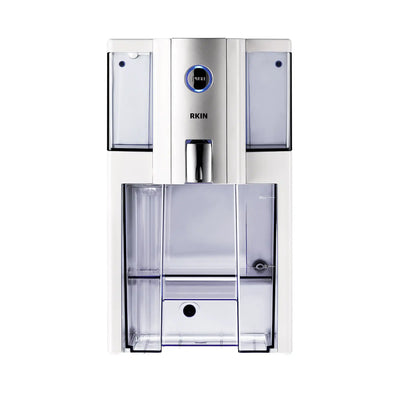
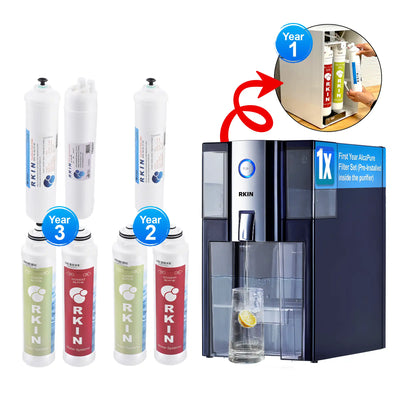
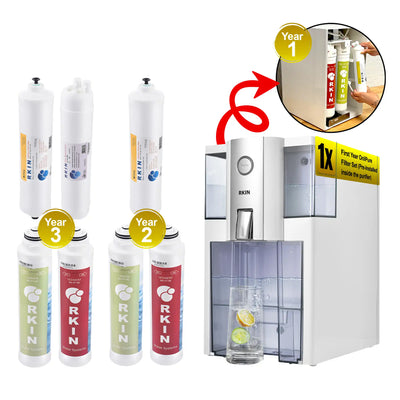
For homeowners comparing reverse osmosis options at the drinking-water tap, the RKIN Zero Installation Purifier Countertop Reverse Osmosis Water Filter is designed for households that want RO without plumbing changes. It is a countertop system, so it can be a practical fit for renters, apartments, and kitchens where under-sink installation is not the right path.
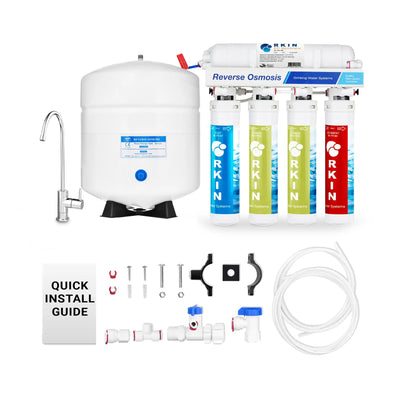
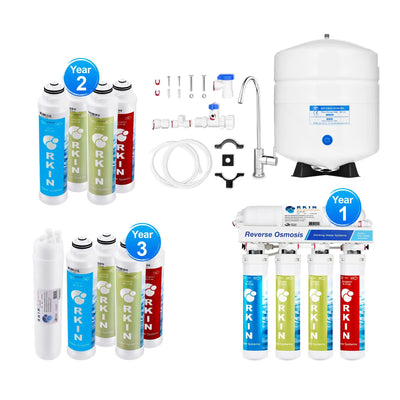
If you prefer an installed kitchen setup, the RKIN Flash Undersink RO System is the under-sink RO option. It fits homes where a dedicated faucet and compact storage tank make more sense than a countertop unit.
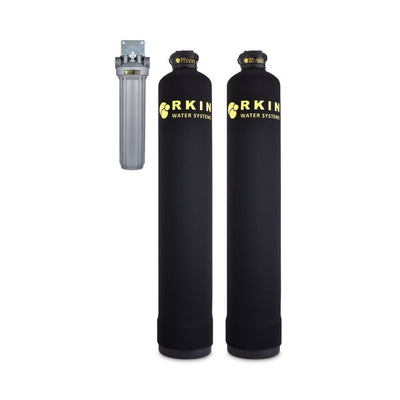
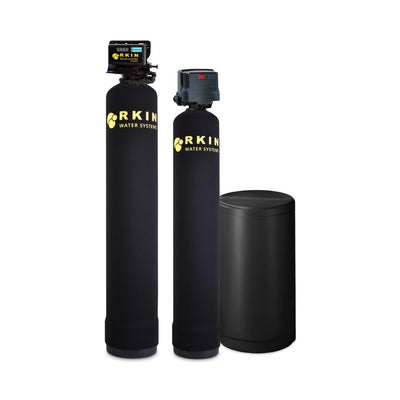
If your water concerns are whole-home issues such as sediment, hardness, chlorine taste throughout the house, or well-water pretreatment, start with RKIN Whole House Water Treatment. Whole-home equipment and drinking-water RO can work together, but they solve different parts of the water problem.
If perchlorate is your specific target, verify the current product data and any contaminant-specific documentation before relying on any system. The right answer starts with the water test, not with a guess.
Me personally, I would test for perchlorate first and verify the exact RO claim before buying.
Frequently Asked Questions
Does reverse osmosis remove perchlorate?
Reverse osmosis is one of the treatment methods EPA lists for perchlorate removal in its proposed public-water rule materials. For home systems, check the exact product documentation. NSF/ANSI 58 includes perchlorate reduction as an optional claim, so do not assume every RO system has the same tested claim.
How do I know if perchlorate is in my tap water?
For city water, check your utility’s Consumer Confidence Report or a direct notice from the water provider. For a private well, ask a state-certified lab or local health department whether perchlorate testing is recommended in your area. A taste, smell, or TDS reading will not confirm perchlorate.
Is a carbon filter enough for perchlorate?
Do not assume a basic carbon filter is enough. Carbon can be useful for taste, odor, chlorine, and some organic compounds when the product is designed and tested for them, but perchlorate requires a contaminant-specific claim or an appropriate treatment method backed by data.
Do I need a whole-house filter for perchlorate?
Most perchlorate decisions start at drinking and cooking water, not every gallon in the home. A point-of-use RO system can be the more direct path for drinking water. Whole-house treatment may still matter for other problems such as sediment, hardness, chlorine, or well-water conditions.
What should I ask before buying a perchlorate filter?
Ask for the water test result, the exact contaminant claim, the standard used for testing or certification, the rated capacity, and the maintenance schedule. If the seller cannot show documentation for perchlorate, do not treat a broad “purification” claim as proof.
Ready to Check Your Drinking Water?
Start with your water report or a certified lab test, then choose treatment based on the result. If reverse osmosis fits your plan, compare the layout that fits your kitchen and verify the claims that matter to your water.
Review the RKIN Zero Installation Purifier Countertop Reverse Osmosis Water Filter for a no-plumbing RO option, or choose the RKIN Flash Undersink RO System for an installed kitchen setup.





0 comments