



brine tank full of water
Should There Be Water in My Water Softener Brine Tank?

A water softener brine tank is supposed to use water, but the water line should make sense for the system. Seeing salt below the water level does not automatically mean the unit is broken. Seeing a tank full of water, no water at all when the system expects it, or salt that never moves is a different story.
Some softener brine tanks normally hold visible water, but not every tank looks the same. The correct level depends on the softener design, salt setting, float assembly, and point in the regeneration cycle. Use your city Consumer Confidence Report or the EPA's private well guidance to confirm the source-water problem before changing equipment.
The Short Answer: A Little Water Can Be Normal
Most salt-based water softeners use a brine tank to make salty water for regeneration. During regeneration, brine helps clean the resin bed so the softener can keep swapping hardness minerals for sodium or potassium ions, depending on the salt used.
That means water in the brine tank is not automatically a red flag. Many systems keep water in the tank between cycles. Others fill shortly before regeneration and look mostly dry between cycles. The owner’s manual is the final answer for your model.
Here is the practical homeowner version: salt can sit above or below the water line and the softener may still work. The warning sign is not “I can see water.” The warning sign is change. If the tank used to have a few inches of water and now it is half full, pay attention. If the water never drops after regeneration, pay attention. If the salt has formed a hard crust while water sits below it, pay attention.
Water level is a clue. It is not the whole diagnosis.
How a Brine Tank Actually Works
A salt-based softener has two jobs. First, it sends hard water through a resin tank. The resin attracts hardness minerals such as calcium and magnesium. Second, it periodically regenerates the resin with brine from the salt tank.
The brine tank holds salt and water. The system either keeps a measured amount of water in the tank or adds water before regeneration. That water dissolves some of the salt and becomes brine. During regeneration, the control valve pulls that brine into the resin tank, then rinses the system and sends waste water to a drain.
That is why the brine tank is not just a bucket of salt. It has a float, brine line, safety shutoff, and valve timing. If any of those parts sticks, clogs, leaks, or loses suction, the water level can look wrong.
The salt level matters too. If the tank is packed too full, you may not notice a salt bridge. A bridge is a hardened crust with empty space underneath. From the top, the tank looks full. Underneath, the system may not be making proper brine. That is one reason a quick visual check is not always enough.
What Water Level Is Normal?
There is no single normal water level that applies to every softener. Some brine tanks may show several inches of water. Some may show water above the salt after a cycle. Some may look almost dry until the system starts its next regeneration.
Instead of looking for one universal number, look for pattern and behavior.
- Stable pattern: The tank looks about the same after each cycle and the salt level slowly drops over time.
- Salt use: The system uses salt at a predictable pace based on household water use and hardness.
- Soft-water feel: Soap, fixtures, and white buildup improve compared with untreated hard water.
- No overflow: Water is not rising high enough to threaten overflow or stand near the top of the tank.
- No salt bridge: Salt is not hardened into a shell that hides an empty pocket underneath.
If those checks pass, water below some of the salt may be normal. If the pattern changed, the unit needs a closer look.
Warning Signs in a Brine Tank
A brine tank full of water is the classic “stop and check” sign. It may point to a clogged injector, blocked brine line, stuck float, drain restriction, valve issue, or loss of suction. The softener may fill the tank but fail to draw brine back out.
No water can also be a problem if your model is supposed to keep water in the tank. That may point to a fill valve problem, salt setting issue, blocked line, or control setting that needs review.
Salt that never moves is another clue. If you keep adding salt but the level never drops, the softener may not be regenerating correctly. It may be bridged, misprogrammed, bypassed, or not drawing brine.
A mushy layer at the bottom of the tank can also reduce performance. This is sometimes called salt mushing. The bottom turns into sludge instead of dissolving cleanly, and the system struggles to pull brine.
If you smell unusual odors, see standing water outside the tank, or notice a sudden pressure change, treat the brine tank as part of a larger plumbing check. Do not keep forcing regeneration cycles without understanding why the tank is acting differently.
What Not to Do When the Water Looks High
Do not scoop water out and call it fixed. If the tank refills too high again, the cause is still there.
Do not keep adding salt until the tank is packed to the lid. More salt does not fix a draw problem. It may hide the water level and make bridging more likely.
Do not hit the tank, pry aggressively, or use sharp tools near the float assembly or brine well. You can break parts that were not the original issue.
Do not assume the water softener is treating everything in your water. A softener handles hardness. It is not a drinking-water reverse osmosis system, a carbon filter, or a well treatment system for every possible issue.
In my house, if the water level suddenly changed, I would stop adding salt, check whether the unit is in bypass, look for a salt bridge, and schedule service if the tank stayed high after a regeneration. Simple checks first, parts second.
A Simple Brine Tank Check You Can Do
Before calling anyone, collect a few facts. This makes the service conversation faster and helps avoid a vague diagnosis.
- Take a photo: Capture the water level, salt level, and control valve screen.
- Check bypass: Make sure the softener is not accidentally bypassed.
- Look for a bridge: Tap gently with a broom handle. A hollow sound can suggest a crust over empty space.
- Watch one cycle: If safe and accessible, see whether the system fills and then draws brine down.
- Check the drain line: Look for kinks, restrictions, or a line that moved.
- Review settings: Hardness setting, time of day, regeneration frequency, and salt type should match the manual.
If you are on a private well, pair the mechanical check with water testing. Hardness, iron, manganese, sulfur odor, sediment, and pH can all change the treatment plan. A softener can be the right tool and still be only one piece of the setup.
When a Salt-Based Softener Fits
A salt-based softener is built for hardness. If your home has white buildup, hard-water spotting, dry-feeling soap residue, stiff laundry, or water heater buildup, a softener may be the right whole-house direction after testing confirms hardness is the issue.
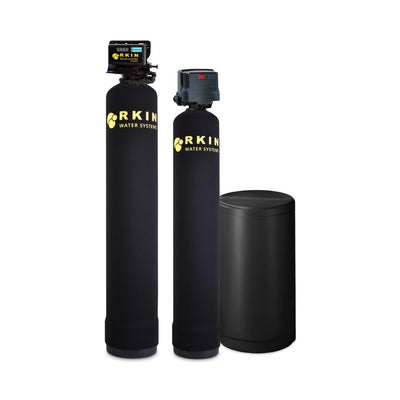
The RKIN Water Softener System is the direct fit when the problem is hardness and you are comfortable with a salt-based system. It belongs on the main water line, with a correct drain path, bypass valves, and enough room to service the brine tank.
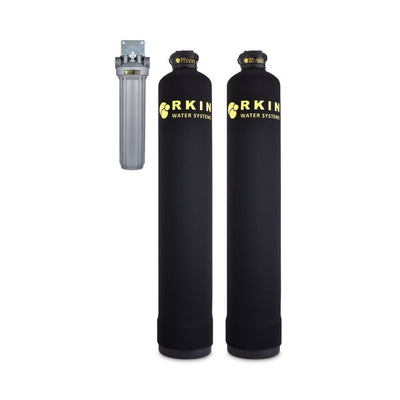
If you want scale control without a brine tank, look at salt-free conditioning instead. The RKIN OnliSoft Pro Salt-Free + Carbon Combo is a different category: it does not work by making brine. It is for homeowners who want a salt-free whole-house direction and carbon filtration in one system.
Base the recommendation on your water test, plumbing, and willingness to maintain a salt-based softener.
Frequently Asked Questions
Should there be water in my water softener brine tank?
Yes, water in a brine tank can be normal. Some softeners keep water in the tank between cycles, while others fill closer to regeneration. The concern is a sudden change, a tank full of water, no salt use, or water that never draws down.
Is salt supposed to be below the water line?
It can be normal for some salt to sit below the water line. The key is whether the system is making and drawing brine correctly. If salt never drops or the tank stays full of water, check for a bridge, clogged line, float issue, or service need.
Why is my brine tank full of water?
A brine tank full of water can point to a clogged injector, stuck float, blocked brine line, drain restriction, or valve problem. Do not just remove water and move on. If the tank refills too high, the cause still needs attention.
Can I use a water softener without salt?
A salt-based softener needs salt or potassium chloride to regenerate. If you want a no-salt setup, compare a salt-free conditioner instead. It is a different kind of system and should be chosen based on your water test and goals.
Does a water softener filter drinking water?
A softener is not a drinking-water filter. It addresses hardness minerals for the whole home. For drinking-water concerns, compare reverse osmosis or carbon filtration based on your water report and the substances you want to reduce.
Ready to Fix the Hard-Water Setup?
If the brine tank water level changed, start with the simple checks: bypass, salt bridge, drain line, and one regeneration cycle. If the real problem is hardness, compare the RKIN Water Softener System. If you want a salt-free whole-house direction, review the RKIN OnliSoft Pro Salt-Free + Carbon Combo.





0 comments