





brine tank salt bridge
Water Softener Salt Bridge: Signs, Causes, and Fixes

A water softener salt bridge is one of the most frustrating hard-water problems because the brine tank can look full even when the system is not getting the salt it needs. You lift the lid, see plenty of salt, and wonder why spots are back on dishes or the shower feels different.
The EPA’s 2026 water-softener guide explains that a salt bridge keeps suspended salt from mixing with the water below to form brine. It recommends using a blunt handle to clear the bridge and running a regeneration cycle afterward.
The issue is usually a hardened crust of salt inside the brine tank. That crust creates an empty space below it, blocking salt from dissolving properly into the water below. The softener may keep cycling, but it cannot make normal brine. Without normal brine, the resin bed cannot recharge as expected.
Here is how to spot a salt bridge, what causes it, how to fix it without damaging the tank, and when it may be time to look at a different hard-water treatment approach.
What Is a Water Softener Salt Bridge?
A salt bridge is a firm layer of salt that forms above the water level in the brine tank. It can look like a normal pile of pellets, crystals, or blocks from the top, but underneath that layer there may be a hollow pocket.
Water softeners need salt to create brine. During regeneration, brine is drawn through the resin tank to help the system release hardness minerals it collected during service. If the salt is bridged, the water in the tank cannot dissolve enough salt. That means weak brine, poor regeneration, and hard-water symptoms even though the tank appears full.
Salt bridges are more common in humid weather, which is why many homeowners notice them in summer. Moisture can cause salt to clump and harden. Adding too much salt at once can also add weight and pressure, making it easier for a crust to form. Some salt types are more prone to mush or buildup, especially if the tank is rarely cleaned.
A salt bridge is not the same as an empty brine tank. It is also not the same as salt mushing, where broken-down salt forms a sludge at the bottom of the tank. Both can interfere with brine production, but they require slightly different cleanup.
Signs Your Softener Has a Salt Bridge
The biggest clue is a mismatch between what the tank shows and what the water feels like. The salt level looks high, but the home acts like the softener is not working.
Common signs include:
- White spots on faucets, glassware, or shower doors
- Soap that does not lather the way it usually does
- A slick feeling disappearing after showers
- Stiff laundry or mineral residue on fixtures
- Salt level that has not dropped for weeks
- Brine tank that looks full even after several regeneration cycles
- A hollow sound when you gently tap the side of the tank
You may also notice that the control valve seems to run as scheduled. That can be confusing. The softener may be doing its timed cycle, but the brine tank is not supplying properly saturated brine.
Before assuming the whole system failed, check the brine tank. A salt bridge is often a maintenance issue rather than a sign that the softener must be replaced.
What Does Not Fix a Salt Bridge
Because the tank looks full, many people add more salt. That usually makes the problem worse. More weight can pack down the crust and hide the hollow pocket even more.
Avoid these common mistakes:
- Do not keep adding salt when the level is not dropping
- Do not use sharp metal tools that can puncture the brine tank
- Do not pour harsh chemicals into the tank
- Do not kick or strike the tank hard
- Do not assume one forced regeneration will solve a bridge
- Do not ignore repeated bridges if they keep returning
It is also easy to confuse a salt bridge with a salt clog, blocked injector, stuck float, or control valve problem. If the salt level is dropping normally but the water is still hard, the problem may be somewhere else. If the tank is full and the level has not changed, a bridge is a likely suspect.
Use gentle troubleshooting first. If you are not comfortable opening the tank, checking the brine well, or breaking the crust, call a water treatment professional.
How to Break a Salt Bridge Safely
Start by checking your owner’s manual if you have it. Different brine tanks have different parts, and you do not want to damage the float assembly or brine well.
A typical safe process looks like this:
- Turn the softener to bypass if your manual recommends it
- Remove the brine tank lid
- Look for a hard crust or salt level that has not moved
- Use a broom handle or similar blunt wooden handle to gently probe the salt
- Keep the tool away from the tank walls and brine well
- Break the crust into smaller pieces without jabbing the bottom
- Scoop out large chunks if needed
- Add a small amount of water if the tank is too dry, following the manual
- Start a manual regeneration after the bridge is cleared
The key word is gently. The brine tank is plastic, and the internal parts are not designed for force. A blunt wooden handle is preferred over metal because it is less likely to puncture or scrape the tank.
After the bridge breaks, the salt may drop suddenly. That is normal if there was a hollow space underneath. Once the tank is clear, let the system regenerate and then check water feel over the next day or two.
If you find salt sludge at the bottom, you may need a deeper brine tank cleanout. That can involve removing remaining salt, cleaning the tank, and refilling with fresh salt according to the manufacturer’s directions.
Why Salt Bridges Keep Coming Back
One salt bridge can happen during a humid stretch. Repeated salt bridges usually point to a pattern that needs attention.
Common causes include:
- Filling the brine tank too high
- Letting salt sit for long periods without much water use
- High humidity around the softener
- Using lower-quality salt with more impurities
- Mixing salt types in the tank
- Moisture entering through a loose lid
- A softener that is oversized for the household’s actual water use
Try keeping the tank partly full instead of packed to the top. Many homeowners do better by adding salt more often in smaller amounts. Keep the lid closed, store salt bags in a dry area, and avoid dumping wet or damaged bags into the tank.
If the system is in a garage, basement, or utility area with summer humidity, ventilation may help. In some cases, a dehumidifier in the room can reduce clumping.
Also check your settings. If the softener is set too high, too low, or regenerates in a way that does not match your water use, salt performance may suffer. Hardness level, household size, and water usage all affect proper setup.
When Hard-Water Symptoms Are Not a Salt Bridge
A salt bridge is common, but it is not the only reason hard-water symptoms return. If you break the bridge and the water still feels hard, look deeper.
Possible causes include:
- Empty salt tank before the bridge formed
- Salt mush at the bottom of the tank
- Clogged injector or venturi
- Stuck brine float
- Incorrect hardness setting
- Bypass valve left open
- Resin bed fouling from iron or sediment
- Old resin that no longer performs well
- A system that is too small for household demand
If your home uses private well water, iron, manganese, sediment, or sulfur odor can complicate softener performance. A softener is designed for hardness minerals, not every well water issue. Pretreatment may be needed to protect the softener and improve results.
For city water homes, changes in municipal water chemistry or household use can also affect performance. If more people are living in the home, or if irrigation, fixtures, or appliances changed, the old settings may no longer fit.
RKIN Options for Hard-Water Problems
If your current salt-based softener works well most of the time, a salt bridge may simply be a maintenance reminder. Clear the bridge, adjust how you fill the tank, and monitor results.
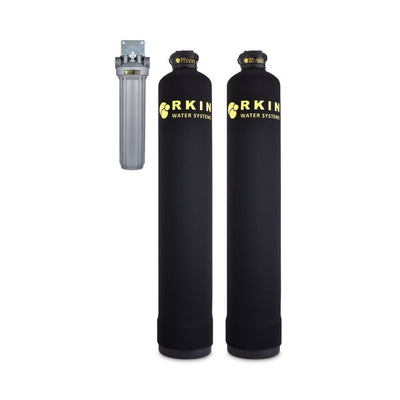
If you are tired of buying salt, dealing with bridges, or maintaining a brine tank, a salt-free conditioner may be worth considering. The RKIN OnliSoft Salt-Free Water Conditioner is designed for whole-house hard-water conditioning without salt, brine, or regeneration. Salt-free conditioners do not remove hardness minerals the same way a salt-based softener does, but they can help reduce scale behavior in many homes.
If you also want carbon filtration for whole-house water quality, the RKIN OnliSoft Pro Salt-Free + Carbon Combo pairs salt-free conditioning with carbon filtration in one whole-home setup. It can be a good fit when scale control and general water filtration are both priorities.
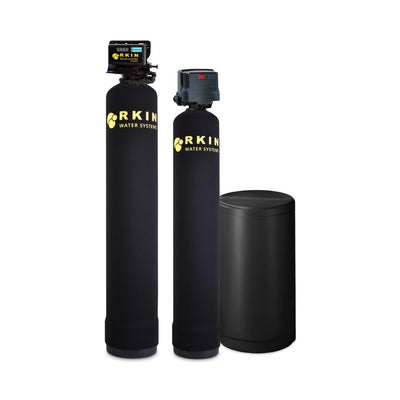
For homeowners who specifically want traditional ion-exchange softening, the RKIN Water Softener remains the appropriate salt-based option. It is best for homes that want hardness minerals removed through a conventional softening process and are comfortable with salt maintenance.
You can also compare systems in RKIN’s whole-house water treatment collection or contact RKIN for help choosing the right setup for your water report and household goals.
Frequently Asked Questions
How do I know if my water softener has a salt bridge?
A likely sign is a brine tank that looks full while hard-water symptoms return and the salt level does not drop over time. Gently probing the salt with a blunt wooden handle can reveal a hardened crust and hollow space.
Can I break a salt bridge with a broom handle?
Yes, a broom handle or similar blunt wooden tool is often used to gently break the crust. Avoid sharp metal tools and keep the handle away from the tank walls, brine well, and float assembly.
Why does my softener get salt bridges in summer?
Humidity can cause salt to absorb moisture, clump, and harden. Garages, basements, and utility rooms can become damp in warm weather, making bridges more likely.
Should I add more salt if I think there is a salt bridge?
No. If the salt level is not dropping, adding more salt can make the bridge harder to find and break. Clear the bridge first, then refill only as needed.
Is a salt-free conditioner the same as a water softener?
No. A traditional water softener removes hardness minerals through ion exchange. A salt-free conditioner changes how minerals behave to help reduce scale buildup, without salt or brine.
When should I replace my water softener?
Consider replacement if bridges keep returning despite good maintenance, the resin is no longer performing, repairs are stacking up, or the system no longer matches your household’s water use. A water test can help guide the decision.
Ready to Solve Hard-Water Problems?
If your brine tank looks full but hard-water signs are back, check for a water softener salt bridge before assuming the system failed. If you want help comparing salt-based and salt-free whole-house options, RKIN can review your goals and water conditions. Contact RKIN to find a hard-water solution that fits your home.






0 comments