





black stains in well water
Why Well Water Leaves Orange or Black Stains at Home

Orange well-water stains usually point to iron; black stains often point to manganese. Test for iron, manganese, pH, hardness, tannins, sulfur, and bacteria before choosing treatment. The results show whether the problem is dissolved minerals, oxidized particles, or both.
What orange and black well water stains usually mean
Orange, red, brown, or rusty staining is the classic sign of iron in well water. Iron can enter groundwater naturally as water moves through rock and soil. It may also show up more clearly after plumbing work, a change in the well, or a long period of low water use. The stain often appears where water sits or evaporates: toilet bowls, shower corners, tub drains, sink rims, dishwasher interiors, and washing machine drums.
Black or dark gray staining is often linked to manganese. Manganese behaves a lot like iron in water, but it can leave darker marks. You may see it as black streaks in the toilet tank, gray smudges around drains, dark flecks in laundry, or a black film on fixtures. Some wells contain both iron and manganese, which can create stains that shift from yellow-orange to brown, gray, or black.
The U.S. EPA lists iron and manganese under its Secondary Drinking Water Standards, which are guidance levels for nuisance effects such as staining, color, and metallic taste rather than federally enforceable health limits. EPA's current secondary standard is 0.3 mg/L for iron and 0.05 mg/L for manganese, with noted effects that include staining and metallic taste, according to the EPA Secondary Drinking Water Standards page, last updated May 26, 2026: EPA Secondary Drinking Water Standards.
Those numbers matter because stains can appear before the water looks dirty in a glass. A clear glass of water can still carry dissolved iron or manganese that stains later after it contacts oxygen.
Why clear water can still leave rusty stains
Iron and manganese can be present in different forms. Dissolved iron is often called clear-water iron because the water may look clear when it first leaves the faucet. After it sits in a toilet bowl, shower, or sink, oxygen changes the iron into visible particles. That is when the orange or rusty film appears.
Oxidized iron is different. It is already in particle form when it reaches the tap, so the water may look yellow, red, brown, or cloudy right away. This form is more likely to plug small screens, stain quickly, and collect in toilet tanks. Manganese can act the same way, except the color tends to be gray, brown, or black.
Iron bacteria can add another layer. These bacteria use iron as part of their growth process and may create orange slime, stringy buildup, or oily-looking films. That does not mean every orange stain is iron bacteria, but slime is a useful clue. Sulfur odors, tannins, low pH, and sediment can also change how stains look and how treatment should be sized.
This is why one-size-fits-all advice can waste time. A water softener may reduce certain low levels of dissolved iron, but it is not designed as the main answer for every rusty well water problem. If iron is oxidized, high, mixed with manganese, or tied to bacteria, it can foul equipment and keep staining.
Penn State Extension notes that softeners sometimes help with limited dissolved iron and small amounts of manganese, but oxidized forms can foul resin and filtration or oxidation treatment may be needed. See Penn State Extension's guide, updated May 29, 2025: Iron and Manganese in Private Water Systems.
How to test before choosing treatment
Start with a laboratory water test or a professional well water analysis. At minimum, ask for iron, manganese, hardness, pH, total dissolved solids, turbidity, tannins, sulfur, and bacteria. If your area has known concerns, add local contaminants recommended by your county health department or state well program.
Do not rely only on stain color. Orange usually suggests iron, and black usually suggests manganese, but water chemistry decides the fix. A low pH can make water more corrosive. Hardness can create scale that traps stains. Tannins can make water look tea-colored and may interfere with certain media. Sulfur can add odor and may require different handling. Sediment can carry oxidized iron into the home even if dissolved iron is moderate.
Collect the sample exactly as the lab instructs. Some tests require a first-draw sample, some require flushing the line, and bacteria tests require a sterile bottle. If you have treatment equipment already installed, ask whether to sample before treatment, after treatment, or both. For stains, the raw well water sample is especially important because it shows what the treatment system must handle.
You can also take notes around the house. Does staining appear mostly in toilets, or everywhere? Is the water clear at first and rusty later? Is there black grit in aerators? Does the toilet tank have slime? Does hot water look worse than cold water? These details help connect lab numbers to the real problem.
Once the report is back, look at the iron and manganese values next to the EPA secondary levels. Values above 0.3 mg/L iron or 0.05 mg/L manganese are often enough to create staining complaints. Higher levels, mixed forms, or difficult chemistry call for a stronger plan than a small point-of-use filter.
Treatment options for iron and manganese stains
Treatment depends on the form and concentration of the minerals. For low dissolved iron in otherwise simple water, a softener may reduce staining in some homes. That said, a softener is not an iron filter, and it can become fouled when iron or manganese is oxidized, high, or tied to bacteria.
For many wells, the better approach is oxidation plus filtration. Oxidation changes dissolved iron and manganese into particles, and filtration captures those particles before they reach fixtures. Depending on the water report, that process may use air injection, catalytic media, or another oxidizing method. The system must be matched to flow rate, water chemistry, and contaminant levels.
A whole house system is often the practical choice because stains happen across the home. Treating only one faucet will not stop orange toilet rings, black shower marks, or laundry discoloration. Whole house treatment handles water before it reaches bathrooms, laundry, appliances, and plumbing fixtures.
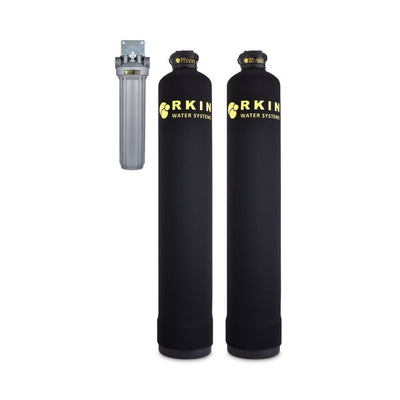
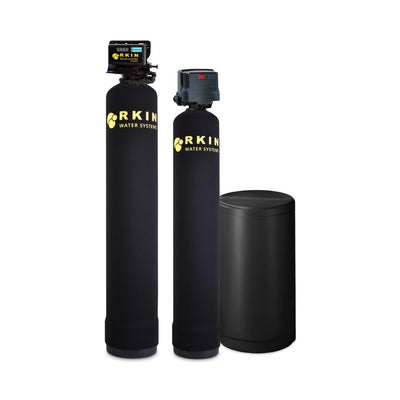
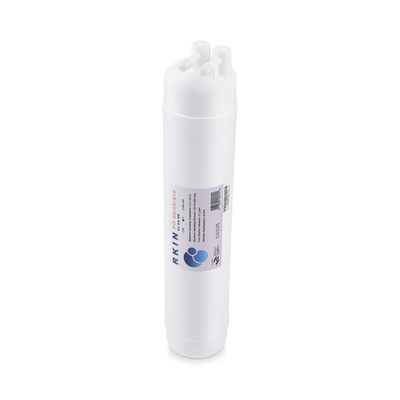
The RKIN Well Water Whole House Filter is designed for well water concerns including iron, sulfur, and manganese treatment. It is a fit to review after testing confirms the water conditions match the system's intended use. If you are comparing broader home treatment options, you can also review RKIN's Whole House Water Treatment category.
The key is sequence: test first, then size and select. A good system is chosen because it matches your well, not because a stain photo looked familiar.
How to reduce staining while you wait for results
While you are waiting for lab results, you can slow new staining with routine cleaning and water-use habits. Clean stains early before they set. Rinse showers and sinks after use. Keep toilet bowls from sitting for long periods without cleaning. Remove and rinse faucet aerators if they collect particles.
Avoid harsh mixing of cleaning chemicals. Iron and manganese stains may need mineral-focused cleaners, but always follow product labels and do not combine cleaners. For laundry, avoid using chlorine bleach on iron-stained loads because it can make some rusty discoloration harder to remove. Rewash affected items only after you understand the water issue; otherwise the same minerals may stain the fabric again.
If the stain appears suddenly, check for recent changes. A new well pump, plumbing repair, pressure tank issue, drought, heavy rain, or long vacancy can disturb sediment or change how minerals show up. If only hot water looks discolored, the water heater may need attention. If only one fixture stains, the issue may be local to that fixture, supply line, or aerator.
These steps do not replace treatment, but they help protect fixtures while you get the facts. They also give you better notes to share when selecting equipment.
When orange or black stains need faster attention
Most iron and manganese staining is an aesthetic and nuisance issue, but private well owners should take sudden water changes seriously. If your water becomes cloudy, has a new odor, carries sediment, or changes after flooding, well service, or nearby construction, pause and test. If bacteria is suspected, follow guidance from your local health department or licensed well professional.
Call a well professional if you see a sharp pressure drop, air spurting from faucets, heavy sediment, pump cycling, or water that changes color only after the pump runs. Treatment equipment cannot solve a mechanical well issue by itself. The source problem should be corrected before filtration is installed or adjusted.
If your lab report shows iron and manganese as the main staining drivers, then a whole house iron, sulfur, and manganese system may be the right next step. If other items appear, such as low pH, bacteria, tannins, or high sediment, those may need to be handled before or alongside the main filter.
FAQ
What causes orange stains from well water?
Orange stains from well water are usually caused by iron. Dissolved iron can look clear at the faucet and then turn orange or rusty after it contacts oxygen in a toilet, sink, tub, or shower.
What causes black stains in well water?
Black stains in well water often point to manganese. Manganese can leave dark gray or black marks on fixtures, inside toilet tanks, around drains, and sometimes on laundry.
Are iron and manganese in well water regulated?
Iron and manganese are listed by EPA under Secondary Drinking Water Standards, which are guidance levels for nuisance effects such as staining and taste. EPA lists 0.3 mg/L for iron and 0.05 mg/L for manganese.
Will a water softener remove rusty well water stains?
A softener may help with limited dissolved iron in some water conditions, but it is not the right answer for every well. Oxidized iron, higher levels, manganese, sediment, or iron bacteria can foul softener resin and may need oxidation and filtration.
What should I test for if my well water stains fixtures?
Test for iron, manganese, pH, hardness, turbidity, tannins, sulfur, bacteria, and local concerns recommended by your county or state well program. The full chemistry helps match treatment to the well.
Does a whole house filter help with orange and black stains?
A whole house filter can help when it is designed for the confirmed water problem and sized correctly. For many wells with iron and manganese, oxidation plus filtration is used to reduce staining throughout the home.
Ready to stop guessing at stain causes? Start with a current well water test, then review the RKIN Well Water Whole House Filter if your results show iron, sulfur, or manganese concerns across the home.





0 comments