




microplásticos
Does RKIN Remove PFAS and Microplastics? A Clear Answer by Product

If you've been following the news lately, you've probably seen a lot about PFAS — the so-called "forever chemicals" — and microplastics showing up in water supplies. The EPA issued new guidance this week. Search interest tripled overnight. And people are asking us directly: does RKIN actually remove this stuff?
The short answer is yes — but not every RKIN product handles it the same way. Here's exactly what you need to know, by product.
What Are PFAS and Microplastics?
PFAS (per- and polyfluoroalkyl substances) are a family of thousands of man-made chemicals used in everything from nonstick cookware to firefighting foam. They don't break down in the environment, which is how they ended up in rivers, groundwater, and eventually tap water across the country. The EPA's latest health advisories set limits near zero for several PFAS compounds — including PFOA and PFOS — because even very low concentrations are under study.
Microplastics are tiny plastic particles (under 5mm) that shed from packaging, textiles, and pipes. They've been detected in bottled water, tap water, and even human blood samples in recent research. The EPA hasn't set a drinking water standard yet, but the scientific community is paying close attention.
Both contaminants have one thing in common: standard pitcher filters and basic carbon blocks don't touch them. Removing PFAS and microplastics requires either a strong adsorption media, reverse osmosis membranes, or both.
Which RKIN Products Remove PFAS?
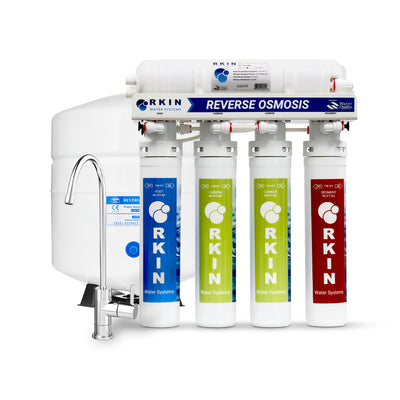
RKIN Flash Undersink RO System — Yes ✅
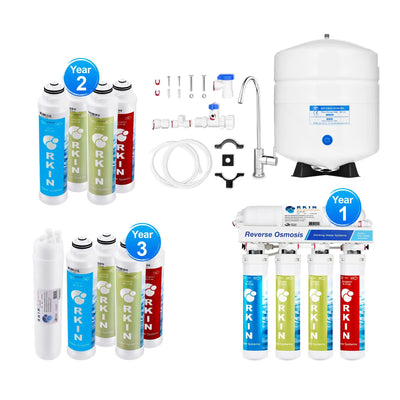
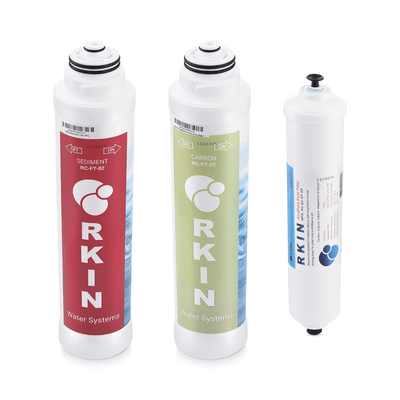
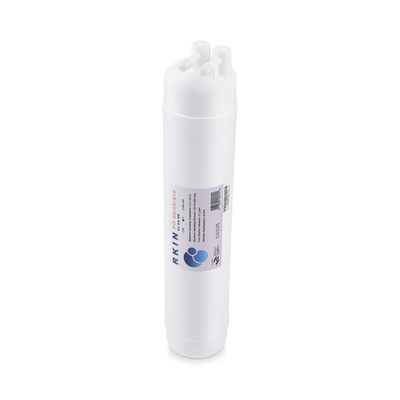
The RKIN Flash Undersink RO System uses a reverse osmosis membrane with a pore size around 0.0001 microns — far smaller than PFAS molecules and orders of magnitude smaller than any microplastic particle. Independent testing on comparable RO membranes shows PFAS reduction rates of 90–99%, depending on the specific compound. The Flash also includes a pre-filter stage that catches sediment and larger particles, and a post-filter carbon stage that handles taste and any trace organics.
Under the sink, always-on, no countertop footprint. This is the option for people who want the highest level of filtration and have space under a kitchen sink.
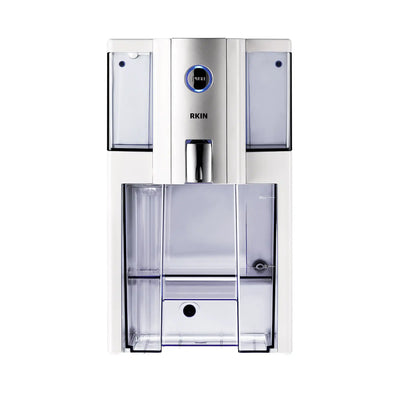
RKIN U1 4-in-1 Water Filter System — Yes ✅
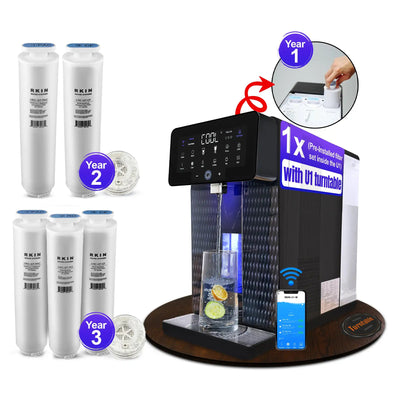
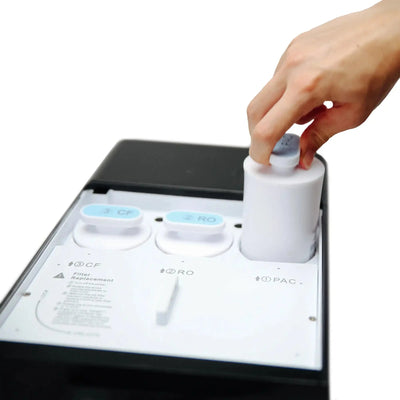
The RKIN U1 4-in-1 Water Filter System packs RO filtration into a countertop format. Same RO membrane principle as the Flash — 0.0001-micron pore size. Third-party tested for reduction of PFAS, lead, arsenic, fluoride, and TDS. The U1 is the no-installation option: it runs off your existing tap, no plumbing modification required.
Important: the U1 is 3rd-party tested, not NSF-certified. The testing methodology covers the same contaminant categories as NSF/ANSI 58 (reverse osmosis systems), but the certification name is different. The contaminant reduction performance is real.
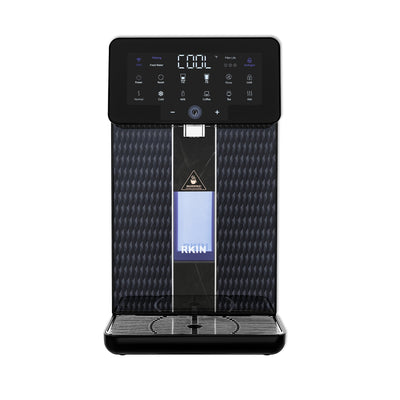
Zero Installation Purifier — Yes ✅
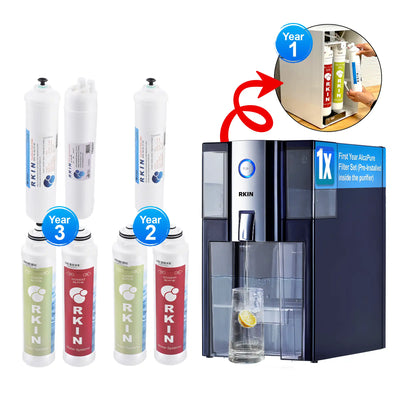
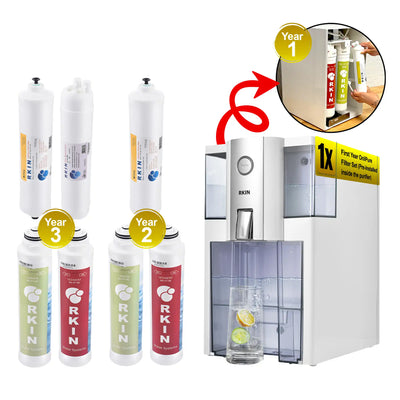
The Zero Installation Purifier also uses reverse osmosis filtration. Same membrane technology, same PFAS and microplastic removal capability. This is RKIN's simplest plug-in option — it sits on the counter, connects to any standard outlet, and starts filtering in minutes. No tools, no plumber.
RKIN OP1L Whole House Lead, Cyst, PFOA & PFOS Filter — Yes ✅
The RKIN OP1L Certified Whole House Lead, Cyst, PFOA, and PFOS Water Filter System is RKIN's dedicated PFAS solution for the entire home. Unlike the point-of-use RO systems above, the OP1L installs at the main water line and treats every faucet, shower, and appliance in the house.
The OP1L uses a 0.5-micron filtration cartridge specifically engineered to eliminate PFOA and PFOS at the point of entry. It also removes particulate and soluble lead, Giardia, Cryptosporidium (>99.95%), chlorine, and chloramine. The system includes a digital notification head that tracks filter life so you know exactly when to replace the cartridge — no guesswork.
Best for: homeowners who want whole-house PFAS protection — not just at the kitchen tap. If your concern is PFAS exposure from all water sources (drinking, cooking, bathing), the OP1L covers the entire home in a single install. Pair it with a countertop or undersink RO system for the highest level of drinking water purity.
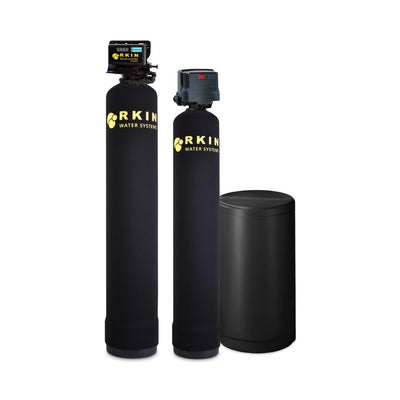
RKIN OnliSoft Salt-Free Water Conditioner — No ❌
The RKIN OnliSoft Salt-Free Water Conditioner is designed to address hard water — calcium and magnesium buildup that causes scale on pipes, appliances, and fixtures. It changes the form of hardness minerals so they don't stick to surfaces. It does not filter contaminants. It is not a water purifier and is not designed to remove PFAS or microplastics.
If your concern is PFAS and you also have hard water, the right setup is a whole-home conditioner for scale plus a point-of-use RO system at the kitchen tap for drinking water.
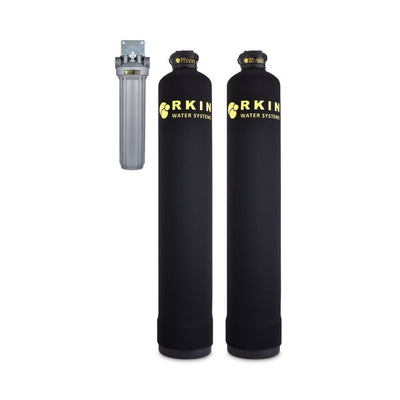
RKIN CBS Dual Carbon Whole House Filter — Partial ⚠️
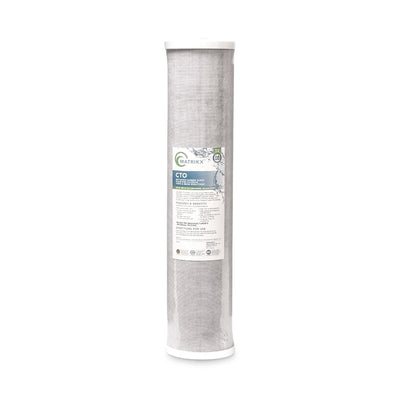
The RKIN CBS Dual Carbon Whole House Filter uses activated carbon, which can reduce some PFAS compounds — particularly PFOA and PFOS — but not all PFAS with the same consistency as RO. Carbon is excellent for chlorine, chloramine, VOCs, and taste/odor. For PFAS specifically, the reduction rate varies by compound and contact time. If PFAS is your primary concern, an RO system at the point of use gives more consistent results.
What About Microplastics Specifically?
Any RO membrane will stop microplastics — the particle size is simply too large to pass through. Even the largest microplastic fragments are 1–5mm; the RO membrane pore size is 0.0001 microns. There's no scenario where a microplastic passes through a functioning RO membrane.
Activated carbon filters can catch larger microplastic particles but won't catch nano-scale fragments. For complete microplastic removal, RO is the definitive answer.
How to Choose Based on Your Situation
- Concerned about PFAS in drinking water, renting or can't modify plumbing: Zero Installation Purifier or RKIN U1 4-in-1 Water Filter System — both are no-installation RO systems.
- Own your home, want under-sink filtration: RKIN Flash Undersink RO System — highest throughput, no countertop footprint.
- Want whole-house PFAS protection: RKIN OP1L at the main water line treats every tap. Add a countertop RO for the highest drinking water purity.
- Hard water AND PFAS concerns: Whole-home conditioner for scale + OP1L for PFAS + point-of-use RO at the kitchen. The systems work together.
- Already have an RO system and want to know if it covers microplastics: Yes. Any functioning RO membrane removes microplastics by default.
If you're not sure what's in your water, start with a water test. Many municipalities publish annual water quality reports (Consumer Confidence Reports) that list PFAS and other contaminants. You can also request a test from a certified lab for around $50–$150 for a basic panel.
Questions about which RKIN system fits your home? The RKIN support team can walk through your situation — source water type, living setup, and what you're trying to remove.
Frequently Asked Questions
Q: Does reverse osmosis remove PFAS?
Yes. RO membranes reduce PFAS by 90–99% in testing. All RKIN RO systems use this technology.
Q: Does RKIN remove microplastics?
Yes — all RKIN RO systems. The membrane pore size is thousands of times smaller than any microplastic particle.
Q: Which RKIN product is best for PFAS?
For whole-house protection, the OP1L — it's certified for PFOA and PFOS and treats every tap. For point-of-use drinking water, any RKIN RO system: Flash for under-sink, U1 or Zero Installation Purifier for countertop.
Q: Does a carbon filter remove PFAS?
Partially. Carbon reduces some PFAS compounds but is less consistent than RO. For reliable PFAS removal, RO is the better choice.
Q: Does the OnliSoft remove PFAS?
No. The OnliSoft is a scale conditioner, not a contaminant filter. For PFAS removal, a separate RO system is needed.






0 comentarios