


agua dura
How Hard Water Destroys Your Water Heater (and How to Stop It)

If your water heater is failing early, running inefficiently, or costing more to operate than it should, hard water is likely the reason. Hard water affects roughly 85% of U.S. homes, according to the U.S. Geological Survey — and the water heater is one of the first appliances to pay the price. Scale accumulates quietly, year after year, until you're staring down a repair bill or a full replacement a decade too soon.
This isn't a worst-case scenario. It's the normal outcome when hard water goes untreated.
What Hard Water Actually Does Inside Your Water Heater
Hard water carries dissolved calcium and magnesium minerals. At room temperature, those minerals stay in solution. Heat changes everything.
When water is heated, calcium and magnesium precipitate out and bond to surfaces — the tank walls, the heating elements, and especially the bottom of the tank. That's scale. And it builds up continuously, every time your water heater fires.
Here's what that means in practice:
Reduced efficiency. Scale is an excellent insulator — in the wrong direction. According to the U.S. Department of Energy, just 1/4 inch of scale buildup on a water heater's heating element can reduce efficiency by up to 40%. Your heater works harder to move heat through the mineral crust, consuming more energy to deliver the same hot water.
Shorter lifespan. The average tank water heater is rated for 8–12 years. The Water Quality Association (WQA) found that in hard water areas, water heaters can fail in as few as 6 years — less than half the expected service life. The scale traps heat at the bottom of the tank, causing the metal to overheat and weaken over time.
Sediment buildup. That popping or rumbling noise your water heater makes? That's sediment — a mix of settled mineral deposits and scale fragments — shifting in the tank as it heats. It's not just an annoyance. Sediment insulates the tank floor from the burner in gas models, and coats the element in electric ones. Both cause overheating.
Faster anode rod depletion. The anode rod protects your tank from corrosion. Hard water accelerates anode rod degradation, which means your tank loses its corrosion protection sooner. Once that happens, rust follows. And a rusted tank isn't repairable — it's a replacement.
Higher energy bills. The DOE estimates that water heating accounts for about 18% of a home's energy use. A scaled-up heater pushes that number higher, month after month, without any change in your hot water usage.
The damage is slow enough that most people don't notice until something breaks. By then, the scale has been accumulating for years.
Why Flushing Your Water Heater Isn't Enough
Flushing is standard maintenance advice, and it does help — but it only addresses the sediment at the bottom of the tank. It does nothing about scale bonded to the heating element, the tank walls, or the interior surfaces.
Some homeowners try running vinegar through their water heater to dissolve scale. It works, to a degree, on loose deposits. But it doesn't fully remove scale that's bonded to metal, and it doesn't address the root cause. The minerals are still in your water. Scale will rebuild within weeks.
Anode rod replacement extends tank life, and we recommend doing it every 3–5 years regardless of your water hardness. But again, it's a reactive measure — it slows the damage after the hard water has already done its work.
The honest answer is that flushing, vinegar treatments, and anode rod maintenance are all worthwhile, but none of them prevent hard water from damaging your water heater. They manage symptoms. They don't treat the source.
If your water is hard — anything above 7 grains per gallon (gpg), or roughly 120 mg/L — those maintenance steps alone won't protect your system from early failure.
How to Actually Protect Your Water Heater from Hard Water
Protecting your water heater from hard water means treating the water before it enters the heater. There are two main approaches, and which one makes sense depends on your water hardness and your household priorities.
Salt-free water conditioning works by changing the physical structure of calcium and magnesium minerals rather than removing them. Through a process called Template Assisted Crystallization (TAC), the minerals are converted into microscopic crystals that stay suspended in the water instead of bonding to surfaces. The minerals are still present in the water — you'd still see them on a test — but they can't form scale.
This is meaningful for water heater protection because scale formation requires those minerals to precipitate and bond. When they're in crystal form, that bonding doesn't happen. Salt-free conditioners don't use salt, don't need electricity, and produce no wastewater. They're a good fit for moderate hard water (generally up to about 25 gpg, though this varies by system) and for households that want low-maintenance operation.
Salt-based water softening uses an ion exchange process to actually remove calcium and magnesium from the water, replacing them with sodium ions. The result is genuinely soft water — water that forms no scale at all, because the minerals that cause scale are gone. Salt-based systems require salt refills and periodic regeneration cycles, but they handle severe hard water more definitively than salt-free conditioning.
Both approaches protect your water heater. Salt-free conditioning prevents scale without altering the water's mineral content. Salt-based softening removes the minerals entirely. The right choice comes down to your hardness level, your maintenance preferences, and whether you have water quality goals beyond just scale prevention.
One thing worth knowing: water heater manufacturers are aware of the hard water problem. Some void warranties in hard water areas unless a water treatment system is installed. Checking your warranty documentation is worth a few minutes of your time.
A Smarter Approach to Hard Water Treatment
We built our water treatment systems around the reality that most homes need protection at the point of entry — before water reaches any appliance, not just the water heater.
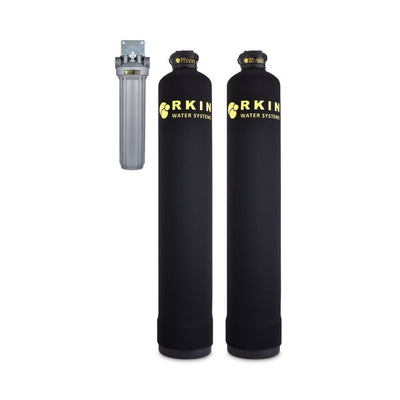
If you're looking for a no-salt, no-maintenance approach, the RKIN OnliSoft Salt-Free Water Conditioner is worth a close look. It uses TAC media to condition hard water throughout your home, protecting your water heater, dishwasher, pipes, and fixtures from scale without adding sodium to your water or producing any wastewater. Good fit for moderate hard water. Learn more about the RKIN OnliSoft Salt-Free Water Conditioner.
For households that want scale protection plus improved taste and odor throughout the house, the RKIN OnliSoft Pro Salt-Free + Carbon Combo combines the salt-free conditioning system with a whole-house carbon filter. You get scale prevention plus chlorine and chloramine reduction at every tap. Learn more about the RKIN OnliSoft Pro.
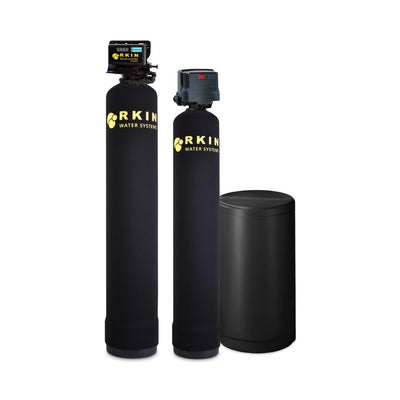
If your water is severely hard — over 20–25 gpg — or you want the most complete mineral removal available, the RKIN Whole House Salt-Based Water Softener is the more definitive solution. It removes hardness minerals through ion exchange, giving you genuinely soft water throughout your home. Requires salt and a drain connection. Learn more about the RKIN Whole House Salt-Based Water Softener.
Not sure which is right for your situation? Start with a water test. Hardness level drives the decision more than anything else.
Frequently Asked Questions
How do I know if hard water is damaging my water heater?
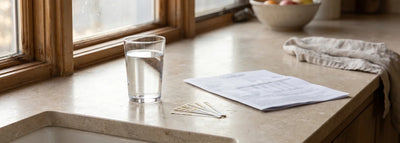
The most common signs are a rumbling or popping sound during heating cycles (sediment movement), higher-than-expected energy bills, inconsistent hot water, and a water heater that's failing before its rated lifespan. If you hear knocking from your tank, it's worth checking both the sediment situation and your water hardness level. A water hardness test kit runs a few dollars at most hardware stores.
How much can hard water shorten a water heater's lifespan?
The Water Quality Association has documented water heater failure in as few as 6 years in hard water areas, compared to an 8–12 year expected lifespan. That's potentially half the service life. The energy efficiency losses compound the financial impact — you're paying more to operate a unit that's going to fail sooner anyway.
Will a salt-free conditioner fully protect my water heater?
For most homes with moderate hard water, yes. Salt-free conditioning prevents scale formation by keeping calcium and magnesium minerals in a suspended crystal state rather than letting them bond to surfaces. It won't work as well for very high hardness levels — in those cases, a salt-based softener provides more complete protection. If you're unsure where your water falls, test it first.
Do I need to replace my water heater before installing a treatment system?
Not necessarily. A water treatment system will stop new scale from forming regardless of what's already in the tank. If your water heater is relatively new (under 6 years), treatment can meaningfully extend its remaining life. If it's older and already showing signs of failure, treatment alone won't reverse existing damage — but it will protect the replacement unit from day one.
Is water softener salt bad for the water heater?
No. The sodium added by ion exchange softening is at low levels and doesn't damage water heaters. In fact, soft water from a salt-based system is significantly easier on water heaters than hard water — it eliminates scale entirely. The concern about sodium in soft water is more relevant to dietary considerations for people on sodium-restricted diets, and even then the amounts are small.
Ready to Protect Your Home from Hard Water?
Your water heater is one of the more expensive appliances in your home, and hard water will shorten its life if left untreated. The fix isn't complicated — it's treating the water before it gets there.
If you're not sure what your water hardness looks like, start with a test. Once you know your number, choosing between salt-free conditioning and salt-based softening becomes straightforward. We're happy to help you think through it — reach out and tell us what you're working with.




0 comentarios