




agua dura
How to Remove Calcium From Well Water: A Homeowner's Guide

The white crust on your shower head. The chalky film on your drinking glasses. The water heater that died three years before it should have. If you're on a private well and any of those sound familiar, you're not imagining it — you're looking at calcium. A 2023 USGS groundwater assessment found that roughly 85% of U.S. groundwater is considered hard, and wells in limestone-rich regions routinely exceed 10 grains per gallon.
Calcium isn't a health problem at the levels found in well water. It's an infrastructure problem. Every dollar you spend heating, pumping, or softening scaled water is a dollar wasted. The good news: removing calcium from well water is one of the most solved problems in residential water treatment. The trick is matching the solution to your well.
Why Well Water Carries So Much Calcium
Rainwater is soft. It picks up hardness on the way down through soil and rock. Groundwater that sits in aquifers made of limestone, dolomite, chalk, or gypsum dissolves calcium carbonate and magnesium carbonate at levels that municipal water rarely reaches. Unlike city water, well water has no treatment step between the aquifer and your tap.
That matters because well-water hardness is usually higher and more variable than city water. It's common to see wells testing at 15-25 grains per gallon (gpg), which is roughly 257-428 parts per million of calcium carbonate. At those levels, scale builds up fast and appliances pay the price.
How to Tell How Much Calcium You Have
Before picking a solution, test the water. Guessing leads to oversized systems, under-treated water, or both. Three reliable options:
- Hardness test strips — a cheap first pass. They give a rough gpg reading in seconds. Good enough to know whether you need treatment, not precise enough to size equipment.
- A mail-in lab test — the next step up. Expect hardness in gpg or ppm, plus pH, iron, manganese, and sulfates. Look for a lab with state certification.
- Free water test through a local well-water specialist — many professional installers will test your water at no cost as part of a consultation, and they'll measure hardness alongside iron, tannins, and other well-specific contaminants.
Well water also moves around. Seasonal shifts, nearby construction, and drawdown from a drought year can all change your hardness numbers. Retest every couple of years, and whenever you notice new symptoms.
The Four Main Ways to Remove Calcium
There's no single "right" answer. The choice depends on your hardness level, what else is in the water, and what you're trying to protect.
1. Salt-Based Ion Exchange (Traditional Softener)
The old standby. A resin tank filled with sodium-loaded beads swaps calcium and magnesium for sodium ions. The softened water is easy on appliances and makes soap lather again. The resin regenerates itself every few days using brine from a salt tank.
Good for: High hardness, large households, homes with multiple bathrooms, and anyone who wants classic soft water with no scale at all.
Trade-offs: You're buying salt regularly, discharging backwash to a drain or drywell, and adding a small amount of sodium to the water. Well owners with septic systems should confirm with their installer that the local code allows softener discharge to septic.
2. Salt-Free Conditioning (Template-Assisted Crystallization)
Salt-free systems convert dissolved calcium into microscopic, inert calcium crystals that pass through the plumbing without sticking to surfaces. The calcium is still in the water — but it no longer forms scale on pipes, water heaters, or fixtures.
Good for: Moderate hardness (up to roughly 25 gpg), homeowners who want scale prevention without added sodium, homes on septic, and anyone who prefers a maintenance-light setup.
Trade-offs: You don't get the slick "soft" feel of traditional softened water. Soap still behaves like it's in mineral-rich water. Existing scale won't dissolve overnight — the system prevents new buildup but doesn't strip old deposits.
3. Whole-House Reverse Osmosis
A large-scale RO system treats every drop entering the home through a membrane that removes calcium, magnesium, iron, arsenic, nitrates, and most other dissolved solids. You end up with water that's close to distilled.
Good for: Wells with a stack of problems at once — high hardness plus high TDS, nitrates, arsenic, or PFAS.
Trade-offs: Higher cost, more complexity, more maintenance, and it removes beneficial minerals along with the bad ones. Most households don't need whole-house RO just for calcium.
4. Point-of-Use Filtration
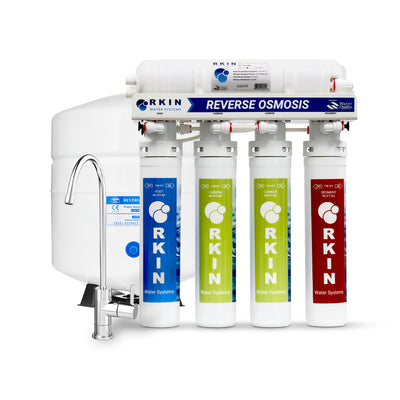
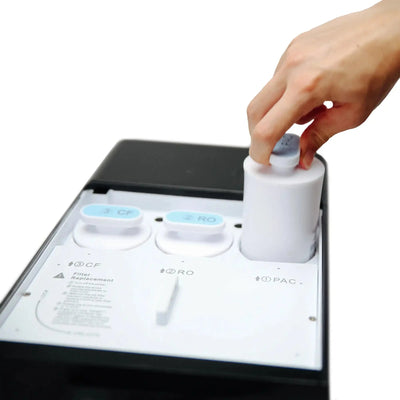
If calcium is only bothering you at the kitchen tap — cloudy ice, film on coffee, white dust on the stovetop — you don't need a whole-house system. A point-of-use reverse osmosis unit under the sink or on the counter will handle hardness for drinking and cooking water without touching the rest of the home's plumbing.
Good for: Renters, homes with moderate hardness where appliances aren't yet suffering, or households that want the best drinking water possible without a whole-house install.
Trade-offs: Doesn't protect the water heater, laundry, or showers.
What the Right Stack Looks Like for Most Wells
Most well-water homes land on one of two setups:
Setup A — Classic hard well water, no iron problem: A whole-house salt-free conditioner (or salt-based softener, if you want "silky" water) covers scale prevention, and a point-of-use RO at the kitchen sink handles drinking water.
Setup B — Well with iron, manganese, or sediment in addition to hardness: Pre-treat first. Install an iron and manganese removal stage ahead of the softener or conditioner. Softener resin chokes on iron and prematurely fails if it's asked to handle both hardness and metals at once. A dedicated well filter upstream doubles the life of everything downstream.
Skipping the pre-treatment step is the most common mistake well owners make. You'll know it's happening when your softener stops producing soft water months ahead of schedule, and the resin comes out of the tank stained rust-brown.
Matching a System to Your Water
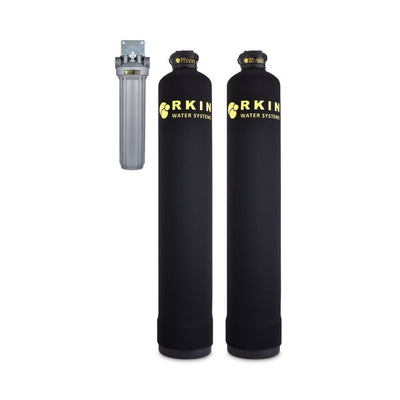
For wells that are hard but otherwise clean, the RKIN OnliSoft Salt-Free Water Conditioner prevents scale throughout the home without adding salt, without a drain line, and without any regeneration cycle to schedule. It's a good fit for homes on septic and anyone who prefers low-touch equipment.
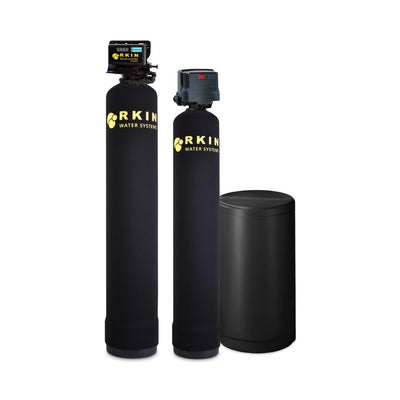
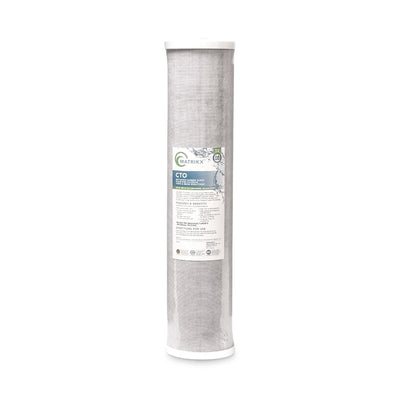
If your well has iron along with hardness — a combination most common in older wells and in regions with iron-bearing bedrock — start with the RKIN Well Water Whole House Filter to strip iron, sulfur, and manganese first, then add softening or conditioning downstream.
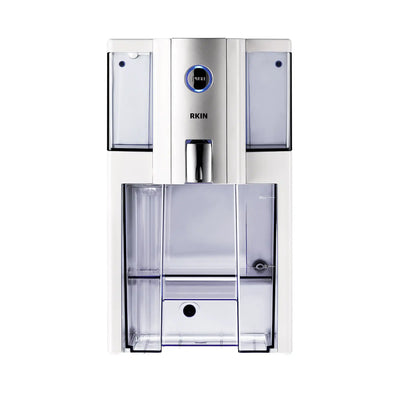
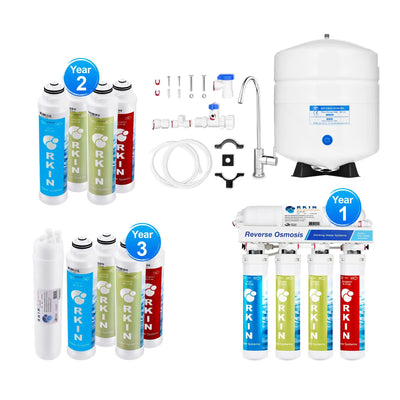
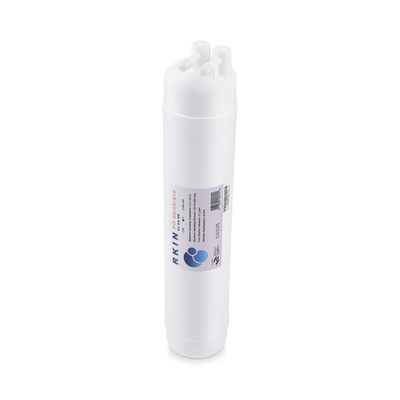
For drinking water itself, pair the whole-house solution with the RKIN Flash Undersink RO System at the kitchen sink. That's where the calcium does the most visible damage — in your coffee, your ice cubes, and your pasta water — and a point-of-use RO removes it completely along with any trace contaminants your well might still be carrying.
Frequently Asked Questions
How do I know if my well water has calcium?
The fastest check is a hardness test strip, available for a few dollars at any hardware store. For a precise number, use a mail-in lab test or ask a local well-water specialist for a free water test. Hardness above 7 grains per gallon is usually worth treating.
Is calcium in well water bad for me?
No. Calcium and magnesium in water are not a health hazard at the levels typically found in wells. The reason to remove them is to protect your plumbing, water heater, and appliances, and to stop the scale buildup on fixtures and glassware.
Will a regular sediment filter remove calcium?
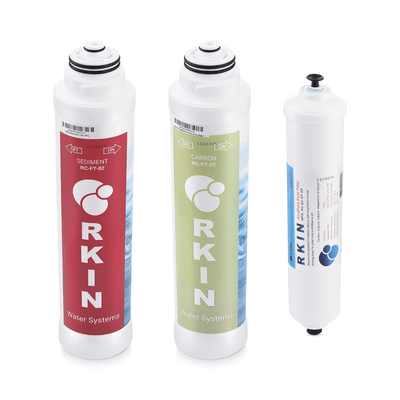
No. Sediment filters remove suspended particles like sand, silt, and rust. Calcium is dissolved in the water, not suspended as a particle, so it passes straight through a sediment filter. You need ion exchange, salt-free conditioning, or reverse osmosis.
Can I remove calcium from well water without using salt?
Yes. Salt-free conditioning (template-assisted crystallization) prevents calcium from forming scale without using sodium. Reverse osmosis removes calcium entirely without salt. Both are strong options for homes on septic or homes where adding sodium to the water isn't ideal.
Does boiling well water remove calcium?
Partially, and only for temporary hardness. Boiling can precipitate some calcium carbonate out as a solid — that's the crust inside your kettle. It doesn't address permanent hardness (calcium sulfate, calcium chloride) and it's not a whole-home solution. Filter instead of boiling.
How long does softener resin last on well water?
Typical softener resin lasts 10-15 years on city water. On well water with iron or manganese present, resin can fail in 3-5 years unless you pre-treat. Adding a dedicated well filter upstream of the softener protects the resin and extends service life back to normal.
What's the difference between a water softener and a well water filter?
A softener targets hardness minerals. A well water filter targets iron, sulfur, manganese, and sediment. On many wells you need both — the filter first to handle metals, then the softener (or salt-free conditioner) to handle calcium and magnesium. Installing them in the right order matters.
Ready to Stop Scaling Your Appliances?
Calcium in well water doesn't have to mean replacing your water heater every five years or scrubbing fixtures every weekend. The right setup — matched to your well's specific profile — protects the plumbing, cleans up the drinking water, and stays out of your way.
The RKIN OnliSoft Salt-Free Water Conditioner handles scale prevention for the whole home with no salt, no drain line, and no regeneration. Pair it with a Flash Undersink RO System at the kitchen tap for drinking water that tastes the way well water should. Ships free.






0 comentarios