


low water pressure after water softener
Low Water Pressure After Installing a Softener: Causes & Fixes

You install a water softener on Saturday, fill the brine tank, and by Monday morning the shower feels like a sad drizzle. Or the dishwasher takes twice as long. Or the toilets cycle slowly. The softener is working — your soap finally lathers — but the pressure dropped and now you're wondering whether to live with it, blame the installer, or rip the thing back out.
Don't rip it out. A pressure drop after softener installation is one of the most common post-install issues, and in nearly every case the fix is a 15-minute homeowner job. Here are the seven causes, ordered from most to least common, with the fix for each.
How softeners affect pressure (and how much is normal)
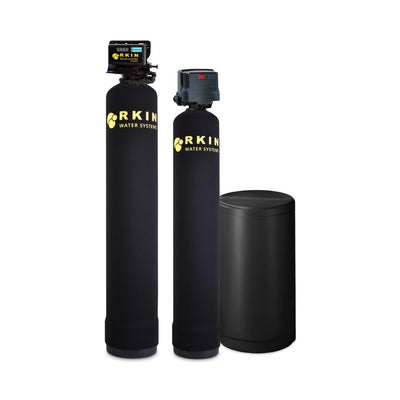
Any whole-house treatment device adds resistance to the line. Water has to travel through a control valve, down through a resin bed, back up a riser tube, and out the other side. A correctly sized softener typically drops static pressure by 5–10 psi — barely noticeable. A drop bigger than that, or a sudden change weeks after install, points to one of the seven issues below.
If you don't already own a hose-bib pressure gauge, grab one. They cost about as much as a bag of softener salt and they take the guesswork out of every diagnosis below. Thread it onto an outdoor spigot, open the valve, and you have a real number to work with.
Cause 1: The bypass valve is partially closed
This is the single most common cause and the easiest fix. Every softener has a bypass valve assembly — usually a pair of red, blue, or black handles on top of the unit. During installation, the bypass gets cycled multiple times, and it's easy to leave one of the handles slightly off-axis.
Fix: Look at the bypass valve. Both handles should be in the same orientation as the inlet/outlet pipes — usually pointing in the direction of water flow. If either is at an angle, rotate it fully into the "service" position. Pressure should normalize within seconds.
Cause 2: The softener is undersized for your home
A softener rated for 24,000 grains in a 5-bathroom house with a high-flow rain showerhead is going to feel slow. Resin beds have a maximum service flow rate — push more water through than that and you'll see pressure drop, especially during peak morning use.
Fix: Check your softener's spec sheet for "service flow rate" (in gpm). Add up the simultaneous fixtures you'd reasonably run at peak: two showers + dishwasher + toilet refill is roughly 8–10 gpm. If your softener is rated below that number, the system is undersized for your usage pattern. The right answer is upsizing — not lowering your expectations.
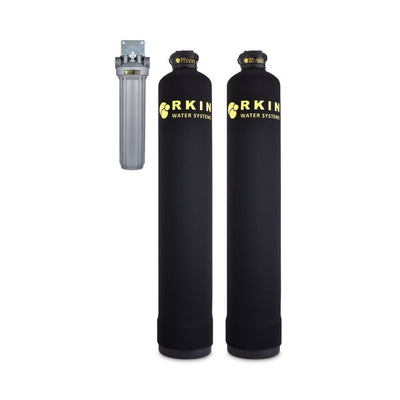
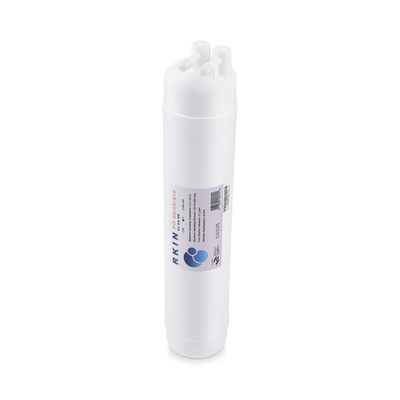
Salt-free conditioners avoid this issue almost entirely because there's no resin bed swapping ions; water just passes through a media that conditions hardness without restricting flow. The RKIN OnliSoft Pro Salt-Free + Carbon Combo is sized for whole-home flow with carbon filtration in one cabinet.
Cause 3: A clogged sediment prefilter
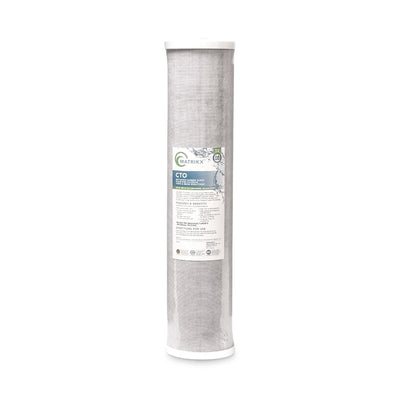
Most installations include a sediment prefilter ahead of the softener — usually a 5-micron or 20-micron cartridge in a clear or blue housing. The prefilter does its job by catching sand, rust flakes, and pipe debris, which means it gets dirty fast in the first month after a fresh install (new pipework stirs up debris that's been sitting in your line for years).
Fix: Shut the main, depressurize the housing, and pull the cartridge. If it's brown, gray, or visibly loaded, replace it. After the first cartridge change post-install, the schedule typically settles into every 6–12 months for most homes.
Cause 4: Resin bed channeling or a blocked riser
If the softener was shipped, dropped, or installed without proper backwashing, the resin bed can develop channels — paths of least resistance that water races through while bypassing the bulk of the resin. Worse, if debris got into the riser tube during installation, water flow is restricted at the geometry's tightest point.
Fix: Run a manual regeneration cycle on the softener. Most control valves have a "regenerate now" button or dial position. A full regeneration includes a backwash phase that lifts and resettles the resin bed. If pressure improves after regen, channeling was the culprit. If not, the issue is mechanical — call the installer or manufacturer.
Cause 5: Iron or sediment fouling the resin
If you have well water or a high-iron municipal source, iron can coat the resin beads and gradually reduce flow. Manganese does the same. The pressure drop on iron-fouled softeners is gradual — months, not days — but it's worth listing here because plenty of homeowners assume their original softener install was fine and a year later wonder why pressure has crept down.
Fix: Clean the resin with an iron-specific resin cleaner (sold at hardware stores and softener-supply retailers). Run two manual regen cycles after dosing. For chronic iron problems, a dedicated iron filter upstream of the softener is the right answer — the RKIN Well Water Whole House Filter System is designed for iron, sulfur, and manganese on well water.
Cause 6: A pressure-reducing valve set too low
Many homes have a pressure-reducing valve (PRV) on the main line, usually right after the meter. PRVs sometimes get adjusted during plumbing work — the installer bumped it, or set it down because they were nervous about pressure spikes during the installation. After the softener install, that lower setting becomes your new normal.
Fix: Locate the PRV (it looks like a bell-shaped brass valve on the main line). The adjustment screw is usually on top under a cap. Turn clockwise to raise pressure, counterclockwise to lower. Aim for 50–60 psi at a hose bib. Don't push above 70 psi — that's where appliance hoses and toilet fill valves start to fail.
Cause 7: The softener is set to regenerate during peak hours
If you noticed the pressure drop happens at the same time every day (often early morning), check the regeneration schedule. During a regen cycle, the softener pulls hundreds of gallons of water for backwashing and brining — and depending on the model, the bypass may not fully open. So if regen is scheduled for 6:00 a.m. and your shower is at 6:15, you're showering through a softener mid-cycle.
Fix: Set regeneration for 2:00 or 3:00 a.m. — well outside any household water use. Most modern control valves allow this in three button presses. Check the manual.
When to call a pro
If you've worked through all seven causes and pressure is still off, the issue is likely upstream of the softener (city main pressure issue, leak, or a partially closed shutoff somewhere), or the softener has an internal failure (broken piston, cracked distributor tube). Both warrant a call to a licensed plumber or the softener manufacturer's support line.
Before calling, write down: static pressure at a hose bib (with all fixtures off), pressure during a shower, regen schedule, prefilter age, and softener model and capacity. The 5-minute prep saves 30 minutes on the phone.
Frequently Asked Questions
How much pressure drop is normal after installing a water softener?
5–10 psi is typical and rarely noticeable. Anything more than 10 psi suggests a sizing issue, a partially closed valve, or a clogged prefilter. If you measured pressure before installation and after, you have a real comparison; if not, a hose-bib pressure gauge gives you a baseline going forward.
Why did my pressure only drop after the first week, not on day one?
Two likely causes: a prefilter that loaded up with debris stirred loose by the install, or a resin bed that needs its first regeneration to settle properly. Replace the prefilter and run a manual regen — pressure typically returns to normal.
Will a salt-free conditioner avoid this pressure problem?
Mostly, yes. Salt-free systems don't use a resin bed for ion exchange, so there's no service flow rate ceiling and no regeneration cycle to interrupt household water use. The pressure drop across a properly sized salt-free conditioner is usually under 3 psi. The RKIN OnliSoft is a salt-free option for homeowners who want hardness conditioning without the flow trade-off.
Can a clogged softener resin bed permanently damage pressure?
The pressure problem itself is reversible — clean the resin or replace it and flow returns. The risk is that running an undersized or fouled softener for years masks an upstream issue (like a slowly closing main shutoff or a leak) until the day pressure crashes entirely. Diagnose now, not later.
Should I install a booster pump if my softener dropped pressure?
Almost never. A booster pump is a last resort for homes with genuine low city pressure. If the softener caused the drop, the right fix is one of the seven causes above — not adding another mechanical device that has its own maintenance and failure modes.
Does an under-sink RO system also cause pressure issues?
Under-sink RO systems run on a separate small line to a dedicated faucet — they don't affect whole-home pressure. The dedicated RO faucet has its own (lower) flow because RO produces water slowly and stores it in a small tank. The RKIN Flash Undersink RO System uses a 3.2-gallon tank and doesn't impact main household pressure.
Ready to Get Your Pressure (and Your Soft Water) Back?
Most softener pressure issues come down to a bypass valve, a prefilter, or a regen schedule — all 15-minute fixes. If you're shopping for a softener and want to skip the resin-bed pressure trade-off entirely, the RKIN OnliSoft Pro Salt-Free + Carbon Combo conditions hardness and filters chlorine in one whole-home unit — without sacrificing flow. See the full whole-house water treatment lineup for sizing options.






0 comentarios